Wednesday, August 16, 2023

Gossip - More Than Meets the Eye


“You do not know me, and rest assured, you never shall.” — Lady Whistledown in
Netflix Bridgerton


Today I want to examine gossip by exploring its link to storytelling. Yes, even Fantasy Fiction can utilize this age-old human proclivity to talk about others behind their backs. Some novels even have plots that revolve solely around the revelation of such unverified "truths".


For the purpose of this post, I am defining gossip as talking or writing about other people's business in a sensational, judgmental and/or unverified way. In writing, it's easy to see the usefulness of this tool, but the question is, why do we do it in the first place? What's the fascination? 

Why We Gossip

Samantha Holder from the International University of Florida says, "Gossip has served as a survival tool since prehistoric times. In fact, the citizens of Ancient Greece relied on idle talk and rumors to determine which members of their community could not be trusted."

René Magritte - at the Atomium in Brussels, Belgium


But why?

Evolutionary biologists tell us that, as humans, we are hardwired to connect with a social group of up to 150 individuals. From where I'm sitting it seems like a lot. I sure don't have that many people in my life. 

I mean, how would I keep track of such a large clan?

One of the ways our ancestors managed to connect with so many others was to know their business. In other words, to gossip about them. By doing so, according to research, earlier humans reinforced community bonds, stimulating the prefrontal cortex (our ability to form complex relationships). All this was done by sharing information and expressing feelings. The results was to better understand the current social order. 

Add to all this, gossiping can light up the pleasure centres in the brain. ie, it's entertaining and fun. At least, it can be.

Gossip in the Modern World

With nuclear families, isolation and city dwelling vs agrarian communities, contemporary humans are hard-pressed to feel connected to 150 important others, save through a wider, parasocial circle. This includes politicians and leaders, celebrities on the big screen, small, and heroes in the sports/science fields. 

And of course, there are content creators on YouTube to follow. :)

When we talk about or gossip about these others in our life, we are fulfilling our drive to stay connected to the clan. 

Basically, we gossip to survive.

Gossip in Storytelling

Given this history, it seems quite natural for fictional characters to gossip about each other. When authors write such scenes, it  can provide the reader with one of four things:


Information (What's happening)

Insight (Why it's happening)

Interest (Entertainment!)

Instinct (Who the character really is)

As Cynthia Ozick says in The Novel's Evil Tongue:  Gossip is the steady deliverer of secrets, the necessary divulger of who thinks this and who does that, the carrier of speculation and suspicion. 

In this capacity, gossip becomes one of the writer's best tools. 

By using gossip in dialogue and plot, authors can inform the reader of many things without bogging down the narrative in information and description. As well, this kind of dialogue can help readers draw their own conclusions as opposed to being spoon-fed the story one bite at a time. 

Alice Sun can turn invisible, and oh
the secrets she learns.
Gossip can also introduce topics and ideas about the plot and characters without the use of backstory. To top it off, gossiping characters show something about themselves without needing the author to spell it out.

Here's an example from Crown of Bones

From Marcus's POV, he and his company ride through the rolling hills of Palrio on a dangerous journey to the Isle of Aku. Belair, an unknown peer who has just joined them, strikes up a conversation with the reluctant Marcus. 

Note what you learn about all five characters discussed in this snippet without even trying.

***

“They’re adorable,” Belair says, nodding to Samsen and Piper as they ride ahead, out of earshot.

“I guess.” Adorable? Why are we talking about this? 

“There’s a story there, I’ll wager.” Belair sounds more than a little curious. “She’s older than him, right?” He asks of Piper, but his eyes stay on Sam.

“I... ” I’d rather discuss anything else, training on Aku, his warrior phantom, navigating these enemy lands. 

Ash, who rides on my other side, clears her throat. The sound is a familiar one. It’s her way of telling me to be nice to our new company member, no matter that I resent him.  

I nod my head toward the healer. “Ten years ago, when Piper was sixteen, she’d just earned her orange robes…”

“That’s young.”

“It is, and well deserved. Anyway, she was in the hills behind Baiseen, gathering herbs when a band of Gollnarians cornered her.”

“They were far from home.”

“A scouting party. She was badly outnumbered.”

His brows lift. “What happened?”

“Samsen, thirteen at the time, was hunting nearby. He heard the fight and sent his phantom in.”

“Form?”

“Golden eagle, talons like grappling hooks. But by the time Samsen reached her, his phantom was pinned under a Gollnar winged-demon, and Piper was at the bottom of a ravine, her snake chopped in half, going to ground.”

           “How did they survive?” 

“He doesn't like to talk about it, but from what I gathered, Sam stayed in phantom perspective, in spite of his wounds. Fought them off. Killed or cut up every last one. By then, he was bleeding so badly he nearly died.”

Belair rests his eyes ahead as his face reddens. “Truely bonded to each other then?”

“Truely.” 

          “Ahh,” he exhales as if impressed and disappointed at the same time. “So be it.”


***

This snippet of gossip doesn't just reveal more about the characters, but it helps Belair, the new member, catch up to his companion's history and adjust how he might fit in. 

Like gossip in the real world, it allows him to feel more connected. 

How about you? Have you noticed this aspect of dialog in any recent reading? 

And authors? Have you consciously used gossip to shed light (true or false) on a character or situation?

I'd love to hear about it! 

Let's gossip!

xxKim

***

Kim Falconer, currently writing as A K Wilder, has released Crown of Bones, a YA Epic Fantasy with Curse of Shadows as book 2 in the series. Currently, she is working on the third book, out in 2024

Kim can be found on  AKWilder Twitter, Facebook and Instagram. 

Throw the bones, read your horoscopes or Raise Your Phantom on the AKWilder.com site 


    Tuesday, August 1, 2023

    When Bands -- & Bros -- Go Bad

     .
    This year, I've been honing in on the importance of "bands of brothers" and Scooby Gangs in the Fantasy genre and storytelling, along with their natural subsets, the bromance and sister acts.

    The archetypal "band of brothers"

    Today, though, my focus is when bands go bad and found "brother-or-sister-hoods" can't survive the pressures of time or subsequent events. (By way of shorthand, I'm refering to "brotherhood" and "bromances", as the most well-known terms, but I'm including all bonds of intense friendship and loyalty, including "sisters" and "sisterhoods", within their use.)

    Quintessential "scooby-gangs"

    The whole notion, and magic, of the "band of brothers" is founded on diverse people in extreme or extraordinary circumstances, forging unbreakable bonds. We want to believe in that dream, but real life has habit of testing friendship, loyalty, and good faith -- and what can't be broken outright, may be eroded over time and by competing imperatives.

    Then there's the bromance...

    Competing and corrosive forces can stem from political, cultural, or religious loyalties, which were not at the forefront when the brotherhood was formed, but which reassert themselves afterward. Obligations of family and community, especially where these must be protected from adverse circumstance, may also undermine bromances and brotherhood loyalties. In other cases, money and advancement may be enough to undermine bonds that once felt strong enough to endure forever. 

    ...and "sister acts"

    "Needless to say", perhaps (since in fantasy we're largely having fun with the heroic and the magical) bands and "bros" that go bad are comparatively few in fantasy storytelling -- but still there to be found!  


    In an earlier post, I discussed the bromance between Rodrigo Belmonte and Ammar ibn Khairan in Guy Gavriel Kay's The Lions of Al-Rassan. Their story is a classic example of how a brotherhood-in-arms that makes the heart beat faster, cannot withstand the pressures of subsequent political events, underpinned by national and religious loyalties that not only place them in opposing camps, but eventually, in direct conflict with each other. To uphold their brotherhood, Rodrigo and Ammar would have to abandon families, land and position, and go into exile -- a collective and cumulative cost that proves too high.


    Bromance and the band-of-brothers lies at the heart of David Gemmell's heroic fantasy. It's what Julia Cameron would term his "vein of gold" -- but in the Knights of Dark Renown he explores what happens when a band goes bad. The core of the story is that the loyalty and comradeship we laud in the band and bromance ideal can fuel evil when it overrides or trumps the values of good, e.g. justice, truth, compassion, and moral integrity. 


    Similarly, in The Poppy War trilogy by RF Kuang, the bonds Rin forms with her fellow students, particularly Kitay and Nezha, and with the band of disparate characters that later follows her, cannot withstand the forces of self-interest and personal ambition, class and political conflict, juxtaposed with the lust for power. In The Poppy War, every band that forms dies in infancy, if not stillborn, and the twin deathblows are always treachery and betrayal.


    Another take on bands and friendships that fall (far) short of the ideal, can be found in Joe Abercrombie's Half A King (The Shattered Sea #1.) Adverse circumstances see the protagonist, Yarvi, become one of a band of disparate (motley) refugees and escaped slaves fleeing across country in deep winter. Survival dictates they work together, and adversity forms bonds -- but the reader holds few illusions they will survive ambition, self-interest, and the gift of Yarvi (and others) for deception once the band rejoins civilization. And so indeed, by and large, it plays out...

    Reality overcoming or eroding bonds of friendship, failed brotherhoods, and broken dreams: there is -- and has to be, imho -- a place in contemporary fantasy for the flipside of the "band of brothers" ideal.

    But next month, I promise you, we shall return to happier themes. :-)

    ~*~


    About the Author

    Helen Lowe is an award-winning novelist, poet, and lover of story. With four books published to date, she is currently completing the final instalment in The Wall Of Night series.

    Helen posts regularly on her “…on Anything, Really” blog, monthly on the Supernatural Underground, and tweets @helenl0we.

    ~*~

    Previous Posts:

    February: Honing in on 2021—Celebrating the "Band of Brothers"
    March: Celebrating the "Band of Brothers" in Fantasy #2
    April: Celebrating the "Scooby Gang" #3
    May: Celebrating the "Band of Sisters"
    June: From Band of Brothers To Bromance!
    July: Sister Acts: from the "Band of Sisters" to True Sisterhood


    Sunday, July 16, 2023

    Desire - More Than Meets the Eye

    Lucifer asks what we truly Desire. 

    Goals, Motivations and Conflicts

    You've probably heard about character goals, motivations and conflicts, or GMCs. They are the cornerstone of strong writing, making the story ring true no matter the genre - Fantasy, Historical Thriller, Romance, Crime ...  

    We are told that each main character, be they 'good' or 'evil' should have solid and believable GMCs, but looking deeper, we find that there is more here than meets the eye. We find out what it is that truly DRIVES them.

    Enter the root of it all - DESIRE

    It may not be obvious what that desire is, at least at first, but it is at the center of every thought, action and deed of all characters.

    Lilith from Diablo IV - Does she want to destroy the Sanctuary or save it?
    Either way, the core desire is to be eternal.

    Why is Desire so Important?

    From the Uphandashads it is said, 

    You are your deepest driving desire. 

    As is your desire, so is your will. 

    As is your will, so is your deed. 

    As is your deed, so is your destiny.

    You are your deepest driving desire...

    Desire motivates intentions, goals, actions and outcomes, for the protagonists AND antagonists (and for  us regular folk too).

    Susan Sarandon in Enchanted

    Good vs. Evil Doesn't Live Here

    Some stories might rely on ideas like good vs evil to bolster their character's goals, but desire knows no such division. It is pure, in and of itself. The desire to 'feel safe' may translate into actions that seem to others as good or bad, worthy or unworthy. But these subjective notions are value judgements, not truths.

    Take the example of the goal to win love. If it is driven by the desire to feel whole and complete, then the goals might seem like striving to connect, helping others. Take for example Snow White and her care for the dwarves and the woodsman's cabin. But if the desire is perceived as a liability, it could result in a character who plots to eliminate rivals, like the 'evil' witch with the bright red apple. 

    Relationship to Desire

    The GMCs will depend on the character's relationship to their desire. Do they accept and honor their deepest driving desire or do they push it away? Does the desire embarrass them? Uplift them? Enrage them? Do they even know what it is? This is where the true conflict of the story grows. The author may not make such truths obvious, but the scenes will infer them, even if they keep us readers guessing.

    Take for example Arthur Conon Doyle's Sherlock Holmes. His main character's goal may be to catch criminals and solve crimes but his desire is found behind the cerebral challenge. The puzzle. The chance to 'solve' the problem. The deeper desire may be safety, achieved by discovering order in the chaos.

    A modern take on Sherlock and Watson

    Intention and Obstacles to Desire

    In a Master Class on scriptwriting, Aaron Sorkin said the pace of the story, the authenticity of it, depends on two things: intention and obstacle. He gives the example of a road trip across the States. The intention is to get from New York to LA in a car. That's the goal, motivated, perhaps, by a meeting, audition or interview. But the desire? The fuel that drives everything forward? That might be the burning desire to expand one's horizons.

    And for the story to work, there has to be an obstacle. They can't just get in the car and three days later arrive in LA on time. There must be challenges along the way. 

    Maybe they only have two days to make it there on time. Or maybe, they don't have money for gas. The car could break down. They could even be abducted by aliens. Obstacles to achieving desires will keep the story, and characters, going.

    In Crown of Bones, Ash's true desire is to experience communion with 
    her phantom, the one she can never have...

    Goals Change; Desires Remain the Same

    A character's goals may change through the story as they grow and evolve, but the driving desire is like a core value. It remains the same. 

    Again, in Crown of Bones, Marcus's goal is to control his phantom, but his true desire is to be worthy. Once he can control the phantom, his goal shifts to leading his companions back to Baiseen in time to protect the city. Once the city is safe, his goal is to collect the remaining whistle bones.... and on it goes but the desire, for him, is to achieve a sense of worthiness. That never goes away.

    As Willa Cather says in the Song of the Lark, “The world is little, people are little, human life is little. There is only one big thing — desire.”

    So tell me, do you know what you truly desire?

    xxKim

    ***

    Posts in the 'More Than Meets the Eye' Series

    Book Titles

    The End

    Backstory

    Environment

    Styling Characters

    Desire


    ***

    Kim Falconer, currently writing as A K Wilder, has released Crown of Bones, a YA Epic Fantasy with Curse of Shadows as book 2 in the series. Currently, she is working on the third book, out in 2024

    Kim can be found on  AKWilder Twitter, Facebook and Instagram. 

    Throw the bones, read your horoscopes or Raise Your Phantom on the AKWilder.com site 


    Thursday, July 6, 2023

    Styling Characters in “The Gathering of the Lost”

    .

    Last week, inspired by Kim Falconer’s recent  More Than Meets the Eye: Styling Characters post, I took a closer look at styling characters in The Heir of Night (Heir).

    The premise of Kim’s post is that a character’s depiction through “style”, whether clothing or arms, can provide insight into their personality, as well as their part of the story’s narrative arc, or their current mood and motivation.

    In last week’s post I also addressed “When to Style”, which I won’t repeat here, so you may like to click back if you’re new to this post series or just want to refresh.
    .

    Styling Characters in The Gathering Of The Lost

    Today the spotlight’s on Book #2 in The Wall Of Night series: The Gathering of the Lost (Gathering.)
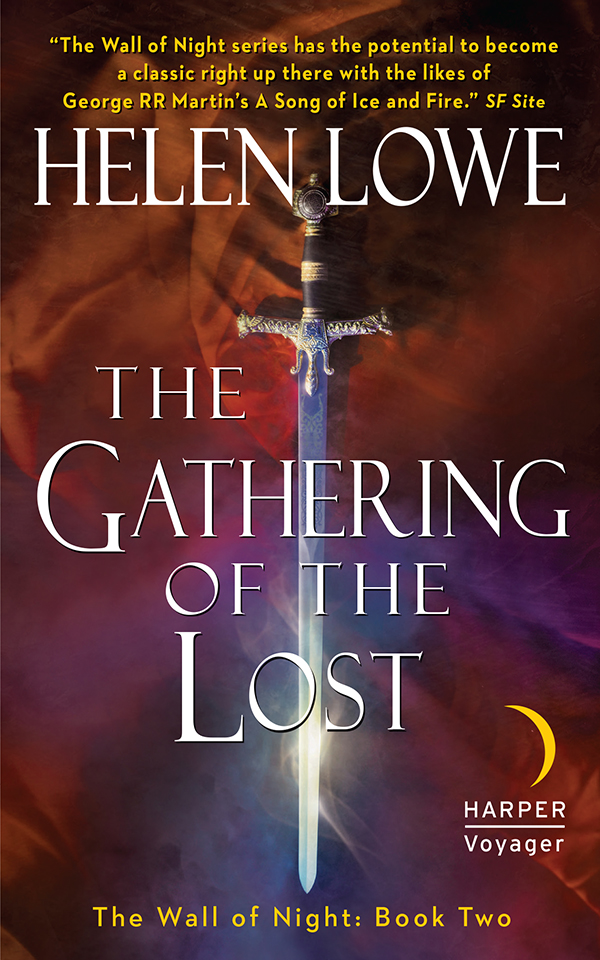
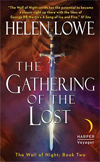
    USA: Current cover

    Last week, I set the scene with a brief outline of the Wall of Night environs, which is where the chief part of the Heir action takes place. In Gathering, the scene shifts substantially, to the Southern Realms of the world of Haarth – chiefly the city state of Ij, in the region known as the River, then farther south to the independent Duchy of Emer.

    Although the story still follows the central characters from Heir they’re operating in a very different environment, which opens the door to styling changes – both for the characters that readers already know, and when new characters and settings are introduced.
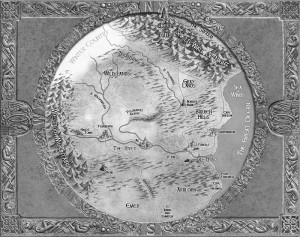
    "The Heir Of Night" map: artist, Peter Fitzpatrick

    Since there are a lot of characters, those mentioned are only a selection, not a comprehensive list. :D

    The Heralds of the Guild: Jehane Mor and Tarathan of Ar

    The Guild of Heralds operates throughout the Southern Realms but is most prominent on the River, where it originated. Heralds always ride in pairs that between them possess powers of finding and concealment, and who appear to have a symbiotic bond, chiefly evident by their practice of speaking with “one voice.” They carry dispatches, but also function as emissaries between rulers and the various states of the Southern Realms.
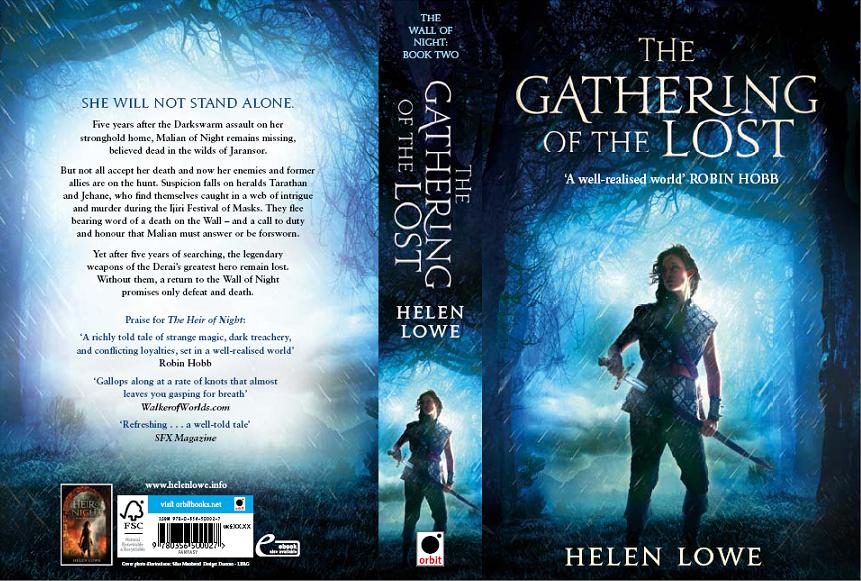
    Full UK/AU/NZ cover

    Being an “order”, although not a religious one, the heralds wear what is essentially a uniform. Accordingly, their style was established from the outset in Heir, when they arrived on the Wall with a secret message for the Earl of Night, and does not change in Gathering:

    “They were both of middle height and clad alike in grey, their long cloaks cast back. A badge pinned each cloak on the left shoulder and a dagger was sheathed at their belts. Both their faces were drawn and weary, their clothes mired from the road…”

    Heralds spend most of their time traveling, so in terms of styling choice, their clothing was always going to be in the grey or brown spectrum, i.e. to attract less attention in wild and lonely places, as well as blending with that “mire from the road.” Since brown is perceived as rustic in styling terms, and the heralds are emissaries as well as messengers, that made grey the logical choice.

    When the heralds first appear, they are only carrying daggers, but it’s clarified in Gathering that they go armed when traveling beyond the River. In Jehane Mor’s case, that’s still only with what a Derai warrior (Tirorn) calls her “toy knife”, but Tarathan carries “a pair of short, curved swords strapped to his back” and also uses a “horseman's curved bow.”

    As noted last week, styling should only convey detail that matters to the story. In the heralds’ case, their grey garb reflects their calling. The style of Tarathan’s weapons is also noted for a reason, which (I hope!) becomes clear once his backstory is revealed.
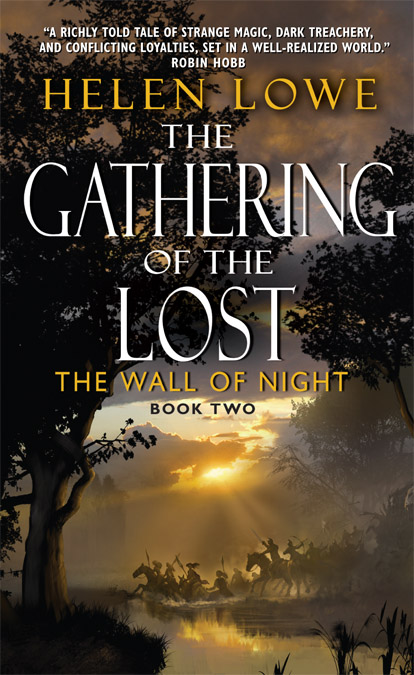
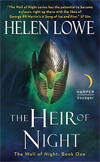
    Original US cover

    The Patrol and Aravenor

    One reason heralds do not go armed on the River is because “the peace of road and river” is maintained by the Patrol. When first met, very early in the River narrative, readers learn only that they are a “mounted unit” and “silent behind their visors.”

    Soon after, the heralds meet the Patrol captain called Aravenor, whose face is also covered by “the trademark visored helm.” At this point, it’s also disclosed that “the Patrol never revealed their faces, or entered a town or city, or stayed in any of the inns along the main road.”

    It’s the helms, though, that lead a young woman in the neighbouring realm of Emer to speculate that, “…the Patrol are really demons bound to the River’s service and that is why they never show their faces to anyone.”

    In terms of the Patrol’s styling, the helmets are the chief focus because of the associated secrecy. Although because they’re a mounted force, it’s not just the riders that go armored, but the horses as well:

    “…the first of the of the riders emerged through the fog. The heralds saw the horse's head first, splitting the white air, its ears forward and nostrils flared. A second later the spiked helmet of its rider appeared, turning slowly in a sweep of road and wood. The visor was lowered, concealing the rider's face, and the horse too was armored, its breath curling through the metal chanfron as it walked forward. Together, horse and rider looked like some beast of ancient legend—or something altogether stranger, a shape of night itself emerging from the mist.”

    The styling, together with the fog, is partly scene setting for what’s currently afoot, partly reinforcing the armed strength of the Patrol (which is important to this part of the story) – but also underlines that the Patrol is one of the great mysteries of the River lands.
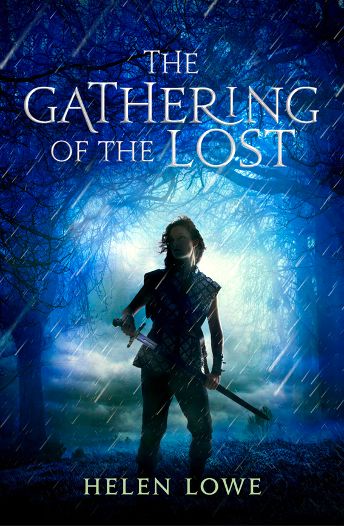
    The "blue" UK cover

    Raven

    From the River, the story shifts to Emer, in particular its wild and dangerous northern march (Normarch.) Emer is known for its heavily armored Emerian knights (think Burgundy in the mid-to-late Middle Ages) but one of the first characters readers meet is a hedge knight called Raven.

    Hedge knights are effectively swords-for-hire. They may serve a ruler or lesser lord for a period, but are not retainers. As such they follow conflicts where extra swords are needed, and some may also pursue the tourney circuit in the hopes of prize money. When hedge knights come together as a company, they would definitely be termed mercenaries, but as the “hedge” suggests, most spend a great deal of their lives on the road and live rough while doing so.

    Clearly, Raven’s styling needs to reflect the hedge knight lifestyle, so here’s how he first appears:

    "The rider … looked decidedly shabby in an old-fashioned ringmail shirt beneath a patched tunic, and the pot helm on his head had clearly seen better days."

    A little later, the character with him (Carick) decides that, “…the shabbiness of Raven's first appearance did not improve upon closer inspection. The old-fashioned sark had been mended with horn and bone in places, and his cracked leather gauntlets, like the helmet, had definitely seen better days. Carick noted other signs of the disreputable as well: the tattoos glimpsed between the edge of the knight's sleeves and his gloves, the fetishes of bone and feather tied as a crest to his helmet—and horses that answered to a whistle.”
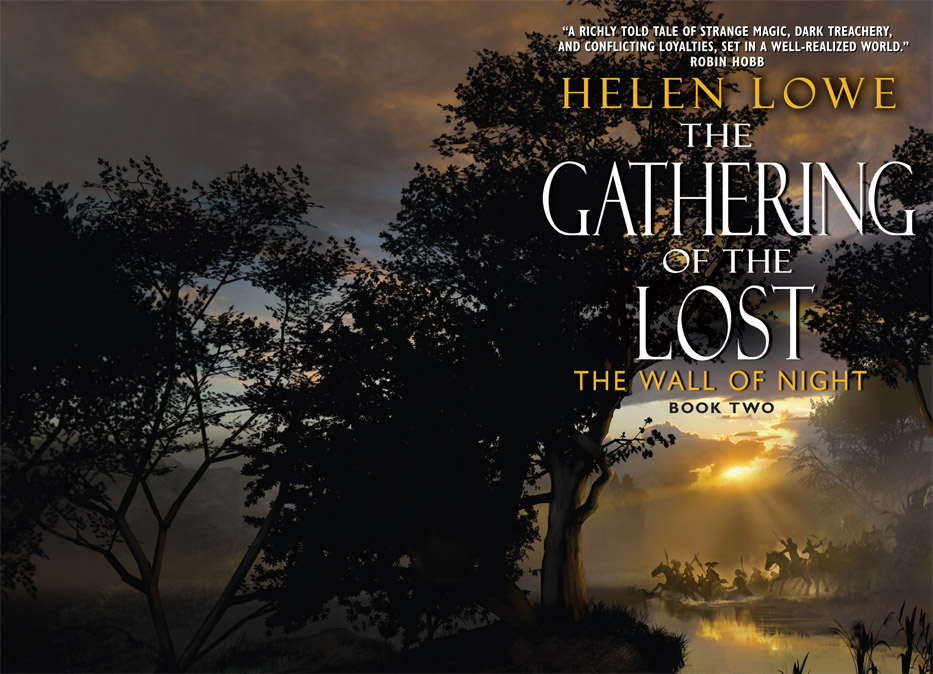
    Full US Cover (Original)

    Sufficient, I hope, for readers to glean that Raven may be a companion of dubious provenance. He’s very handy in a fight, though, as Carick learns soon enough.

    Styling Armor: Audin; The Lightning Knights; Asantir

    The Emerian narrative centres around knights-in-training, melees, battles, and a grand midsummer tournament, so armor and weapons play a  major part in styling the story. As with the Derai warriors in Heir, given readers know this is a militarized society, a certain amount can be taken for granted except when detail matters to the narrative.

    For example, one of the knights-in-training is Audin, nephew to the Duke of Emer. In general, this is not emphasized, but when conflict comes, Carick notices “…the black oak of Emer on his jupon, set within the oak-leaf circlet of the ducal house.”

    The fact Audin’s style includes a jupon also tells readers interested in such things a great deal about the style of armor that he—and by implication his companions—are wearing.

    Similarly, when the young knights arrive at the tourney, styling in armor and weaponry is utilized to emphasize difference (a use also noted in last week’s post) when they meet the unknown Lightning knights:

    “Kalan took in details without seeming to: blue-black armor beneath a long black surcote, and gauntleted hands resting on the pommel of a tall, two-handed sword. The guard’s visor was open, but he wore his mail coif in the Ishnapuri fashion, veiling the lower part of the face, so that Kalan could detect little of his features. He did not think that the man was Ishnapuri, though, despite the coif.”

    UK release poster

    Kim’s originating post points to styling conveying information about a character’s “background and place in the world”, as illustrated by the heralds’ greys, Raven’s rough equipage, and Audin’s jupon.

    In the section of the book that briefly returns to the Wall of Night, readers re-met the Honor Captain, Asantir – who has been promoted since the events in Heir. Now she’s the Commander of Night and this is reflected in her styling:

    “Asantir’s clothes and armor might still be plain black, but Night’s winged horse insignia on her breastplate gleamed with gold, ruby, and diamond. Even the cuffs of her gauntlets were worked with gold thread—necessary, Garan knew, for the prestige of Night…”


    Returning to Malian

    I did promise to return to Malian, when I discussed her styling in Heir. In particular, I noted that “Malian’s preference is for less restrictive clothing, where it doesn’t matter if she gets it dirty” and that I was “pretty sure” that preference would continue.

    At one point, she “smooths the worst of the wrinkles out of her clothes and combs at her hair with her fingers.” Later, when preparing for action, she pulls out “her last clean shirt and hose.” The shirt and hose, “…as well as the sleeveless tunic she pulled on over the top, were black, but of everyday fabric.”

    Still doing it plain and practical, in other words. Although Malian chooses apparel appropriate to the circumstances, her choices also convey a great deal more than meets the eye, including that clothes are not important to her.

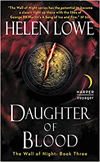
    Next time, we’ll see if that still holds true in Daughter of Blood, (The Wall Of Night, Book Three.) Meanwhile enjoy the Styling Characters fun – I hope it offers some insight into the style options for revealing character and nuanced storytelling.

    ~*~

    About the Author

    Helen Lowe is an award-winning novelist, poet, and lover of story. With four books published to date, she is currently completing the final instalment in The Wall Of Night series.

    Helen posts regularly on her “…on Anything, Really” blog, monthly on the Supernatural Underground, and tweets @helenl0we.

    ~*~

    Previous Posts

    Styling Characters: More Than Meets the Eye (Kim Falconer)
    Styling characters in The Heir of Night (Helen Lowe)

    Note: This post also features on my "...on Anything, Really" blog today.

    Saturday, July 1, 2023

    Sister Acts: From the “Band of Sisters” to True Sisterhood

     .

    Last month we rocked from “the band of brothers” to bromance – and this month’s it’s time for the sister act!


    .

    When taking a closer look at bromances, I tagged them as an integral sub-category to the “band of brothers”, involving “the celebration of friendships that are forged in adversity and as strong, if not stronger, than romantic relationships.” 

    It’s very much what we would now call “found brotherhood” – but as I also noted in May’s post on the “Band of Sisters”, both the bands and “found sisterhood” themes are by no means common in Fantasy fiction. 


    .

    What I believe carves out a much stronger path through the genre is “true sisterhood.” In the same way The Lord of the Rings establishes the archetypal “band of brothers”, Alice Hoffman’s Practical Magic shines a limelight on true sisterhood.

    The relationship between sisters Sally and Gillian (played by Sandra Bullock and Nicole Kidman respectively in the film), is both the core of the book and also embodies classic sisterhood themes: love, loyalty, and protectiveness in contention with jealousy, rivalry, and misunderstanding. The fractures in the relationship must be resolved in order to resolve the various magical conundrums besetting the sisters, as well as to gain community acceptance. 


    I first recall encountering sisterhood as a potent Fantasy force in Kate Elliott’s Cold Magic, where Cat and Bee have been raised as sisters (although they’re actually cousins) and forged a really close bond. Although tested by events, that bond is as important as their romantic relationships when dealing with the magical and societal curved balls—think politics, derring-do, and dark magic—that the story throws at them.

    Another pair of cousins who’ve been raised as sisters and have a really close bond, are Laura Hame and Rose Tiebold in Elizabeth Knox’s Dream duology, Dreamhunter and Dreamquake. Laura and Rose’s lives fork unexpectedly, and they do grow apart – as can happen with even the closest of sisters. 


    Nonetheless, both have an important part to play, including standing by each other, in a story involving both an alternate realm where dreams can be captured and brought back to entertain society (think alternate-Edwardian), and a potential political coup.


    Frey and Rafi are the twin protagonists in Scott Westerfeld’s Impostors, with one (Frey) the secret protector of the other, who is the official political heir to their state. Again, they’re close, with the public sister and hidden one seeing themselves as the two sides of the same coin (or blade!) The test comes when Frey stands in for Rafi on a visit to a neighboring state, and everything starts to unravel…


    In Dhonielle Clayton’s Belles, Camellia (Camille) and her five “sisters” have been raised together (as sisters) since birth to serve their nation (Orleans) as dispensers of the beauty that is denied to most citizens. The plot is dark, involving themes of exploitation and corruption, but the relationship between the sisters—particularly Camille and her love-hate relationship with Amber, but also the errant Edel—is undoubtedly the axis around which the book revolves.


    Another celebrated tale of two sisters is Stephanie Garber’s Caraval. Fleeing their despotic and murderous father, sisters Scarlett and Donatella get caught up in the magical Caraval, a night carnival where everything is a game – or is it? Separated from Donatella at the outset, Scarlett must play for her life and her sister’s in a contest where secrets lie hidden within secrets and nothing is as it seems. Edge-of-your-seat stuff, but also a story where much, if not all, swings on the sisters’ relationship.

    And there’s more – Seanan McGuire’s Incryptid series with the fraught relationship between sisters Verity and Antimony. (In their case, there’s a brother, too.) The threesome of Lula, Rose, and Alejandra in Zoraida Cordova’s Labyrinth Lost – and Katrina Leno’s Summer of Salt, which also features two twins who must find their powers, and where their relationship with each other is key. 




    BUT I think if we’re going to talk sister love and the way it shapes a story and changes the course of events, I don’t believe it’s possible to go past Suzanne Collins’ The Hunger Games – where everything changes when Katniss volunteers as tribute to save her sister, Prim(rose) from what is believed to be a death sentence: participation in the Hunger Games. 

    "I volunteer."

    As always, I would love to learn your favorite “true sisters” of Fantasy – if you’re willing, do share with a comment. J

    ~*~


    About the Author

    Helen Lowe is an award-winning novelist, poet, and lover of story. With four books published to date, she is currently completing the final instalment in The Wall Of Night series.

    Helen posts regularly on her “…on Anything, Really” blog, monthly on the Supernatural Underground, and tweets @helenl0we.

    ~*~

    Previous Posts:

    February: Honing in on 2021—Celebrating the "Band of Brothers"
    March: Celebrating the "Band of Brothers" in Fantasy #2
    April: Celebrating the "Scooby Gang" #3
    May: Celebrating the "Band of Sisters"
    June: From Band of Brothers To Bromance!