
 |
| My Demon adaptation on Webtunes! |
Hello, Sup readers and writers!
We have arrived at the end of the year, and it seems most fitting that I make this post a wrap-up of the previous eleven months, highlighting how authors must use adaptation in their writing.
 |
| Some of the best film adaptations on Netflix! |
Adaptation to Film
Let's begin with the most obvious interpretation of adaptation with January's post on The Art of Adaptation - Films in 2025. In essence, this is the making of one medium suitable for another. As in, a novel to a film or series.
Why do this? Sometimes we are compelled to adapt. Other times, it is part of the act of creating. Mostly is it is through the very hard work of an agent selling film rights to a producer. However they get there, this is where the author doesn't hesitate. Doesn't bulk. They give a resounding YES, sign the agreement and get out the confetti. But don't think for a moment this process is easy...

Adaptation to External Pressure
In February, the focus was on the adjustments authors make when turning their manuscripts into books. Basically, it's pressure to change some part of the submitted story, a process called revision. I give some great examples here.
Where do these pressures come from?
It might be from the author's agent, suggesting changes that will make the work easier to sell. Or, maybe it's the editorial department asking for a change that puts the work more in line with the imprint. Perhaps it is from sensitivity readers if the book succumbs to stereotyping, racial profiling, cultural appropriation or biases.
Whatever the pressure, if it is meaningful to the book's publication and success, writers usually will adapt...
Adapting to International Films
Next, let's look at the Healing Magic of KDramas.
KDramas, once categorised as foreign films but now referred to as 'international', have a magical appeal,
tempting viewers with new settings, customs, styles and ideologies while staying firmly rooted in familiar feelings, narratives and archetypes. Think of them as the epitome of immersion into another culture, the next best thing to being there.

Narrative Persuasion
Next, I explore how the reader might adapt to the story world based on the writer's ability to persuade...
in other words, how the author might push readers out of their comfort zone and into new experiences and perspectives.
Can stories really do this? Cause us to change our attitudes in real life
Simply put, storytelling has the potential to effect change through a technique called narrative persuasion...
Fantasy Monsters
This form of adaptation as multiple aspects, so I divite it into two parts:
Part 1 - Exploring the physicality and psychology of our darkest nightmares and how they have adapted and changed over time.
Part 2 - Here I share some wonderful and eclectic new examples, all released this year, 2025!

Alternate History
To create an Alternate History work, you usually start with a 'real-life' event and then take a big 'ol step backward to alter how that event was shaped. Of course, the story will then have to adapt to the changes you envision, becoming something else entirely. Hopeful, it will be provocative, and inspiring... or maybe just haunting. You'll find great examples here!
AI
For many authors, writing is a deep, personal process, rich in emotion and intricately woven with their unique voice. AI presents an intriguing proposition here. With tools that can analyse narrative structures, suggest plot twists, or even help in world-building, could these innovations enhance the creative process? Could they destroy it?
This post had an element of controversy as I asked AI to write it, then deleted one paragraph and rewrote it myself. The goal was to see if readers could spot the difference, and thus far, no one has. Can you?
Crafting Mood with Language
In the same way a carefully curated soundtrack can transform the mood of a visual scene, so too can the choice of words shift the emotional landscape of a written narrative. In this Art of Adaptation post, I explore how language can evoke different moods and feelings, using examples from two beloved vampire series: Anne Rice's "The Vampire Chronicles" and Charlaine Harris's "Southern Vampire Mysteries."
Take 5
We know that most authors have adapted to an intense and competitive work expectation, but is this good for us? Our creativity?

No, we do not. Before you shrug this off for any multitude of reasons, consider some interesting facts
from our historians and evolutionary biologists on Taking 5...
On Time
This is hands down my favourite post of the series.
It looks at how easily we adapt to time without thinking. From an author's belief in rigid time constraints, to the readers' suspension of disbelief in 'reality'.
My big question to you is, what would happen if we changed our story and started saying, "I have all the time in the world?"
Let's find out in 2026!
***
I hope you enjoyed the series and this longer-than-planned recap.
Happy holidays!
xo Kim
If you have suggestions for 2026 posts, let me know. I am still brainstorming the topic for the year!
About Kim Falconer
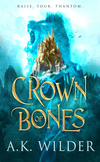
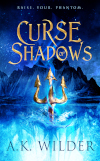
Kim Falconer, also writing as AK Wilder, has released Crown of Bones, a YA Epic Fantasy with Curse of Shadows as book 2 in the series.
Currently, she is ready with the third book, planned to be out in 2025. TBA
 Kim can be found on AKWilder.com, Twitter, Facebook, Instagram and KimFalconer.com.

Throw the bones on the AKWilder.com site.. See you there!






No comments:
Post a Comment