
 |
| Better Tomorrow by YuumeiART |
Hello, Supernatural Underground Community!
A new year is here, and with it begins my new monthly series of posts. The theme for 2026 (drum roll) is Fiction Preditions.
It was sparked by the question: "How can authors write a work of fiction about society or technology, and then, decades later, we are living it?"
Introduction

Even the possibility of this happening provokes a deeper exploration: how do writers operating in the realm of imagination and fantasy travel the boundaries of time by predicting future technologies, social norms, and cultural shifts? That's exactly what I want to explore, month by month, until we hopefully come up with some answers.
Neuromancer and AI vs. The Midnight Train
To kick off our exploration, let’s take a closer look at William Gibson’s iconic novel *Neuromancer*, published in 1984. This cornerstone of cyberpunk literature introduced readers to "cyberspace," a term Gibson coined that has since become embedded in our daily vernacular. He prophesied the notion of artificial intelligence and virtual reality, fleshing out a digital landscape that now feels completely familiar. Not only did Gibson capture the essence of hacker culture, but he also accelerated conversations around technology that many of us are still navigating today.

All very interesting, but how does this happen?
The Role of the ‘Seer’
Throughout history, figures like Nostradamus have been branded as seers, individuals with the ability to foresee events long before they happen. Some view this as pure coincidence, or as synchronicity, while others argue that these predictions stem from 'truths' - insights into human behaviour, trends, and the cyclical nature of society. Writers often follow similar trajectories, utilising their imagination to extend beyond the constraints of their time. By examining current sociopolitical climates, technological advancements, and cultural movements, even unconsciously, writers can craft narratives that resonate with readers and reflect potential futures.
I know it's not an answer, but it's a starting point.
Let's take Isaac Asimov, for instance. While his name evokes images of robot armies and galactic empires, it’s his scientific education, observations of technological progress and of human nature that propelled him to make accurate predictions about future advancements. From the advent of computers in homes to the rise of biotechnology, Asimov’s foresight illustrates how speculative fiction can serve as a mirror to cultural and technological evolution. Or maybe, a window into. . .
Imagination vs. Reality: The Lens of Storytelling
 |
| YA Art by PrasetuaJQ |
Still, how does this happen? Part of it lies in the audacity to attempt. The audacity to dream. Our speculative genre inherently invites us to stretch our imaginations and explore the possibilities that may appear outlandish today. By challenging societal norms and igniting conversations about future happenings, writers create a worldview for us to project our hopes, fears, and aspirations onto.
But here is the core, the point and the purpose of storytelling. While we call it “fiction,” it can still become rooted in reality. The ability to envision the "what ifs" of our world allows fiction to create pathways for innovation as well as to support psychological readiness for change. This brings us to our contemporary narrative world, where current writers continue to explore the motivations behind our ever-evolving 'reality'.
Backward Causation: A Curious Concept
As we reflect on our relationship with fiction, we discover the idea of backward causation, also known as retrocausation, a theory that claims the future influences the past, not the other way around. This concept challenges the way we perceive time, in a first-then-final order. Notions such as visualising a future prompt changes in the past may describe a fluid universe we are not quite prepared for!
So, is speculative fiction a self-fulfilling prophecy? If so, is the collective unconscious involved? Can innovations presented in a book inspire real-world advancements as inventors and thinkers draw from movements in the collective? These are questions I want to explore in the Fiction Prediction Series this year.
Conclusion: A Journey Begins
Can this meeting of imagination and 'real life' in speculative fiction lead us to reconsider how narratives potentially create reality? As we embark on this twelve-month journey, I plan to offer a kaleidoscope of visionary books—past and present—each prompting us to ponder a new way of seeing this topic.
From iconic works to fresh perspectives in contemporary literature, we’ll explore how writers can be seers, capturing insights that connect us through time, forward and back.
Please join me in this series, and feel free to drop a comment on what books you want to explore, too. Suggestions are always welcome.
Let’s see where this idea takes us!
Happy New Year!
xx Kim
* * *
About Kim Falconer
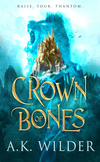
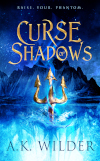
Kim Falconer, also writing as AK Wilder, has released Crown of Bones, a YA Epic Fantasy with Curse of Shadows as book 2 in the series.
Currently, she is ready with the third book, planned to be out in 2025. TBA
 |
| Quantum Enchantment |
Throw the bones on the AKWilder.com site.. See you there!







No comments:
Post a Comment