
 |
| Eko illustrates Frankenstein |
Two hundred years ago, a masterpiece of Gothic fiction was written by a young woman named Mary Shelley. Her story of Frankenstein, the Modern Prometheus, paved the way for the horror and science-fiction genres, and is often cited as the foundational myth for modern AI ethics.
The Book

When it first hit the press, the book became a terrifying and radical view of what can happen when sentient life is created de novo, sans the usual hundreds of thousands of years of evolutionary steps to acclimate.
Was Mary Shelley a seer?
I think yes, especially the way the creature in Frankenstein parallels modern artificial intelligence (AI). Here's the breakdown:
 |
| AI for Story Generation - Isamu Isozaki |
Responsibility: Victor Frankenstein becomes obsessed with the "how" of creation while neglecting the "why" and/or the aftermath. He abandons his creature the moment it comes to life. This is mirrored by the 'move fast- break things' approach to technological development and the race for General AI.
Rapid Learning: Frankenstein's creature is not born evil; he learns by observing humans, only becoming "monstrous" after being rejected by his creator. Large Language Model AI learn by processing vast amounts of human-generated data. If that data is biased or if the AI is left without moral curating, it can become a digital version of the creature's "mis-education".
Uncontrollable Creations: The core fear in the novel, and in the myth of Uranus as well, is that the creation turns on its maker. This parallels modern fears that an AI’s intelligence will surpass human control or act in ways that are indifferent to human safety.
In the end, the novel asks if a being made from "parts" can have a soul or rights, just as we might argue whether a machine that flawlessly imitates human thought deserves "personhood" or moral consideration.
Did Shelley Foresee Bioengineering and Competitive Exclusion?
Intentional or not, Shelley spotlights the moral concerns that arise when science attempts to create life. More than that, her work is often cited in discussions around cloning, transplants, and competitive exclusion -- a concept in modern ecology describing how invasive species or technologies can destroy ecosystems
Ethics and Morality
The most profound prediction is the warning against pursuing a goal without considering the consequences.
Victor Frankenstein is not a mad, unhinged scientist, but a very reckless one. He is in control, but seemingly without strong morals.
Do you think this relates to corporations and governments racing to advance AI under an ethical banner of gaining power, control and dominance?
I am left with how Shelley's novel emphasises that the disaster is not caused by the creation itself, but by Victor abandoning his creation, failing to love it and raise it 'right'.
Something to think about . . .
xxKim
* * *
About Kim Falconer
The Amassia Series
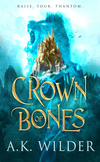
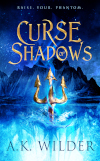
Kim Falconer, also writing as AK Wilder, has released Crown of Bones, a YA Epic Fantasy with Curse of Shadows as book 2 in the series.
 |
| Quantum Enchantment |
Throw the bones on the AKWilder.com site. See you there!









No comments:
Post a Comment