.
In dubbing 2024 the Year of the Villain, we've traversed quite a few examples of villainy in fantasy together, from Tolkien's pantheon of big bads, through Le Guin's more interior focus, to others such as formless evil, wrongdoers that manipulate from the shadows, and most recently, heroes that fall.
I don't believe any discussion of villains and villainy would be complete, however, without hearing from authors about the antagonists in their own work. So today I'm delighted to have fellow Supernatural Underground authors, Kim Falconer and Amanda Arista, here to talk exactly that.
Kim Falconer: Anti-Heroes, & Shadow, Betrayer, & Super Villains
 |
| Amassia series |
I’m so
excited to contribute to this group post on villainy. After all, what kind of
story would there be without the evil doers?
But have
you noticed over the decades that evil is changing? Becoming more three dimensional?
Once upon a
time, villains did bad things for bad reasons and that was it. But this is no
longer always the case.
Take, for
example, the red-robe Tann in my Amassia series. As twisted as he gets, he isn’t
100% bad. He has reasons! He also has all the ingredients that make a good
hero. He’s on a journey with strong motivations. Much is at stake,
and he risks everything to succeed.
Sounds
heroic, right?
That’s
because Tann is a Shadow Villain. When we learn his history, later in
the series, we see that he represents the ‘dark side’ of our heroes. And while
he’s at it, he elucidates the history and nature of the crown of bones.
In the end, it is the shadow villain who leads us through the darkness to the
light, though unintentionally...
But Tann isn’t the
only bad guy in the Amassia series. There is also a Betrayer Villain –
the fallen one, as it were. Helen has written about this in detail in her post Once Were Heroes. In my series, this role is taken
by High Savant Brogal. Notice how, while he is busy betraying, he shows the
reader ‘another side’ of the story. It makes us question…
Then there
is the Anti-Hero, like Jean-Baptiste Grenouille in Perfume. The
anti-hero is a serious villain, but their story is told from their POV. They do
‘bad’ things (terrible things) but for ‘good’ reasons, according to them. Like in the Amassia series…oops I better not say that! It’s a massive spoiler! You’ll
just have to find out in the pages.
Finally,
there is the Super Villain. Like the Dark Side of the Force in Star
Wars, or the Machine Mind in the Matrix, the super villain appears
faceless yet all powerful. It is an impersonal force of nature. There is a
super villain in the Amassia series. Can you guess what form it takes?
I’d love to
know, who is a favourite villain on your bookshelf right now? In film?
Mine would
have to be Colin Farrell as Oz Cobb, the Penguin. https://www.imdb.com/title/tt15435876/
Happy
reading, and viewing!
~*~
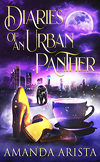
Amanda Arista: Faces To Punch in the "Urban Panther" Universe
Though there are lots of faces that Violet gets to punch
in The Diaries of an Urban Panther series, the Haverty duo are
the two really pulling all the strings: one as an old-fashioned bad
guy coming after Violet with a vengeance and one as a dark mirror to
her own story.
Reade Haverty was always a villain, from the moment he took over
the Dallas Pride, tearing apart a family of werelions to do so. Proud and power
hungry, he stepped on everyone in his path to control all the
shifters in Dallas. Including his son Spencer Haverty, playboy and panther
whose bite activated Violet's own destiny.
Haverty’s villainy was external and
visceral and Violet was a pawn he wanted out of play. When Daddy Haverty
met his end thanks to a well-placed knife to the heart,
Spencer's villainy twisted into another antagonist force Violet had
to stop, but this one was more difficult to defeat.
Pulling on their connection as
her maker, Spencer became the dark reflection of Violet. When she got power, he
got power. When she took control, he took control. He invaded her dreams,
twisted her friendships, and even killed her mentor. Thanks to his daddy
issues, he never made the heroic choices that Violet did, even when she gave
him the chance.
Defeating both types of villains grew Violet into the hero she
needed to be to lead the Dallas Pride.
~*~
Helen Lowe: "The Wall Of Night" Pantheon
Like Kim's Amassia series, The Wall of Night is fantasy in the epic mode -- think Lord of the Rings meets the political machinations of House of the Dragon. It's also alternate (aka 'secondary') world fantasy, whereas Amanda's Urban Panther 'verse is set in a very recognizable Dallas, Texas. :-)
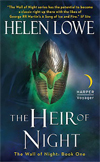
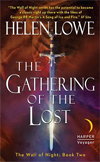
As the series develops, opening with The Heir of Night (Heir) and progressing through The Gathering of the Lost (Gathering) to Daughter of Blood (Daughter), with the story finale currently in completion, the reader's understanding of its pantheon of villains evolves in the same way as the cast of heroes.
The latter are chiefly drawn from a people known as the Derai, who have been fighting an age-old war for the fate of the universe and all life. Yep, the stakes are high -- and in Heir, the evil the main characters face is a correspondingly monolithic, but also formless force (i.e. Kim's "super villain"), which manifests through various demonic entities. The main characters, Malian and Kalan, know there are people, called the Darksworn, among the demon ranks, but they're mostly an off-stage, if not completely off-page, presence.
 |
|
In Gathering, the reader meets Darksworn in their own right for the first time, as opposed to solely through the heroes' eyes. The sorcerers Nirn and Arcolin, and their adept and warrior henchmen, are working to destabilize the world of Haarth, utilizing the magic and strength of beast-men known as werehunters. So the demonic elements remain, but the villains, and the evil they practice, wear a more human face. Their motivation also becomes more central to the plot.
Daughter reinforces these elements while introducing more, and more powerful, Darksworn villains, including a prince, giant in stature, with serpent hair. Again, the demonic aspect overlays the villainy, but with the narrative returning to the Derai, who believe themselves champions of good, their actions receive closer scrutiny. Many prove comparable with those of their Darksworn enemies -- broadening the scope of what constitutes evil in the Wall of Night story, and expanding the ranks of its villains.
I can definitely promise you further broadening, and more indepth scrutiny, in the book to come...
~*~
About the Authors
About Kim Falconer:
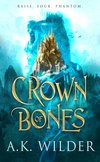
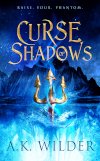
Kim Falconer, currently writing as A K Wilder, has released Crown of
Bones, a YA Epic Fantasy with Curse of Shadows as book 2 in the series. Currently, she is working on the
third book, out in 2025.
Kim can be
found on Twitter, Facebook
and Instagram.
Or pop over to throw the bones or Raise Your
Phantom on the AKWilder.com
site
~*~
About Amanda Arista:
Amanda was
born in Illinois, raised in Corpus Christi, and lives in Dallas, but her heart lies
in London. Good thing she loves to travel!
Amanda is the author of the Diaries of an Urban Panther series and The Merci Lanard Files. A graduate of the SMU Creative Writing
Program, she now teaches other aspiring authors and loves discussing craft,
character, and structure.
You can usually find Amanda curled up on her couch with a tiny human or a dog, writing away, or otherwise on Facebook:
https://www.facebook.com/pantherista/ Find out what she's currently doing on Instagram: @pantherista
~*~
About Helen Lowe:
Helen Lowe is an award-winning novelist, poet, and lover of story. With four books published to date, she is currently completing the final instalment in The Wall Of Night series.
Helen posts regularly on her “…on Anything, Really” blog, monthly on the Supernatural Underground, and tweets @helenl0we.
~*~
Previous “Year of the Villain” Posts:
January: Ushering in 2024 -- & the Year of the Villain
February: The Year of the Villain #1: The Lord of The Rings Pantheon
March: The Year of the Villain #2: Ursula Le Guin & “Earthsea”
April: The Year of the Villain #3: Tigana and Brandin of Ygrath
May: The Year of the Villain #4: Elidor and Formless Evil
June: The Year of the Villain #5: When the Hero Is Really A Villain
July: The Year of the Villain #6: When the Author Messes With Your Mind
August: The Year of the Villain #7: The Evilest Of Them All
September: The Year of the Villain #8: Secret Villains
October: The Year of the Villain #9: Once Were Heroes