Showing posts with label Mythology. Show all posts

Tuesday, November 1, 2016

Portent and Fate: The Mythic Aspect of Dream in Fantasy

.
Dream magic plays a relatively significant part in both Thornspell and The Wall Of Night series and one of its more important aspects is that of portent, with fulfillment locked into whether—or how—the foretold doom or destiny will play out.

This aspect of dream and fulfillment is an essential element of both the Greek and Norse myths, as well as folklore. We all recognize, after all, that if our hero or heroine is told something three times, especially by an oracle of some kind, then the foretelling is likely to prove true …

(This is not just in Fantasy, by the way. In the now-classic SFF television series, Babylon 5, I believe careful perusal will show that the captain, John Sheridan, is warned three times that, “If you go to Z’ha’dum, you will die.” Just sayin’)

Yet any exploration of dreams and their “fated” fulfillment in Fantasy also gives rise to the alternative consideration: the extent to which characters have free will. Can they, like Will Thatcher (the mourned Heath Ledger) in the film, A Knight’s Tale, change their stars?

The Greek and Norse myths would answer that question with a resounding “no”—in fact it is usually the protagonist’s endeavours to avoid his or her prophesied fate that brings about the doom.

In The Wall of Night series I keep the fate vs free will aspect open by having the prophetic dreams occur very much in the “jumbled workings” of the subconscious. There is truth in them, but they may only imperfectly reflect events that occur in the daylight world. Nothing is certain … and every action a protagonist takes acts on the dream, creating alternative possibilities of fulfillment.
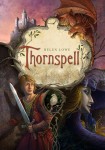
Thornspell cover illustration
In exploring the prophetic dream tradition, both through reading other writers and in my own work, I suspect that we are also talking about aspiration—the innate human desire to affect our fate and exert control over destiny. The myths, of course, would say that any such aspiration is doomed, its fulfillment stillborn before it has taken the first breath of life.

But what do you think? Do you have a view on the use of dreams and portents in contemporary Fantasy, or a favorite book or series you feel uses them well?

---

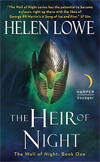
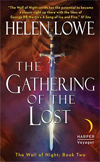
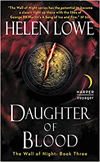
Helen Lowe is a novelist, poet, interviewer and blogger whose first novel, Thornspell (Knopf), was published to critical praise in 2008. Her second, The Heir of Night (The Wall Of Night Series, Book One) won the Gemmell Morningstar Award 2012. The sequel, The Gathering Of The Lost, was shortlisted for the Gemmell Legend Award in 2013. Daughter Of Blood, (The Wall Of Night, Book Three) was published this year.

Helen posts regularly on her “…on Anything, Really” blog and is also on Twitter: @helenl0we

Wednesday, July 16, 2014

How to Know the Unknowable

Man or Mar?
The adage write what you know works well for how-to manuals, cookbooks, auto repair guides or medical text. With such topics, writers need a certain level of expertise. When it comes to speculative fiction, however, it’s another story.

No one on Earth can know what a newly risen Mar, a Silver Metal Lover, a sympathetic, crazy hot zombi or a post apocalyptic witch is really like until the author creates them, from scratch.

Sometimes that process can be a challenge so I’ve put together some thoughts for writing what you don’t know.

Stefan, Elena, Damon

Tip #1: Research

This is totally fun. If you have a world that is primarily desert, you don’t have to live in the Sahara to write it convincingly. You do have to ‘know’ what it is like to have half and inch of rain a year and dust storms so blinding you can get lost between your camel and your tent. In other words, research the ecology of desert life.

You can’t have bright green grass and furry platypuses, unless you explain a turf that goes eleven and a half months without water and a river mammal that swims in sand. And what about that supernatural man or woman? How to characterize them?


Suggested research includes: Buffy, Angel, Spike, Drusilla, Eric, Sookie, Damon, Stefan, Elena, Klaus, Caroline . . . who else?

Tip #2: Savvy proofreaders

Klaus & Caroline
Research can take the place of direct experience, especially in world building, but there are exceptions. Horses are one. If you don’t know horses, you can learn about them, but if they are going to do more than graze in the paddock, you’ll need a proof-reader with horse sense to check your work. Readers who are also riders will spot ineptitude a mile away. Jolt! If it’s going to be a feature in your novel, get an expert to proof and/or offer technical advice. Same goes for quantum computers, wolves and witches.

Tip #3: Hands on

If you’re going to give a piece of art, animal, dance, ritual, music or machine a big role in your script, immerse in it, fully. As a bonus, your life will become richer for the experience. In my first two series, I researched quantum computing, physics theory, geo-engineering, bio-engineering and were-animal mythologies. I joined a local dojo and learned to wield a samurai sword. I can't tell you how much 'hands on' enhances the writing experience. :)


Tip #4: Start with a grain of truth

No matter how wild and farfetched your story becomes, that grain of truth (from history, mythology and lore) is what you build on and what will give your prose more weight. In my Quantum Encryption series, a main character takes my love of the Gray Wolf, an endangered species, and comes up with a solution to their looming extinction. I also look at possible results from geo-engineering projects that might do more harm than good (solar shields anyone?). It’s all about the speculation, but begin with something real. A truth.
Sookie & Eric

Add these tips together and you'll find your story not only rings true, it becomes a contribution to the future, what is possibly, probably or only ever to be imagined.

Happy reading, writing, dreaming and storytelling, everyone and let me know who your favorite original supernatural character is, from book or film. Right now, I'm leaning toward Orphan Black's Sarah Manning.  Yep, clone club. :)

xxKim

Kim Falconer is a Supernatural Underground author writing paranormal romance, urban fantasy, YA and epic science fantasy novels.

You can find out more about Kim at kimfalconer.com or on the 11th House Blog, and on FaceBook and Twitter. She posts here at the Supernatural Underground on the 16th of every month. Her latest release is"Blood and Water" in Supernatural Underground: Vampires Gone Wild.

Tuesday, January 28, 2014

A Hot Thriller for Cold Nights

Winners of the Deliverance Giveaway:
Erica and Barbara!

Ready for a 

Thriller?

For Fantasy
I'm giving away two copies of Deliverance, the most recent book in the Mortal Path series. Choose a signed paperback (USA only) or an authorgraphed e-book. Leave a comment below with your email in an altered form. Two winners will be randomly chosen. The last day to enter is Monday, February 3rd.

The Story: A demon's assassin for centuries, Maliha Crayne has gone rogue, determined to save a life for every one she's destroyed in order to free herself from an eternity of enslavement, damnation, and excruciating torment. But as the powers that sustained her in the past fade, she is wary of trusting those closest to her-especially her lover, Jake. Should Maliha listen to her heart or the alarms going off in her head? Then her closest friends begin to disappear, one by one. Amid her anger, suspicion, and sorrow, she feels her life spiraling out of control.

"DELIVERANCE is wonderfully unpredictable, full of breathlessly exciting action scenes. Readers will be hooked till the very last page, and then will rush to pick up the others in the Mortal Path series." - RT Book Reviews

"DELIVERANCE is filled with action, suspense, raw honesty, and great drama. It is definitely the most high-stakes installment in the series yet and I could not put it down. Dakota has done a marvelous job of creating an untenable situation and forcing Maliha to deal with it." - Tynga's Reviews


Saturday, December 24, 2011

Books for Christmas: A Celebration of Story

Giveaway Winners!

And  the draw winners are:

  •  SandyG265 ~ 'The Heir of Night'
  • Llehn ~ 'Thornspell'
  • JacquiR ~ JAAM 26
Congratulations to the winners and my thanks to everyone who commented---remember to stay posted for the 'Grand Supernatural Underground Draw' on the 30th. And of course I'll be back on the 1st for my regular slot and with something I hope you'll agree is special ...

Book recipients---please contact me on contact[at]helenlowe[dot]info so I can arrange to send you your 'loot'. :)
.
 ---
As a writer, it’s perhaps not surprising that books form one of the major landmarks of my Christmases past—not least, I suspect, because the gift of a book was always ‘sure to please’ me on the gift front. So I thought I’d share some of the brightest of those Christmas book memories today.

One of the earliest and most enduringly successful of those book gifts—possibly because it has always spoken to both the poet and prose writer in me, as well as to the lover of gorgeous illustrations—was Twas the Night Before Christmas (believed to be the work of Clement Clarke Moore, 1779-1863):

“Twas the night before Christmas, when all through the house,
Not a creature was stirring, not even a mouse …”


I have always loved the story this book tells, and the way it captures the anticipation and enchantment of Christmas Eve, a time when the young child feels as though the whole world is poised and waiting … for something magical to happen. And in Twas the Night Before Christmas it does!

I was 10 when I received the second of those very influential Christmas books—Roger Lancelyn Green’s Tales of Troy and Greece. (I suspect my book is a compilation from two publications: The Tales of Troy and Tales of the Greek Heroes, both first published in 1958.) I was already an enthusiast for both Greek and Norse myths and legends, but there was something particularly real and compelling in Green’s retelling, and all his characters came alive for me on the page. I have read many versions of those same stories, and many other classical works and reworkings since then. But I still feel that Tales of Troy and Greece was the signpost that set me firmly on the path to short stories such as The Brother King and Ithaca, and to poems like my Ithaca Conversations sequence, as well as establishing the strong mytho-heroic influences on my novels, Thornspell and The Heir of Night.

My father died when I was twenty two, and money and good cheer were both in short supply on the Christmas following his death. But we still came together as a family and my mother gave each of us a book, a trade paperback from the stationers near her work. My gift was Marion Zimmer Bradley’s The Mists of Avalon—and I loved it. Although I was subsequently to read a huge number of retellings of the Arthurian legends (too many in fact!) The Mists of Avalon was the very first such retelling I encountered and I was enthralled by its interweaving of Celtic myth and real history, and the combination of politics and battles and magic, romantic and sexual relationships—but most of all that the entire story was told from the perspective of the women in the Arthurian cycle. That was definitely a first for me in my Fantasy reading and one I liked, opening up the notion that women’s history and women’s voices in and through storytelling had something to say: something that mattered.

My mother, like my father, passed away too young. But they left me a legacy beyond price, one bound inextricably into my Christmas memories—the gift of books, and through the books, of the magic that is both story and storytelling. So it is no accident, or mere observance of convention, that The Heir of Night, the first book in my Wall of Night series, is dedicated to my parents. 

Giveaways Galore:

As part of this countdown to Christmas, each Supernatural Underground author who posts in the "Christmas Memories" series is doing a giveaway—and there’s also a Grand Supernatural Underground Giveaway at the end of the series, I believe to be drawn on 30 December. There’ll be a copy of The Heir of Night in that Grand Giveaway—plus in the soldiers' gift package—but I am also giving away a copy of both Thornspell and The Heir of Night today, the recipients to be drawn from commenters on this post.

Plus for those who already have both Thornspell and Heir (yes, Sharon, I’m looking at you! :) ) I’m adding in a copy of JAAM 26, which contains my short story Ithaca and two poems from the Ithaca Conversations sequence—amongst very many other fine stories and poems from other writers.

Just post a comment here, telling me about a “landmark” gift you've received (it doesn't have to be for Christmas), and be in to win.

Eligibility will close at midnight, US Eastern Standard Time, December 26th—I will then post the result here on the 27th so don’t forget to check back.

---

Supernatural Underground author Helen Lowe is a novelist, poet and interviewer. Her latest novel, The Heir of Night, the first of THE WALL OF NIGHT quartet, is published in the USA, UK, and internationally and won the Sir Julius Vogel Award 2011 for Best Novel. Her first novel, Thornspell, is published in the US by Knopf. Helen blogs every day on her Helen Lowe on Anything, Really site and on the first day of every month right here on the Supernatural Underground.

Tuesday, January 11, 2011

Stealing From the Ancients: Weaving Mythology into Your Fiction

I was at a loss for what to write about today, so I put out a call on Facebook for what people wanted to know more about. Heather Long responded with the fabulous topic of how to weave mythology into fiction. And since I have done this very thing in all five of my completed, accepted, and published/about-to-be-published books, then I feel like I can speak about this with some authority. At least in the method I use to weave myth into my books.

Of course mine aren't the only books out there dealing with mythology, and there are at least three different ways to approach it.

  • use actual, literal gods, goddesses, and other bits of myth in your story (ex/ Percy Jackson and the Olympians series by Rick Riordan)
  • write a historical novel from the point of view of a mythological character (ex/ Nobody's Princess and Nobody's Prize by Esther Friesner)
  • create a contemporary fantasy world in which characters are related to/descended from mythological characters (ex/ my books)
Though there are advantages and disadvantages to each, I think the reason I prefer the third method is that it gives me the most creative freedom. The closer you are to the actual myth, the more you have to stay true to it. In my worlds, the myths of ancient Greece date back more than two thousand years. The written myths end... but the mythological word continues. Between then and now I can create whatever history I want.

In the Oh. My. Gods. books, I didn't stray too far. I gave descendants to the virgin goddesses, gave illegitimate children to the goddess of marriage, and made Plato's real life Academy a school for descendants of the gods. The mermaids in the Forgive My Fins books are descended from an ancient ancestor who was granted mer powers by Capheira, one of Poseidon's sea nymphs. But in Medusa girls trilogy, I take my mythology tweaking to the next level. I basically rewrote the truth about Medusa.

The trick to playing around with mythology, with the canon of myths that we as a culture have known and learned for millennia, is to go one step beyond, to blur the line between what was written and what wasn't. I can't say that Hera had half-human children in ancient times, but who knows what's happened in the centuries since then? There is no mythological proof that mermaids owe their powers to Capheira, but there is no proof that they don't either. And with Medusa, while I couldn't just erase her legacy as a hideous, murderous monster, I could create a believable backstory that explains why we only think that is true.

That's the wonderful thing about mythology: it never tells the complete story. We get pieces of each myth, sometimes even contradicting versions of the same story. Go to Theoi Greek Mythology (my favorite reference) and look up a few characters in the glossary. Chances are there are at least two or three or even half a dozen different parents listed for them. Many have short, open-to-interpretation biographies while others have vast, opposing ones. In some myths Medusa was always a hideous monster, in others she was a beautiful maiden turned monster. Pick and choose the pieces you want to use and create the story to fill in the blanks.

At least that's how I weave mythology into my fiction. I'm always open to suggestions.


Hugs,
TLC

teralynnchilds.com
@teralynnchilds