Showing posts with label Sookie Stackhouse. Show all posts

Thursday, May 16, 2024

Choose Your Weapon - Firearms


Jinx from Arcane - Season Two Theories - by Tom Hartig November 22, 2021

A firearm might not be the first weapon we think of sifting through the Fantasy genre, but when considering the popular subcategories, from Steampunk to Urban Fantasy, they do indeed appear. Think of it this way: In any world where gunpowder has been discovered, firearms can exist. 

Ever since Marco Polo started travelling the Silk Road, these exploding projectile weapons have found their way into the hands of Western inventors, and shortly after, Western literature, including Fantasy. Just take a look at these wonderful subgenre examples.

Steampunk


Gail Carriger's The Parasol Protectorate Series comes to mind.

Engagingly written in a Steampunk/PNR/tongue-in-cheek style, this is a 'five book (and one prequel short) series chronicling the exploits of Alexia Tarabotti, a lady of considerable assets including a large Scottish werewolf, a battle-parasol, and treacle tart. Oh, and she has no soul...'

“Well, my love,” said Alexia with prodigious daring to Lord Maccon, “shall we?” 

The earl started to move forward and then stopped abruptly and looked down at her, not moving at all. “Am I?”

“Are you what?” She peeked up at him through her tangled hair, pretending confusion. There was no possible way she was going to make this easy for him.

“Your love?”

“Well, you are a werewolf, Scottish, naked, and covered in blood, and I am still holding your hand.”

He sighed in evident relief. “Good. That is settled, then.”

― Gail Carriger, Soulless

How fun is that!


Think also of Sanderson's Alloy of Law, the Temeraire series by Naomi Novik and other great Steampunk reads like the Lightbribger series by Brent Weeks. 

From Western subgenres to the Victorian era and the Civil War, Steampunk has much to offer, including a 'new' take on weapons in the Fantasy arsenal.

Urban Fantasy

This genre has had its ups and downs, but Urban Fantasy is in our blood and here to stay. With its paranormal characters set against a citified backdrop, what's not to love?

I burned through the Southern Vampire Mysteries (You can check out this internet database of firearms found in True Blood, as an example). I  also relish authors like Patricia Briggs and her Mercy Tompson Series. 

But there are some caveats to consider when writing Urban Fantasy.

 Because we want readers immersed in the tale, 'modern' weapons require careful handling. Otherwise, their appearance might flip readers out of the magic and fracture the storytelling altogether.

The first thing I consider with this genre is giving the township or city backdrop a personality. Think of it as a main character:

The backdrop aesthetic in an urban fantasy... plays a key role in the story; For this reason, the urban setting needs to be very well developed. - Jacqueline Silveste

Weapons are part of this environmental dev. That's why, in some cases, these Urban Fantasy guns will have real names (like the Ruger in the Ava Sykes series), or even mystical ones that imbue magical powers. They may also have special modifications like species-specific bullets. 

... I opened my gun safe and slipped my Ruger 9 mm into my calf holster and smoothed down my jeans. 

I was licensed to carry, and I always did at work, more for the trip there and back than anything else. 

New LA wasn't really a city of angels, not good ones anyway...

From Ava Sykes - The Blood in the Beginning

Post Apocalyptic Fantasy


In this genre, guns make plenty of sense though there may be more issues around obtaining the firearms,

and maintaining them, let alone finding bullets. It depends on how far down the rabbit hole the world has gone. Try TW Piperbrook's Better Guns and Gardens for a quick intro!

And if you want to just kick back and watch a fantastic video-game-turned-Prime-Original-Series, there is always the newly released Fallout. 

"Based on one of the greatest video games of all time, Fallout is the story of haves and have-nots in a world in which there’s almost nothing left to have. 200 years after the apocalypse, the gentle denizens of luxury fallout shelters are forced to return to the incredibly complex, gleefully weird and highly violent universe waiting for them above."

However we look at them, guns are fantasy weapons and when handled correctly, make exciting additions to the storytelling.

Do you have a fav fantasy-with-firearms series? I'd love to hear about it in the comments.

xxKim

Choose Your Weapon Series 2024

Poison

The Perfect Storm

The Sword

Firearms

Ranged

Spells

Unarmed

Curses

Time Travel

Invisibility

***


About Kim Falconer

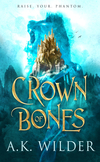
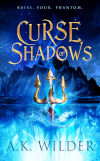
Kim Falconer, currently writing as AK Wilder, has released Crown of Bones, a YA Epic Fantasy with Curse of Shadows as book 2 in the series. Currently, she is working on the third book, out in 2024.

Kim can be found on  AKWilder Twitter, Facebook and Instagram. 

Throw the bones, read your horoscopes or Raise Your Phantom on the AKWilder.com site


Monday, May 16, 2022

The End

Sara Amini  

The End - Art Ranked

I just finished reading Holly Black's Book of Night, and I give it full credit for this month's blog topic.  Yes, I have written about endings before, in the 2018 post, The End is Near, but today's topic is different.

Don't worry, I won't tell you how the Book of Night ends, except to sputter words like provocative, shattering and unexpected. I literally can't stop thinking about it. If the goal is to evoke emotions, it reached it, and then some.

You've probably guessed by now, I'm here as much for my therapy as I am for exploring insights into story endings. BON has me asking: What is the right ending for a story? How much is the rightness based on reader expectation and genre? Just how much can we get away with?

According to Master Class at Writing 101 (yes I researched this) there are multiple classifications of endings including:

Resolved ending

Unresolved ending

Expanded ending

Unexpected ending

Ambiguous ending

Tied ending

But even as I look at this academic list, I don't know where to put  Holly Black's Book of Night. And let me just add, that the narration by Sara Amini is stunning and visceral. She's amazing in her contribution to the storytelling.

But back to the topic. Each story is unique, as is each genre so let's go through a few. Maybe you can help me come to some conclusions about BON.


Romance and the HEA

I'm pretty sure all the Sup readers know that HEA stands for Happily Ever After. It's linked to the fairytale ending, but also might have the contemporary, slightly more real twist of HFN, or happy for now. It's satisfying, but also no big surprise... Holly Black's Book of Night was not this in the slightest.


Mystery, Crime and Detective - the Resolved Ending

Here we have the wrap-up ending. It may include a review of what the characters will do after the last page, or not, but the bottom line for this ending is closure. There are not going to be many loose strings left in the plot elements because the story is complete. Holly Black's Book of Night was definitely not this, because we know now it is #1 of a series. 

Fantasy and the Cliffhanger, Surprise or Expanded Ending


Fantasy books are not always series, and not always cliffhangers, but they often are. How else to lure the reader on to the second, third and fourth book? There are options, like write amazing worlds and characters. One may also include epilogues (the expanded ending) and partial resolves/partial unresolved, but note, just because a book is part of a series doesn't mean it can't have a feeling of HEA and/or resolution. 


Take Lee Child's Jack Reacher series. Each book is one of 28, so far, but has its own sense of completion. Charlaine Harris did this with the Sookie Stackhouse series. 

Meanwhile, the true cliffhanger is just that. It leaves us hanging on the edge of a cliff. But Holly Black's Book of Night was not really this. It has a powerful sense of The End, just not what I ever thought it would be.*


The Hero's Journey - a Tied Ending

Here we have the full circle, the ending that returns to the time, place or sense where it all began. It doesn't mean that nothing has changed, but here we are again, but with more significance. Time travel themes are obvious in this style of ending and those stories following classical mythology tropes. The Dark Tower Series by Stephen King is an example. 

Holly Black's Book of Night was not this either, except in the sense that we find a very early phrase
repeated in the very last sentence, making for a powerhouse theme I didn't see coming.


Literary Fiction and the Ambiguous Ending

Here the ending is open to interpretation. Ten readers might have ten different takes on what happened, and what may happen next. For example, Life of Pi by Yann Martel. 

Not all literary fiction ends this way, and it still can make sense and possibly resolve at least a portion of the plot, but there is a feeling of wonder (or horror) or maybe doubt. 

Holly Black's Book of Night comes close to this too. I haven't talked to enough other people who read it to know... I think I'll go check the reviews on Goodreads to find out.

* Reviewers on Goodreads are calling this a cliffhanger ending on Goodreads. For me, it wasn't OMG what will happen next but more, OMG that happened?


Let me know your thoughts in the comments if you have a second. I would love to hear them.

See you there

xxKim

* * *

***

Kim Falconer, currently writing as A K Wilder, has just released Crown of Bones, a YA Epic Fantasy with Curse of Shadows coming out in 2022.

Kim can be found on  AKWilder Twitter, Facebook and Instagram. 

Throw the bones, read your horoscopes or Raise Your Phantom on the AKWilder.com site 


Sunday, June 16, 2019

Stories within Stories

The Mysteries of Udolpho art by Roman Cieslewicz
Lately, I've been fascinated with the art of intertextuality, as when a fictional character becomes engaged in a story within the book. In a simple example, Sookie Stackhouse always picks up a romance novel when she's not deep in a vampire/were/fae drama. Roald Dahl's Matilda reads widely and continuously, as do all the main characters in The Jane Austen Book Club by Karen Joy Fowler.

Roald Dahl's Matilda and her love of literature.
In many cases of intertextuality, the reader is better understood or defined by their books. For example, Tyrion Lannister sets himself apart by being an avid reader in a world of swords and betrayals, dragons and oncoming winter.

“The mind needs books like the sword needs a whetstone.” (Tyrion Lannister) in A Game of Thrones by George R R Martin.
And let's not forget Lisa Simpson. She has surprisingly eclectic tastes for a cartoon character. I've seen her reading A Separate Peace, by John Knowles, The Brothers Karamazov by Fyodor Dostoevsky and the entire Harry Potter Series to name a few.


In this way, a character's literary choices can show us something about who they are, what they love and maybe even what they desire.

Look at the fictional character Catherine Morland in Jane Austen's novel, Northanger Abbey. What does her obsession with Gothic novels, and The Mysteries of Udolpho, a real-world novel by Ann Radcliffe, add to the plot and world building?

The Mysteries of Udolho by Ann Radcliffe first published in 1794.

One of my favourite speculative fiction novels of all times, Angel of Ruin (also known as Fallen Angel) by Kim Wilkins, tells of a contemporary journalist with not enough luck and a bit too much curiosity. As stories unfold within stories, the origins of one of the most famous poems ever written, John Milton's Paradise Lost is re-visioned. In this case, the intertextuality becomes so intricate that there is no plot without it.
"Milton's Paradise Lost" by John Milton and illustrated by Gustave Dore Henry Altemus, Philadelphia - ca 1885, first thus edition (first Altemus Dore edition)
From cartoons to literary fiction, intertextuality has a role. Of course, when we are reading, we don't think of it that way, being too lost in the other worlds. At least, that's the goal.

Do you have a favorite fictional character who reads? A story within a story? I'd love to hear about it in the comments.

* * * 


Kim Falconer's New YA Fantasy Series is out in 2019 - The Bone Throwers. 

Also, check her urban fantasy out now - The Blood in the Beginning - and Ava Sykes Novel and the SFF Quantum Enchantment Series. 

You can find Kim on Twitter, Facebook and Instagram.


Thursday, February 16, 2017

Weird Romance in Fiction


Ulysses and the Sirens, by Herbert James Draper, 1909
Hi everyone,

With St. Valentine's Day just past, it's hard not to have a few thoughts about romance, real and/or fictional. Here at the Sup, we often write love interests who are different species, from alternate times, dimensions or universes.

Mortals falling for super heroes, vampires, shape-shifters, zombies, Mar, witches, demons, you name it, we have it. But how did this all begin?

The tendency to represent love interests as supernatural has its roots in ancient literature. Take Homer's Odyssey for example, from the 8th century BC. We have sirens, harpies, nymphs, and of course Circe, a spectacular witch, all captivating Ulysses in one way or another. And then, there are fairy tales, ie Beauty and the Beast by French novelist Gabrielle-Suzanne Barbot de Villeneuve published in 1740. Hundreds of years later, we're still enchanted!


But things really picked up for supernatural romance when Horace Walpole published The Castle of Otranto in 1764. This launched the Gothic genre, which combines elements of both horror and romance.


After Walpole came Ann Radecliff's The Mysteries of Udolpho, Bram Stoker's Dracula and Mary Shelley's Frankenstein.

Our Speculative Fiction genre owes much to these inspirational novelists.

They led to our modern day versions of dating a monster.  I think we owe a lot to Joss Whedon and his supernaturals in Buffy the Vampire Slayer for the acceptance and idealisation of mortal-supernatural couplings.

From there, Sookie Stackhouse, in Charlaine Harris's Southern Vampire Chronicles pretty much plays the field with vamp-vamp-shifter-fairy-shifter relationships, giving us a mortal eye's view on what it's really like, loving a sup.


Then there's Isacc Marion's Warm Bodies. Who wouldn't want to date this adorable dead boy, and save the human race while their at it?
Nowhere more that Paranormal Romance and Fantasy YA do we find the 'other' elevated to the role of the immortal lover, be they angel or demon from the earth, the sea, the heavens or far away dimensions.

Here are a few of my favourites. 

Elena and the Brothers - from L J Smith's Vampire Diaries


A demon and her angel
A ghost buster and a dead girl

A girl and her robot
A half-Mar and her doctor
Pop in the comments if you want to share your fav 'weird' fictional romances.
xxxKim


Kim Falconer's latest release is out now - The Blood in the Beginning - and Ava Sykes Novel. Find this novel in a store near you.

You can also learn more about Kim at AvaSykes.com, the 11th House Blog, and on FaceBook and Twitter.  

She posts here at the Supernatural Underground on the 16th of every month and runs Save the Day Writer's Community on Facebook. Check out her daily Astro-LOA Flash horoscopes on Facebook.