.
#YoW Year of Worldbuilding
#WiF Worldbuilding in Fantasy

A Year In Worldbuilding – And Celebrating Our Supernatural Underground Community
Throughout 2020, I've focused my posts on worldbuilding in Fantasy fiction, with some attempt to look at worldbuilding over time and in different Fantasy subgenres, although the only true constant has been to hone in on worlds that have spun my own worldbuilding and reading "wheels" in some way. And, of course, to have fun with a subject and genre I love, in the hopes that you may also get some fun and enjoyment out of the process.
It has, after all, been a year in which a little additional fun and enjoyment would not go amiss. :-/
In every year, camaraderie and a sense of community always help keep our personal worlds spinning on their axes. In a year like 2020 that seems designed to test us, camaraderie and community feel more important that ever – which is why I felt the privilege in being part of a community of authors like the Supernatural Underground with additional keenness this year, and appreciated the friendship and support of my fellow authors just a little more deeply.
 I am additionally privileged and appreciative that some of our Supernatural Underground authors have been able to make time in their busy writing and life schedules to share insights into their worldbuilding process – because being a community of Fantasy authors, worldbuilding lies at the heart of what we all do.
And because, in my own humble opine, my fellow Supernatural Underground authors, their creative ethic, and the creativity they gift the world, all rock. And I'm quite sure the books they pen have "gone bump in the night" for a great many, if not all of you, over the past decade of Supernatural Underground goodness. :-)
So for 1 December and the conclusion of my Year of Worldbuilding in Fantasy, I give you:
It has, after all, been a year in which a little additional fun and enjoyment would not go amiss. :-/
In every year, camaraderie and a sense of community always help keep our personal worlds spinning on their axes. In a year like 2020 that seems designed to test us, camaraderie and community feel more important that ever – which is why I felt the privilege in being part of a community of authors like the Supernatural Underground with additional keenness this year, and appreciated the friendship and support of my fellow authors just a little more deeply.

And because, in my own humble opine, my fellow Supernatural Underground authors, their creative ethic, and the creativity they gift the world, all rock. And I'm quite sure the books they pen have "gone bump in the night" for a great many, if not all of you, over the past decade of Supernatural Underground goodness. :-)
So for 1 December and the conclusion of my Year of Worldbuilding in Fantasy, I give you:
- Amanda Arista
- Kim Falconer writing as AK Wilder
- Merrie Destefano
- T Frohock
- Helen Lowe
Celebrating Our Supernatural Underground Worlds
.
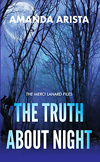
AMANDA ARISTA – & The Two Worlds Of Merci Lanard in THE TRUTH ABOUT NIGHT and THE TRUTH ABOUT BLOOD

For the two books in the MERCI LANARD files I built two different worlds for Merci to walk through. While the magics of Merci Lanard didn't change, the worlds between the two books couldn't have been more different as they went from gritty city murder mystery to cozy small town murder mystery.
It made for a perfect place for Merci to explore her own power – in a familiar backyard. She knew her city more than she knew her own power. But by the end of the book, her relationship with her city and the world of magic within it balanced her newly honed power and how she could protect it.
 So for the second book, the natural thing was to take Merci out of that element. Take her out of the big city and build her a sweet cozy little town filled with active retirees whose smiles made her suspicious. She would stick out like a sore thumb and have to work all over again at finding her balance. The magic of a small town was literally in everything, but hidden until Merci was ready to see how it was right out there in the open, unlike her big city.

Though it turned out that darkness can be found in the sweetest of places, Merci had to learn some things that the city didn't require: subtlety and forgiveness. Only once she found her peace with her mother and peace within the town, could she find out who was taking out her newly found friends.
Amanda’s books are available in eBook and Print from: Amazon , Apple Books, Barnes and Nobles, Kobo
Writer, Story Nerd, Woman Extraordinaire – Amanda is a graduate of the SMU Creative Writing Program and now teaches other aspiring authors.
And for the third book, well, we are taking her totally out of her element again! THE TRUTH ABOUT SHADOWS coming 2021.
.
 About Amanda Arista:
Writer, Story Nerd, Woman Extraordinaire – Amanda is a graduate of the SMU Creative Writing Program and now teaches other aspiring authors. 
You can find Amanda on Facebook:
https://www.facebook.com/pantherista/ She tweets: @pantherista
– –
AK WILDER – CROWN OF BONES (Forthcoming) & Evil, Seduction, and Constraint
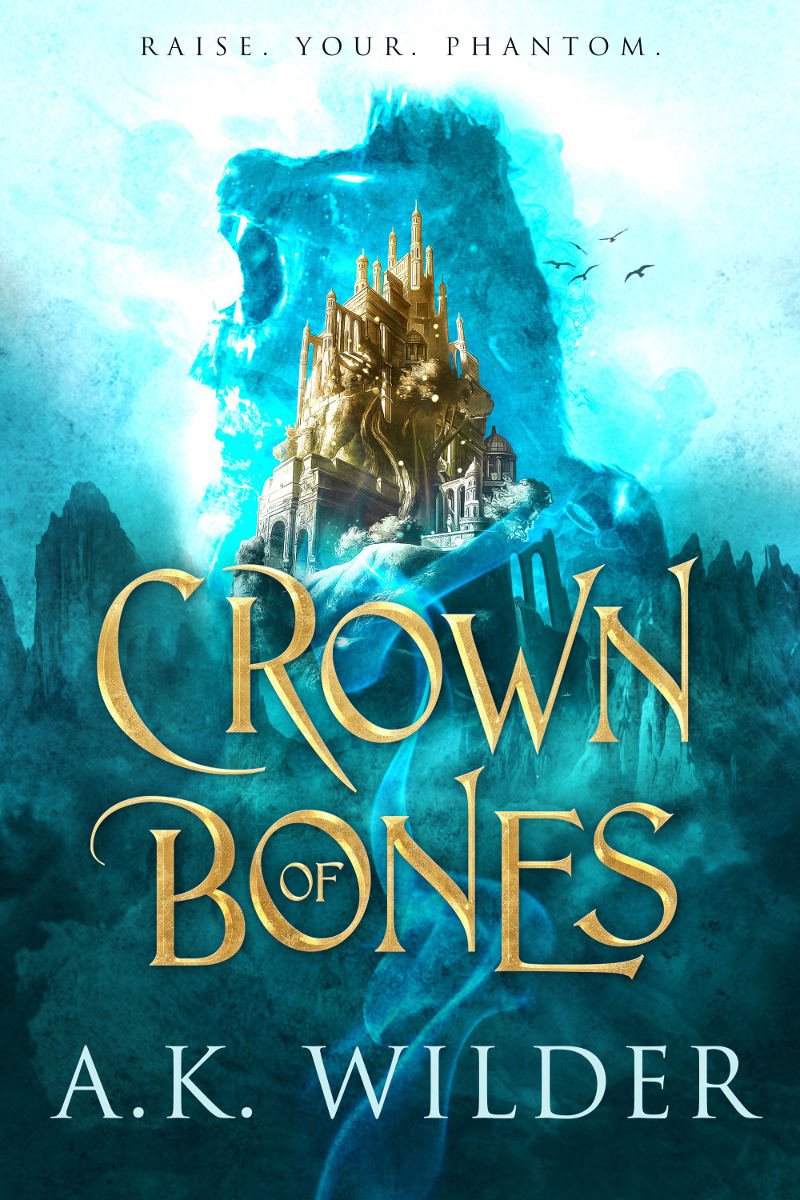
The other day, the wonderful Helen Lowe asked me what my personal recipe was for creating believable worlds. After giving it some thought, I came up with three primary forces or creation deities. Their names are Evil, Seduction and Constraint, just as intense as they sound.
Evil and Worldbuilding
Placed properly, Evil moves the story forward. This deity forces our heroes to struggle, grow, obtain and accomplish… or fail against a power greater than themselves. But Evil is more than just entertainment. It is a shadowed part of our unconscious.
According to Jung, the shadow can be extremely confronting to experience in ourselves, so we look for it ‘outside’ in films, books and art. There it reveals itself in a safe (for us) environment, offering an opportunity for integration and wholeness.
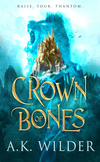
In my upcoming release, CROWN OF BONES, we meet characters who clearly express their shadow side quite freely: Tann, the Sierrak warlord who leads an army of phantoms against our heroes. Salila, the beautiful Mar who embodies the sacred feminine and is demonized for it, and the Sea itself, terrible and majestic, holding the secrets of death and eternal life. Without this ‘force of evil’, the world would definitely fall flat.
According to Jung, the shadow can be extremely confronting to experience in ourselves, so we look for it ‘outside’ in films, books and art. There it reveals itself in a safe (for us) environment, offering an opportunity for integration and wholeness.
In my upcoming release, CROWN OF BONES, we meet characters who clearly express their shadow side quite freely: Tann, the Sierrak warlord who leads an army of phantoms against our heroes. Salila, the beautiful Mar who embodies the sacred feminine and is demonized for it, and the Sea itself, terrible and majestic, holding the secrets of death and eternal life. Without this ‘force of evil’, the world would definitely fall flat.
Seduction and Worldbuilding
I think it’s important right away to distinguish deity from the idea of plausibility. The fact is, a story need not be plausible to be seductive. Take the incident on October 30, 1938 when millions of Americans panicked as they listened to the ‘news’. Earth was under attack from Mars! Programs were interrupted to give vivid descriptions of the events resulting in nation-wide alarm. You can listen to it here.In CROWN OF BONES, Seduction infiltrates much of the worldbuilding: the terraced sanctuaries of phantoms, the Mar of the sea and the whistle bones themselves are not plausible but they do seduce the reader into believing.

Constraint and Worldbuilding
The final deity of worldbuilding I want to honor is Constraint, the laws the story itself must adhere to. The truth is, fantasy readers are not testing a story against Newtonian physics, but they do want it to abide by its own laws. In CROWN OF BONES, Constraint contributes to worldbuilding in many ways including the limitations of phantoms, the power of the Ma’atta corals and the rise and set of the Second Sun. In a way, it is the consistent use of these unbendable rules that holds everything together.CROWN OF BONES, Book #1 in the sweeping new Amassia series, is out January 5, 2020 – and it's available for pre-order now.

About Kim Falconer, Currently Writing As AK Wilder:

About Kim Falconer, Currently Writing As AK Wilder:
Or pop over to throw the bones or Raise Your Phantom on the AKWilder.com site.
– –
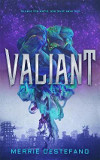
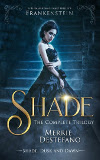
MERRIE DESTEFANO – Her Worldbuilding Rules & AFTERLIFE

Below is a list of world-building rules I follow when I write:
1. Set up your world so that it can have a natural evolution.
For instance, try changing just one thing within our existing world—like P.D. James did in The Children of Men, where suddenly, no one could have children—then see how, over time, that one change could affect everything else in the world.2. These changes can be subtle or they can be drastic.
But spend time considering how this one change could have an effect upon our culture, from politics to religion to social mores. In my book, AFTERLIFE, I created a technology where people could resurrect instead of die and this had a trickle-down effect on nearly everything, including major world religions. I didn’t realize it until I started working on the book, but death is a very significant part of our lives.3. Reveal these changes to the reader.
But do it carefully, gently, clue by clue, throughout your story. Reveal the world in bits and pieces, a little snippet here and there. Make it a mystery and remove the veil, one layer at a time. This way the reader is never overwhelmed or pulled out of the story. Remember, story is king. All the pretty writing and deep, tortured characters in the world cannot replace story.For more world-building and writing tips, please follow Merrie Destefano’s blog here. Or subscribe to her newsletter here. You can purchase AFTERLIFE: THE RESURRECTION CHRONICLES, her first book with HarperCollins, here.
.
 About Merrie Destefano

Award-winning author Merrie Destefano writes lyrical tales of magic, mystery, and hope. Her traditional books have been published by HarperCollins, Entangled Teen, and Walter Foster, while her indie imprint is Ruby Slippers Press.
– –
.
.
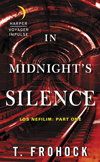
T Frohock – Realism Meets The Supernatural In Her LOS NEFILIM World

I merged all the realism in the LOS NEFILIM books with a fantastic world made up of supernatural creatures. My interest in Christian mythology goes back to my novel, MISERERE, which also played with the ideas of angels and demons and their interrelationship with humans. LOS NEFILIM takes these very scary angels, combines them with self-centered daimons, and places them in the early twentieth century, a time of great upheaval in the world. The Inner Guard is a secret society of Nephilim, which is set up much like John Wick’s world of assassins, except in LOS NEFILIM, the creatures possess supernatural abilities.

I also had the opportunity to shed light on something that I love to address in a fantasy setting, a loving committed relationship between Diago and his husband, Miquel. Too often in fiction, we see the beginning of a relationship, which is always exciting and fun, but I wanted to show the difficulties and joys of a couple in a long-term relationship. As Diago and Miquel face new traumas and experiences together, they remain supportive of one another.

T’s books are available in eBook and Print from your favorite bookstore, either online or on the high street. A SONG WITH TEETH, the third and final novel in the LOS NEFILIM novel trilogy, is forthcoming on 9 February 2021 and is available for preorder.
.
 About T. Frohock

T. Frohock has turned a love of history and dark fantasy into tales of deliciously creepy fiction. A real-life cyborg, T. has a cochlear ear implant meaning she can switch you on or off with the flick of a switch. Make of that what you will. She currently lives in North Carolina where she has long been accused of telling stories, a southern colloquialism for lying.
You can find T. on her website, here and on Twitter: @T_Frohock
– –
.
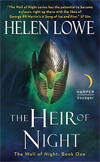
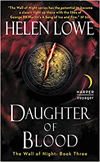
Helen Lowe – Worldbuilding At Front And Center In THE WALL OF NIGHT Series

I embarked on this worldbuilding post series because I love Fantasy, but also because I believe worldbuilding lies at the heart of what makes the genre distinctive from other styles of literature.
All literary genres must set their scene, but in Fantasy this process goes beyond landscape and backdrop to encompass alternate realms and forms of being – and to persuade the reader to suspend disbelief and embrace the alternate reality.
 In terms of my own series, while the Wall of Night doesn’t comprise the entire world in which the story takes place, it isn’t chance that the series is named for it. Perpetually twilit, windblasted, and storm-ridden, the Wall pervades and shapes Book #1, THE HEIR OF NIGHT, through sheer physical presence and the emotional and mental demands on the characters.

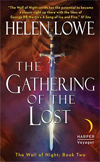
While the action in Book #2, THE GATHERING OF THE LOST, takes place far from the Wall geographically, its presence pervades the rest of the world and its influence continues to shape the main characters.

Although aware the Wall was central to the story, I didn’t appreciate the full extent of its significance until midway through GATHERING. I loved the way the world was expanding to encompass the Sothern Realms of Haarth—particularly the River and the city of Ij, before moving to the wild and isolated Northern march of Emer—and was enjoying the unfolding narrative.
Yet despite these positives, the book as a whole felt a little rudderless—disconnected even—until I wrote the two-chapter sequence, The Border Mark, that returns the story to the Wall and the Derai, the society that garrisons its harsh terrain.

I didn’t need to remind myself to include the Wall as a similar ‘touchstone’ for Book #3, though, as DAUGHTER OF BLOOD returns the main characters and the series arc to its heartland, on the Wall of Night.
As with T’s LOS NEFILIM series, THE WALL OF NIGHT #1 - #3 are available in e-book and paperback, through online retailers and bricks-and-mortar stores. J
.
 About Helen Lowe
Helen Lowe is a multiple award-winning novelist, poet, and lover of story. With four books published to date, she is currently completing the fourth and final novel in THE WALL OF NIGHT series. 
Helen posts regularly on her “…on Anything, Really” blog, monthly on the Supernatural Underground, and tweets @helenl0we.
– –
.
Take good care and stay safe through the holiday season.
Conclusion
Well, this is it – the wrap up for the Year of Worldbuilding in Fantasy. I can think of no better way to finish than with the crown of good company – and my fellow Supernatural Underground authors are the very best of company. I hope you’ve enjoyed reading their insights into the worldbuilding process as much as I’ve enjoyed putting the overall post together – and I’ll see you again on the other side, in 2021.Take good care and stay safe through the holiday season.
He
– –
.
2020: The Year of Worldbuilding in Fantasy
February: The Lion, the Witch & the Wardrobe (Chronicles of Narnia) by CS Lewis
March: A Wizard of Earthsea by Ursula Le Guin
April: Sparrow Hill Road by Seanan McGuire
May: Palimpsest by Catherynne M Valente
June: Ship of Magic & the Liveship Traders series by Robin Hobb
April: Sparrow Hill Road by Seanan McGuire
May: Palimpsest by Catherynne M Valente
June: Ship of Magic & the Liveship Traders series by Robin Hobb
July: Gideon the Ninth by Tamsyn Muir
August: Tymon's Flight (Chronicles of the Tree) by Mary Victoria
September: Dreamhunter, Dreamquake, Mortal Fire, by Elizabeth Knox
October: The Many Worlds Of Kate Elliott
November: A Wealth of Fabulous Worlds
August: Tymon's Flight (Chronicles of the Tree) by Mary Victoria
September: Dreamhunter, Dreamquake, Mortal Fire, by Elizabeth Knox
October: The Many Worlds Of Kate Elliott
November: A Wealth of Fabulous Worlds