|
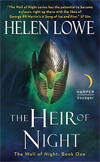
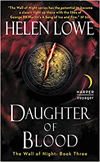
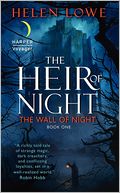
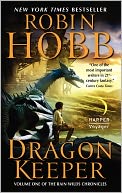
| US cover |
.
The launch of a new book is always a busy time and since
The Gathering of the Lost (The Wall of Night Book Two) was published on 27 March I've had a very full programme of guest blog spots and interviews, including recent get togethers with both
Nalini Singh,
here, and
Robin Hobb,
here.
And right now I’m attending
UnConventional, NZ's National Science Fiction Fantasy Convention, with
Trudi Canavan as international Guest of Honour. I have an interesting programme of panels, too, including one on world building:
"Worldbuilding —
The thing that
differentiates SF & F from the rest of fiction writing is the extent
to which worldbuilding becomes integral to the writing process."
Since you can't attend the panel, I
thought you might like to read this summary from my in-depth
conversation with Robin Hobb, specifically on world building:
.
"Helen: Good world building is integral to Fantasy. What are some of the key elements for you, Robin?
.
Robin:
‘Would the world work?’ is my first question. If there is no visible
economy, government, religion or culture, I tend to just set it aside.
Ignorance of simple ‘real world’ facts also frustrates me. For example,
learning to wield a sword in two days is like picking up trigonometry in
half-an-hour!
The reason your
The Heir of Night books work
for me is that every character is a product of your world. Each culture,
and consequently each character, is clearly a product of the
surrounding environment. As a result they are distinctive, far beyond
just names and physical descriptions.
 Helen:
My world building is very organic. There is often an initial vision,
such as the twilit, wind-blasted Wall, but after that the world evolves
through the characters’ experience of it. The world has to be real for
the characters or otherwise it just won’t work.
Helen:
My world building is very organic. There is often an initial vision,
such as the twilit, wind-blasted Wall, but after that the world evolves
through the characters’ experience of it. The world has to be real for
the characters or otherwise it just won’t work.
Similarly, the Rain Wilds are my
favorite of your worlds. I love the mysterious, dangerous physical
environment and its juxtaposition with Trader culture. But has your
vision of the world changed in the shift from the Live Ships to the Rain
Wilds’ Chronicles?
 |
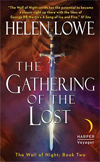
| UK cover |
Robin: Oh, the focus is always on the characters, and so we see
whatever part of the world they are in. In this case, we are seeing the
Rain Wilds (
Dragon Keeper,
Dragon Haven,
City of Dragons,
etc.) from the perspective of the people who live and work in its more
hazardous parts. Someday I’d like to write from the POV of a digger in
Trehaug, who breaks through to a marvellously preserved room . . . Yeah!
But the view of a world changes whenever you change POV
character, in my world or any world. Your Jarna’s experience of the
tournament in
The Gathering of the Lost is vastly different from that of the noble ladies. So, too,
the keepers of Trehaug have a whole different view of their world.
Helen:
How interesting that we both see our worlds as evolving through diverse
characters’ experiences... In The Heir of Night the reader gets a range
of views on the Derai Alliance, particularly the political divide
between their warrior and priestly castes. In the Rain Wilds’ Chronicles
I enjoy getting Sintara and Thymara’s divergent views on their uneasy
relationship—and the tension that creates in the story.Robin:
I do love my characters, even my villains. If you are going to spend a
year writing a character, it had best be someone you find interesting!
And I’ve been enjoying watching your
Wall of Night series unfold, partly
because while your characters are compelling, many in the story also
hold the reader at a distance. It’s not initially obvious if Raven, for
example, is someone to be trusted. Yet he is fascinating…
I
think it layers in a depth of reality, having the same uncertainty in a
tale about someone we’ve just met as we may in our regular lives."
To read the indepth conversation, click
here.

 So I find myself mostly sitting and watching and listening. The conversations here are awesome because everyone is as exciting about books as I am. And boy, are the topics varied. The two women across from my right now are talking about the upswing in New Adult. Two women in the elevator this morning were still talking about the Fated to be Mated panel that our very own Jeaniene Frost and Kerrelyn Sparks gave yesterday afternoon.