Showing posts with label world-building. Show all posts

Monday, September 21, 2026

From the Backlist: Fantasy Festivals

Art by the amazing Stephanie Pui-Mun Law

Happy Equinox everyone. 

Whether your season is turning from summer to autumn, or from winter to spring, it's a time of Sola Aequo where the divine beings 'make equal' the power of the sun for day and night. It's traditionally a time of celebration and gratitude, and a time to reflect.

With that in mind, today's post from the Backlist is Kim Falconer's Fantasy Festivals.

Enjoy!

***

Fantasy Festivals 

by Kim Falconer on the Supernatural Underground

There are a number of ways an author draws the reader into their story. They can use pace, suspense, fear, excitement, but behind the page-turning tools is a little something called atmosphere, the nuance that creates immersion.

For example: Harry Potter's first festival feast not only helps create an atmosphere at Hogwarts, it shows a contrast to his austere upbringing.


In this way, the readers and audience are captivated by the story, not just because it excites them, but because it feels 'real'.

Ways to create an atmosphere stem from language, word choice, dialogue, character and world-building - the sights, sounds, smells, textures, tastes and history of the story-world. Included in the art of world-building is the power of celebration. . . 

... and there's nothing like a royal wedding to make the heart sing.

Tolkien certainly new how to put on a festival! LOTR Return of the King


These fantasy festivals might match ones the reader is already familiar with ...full post here.

* * *

Do you have a favourite fictional celebration? We'd all love to hear it.

Happy Equinox, everyone!

* * *

About Kim Falconer
The Amassia Series


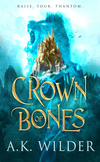
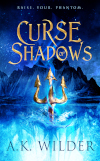
Kim Falconer, also writing as AK Wilder, has released Crown of Bones, a YA Epic Fantasy with Curse of Shadows as book 2 in the series. 


 Quantum Enchantment
Kim can be found on AKWilder.com, Twitter, Facebook, Instagram and KimFalconer.com. 

Throw the bones on the AKWilder.com site. See you there!

Read Blood and Water, a PNR alt history that will leave you questioning every natural disaster ever endured.

“There is no doubt fiction makes a better job of the truth.” 


Monday, June 21, 2021

Midsummer - Winter Solstice is Nigh

Art by Stephani Pui-Mun Law

Hey Everyone,

I invite you all to welcome the midwinter/summer Solstice! This marks when we have either the longest day of the year (N Hemisphere) or the shortest (S Hemisphere).  Here are the exact times for 2021.

MIDSUMMER/WINTER SOLSTICE
SUN @ 0° CANCER
LA - June 20 - 8:32 pm
NY - June 20 - 11:32 pm
LON - June 21 - 4:32 am
SYD - June 21 - 1:32 am

Ancient History

Since neolithic times, we as a people have celebrated the midsummer and midwinter solstices. It still means different things to different cultures but I like to think of it as a time of renewal. A time to fuel hope for the harvest to come (summer), or for the thaw and return of spring (winter). 

What Exactly is the Solstice?

Solstice literally means 'sun at a standstill' as the Latin name describes the sun reaching its maximum or minimum declination in the sky (from a geocentric standpoint). Hence we have a marker for the longest and the shortest day of the year. That alone is something to celebrate!

Ancient Stonehenge and the Solstice

And we do. Take Stonehenge for example, a literal touchstone and host to solstice rituals for the last 5000 years. And still today, modern druids gather at Stonehenge to watch the sun's first rays shine above the ‘hele stone.’  - Summer Solstice - Alban Hefin


The Solstice in Fiction


Fiction also connects us to the midsummer/midwinter Solstices, giving us a chance, at least unconsciously, to align with the power of restoration and renewal.

Plenty of films and novels offer up their interpretations of the Solstice, for example, the 'starts out sweet and turns to horror' film called Midsommar written and directed by Ari Aster. But be careful. It might put you off the whole idea of May Poles and other festivities this time of year.

Another psychological thriller, Solstice, by Joyce Carol Oates, explores an intense-turned-obsessive relationship between two women. In this case, the opportunity for renewal at the solstice is more metaphorical.

The Solstice in Fantasy World-building

Using lunar and solar events like eclipses, Equinox/Solstice, ingresses of planets and other celestial movements can ground a reader in the story. It offers a reason to celebrate or be afraid, or hopeful but no matter what, it gives cultural credibility to the story, deepening the world-building and making the work richer in scope.

In the Fantasy genre, we might see the Solstices mark times of initiation, seasons or events, as in my second Earth - Gaia series (under Kim Falconer) The Path of the Stray. Quantum Encryption Book 1. 

In this book, I used the midsummer Solstice to signify the time of year in a journal entry made by one of the main character's ancestors. The discovery of the journal leads the story back to that era. In essence, I had an element of world-building as well as an event to transition the reader back to the prequel.

Also marking a significant time, the Solstice is mentioned in  Hugo Award-winning writer, M. K. Jemisin's The Fifth Season - Broken Earth Book 1. 

In Traci Harding's Ancient Future Series, Stonehenge literally teleports the main character (and readers) to a distant past.

In this way, Traci's wildly successful series literally uses the summer solstice as a time machine, of sorts, to incredible effect. It all begins with car trouble, putting the main character, Tory, at just the right place and time.

...As she reached the perimeter of the circle a strong presence came over her and she stopped in her tracks. How strange that I should find myself here tonight. She was a little scared by this thought, for tonight was the summer solstice. When Tory recalled tales of Wiccan and Druidic practices traditionally held on this night a shiver ran over her...

In my newest work, Curse of Shadows, the second book in the Amassia Series, the Solstice becomes the hands on a ticking clock. The Bone Thrower insists that our company of main characters begin a quest on the midwinter solstice and complete it successfully by the midsummer solstice. The consequences of failing are dire and we only hope they can do the impossible in time to save the world.

How about you? Do you have any solstice traditions? Books that mark this longstanding human propensity to connect with the cycles of sun, moon and stars? I would love to hear about them in the comments.

xxKim (aka A K Wilder)

* * * 

Kim Falconer, writing YA Fantasy as A K Wilder, has just released Crown of Bones and soon to announce the date for the sequel, Curse of Shadows.

Kim can be found on  AKWilder Twitter, Facebook and Instagram. 

Throw the bones, read your horoscopes or Raise Your Phantom on the AKWilder.com site or have a listen to the audio version on the right.


Tuesday, June 16, 2020

Ships that Sing - Three Books Reviewed


Daniel Dociu Fantasy Art
Shark Ship by Daniel Dociu

Hi Everyone, 

I wanted to share today three novels that have an underlying theme - sentience vessels. (Shoutout to Helen Lowe and her inspiring post on the Live Ship Trader Series.)

The three books I'm talking about today have their own style and grace, SF wonder and amazement. Each author writes with ability, power and insight. But what really excites me about these novels is their treatment of human and non-human sentience.   

What is Sentience?


Is it sapience, intelligence, consciousness? The definition can blur between self-awareness, compassion, identity, ability to suffer and also to adapt, judge and change. But once named 'sentient' everything does, indeed change.

Sentient entities are generally considered deserving of moral rights, respect, and freedom, at lease where these rights are bestowed on humans. So, do these qualities, and therefore rights, belong to humans only? If not, where do we create distinctions?


I love these three books because they each explore these hard questions, though in different ways, yet always juxtaposed to a human main character.


Back in the 60's Ann McCaffrey wrote a short story called The Ship Who Sang. She went on to revise it into a novel and then a series which was also co-written by other SF authors of the time. I'm not sure how the premise would be handled now with more awareness, 60 years later, of persons with disabilities, but still, McCaffrey asks the questions, which is what a good storyteller does.


The Ship Who Sang is about Helva, a human born disabled to the point they only could save her brain. Her life is salvaged by implanting her into the titanium body of an intergalactic ship. When she chooses a human partner, her life unfolds in terrifying and spectacular ways. Ann McCaffrey herself said this was the best story she's ever told...


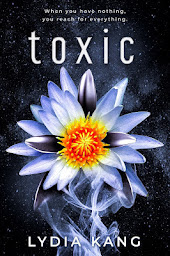
Toxic by Lydia Kang


Toxic is a standalone, Young Adult SF romance with a touch of fantasy and horror. Written in Kang's ever-engaging style, Toxic is a smart read, one that takes a 'speculative' concept and makes it feel true, right down to the core.

The story focuses on a dying ship and a suicide squad sent to record its demise for the company that made it. In that crew is a young man named Fen who plans to use the last days of his life to make up for a series of wrong choices. 

Unknown to all is Hana, the girl left behind by her crew, a girl that has never been out of her room or far from the aqueous folds of her 'bio-mother-ship'... until now.

Toxic asks questions about human and non-human rights, about shifting loyalties and the power of cultural conditioning. But none of that occurs to you while turning the pages. There's too much at stake!

This book, the first in a series of at least one more, still haunts me with its metaphysical questions and real, hard-core truths. The story is, on one level, about a young woman named Seske Kaleigh, heir to the command of a biological, city-size starship carved up from the insides of a spacefaring beast.

Carved up, literally.

While still alive.

The 'beasts' take years to die and there are classes of humans on the city/vessel/beast whose sole purpose in life is to keep it living until they find the next one to replace it. Every possible point and counter-point to the sentient experience is explored in dramatic, spellbinding, heartbreaking ways.

The world--the world-building!--that Drayden creates is so utterly unique, cinematic and so...well, real, you can't tear your eyes off the page, sure is sure is sure. 

I highly recommend all of these reads if you want to awaken your mind to the hard questions of science and philosophy, rights, laws and justice of what we deem alive and worthy. But I promise, while you're reading, you won't be 'thinking' at all of these things but instead gripping the edge of your seat until the ride is over.

Do you have a favorite 'non-human sentient' character? I'd love to hear of them in the comments.

***


Author Kim Falcconer

Kim Falconer's New YA Fantasy Series is out August 4, 2020 - Crown of Bones. (Writing under A.K. Wilder) 


Also, check her urban fantasy  - The Blood in the Beginning - an Ava Sykes Novel and the SFF Quantum Enchantment Series. 


You can find Kim on Twitter, Facebook and Instagram. Or pop over and throw the bones on the AKWilder.com site.

Monday, March 20, 2017

Building Fantasy Worlds

Image by Surreal Artist Jacek Yerka
Hi Everyone,

I chatted with the Sup authors last week about how they created their worlds. So revealing! Here's what they had to say:

"The idea of a dark or twilit world was inspired initially by the swift nightfalls of Singapore, when I lived there as a child." Helen Lowe

"I always try to weave as much fact into my fiction as I can ..." Rachel A. Marks

"I didn't have to build from scratch, just point out what was different about Para-Dallas." - Amanda Arista

"I like to explore how environment shapes my characters, politics, beliefs, and then I let my imagination go wild." Kim Falconer

And then, there's George R. R. Martin -  [who] "... enjoys being surprised by his own work. He thinks of himself as a “gardener”—he has a rough idea of where he’s going but improvises along the way. He sometimes fleshes out only as much of his imaginary world as he needs to make a workable setting for the story.

Tolkien was what Martin calls an “architect.” Tolkien created entire languages, mythologies, and histories for Middle-earth long before he wrote the novels set there. Martin told me that many of his fans assume that he is as meticulous a world-builder as Tolkien was.

They write to say, ‘I’m fascinated by the languages. I would like to do a study of High Valyrian'—an ancient tongue. ‘Could you send me a glossary and a dictionary and the syntax?’

I have to write back and say, ‘I’ve invented seven words of High Valyrian.''” —Laura Miller, in The New Yorker

Why is world-building so important? 

The environment our heroes and villains live in is a major character of every book. It may be silent, behinds the scenes, shaping outcomes without the reader noticing, but it must exist or there's nowhere to for the story to unfold. And it must become real.

Some authors say that readers will believe in anything as long as it’s plausible, but I think Orson Welles proved that wrong when he read The War of the Worlds, by H. G. Wells, over the radio, causing mass panic. No, Martians weren't landing.

Fantasy readers don’t expect a world to adhere to Natural Law, but they do want it to adhere to its own laws. Ursula Le Guin reinforces this saying inner coherence, not plausibility, holds the reader enthralled. 

So let's look at how some of the Sup authors build worlds, and make them plausible, to us.

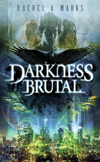
The Dark Cycle Series

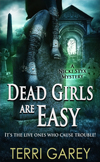
Rachel A. Marks - The Dark Cycle Series


"When thinking about how to begin building my story world, I always try to weave as much fact into my fiction as I can. In my mind, this creates a more vivid reality for my characters to populate. The best part of imagining Aidan's world when writing DARKNESS BRUTAL was being able to take the gritty reality of LA where I've grown up, play it up by overlaying urban legends I've been hearing since I was a kid, and then enrich the rules with supernatural mythos. And then make sure that the only one who can see this invisible world of demons, angels, and ghosts, is the main character, Aidan. So, part of the conflict the main character has in his journey is also a conflict in the world itself. 

"Seventeen-year-old Aidan can see demons, smell emotions, and feel the past in his skin, but will it be enough to save his little sister from the deal his mom made with a powerful demon all those years ago? "
The Wall of Night Series

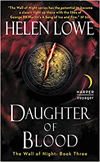
Helen Lowe - The Wall of Night Series


"The Wall of Night world was with me for many years and the idea of a dark or twilit world was inspired initially by the swift nightfalls of Singapore, when I lived there as a child, then developed further when I spent a winter in Sweden with its "endless nights". 

The Norse myths with the "twilight of the gods" was also a considerable influence on the development of the world. As the story and the world expanded away from the Wall of Night to the Southern Realms of Haarth, influences from other landscapes played their part, from the khlongs of Bangkok influencing the River City of Ij, to the Nelson region of New Zealand shaping the physical character of the Duchy of Emer."

"The Wall of Night: fortresses of shadow and decay and an ancient war reigniting in a world where everyone could be an enemy and no-one is what they seem. Lost powers, undiscovered secrets, and a society divided by prejudice, suspicion, and fear -- and Malian, heir to the warrior House of Night and a promise that has endured down centuries: that she will not stand alone." - Good Reads: Daughter of Blood

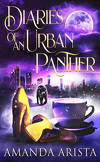
Diaries of an Urban Panther

Amanda Arista - Urban Panther Series

"I live in Dallas and not too many books I had read captured the true urbanite quality of the city. It’s got everything that NY and Vegas with more cars and less smog. Drive 10 minutes and be in a vibrant down town or drive 30 minutes and be out in open land with cows. So I started there with my world-building, and just smoothed a layer of paranormal over the top of that. 

I was looking at the normal weird stuff and explaining it with paranormal things, like graffiti is actually protection spells and sounds in a dark alley that are actually were-creatures. I didn't have to build from scratch, just point out what was different about Para-Dallas. So my main character Violet could ease into the magical along with the reader. She still got her coffee, I still got to write about magic and things that blow up."

When Violet Jordan becomes a midnight snack for a werepanther, his infectious bite invokes the first element of her destiny to become the leader of the Dallas Wanderers. But if push comes to claws, can Violet make a fatal strike against the men threatening her new family, her new home and her first boyfriend in ages?

The Ava Sykes Novel Series

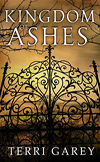
Kim Falconer - The Ava Sykes Novel Series

"The Aftermath. What a mess. The initial repair efforts deserved a medal. Having relief funding in the trillions helped. Who couldn’t make things as good as new, with that kind of backing? But fifteen years later and the funding isn’t so generous. It dried up completely in Anaheim, for example. There’s nothing there anymore but capped fracking wells and an abandoned amusement park. Kinda sad. I’d heard Disney Land was amazing, back in the day. Earthquakes will do that to a place, if earthquake it really was. There were all kinds of conspiracy theories, and then, there's the sea . . ."

"Undergraduate by day, bouncer by night, Ava Sykes works hard to build her life in New LA, a city experiencing the Aftermath of a seismic disaster. Her prospects improve until she stumbles upon an evil no sane person would want to confront. Suddenly, her life, her city and everyone she cares about is in danger. Pushed to the edge, Ava taps a power she never knew she had . . . and uses it."

What are some of your favorite worlds in books, or films? Feel free to share them in the comments.
xxKim

Kim Falconer's latest release is out now - The Blood in the Beginning - and Ava Sykes Novel. Find this novel in a store near you.

You can also learn more about Kim at AvaSykes.com, the 11th House Blog, and on FaceBook and Twitter.  Or on GoodVibeAstrology.com

She posts here at the Supernatural Underground on the 16th of every month and runs Save the Day Writer's Community on Facebook. Check out her daily Astro-LOA Flash horoscopes on Facebook. 


Thursday, October 1, 2015

Sense of Place: Alternate Worlds Versus Our World ...

.
Recently I was asked whether I thought it was easier to achieve a strong sense of place in an alternate world, like Westeros in George RR Martin's A Game Of Thrones, or Haarth in my own The Wall of Night series — as opposed to Fantasy stories based in what is recognisably our world, like Melissa Marr's Wicked Lovely or Patrica Brigg's Mercy Thompson novels.

Which created a fair amount of food for thought!

At one level, creating an alternate world may give you more freedom to create things the way you want, but I can also think of some contemporary urban fantasies where the use of real-world places are used to powerful ‘world building’ effect.

Neil Gaiman’s American Gods is one great example, and Charles De Lint’s Newport another  — and I also love Charlaine Harris's Louisiana backdrop to the Sookie Stackhouse novels (televised as True Blood.)

And  in terms of almost-but-not-quite-this-contemporary-world building, I personally don’t think you can go past Robin McKinley’s urban fantasy, Sunshine ...

In all these stories the sense of place is very strong, almost a character in its own right, and I feel that this sort of world building would have taken considerable imagination and craft.

So, too, of course, does creating an alternate world — and although 'creating your own world' may give you more freedom, you also have to give considerable thought to creating landscape, built environments, and associated cultures, to ground your readers in an authentic sense of place.

So perhaps, in that sense,  being able to use our world, where those aspects are taken as given, is a little easier.

The excitement, though, arises in the successful contrast of the fantastic and paranormal with our everyday experience — something we're all about on the Supernatural Underground!

Thursday, April 16, 2015

Supernatural Sidekickin'

Screen Shot 2015-04-13 at 12.13.20 pm

Hello Sup readers and writers!

Before we begin, remember everyone, the Supernatural Underground "Never Have I Ever" giveaway is still on. Pop into the comments and be in the draw! 

This month, I'm blogging about sidekicks! I want to explore the qualities of a 'good' sidekick/wing woman/man, what traits they have, their roles in the storytelling and how to write them. Re-blogged from the 11th House. 


What Sidekicks Are Good For

Back story: A well written, three dimensional sidekick can help with back story, allowing the reader to see and hear about things that came before page one without wading through heavy exposition. We see this in Star Wars with the sidekick Chewbacca, where his adventures in the past with Han Solo help shape our understanding of the man. Also in the sidekicks C-3PO and R2-D2. We learn much about the world through their cometary.

World Building: The sidekick can represent a culture or social group as Gimli and Legolas do in Lord of the Rings. Gollum, a 'minor' character, but with a major goal, provides a talking point for the long and complex history of the ring. What life was like in the past, the roots of the hobbits as a people. He is kind of an 'anti-skidekick' to the anti-hero Frodo.

Contrast: The sidekick can have different values, ethics, goals and motivations, making for a contrast to the main protagonist. Damon Salvatore in The Vampire Diaries, for example, hasn't much of a moral compass. At all. His buddy Alaric Saltzman, however, does, and watching that friendship grow is a measure of the main character's arc and emotional evolution.

Humor and wit: The protagonist has to be pretty serious at times, playing it 'straight' as they work out how to fight the baddy, retrieve the lost treasure and save the day. The sidekick, however, is free to use wit and humor at times when the hero cannot. We see this in Buffy the Vampire Slayer with Xander (one of Buffy's many sidekicks). She may be in deep emotional angst and he can pop a one-liner that lifts the moment without throwing away her feelings.

Throw-aways: Similar to wit and humor, there are times when a scene is too intense, deep or meaningful and the sidekick can be just the one to lighten it all with a 'throw-away' line. Clive and Ravi do this on iZombie when Liv is too deep into the fact that she is dead, turned into a zombie and has to eat brains to survive. It can turn a scene around in a flash.

Freedom of Speech: The sidekick can say things the hero might be thinking, or wish they could say, but can't. In the Quantum Enchantment Series, Rosette has a sentient familiar, a temple cat who links with her telepathically. She might be having a conversation with a mentor or rival while her familiar does a running commentary on the whole thing, adding a new element to the scene.

Sympathy: The hero may also relate to the sidekick in ways they can't to others, allowing the reader to gain more compassion or understanding. This works especially well for main characters that are not fully sympathetic. Eric Northman's compassion for his progeny, Pam, is an example from True Blood, or Charlain Harrie's Southern Vampire Mysteries.


Screen Shot 2015-04-13 at 12.35.52 pm


Writing the Sidekick

The first question to answer when developing a sidekick in the story is why are they there? They have to move the plot forward, be part of the part of the story. They also have to have their own GMC - goals, motivations and conflicts, internal and external. In a shorter work, these won't be explored to a great depth, but with novel length stories and series, there is room for these subplots to be woven.

In Lord of the Rings, Gollum is a shadow figure of Frodo, a kind of "anti-sidekick" representing the "anit-hero's" darker obsessions, passions, and also his instinctual side. Gollum knows natures ways, leads Sam and Frodo into dark places, with darker designs. Gollum's inner goals, in the end, aren't any different than Frodo's, but he still has his own history, motivations, conflicts, and outer challenges.
  
Further questions to ask when developing a sidekick:
  • How do they move the plot forward?
  • What do they contribute?
  • Do they have heart or at least evoke an emotional response?
  • Are their stakes genuine?
  • Is their dialog strong and juicy?
  • Are they redundant in any way?
When getting the story down, the writer isn't usually thinking of all these things. I know I'm not! Still, it's a useful checklist for the next edit, and the next.

How about you all? Who are some of your favorite sidekicks?

Writers, how to you approach these types of Characters?

Comments are always welcome!

Kim Falconer is a Supernatural Underground author writing paranormal romance, urban fantasy, YA and epic science fantasy novels.
You can find out more about Kim at the 11th House Blog, and on FaceBook and Twitter.

She posts here at the Supernatural Underground on the 16th of every month.

Her latest release is"Blood and Water" in Supernatural Underground: Vampires Gone Wild.