Wednesday, April 20, 2022

Favorite Fantasy Format

Anime Wallpaper

 Last month we explored reading preferences in Fantasy - series, or standalone. 

It boiled down to a basic argument where the beauty of a standalone is containment. When you pick it up, you have the story complete from beginning to end -- no cliffhangers, no unresolved plots.

And the beauty of a series? It may not be an all in one volume or even all in three, but oh the depth and breadth it can obtain. A series can extend over continents, worlds, and generations as we grow with our characters, friends and foes alike. And talk about convoluted plots and sub-plots. There's room for so much more.

Yet the results surprised me. I thought sure it would be series all the way for Fantasy readers but no, the BOTHS had it!

Here's what the survey found


And now, I have another question, this time on a form that will 100% work. Shout out in the comments if not. We have our eyes trained there.

Audio, Digital, or Print?

I'm keen to find out HOW you like to read. Is it Audio? Digital? Or good old paper, binding and print? 


Audiobooks

YaoYao Ma Van As
When researching the benefits of audiobooks, I was thinking mostly about the storytelling aspect. An accomplished voice actor can enhance the experience behind the written word. No doubt about that. I also thought of multitasking, like when I painted my room while listening to Blood Like Magic. But there is more.

Studies show that listing to an audiobook builds critical listening and thinking skills, improves language, pronunciation and vocabulary, and, like all digital books, they can be stored in your pocket and easy to take with you wherever you go. The other major advantage over any other form of reading is accessibility for the person who is visually impaired or blind.

The only drawback I can think of is when you don't gel with the narrator(s). That can make an amazing story hit the DNF pile fast, or not make it past the audio sample before you buy.

 Speaking of... the cost. Audio is more than eBook or paperback, but you can join streaming sites like Audible for deals and credits. It's what I do.

eBooks

YaoYao Ma Van As

Like the audiobook, eBooks are stored in one, virtual space that you can take with you easily, wherever you go. There is also the handy ability to adjust font size and brightness, reducing eye strain. Though they do use energy and have an ongoing carbon footprint, 2.2+ million books are published each year, using around 3 million trees, so they are environmentally friendly in that respect.

There are other handy advantages like searching a work definition with a single tap, searching the text for a quote or passage, as well as the new augmented reality with 3D images and other interactive advances. 

eBooks are lightweight, easy to carry and generally cost less than print or audiobook versions, especially if you belong to BookBub and are alerted to free or discount offers. 


Print Books

YaoYao Ma Van As
But there is a major plus for print books and that is, you can hold them, turn the pages and smell that new, or favorite scent only a book can have. 

Paper cuts aside, print books engaged the senses in ways digital versions cannot. Print books are tangible, with stunning cover art, illustrations and character that is, maybe not better or worse than digital, but it can be preferable.

Print books line your shelves, drawing you to them in a way your ebook or audiobook list doesn't because the print form is real. In a world becoming more digital by the second, a physical book might ground us in ways more advanced technology can't.

And the price? Let's look at a comparison. 

Cost


As you can see, the paperback and eBook are not that far apart, nor is the audiobook from the hardback. And there are specials and discounts, dropping the digital price to $0 which you won't see in the physical variety. 

In the end, it's a personal choice. I'd love to know what yours is!

Tap the form, or drop a note in the comments.

See you there

xxKim

* * *

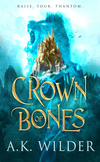
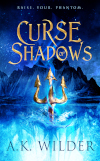
Kim Falconer, currently writing as A K Wilder, has just released Crown of Bones, a YA Epic Fantasy with Curse of Shadows coming out in 2022.

Kim can be found on  AKWilder Twitter, Facebook and Instagram. 

Throw the bones, read your horoscopes or Raise Your Phantom on the AKWilder.com site 


Friday, April 1, 2022

What Makes A Hero? #2: Circumstance

.
Last month, I discussed the overlap between epic and heroic fantasy, along with the parts played by heroes, anti-heroes, and occasionally outright villains, and posed the question, What Makes A Hero? In addressing it, I indicated my intention to begin by examining "three criteria—three C’s in fact—over the next few months." 

What makes a hero?

The first of these was “the call”, which I delved into last month. Today (as the title hints ;-) ) I'm taking a closer look at circumstance and how events shape the protagonist. 
You notice I said "protagonist" here, not "hero", because one of the elements discussed last month was how the person that ends up being key to the book's events and saving the day isn't always  a "hero" from the outset.


This is particularly the case where the protagonists are anti-heroes, and examples I cited included Yarvi in Joe Abercrombie’s Half A King and Half A War; Waylander the Slayer, in David Gemmell’s Drenai novels, and Michael Moorcock’s Elric of Melnibone (the Elric series); along with Nahri in SA Chakraborty’s City of Brass and Venli in Brandon Sanderson's Stormlight Archive series. Not to mention a raft of characters in George RR Martin's A Song of Ice and Fire series (filmed as Game of Thrones) -- to name only a very few leading anti-heroes across the Fantasy genre.

By definition, an anti-hero is patchy in character and potentially morally reprehensible, so more likely to resist the call than a paladin, or heroes like Aragorn in The Lord of the Rings who have been raised to honor, duty, and to answer the call of destiny. Mat Cauthon in Robert Jordan's Wheel of Time series is another example of a "patchy" character whose eventual heroic actions are far more a result of circumstance than personal inclination.


In NK Jemisin's Inheritance trilogy, the three main god protagonists, Nahadoth, Itempas, and Sieh (who is an outright trickster character) are more often cruel than benevolent and only act as heroes in the context of circumstance. Yeine Darr, the chief female protagonist in The Hundred Thousand Kingdoms (Inheritance #1) is morally complex at best, although well-intentioned at the outset, while Oree Shoth in The Broken Kingdoms (Inheritance #2) is cast in a more straightforward heroic mold.


Another protagonist with anti-hero tendencies who is transformed by circumstances into a hero, is Barbara Hambly's mercenary, Sun Wolf, in The Ladies of Mandrigyn. Admittedly, although a mercenary he's not venal as such. John Adversane, of Hambly's Dragonsbane, is far more a paladin by personality and duty, but his heroic choices are still driven by circumstances that have made him the sole military defender of his community.   

While circumstance is usually vital in order for an anti-hero to answer the call, it also plays an important part in the stories of John Adversane, Oree Shoth, and similar protagonists. For example, it's questionable whether the panzer-bjorn,  Iorek Byrnison, in Philip Pullman's The Golden Compass is an actual anti-hero, or simply a hero that's fallen upon hard times. (I do believe the two constitute different types of "hero" in character terms.) 


Circumstance is also an important factor when everyday, run-of-the-mill individuals are called upon to step up and undertake heroic tasks and/or quests. Frodo carrying the one ring to Mordor is possibly the most well-known example, but it's a concept that lies at the heart of every tale of a farmboy/farmgal who goes on a journey and ends saving the realm, if not the world. 

I know, I know: Luke Skywalker and Mulan; Patricia McKillip's Morgon of Hed, TL Huchu's Rupa, and Kristin Cashore’s Ad(venture) Fox -- their numbers are legion.

Ad(venture) Fox -- a hero by circumstance

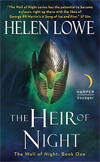
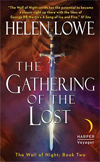
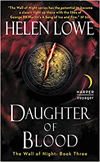
In my own The Wall of Night series, the two main protagonists, Malian and Kalan, are both heroes that heed the call from duty and inclination, while also being driven by circumstances that comprise implacable enemies and a Ragnarok-style end-of-times. They also have superpowers, whereas Myr, the Daughter of Blood for whom the third book is named, is very much the "ordinary individual" who must rise to the occasion amid adverse circumstances.


.
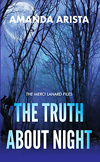
Similarly, Amanda Arista's Merci Lanard, in the series of the same name, is driven to pursue the truth and unmask the dark underbelly of her community, no matter how high the stakes or great the danger.


In A Crown of Bones, AK Wilder's Ash also appears to be the one, regular individual who must hold things together amid a company of friends with superpowers, although circumstances throughout point to her being more than she seems. So, too, with Kaylin, a chance-met companion who definitely has antihero nuances, although he's at least acting the hero -- again, driven by the circumstances of their quest-journey.


.
In short, whether paladin or antihero, a regular guy/gal or near-outright villain (Yarvi, I'm looking at you), and whether the protagonist answers the call willingly or resists, circumstance plays a vital part in making heroes.

© Helen Lowe

~*~

Previous Posts:

January: Looking Forward To An Heroic 2022

March: What Makes A Hero -- and The Call

~*~


About The Author:

Helen Lowe is an award-winning novelist, poet, and lover of story. With four books published to date, she is currently completing the final instalment in The Wall Of Night series.

Helen posts regularly on her “…on Anything, Really” blog, monthly on the Supernatural Underground, and tweets @helenl0we.


Wednesday, March 16, 2022

What Readers Want - Series or Standalone?


Welcome to the Supernatural Underground!

In this post, I'm exploring what readers want in their Fantasy Fiction, series or standalone. Some say it boils down to things like mood, attention span, ability to commit... time constraints. I think it is more about personal taste in literary style and favorite authors. Still, we can't always explain why we love the color blue over red but we feel the truth of it just the same.

How about you?

Is it a standalone novel you reach for first? A complete story from beginning to end in one volume? There are some fantastic ones out there. 

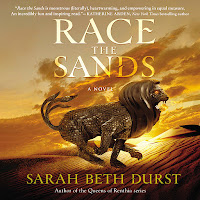
Sarah Beth Durst is a master at this subgenre, as is V. E. Schwab, Holly Black, Garth Nix, Tanith Lee, Neil Gaiman, Margaret Atwood...so many more.

Or do you prefer a series with a much longer story arc divided into multiple books? Are you willing to wait the year or more between instalments in order to experience such an epic tail?

Maybe it's novel serials you love, a collection of books with the same main characters but read, more or less, in any order. Seen often in Urban Fantasy, each book has its own unique beginning and satisfying conclusion as in the works of Charlene Harris, Patricia Briggs and Jim Butcher.

NOTE: There is also a subcategory of the series, immensely popular in the 1800s and not unlike online streaming platforms are these days. Enter the serialized novel. Here the story is delivered over a period of time in bite-size chunks, usually marked by cliffhangers at every mini-conclusion. 

Care to weigh in? I'll post the results near the end of the month!

I'd love to hear more in the comments! 

xxKim

***

Kim Falconer, currently writing as A K Wilder, has just released Crown of Bones, a YA Epic Fantasy with Curse of Shadows coming out in 2022.

Kim can be found on  AKWilder Twitter, Facebook and Instagram. 

Throw the bones, read your horoscopes or Raise Your Phantom on the AKWilder.com site or have a listen to the audio version on the right.

Tuesday, March 1, 2022

What Makes A Hero?

 .

Well, here we are—onto the “Heroes” series at last!

Rather than just honoring my usual m.o. and leaping in and talking about some Fantasy heroes I like, I thought I’d start with the question, “What makes a hero?” 

A farmboy/gal &/or prince/princess goes on a journey...

It’s an important question for Fantasy authors, particularly at the epic end of the spectrum, because an alternative term for “epic fantasy” is “heroic fantasy”, with noble scions or farmboy/gals (or their urban equivalent) not infrequently called upon to save the world.

Quintessential heroic fantasy

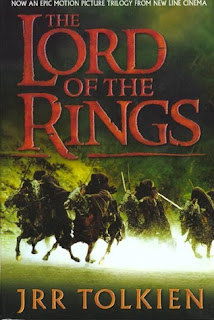
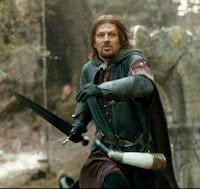
The heroic/epic overlap is very clear in a genre-defining work like JRR Tolkien’s The Lord of the Rings. It’s a work that’s absolutely chock-full of heroes: the four hobbits, Aragorn, Gimli and Legolas, Gandalf, Galadriel, and Elrond, and so many more. Even a character like Boromir, who wavers beneath the ring’s lure, dies a truly heroic death. Then there’s Lobelia Sackville-Baggins, who is heartily disliked by her relatives Frodo and Bilbo, but is cheered by her community at the story’s end for remaining doughty in the face of tyranny.

Boromir's heroic end

Looking at more recent works, I put Ropa, in TL Huchu’s The Library of the Dead, in the "heroes" category, along with Ash in AK Wilder’s Crown of Bones, and Diago in T Frohock’s Los Nefilim series. And although Kristin Cashore’s Bitterblue is a favorite heroine, the telepathic blue fox, Ad, in Winterkeep also rocks the hero tag.


And yet, perhaps because The Lord of the Ring’s heroic focus is so strong, many later works have focused more on “anti-heroes” and even outright villains in the leading role, such as Joe Abercrombie’s Yarvi, in Half A King and Half A War. 


Joe Abercrombie is well-known for his grimdark fantasy, a subgenre that does tend to focus on antiheroes, but I would argue that Thorn, the protagonist in Half A World, and Skara, in Half A War, are more heroic than otherwise.


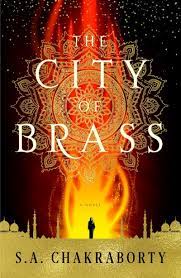
Famous Fantasy antiheroes include Waylander the Slayer, in David Gemmell’s Drenai novels, and Michael Moorcock’s Elric of Melnibone (the Elric series.) More recently, Nahri in SA Chakraborty’s City of Brass has decided antihero tendencies and Venli in Brandon Sanderson's Stormlight Archive series also fits the bill.


When it comes to George RR Martin’s A Song of Ice and Fire series (filmed as A Game of Thrones), a considerable number of characters qualify as antiheroes. Tyrian Lannister springs to mind, along with Sandor Clegane (the Hound), and Arya Stark—but really, there are as many, if not more, antiheroes in ASOIAF as there are heroes in The Lord of the Rings. ;-)


I can’t help thinking, though, that however anti the hero—and the same goes for a villain—if they end saving the day or the world, then for the duration of the “hour that knows their name” (salutes Guy Gavriel Kay), they are a hero.


All of which leads me back to what makes a hero, and to examine three criteria—three C’s in fact—over the next few months. The first of these is “the Call.”

The Call

A great deal is made of whether heroes are willing or unwilling, i.e. whether they heed the call willingly, or drag their feet. For example, Robin McKinley’s Aerin (The Hero and the Crown) is a willing hero, actively hunting the dragons that oppress Damar. Conversely, Hari (The Blue Sword) is more reluctant to champion and save Damar.


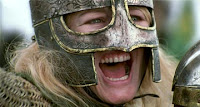
In The Lord of the Rings, Frodo is the most reluctant of the hobbits, whereas Merry, Pippin, and Sam are all eager for adventure. Aragorn and Gandalf both know no doubt, and neither does Eowyn of Rohan, who disguises herself as Dernhelm to fight on the Pelennor Fields. 

Eowyn as Dernhelm

A famous reluctant vs recalcitrant hero is Rand Al Thor in Robert Jordan’s Wheel of Time series—but however reluctantly, he does heed the call.


And in the end, whether willing or reluctant, paladin or antihero, if a character hears the call, and heeds it—however late in the day—then I believe they have the makings of a hero.

Next month, I’ll be back to talk about the second of the three C’s, “circumstance.”

© Helen Lowe

 ~*~


About The Author:

Helen Lowe is an award-winning novelist, poet, and lover of story. With four books published to date, she is currently completing the final instalment in The Wall Of Night series.

Helen posts regularly on her “…on Anything, Really” blog, monthly on the Supernatural Underground, and tweets @helenl0we.