Showing posts with label heroes. Show all posts

Wednesday, September 11, 2024

Sophie Jordan's "Paranormal Heroines vs. Paranormal Heroes": From The Backlist

 .
Sophie Jordan first posted Paranormal Heroines vs. Paranormal Heroes as a guest of the equally wonderful Kerrelyn Sparks -- and we're thrilled to feature it again today. 

Especially as Sophie has an exciting new book, A Fire In The Sky (tagline: Magic lives...) due out on September 24!

Coming very soon!

But here's what Sophie posted when her Firelight trilogy (recently released with new covers) was new-out: enjoy!

Paranormal Heroines vs. Paranormal Heroes

As we slip into fall and near Halloween, nothing excites me more than talking about the paranormal!

Recently on tour for my latest novel, FIRELIGHT, a reader brought to my attention the fact that my heroine in FIRELIGHT is the paranormal “figure” in my book -- not the hero as is the usual case. Yes, I know this, of course, but I hadn’t really considered it very hard. Before now (see me tilting my head thoughtfully here).

Those new covers!

I started mentally checking off a lot of paranormal books – many favorites of mine – and realized the observation in point is rather true. I’m not saying there aren’t books with paranormal females in them, but so many books feature the male figure as the paranormal figure while the heroine is simply human. Why is that? I’m not saying one is better than the other … but I’m interested in your opinion today. Do we, as readers, simply want our male heroes more feral? More dangerous? Does making our heroes into a paranormal creature accomplish that? What does that say?

The original

In Firelight, my heroine Jacinda is a draki, which is a species that has evolved from dragons. She’s the only one of her kind that can still breathe fire. She’s a very strong female, and being so “unique” opens up a world of conflict for her. And what would a book be without conflict? Jacinda is constantly surrounded by danger because of what she is. Since I wrote the book solely from her POV, I had fun with this. It wouldn’t have been nearly as fun to write had she been the human and Will, her love interest, the draki. But that’s just my take. What’s your take?

...

To read the full post, including some great comments, click here.

To find out more about Sophie Jordan, click here.

Tuesday, November 15, 2022

What Makes A Hero? #9: Calm and Chaos


Introduction

Here it is – #9 in the What Makes A Hero in Fantasy series! A little later than usual, but still with plenty of reading time left in the month. ;-)
.
What makes a hero?

And of course, a Having Fun With Fantasy (tropes) post on the "Band of Brothers" by way of an off-course substitute. I do hope you've enjoyed the additional reading goodness. :D

Last Kingdom: the "band of brothers"

So where are we up to with the What Makes A Hero series? I started by focusing on what I considered essential elements in the making of heroes, from the Call through Commitment, to Courage and meeting the Challenge. 

More recently, I've been checking out qualities that may be more optional. To date, I've canvassed Charisma, Chivalry, and Clever vs Clueless. Today I'm taking a closer look at Calm and/or Chaos.
.

What Makes A Fantasy Hero – Calm and Chaos

At face value, an appropriate subtitle could be Berserker vs Stone Killer – except for the niggle that killing and battle are not the beginning or end of heroism. 

Aragorn as healer, in "The Lord of the Rings"

As discussed under Courage in particular, the risk faced may also comprise:

"...unjust imprisonment, loss of standing and/or livelihood within a society, or outright exile from family, community, nation or species."

Consequently, answering the heroic call may require:

 "...physical and mental, or moral courage—or all three."

So I feel that Calm or Chaos is the better starting point. In other words, a protagonist may emulate Kipling's famous If,  and keep their head "when all about ... [them, others] ... are losing theirs", or hurl caution to the winds and charge headlong into the face of overwhelming odds.

Furiosa -- berserker hero

In that context, "berserker" still has its place – and one of fantasy's more famous berserker heroes is the outcast Rek, who becomes the Earl of Bronze in David Gemmell's seminal Legend. His counterpart is Druss, a famous axeman and legendary hero: Druss the Legend, in fact. 


Druss is not a stone killer, and he's not really a warmaster either, although circumstances require that he steps into that role in the defence of the fortress of Dross Drelnoch. (Fortress aside, think a Thermopylae and the Three Hundred-style story.) Druss is unquestionably coolheaded, though, and keeps his calm in the thick of battle, while still taking the fight to the enemy.

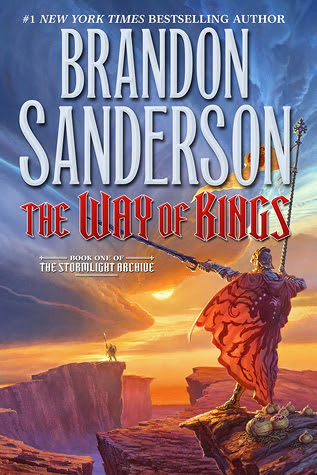
Dalinar Kholin, in Brandon Sanderson's Stormlight Archive, is an interesting example of a warrior who has been a berserker-style champion, but deliberately chooses to contain that part of himself, instead pursuing a warmaster's role.


Gideon and Harrow(hark), in Tamsyn Muir's Gideon the Ninth, are another chaos-and-calm combination. Where Gideon likes to hurl herself at an adversary, preferably wielding her broadsword, Harrow retains her cool--although that may be a be a matter of dire necessity in order to work her necromancy. 


Zeetha, in Studio Foglio's Girl Genius series, is another warrior who likes to hurl herself into the thick of every fray, and Agatha Heterodyne's  extravaganzas of mechanical creation are very berserker-like in their frenzy. Gil (Gilgamesh) on the other hand, is a far cooler-headed character, although just as much a "spark" genius. 


When it comes to outright mayhem, NK Jemisin's Nahadoth, in The One Hundred Thousand Kingdoms,  is a chaos god, and wreaks havoc when his power is unleashed. By contrast, the con artist Nahri—in SA Chakraborty's City of Brass—relies on her wits, no matter how challenging the circumstances. 


One of fantasy's most interesting characters, in terms of the calm-chaos continuum, is JRR Tolkien's Galadriel, a continuum that has been illuminated in series one of The Lord of the Rings: The Rings of Power. In The Lord of the Rings (LoTR) proper, Galadriel is an elder statesperson and great power of the elven realm, who epitomizes calm. The Silmarillion, however, makes it clear the young Galadriel was decidedly hawkish and something of a fireeater. 

Galadriel: The Lord of the Rings

Over the intervening millenia, she has clearly changed a great deal, with the LoTR Galadriel displaying a wisdom that the young Galadriel lacked, which she demonstrates in refusing the ring.

Consideration of Galadriel's arc leads to another class of hero, that does not slot neatly into either the "calm" or "chaos" categories. This is the individual—or "band of brothers"—who is not necessarily trained to lead nations or armies, or overcome challenges, but is forced by circumstances to confront them.

Avatar, the Last Airbender -- another "band of brothers"

In many ways, this is one of fantasy's oldest tropes (which I've called "A Farmboy/Gal Goes On A Journey" in another post), but it's also the basis for "David and Goliath" tales that are enduringly popular in folklore and legend.

Nori Brandyfoot -- an everyday heroine

Bilbo Baggins in The Hobbit, and the four hobbit comrades of The Lord of the Rings, are probably the most famous example of ordinary people thrust into extraordinary circumstances. They certainly don't hurl themselves headfirst into peril, and when peril finds them anyway, they would rather tun and hide than stand and fight.

Yet when in the thick of things, they stumble or crawl to do what needs to be done. One of the great examples is Merry, on the Pelennor Fields. He is dazed from being flung from a horse, but will not let Eowyn confront the Lord of the Nazgul alone, and so crawls to her aid. The result, between Eowyn and Merry, is one of the great deeds of the war, and turns the tide of the battle.

A desperate Merry stabs the Lord of the Nazgul

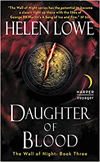
Myr, "the Mouse", is a similar character in Daughter of Blood (The Wall of Night, Book #3.) She is not a warrior and has no overt superpowers, and she is frequently terrified, but has the moral courage to walk a true course amid turmoil, and to avert destruction by remaining true to herself and those she loves.


It is because of characters like the hobbits and Myr, but also Galadriel and Dalinar Kholin, that this post is titled Calm and Chaos—because it's a continuum that depends on circumstance and personality. Regardless of confusion or clarity, circumstances are also likely to create situations where both the cool and hotheaded heroes have their place.

The crows: cool, hotheaded -- & somewhere in between
 

So as with charisma and chivalry, calm and/or chaos are optional qualities for a fantasy hero, though either—or a combination of both—may greatly assist in getting the heroic job done.

© Helen Lowe

~*~

Previous Posts:

January: Looking Forward To An Heroic 2022

March: What Makes A Hero -- and The Call

April: What Makes A Hero #2: Circumstance

May: What Makes A Hero #3: Commitment 

June: What Makes A Hero #4: Courage

July: What Makes A Hero #5: Challenge

August: What Makes A Hero #6: Charisma

September: What Makes A Hero #7: Chivalry 

October: What Makes A Hero #8: Clever – or Clueless? 

~*~

About The Author:

Helen Lowe is an award-winning novelist, poet, and lover of story. With four books published to date, she is currently completing the final instalment in The Wall Of Night series.

Helen posts regularly on her “…on Anything, Really” blog, monthly on the Supernatural Underground, and tweets @helenl0we.


Saturday, October 1, 2022

What Makes A Fantasy Hero #8: Clever -- or Clueless?

 .
When I commenced this "What Makes A Hero?" in Fantasy series, my initial focus was on essential elements, from the Call through to Courage and meeting the Challenge. 
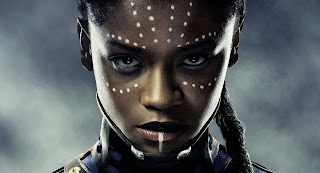
Shuri: courageous and very clever
More recently, I've been discussing qualities that may be considered optional. To date, I've canvassed Charisma and Chivalry – while today's topic addresses Clever vs Clueless. 

Last month, when discussing Chivalry, I referenced The Iliad and Achilles, who is the paramount hero not only because of his prowess in battle but also his (at the outset) exemplary honor. 


When it comes to the importance of cleverness in a hero's make-up, The Iliad provides two further models – the first is the wily Odysseus, who is called upon whenever military initiatives are at a standstill. The second is the immensely strong Ajax, who while always willing to hurl himself at the enemy, is definitely not the sharpest knife in the heroic drawer.

Odysseus in the film "Troy"

Clever or clueless, brain versus brawn – folklore and legend are rich with such characters: David pitted against Goliath, Thor and Loki on their many adventures, together with a whole pantheon of trickster demigods and/or heroes such as Coyote, Maui, and Robin Hood. 

Maui, from the film "Moana"

The question, in considering what makes a Fantasy hero, is if cleverness is a necessary part of the heroic makeup, or whether it can be sufficient to be physically strong and unquestionably brave, like Ajax, but not particularly bright.

The Clever:

The answer may be that it depends on circumstances. Mara of the Acoma, in Janny Wurts and Raymond E Feist's Daughter of the Empire, exemplifies not only cleverness but guile, and an ability to think outside the square. Yet when Mara inherits leadership of her House, its armies are decimated and largely undefended. To survive the Empire's vicious politics and deadly feuds, she has to out-think and outplay everyone else.


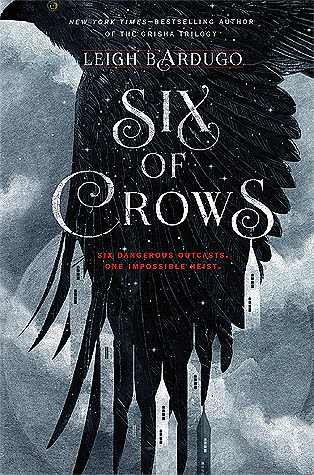
Kaz Brekker, in Leigh Bardugo's Six of Crows, is an outright trickster hero, relying on his wits and cleverness to not only survive but thrive in Ketterdam's underworld and the deadly politics with neighbouring realms. His sidekick, Jesper Fahey, however, while not clueless as such, certainly "leads with his chin" in many situations. 


Mercy Thompson, in Patricia Briggs' series of the same name, is the only shape-shifting coyote in a town dominated by a werewolf pack, but which includes many other paranormal beings as well. In the face of the wolves' superior strength and ferocity, as well as vampire glamors and fey magicks, Mercy must deploy the trickster coyote's wit and savvy to hold her own, stay alive, and protect those she loves.


Other notable trickster heroes include the mage, Quickben, in Steven Erikson's Malazan series, the god Sieh in NK Jemisin's Inheritance trilogy, and Canny Mochrie in Mortal Fire, by Elizabeth Knox. Yarvi, in Joe Abercrombie's Half A King, must use Loki-like cunning and trickery to survive dispossession and exile – although as I've noted before in this series, I'm inclined to regard Yarvi as an outright villain, rather than an antihero. (He's certainly not a hero.)


Cunning, wit, and guile, therefore, are vital in tight corners and when the odds are stacked against the protagonist. 

The cleverness required of a hero may not always be that of the trickster, but rather of the strategist. In terms of circumstances, this more often occurs when the danger is grave but the odds appear more even (at least on the surface.) 


Mara of the Acoma is one of the few heroes who demonstrates both forms of acumen: she subverts where required in order to survive, but she is also a strategic thinker and leader. While always present, the strategic aspect becomes more pronounced in the trilogy's second and third books (Servant of the Empire and Mistress of the Empire, respectively.)


Dalinar Kholin, from Brandon Sanderson's The Way of Kings (and Stormlight Archive series) is an exemplary strategist, as is Count Brass in The Chronicles of the Runestaff by Michael Moorcock. Alessan, in Guy Gavriel Kay's Tigana is another hero prepared to take the field, but his most significant contribution is his ability to outwit and out-game his enemies, pitting them against each other. 


Malian, in my Wall of Night series is a similar character: she has considerable magical power and is prepared to use it, but her ability to keep a cool head, think strategically, and play a long game, are also among her superpowers.


But Are There Clueless Heroes?

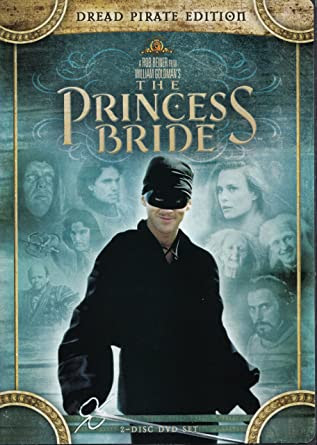
I had to think long and hard in order to identify a Fantasy hero cast in the same model as Ajax. Although not a main character (but still part of the "happy few, the band of brothers") I suspect Fezzik in The Princess Bride probably qualifies. :-)


My best example, though, is Ser Duncan the Tall in George RR Martin's A Knight of the Seven Kingdoms, "Dunk the Lunk" as he terms himself, is extremely naive and also, arguably, not particularly bright – but always very happy to throw himself into the thick of a fight. In Ser Duncan's case he has Egg (Aegon) to take care of most of the heavy thinking, so together they really are something of an 'Ajax and Odysseus' pair. 


Garion, in David Eddings' Belgariad, is not stupid but he is another extremely naive character in the early stages of the saga. And naivety, in many circumstances, can look a lot like cluelessness... 


Overall, though, the genre does not have many clueless heroes. The focus is more on characters that are reasonably intelligent, or even clever, but – like Jesper Fahey – tend to "lead with their chins." In other words, they tend to be driven by their emotions and to lead with them, too, rather than heeding the cooler counsel of their heads. Unsurprisingly, they are often hot-headed and reckless as well.


I've always felt that Harry Potter falls into this category, especially in The Order of the Phoenix, but also in incidents such as the Mirror of Erised in Harry Potter and the Philosopher's Stone. Rand Al Thor, in the Wheel of Time series, is frequently driven by his emotions, as is FitzChivalry in Robin Hobbs' Assassin trilogy. Both can be reckless as well, sometimes to the extent of foolhardiness. 


Sansa Stark, in the A Song of Ice and Fire series is another protagonist whose extreme, and wilful, naivete makes her appear clueless in the early books  – although by the end of A Feast for Crows (ASOIAF #4) the reader is beginning to realize that's not the case. Just as importantly, so is Sansa... 


Conclusion:

The reason for this, I suspect, is because Fantasy heroes must often solve complex magical and strategic problems, as well as leading forlorn hopes and glorious charges, Pelennor Fields-style. There is  definitely a place for the Ajaxes and Sir Duncan the Tall's when glorious charges, forlorn hopes, and sheer brawn are required. More often than not, though, the Fantasy hero must find a clever way to counterbalance considerable odds, or execute strategy on the level of a Mara or an Alessan in order to save a community, a realm, or a world.


Glorious Charge, Pelennor Fields style

Very often, too, part of the hero's journey for the reckless, hotheaded, and emotionally driven is to temper that aspect of themselves in order to win through. 

The weight of evidence, therefore, suggests that some degree of smarts is necessary to a Fantasy hero – and those that don't have it, like George RR Martin's Sir Duncan, had best find themselves an Egg. :-)
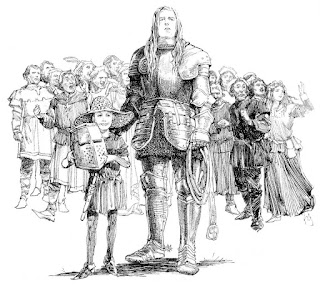
Sir Duncan & Egg

© Helen Lowe

~*~

Previous Posts:

January: Looking Forward To An Heroic 2022

March: What Makes A Hero -- and The Call

April: What Makes A Hero #2: Circumstance

May: What Makes A Hero #3: Commitment 

June: What Makes A Hero #4: Courage

July: What Makes A Hero #5: Challenge

August: What Makes A Hero #6: Charisma

September: What Makes A Hero #7: Chivalry 

~*~

About The Author:

Helen Lowe is an award-winning novelist, poet, and lover of story. With four books published to date, she is currently completing the final instalment in The Wall Of Night series.

Helen posts regularly on her “…on Anything, Really” blog, monthly on the Supernatural Underground, and tweets @helenl0we.