Wednesday, May 20, 2026

From the Backlist: The Art of the YES


Image by Sabrina Belle from Pixabay

Welcome to another post in the Supernatural Underground Backlist Series. Today's feature is from May 2014 by the wonderful author Amanda Arista. This journey may be about heroes, but we think it might apply to us all!

What have you said YES to recently? 

* * * 

I'll have what she's having: The Art of the YES


I've been looking forward to writing this particular step of the Year of Living Heroically and I am so very glad that it fell in this month. 

In YLH #2- I talked about saying 'no' and why it was really all about fear. We refuse the call of adventure because it scares us or we don't feel that we are good enough. 

So this time, I get to talk about saying YES, and the power that it holds. 

When a hero crosses the threshold of their story, they are actively choosing to go on an adventure, do something completely new, or just face what they have been avoiding their whole lives. They have met a mentor who has empowered them or shown them that its not as scary as they think. So they say YES and they start on their adventure. Everything is new and shiny once they say YES. Like a baby starting off in the special world. 

I think we can think of Dorothy putting her first step on the yellow brick road as a good metaphor as to how to say YES. Saying yes is a first step in a longer journey, but your on the road now and you can't go back. 

Just saying YES is empowering. There a certain freedom that comes with shedding off that fear and embracing something totally and wholeheartedly. The saying YES changes you as well. 

Some little questions that change everything in a big way by just answering:

Wanna grab some coffee some time?

Would you like to come work for us?

Will you marry me?

Want to have a baby . . .


---------------------------------------
Find out more about Amanda Arista
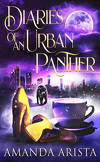
Author, Diaries of an Urban Panther
www.amandaarista.com


Saturday, May 16, 2026

Fiction Predictions: Ballard's Electronic Wallpaper

The Surrealist Mindscapes of J.G. Ballard

J. G. Ballard (1930 - 2009), known for his prophetic short stories and apocalyptic novels, was a foundational figure in the British New Wave. He ignored tropes like rockets, robotics or aliens, and instead explored the depths of the human psyche and an artificially accelerated evolutionary biology. 

Add to that his flair for surrealism and a gifted writing style, and I can see how his confronting plots and violent imagery fueled controversy, while also producing famous works like Empire of the Sun

For today, in the Fiction Predition Series, I want to take a closer look at his 1975 work, High Rise.

This is the third novel Ballard wrote in a trilogy that explores changes in modern society and their effects on human behaviour. In the 70s, at a time when 'advanced tech' referred to 8-track tapes, pocket calculators and electric typewriters, he said:

“... All this, of course, will be mere electronic wallpaper, the background to the main programme in which each of us will be both star and supporting player. Every one of our actions during the day, across the entire spectrum of domestic life, will be instantly recorded on video-tape. In the evening, we will sit back to scan the rushes, selected by a computer trained to pick out only our best profiles, our wittiest dialogue, our most affecting expressions filmed through the kindest filters, and then stitch these together into a heightened re-enactment of the day. Regardless of our place in the family pecking order, each of us within the privacy of our own rooms will be the star in a continually unfolding domestic saga, with parents, husbands, wives and children demoted to an appropriate supporting role.” -High-Rise by J. G. Ballard (1975)     

Now, if that doesn't describe an influencer on TikTok, Instagram, or YouTube, I don't know what would. 

High Rise has been described by Joachim Boazas as 'a virulent strain of Lord of the Flies syndrome' but afflicting adults, instead of children, crammed into an “island-like” building.'

It depicts the trend towards creator economies and influencer culture that leans into social media as an alternative to one-to-one familial relationships, set in an isolate buiding designed only for the very rich.

What could go wrong?

Searching the predicted technology issues first, we find: "Doomscrolling" or "zombie scrolling" can have profound negative effects on mental, emotional, and physical well-being, from increased anxiety and depression to physical symptoms like headaches, eye strain, and poor posture.

But Ballard didn't stop there. He took it to an extreme, horrific to witness as a reader, yet irresistible given his beautiful writing. 

The question today is, was J. G. Ballard a seer

I will answer yes, but hope very much to be wrong.

* * * 

About Kim Falconer
The Amassia Series


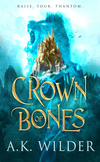
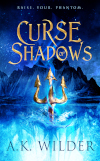
Kim Falconer, also writing as AK Wilder, has released Crown of Bones, a YA Epic Fantasy with Curse of Shadows as book 2 in the series. 


 Quantum Enchantment
Kim can be found on AKWilder.com, TwitterFacebookInstagram and KimFalconer.com

Throw the bones on the AKWilder.com site. See you there!

Read Blood and Water, a PNR alt history that will leave you questioning every natural disaster ever endured.

“There is no doubt fiction makes a better job of the truth.” 

Wednesday, May 13, 2026

From The Backlist: Words Is Your Bizness -- Writing The Blurb

.
We love this post by the wonderful T Frohock on writing blurbs, which is an essential skill in the modern-day author's toolkit.

Definitely a must-read for those pursuing a writing life, and informative for all those interested in it. Enjoy!

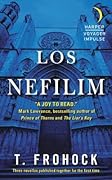
Los Nefilim

Words Is Your Bizness -- Writing The Blurb

by T Frohock

I know a lot of authors tend to think that once they've gotten past the initial query letter, they'll never have to face the horror of condensing their novel into two paragraphs again.

Unfortunately, that is not the case.

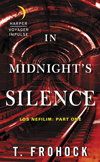
In Midnight's Silence

With both the blurb and the query, you're trying to sell your novel, which is long and deep and complicated, in just a few words, and I know that is hard. One thing I did that helped me immensely was browse in a bookstore. I wandered the fiction section and jotted down taglines and blurbs that caught my attention. Then I went home and analyzed them.

A good blurb is about communicating the essence of your story to the reader, not the details.

Without Light or Guide

Let's look at mine. This was an incredibly difficult blurb to write, because we were combining three novellas into three paragraphs. Here are a few things I learned:

Know your audience. If I am writing historical fantasy with nephilim, I want to target people who love history and magic. So I will design my blurb around the dates, the conflicts, and the how the magic works.

Nail it with a sentence. The biggest argument that I hear from authors is that their story is too complicated. You're a writer. Words is your bizness. Use them well.

The Second Death

Know what appeals to your fans and zoom the lens of your words on the aspects of your story that will appeal most strongly to your reader.

My Los Nefilim blurb encompasses three novellas with one sentence:

T. Frohock's three novellas--In Midnight's Silence, Without Light or Guide, and The Second Death--bring to life the world of Los Nefilim, Spanish Nephilim that possess the power to harness music and light in the supernatural war between the angels and daimons.

What have I told you in that sentence? The names of the previous novellas, what Los Nefilim are (Spanish Nephilim), how they use their magic (through music and light), and finally the nature of the big picture conflict (the supernatural war between angels and daimons).

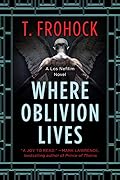
Where Oblivion Lives

Narrow the conflict to the protagonist. The next sentence is:

In 1931, Los Nefilim's existence is shaken by the preternatural forces commanding them ... and a half-breed caught in-between.

Here I center the reader in the time period (1931), because this is historical fantasy. I tell the reader all is not well in the world of Los Nefilim (their existence is shaken), and then I zoom the lens one phrase closer to my protagonist and his place within the conflict (a half-breed caught in-between). The word "caught" indicates the protagonist isn't a willing participant in this war.

Who is the protagonist and what makes them special? Now that I've given the reader the set-up for the world, I tell them about my protagonist:

Diago Alvarez, a singular being of daimonic and angelic descent, is pulled into the ranks of Los Nefilim in order to protect his newly found son.

Diago is not human, nor is he normal by the nephilim's standards (a singular being of daimonic and angelic descent). He is not in Los Nefilim entirely by choice (is pulled into the ranks), but he has a reason to be there (in order to protect his newly found son).

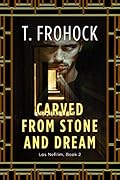
Carved from Stone and Dream

What is the protagonist's conflict? This comes in the last two sentences.

As an angelic war brews in the numinous realms, and Spain marches closer to civil war, the destiny of two worlds hangs on Diago's actions. Yet it is the combined fates of his lover, Miquel, and his young son, Rafael, that weigh most heavily on his soul.

Here I have reintroduced the angelic war and tied it into the Spanish Civil War while alluding to Diago's role in the course of events. I also introduce the fact that Diago is gay (his lover, Miquel) and that the fates of Miquel and Rafael are Diago's primary concern, which adds a very relatable human element to the story.

Sum it all up. The last line sums up the crux of the story:

Lyrical and magical, Los Nefilim explores whether moving toward the light is necessarily the right move, and what it means to live among the shadows.

This sentence refers to Diago questioning his decision to join Los Nefilim throughout the novellas...

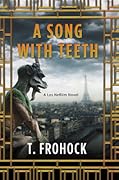
A Song with Teeth


To read the full post, go here

To catch up with T Frohock, visit her here

Saturday, May 2, 2026

A Year of Heroines in Fantasy #3: Brienne of Tarth, Tavore Paran, & Asantir

 
Following my wee hiatus on heroines last month, I'm back again for May and rarin' to talk Brienne of Tarth from the Game of Thrones 'verse, Adjunct Tavore (Paran) in the Malazan Book of the Fallen series, and Asantir from m'own The Wall of Night quartet.

Brienne of Tarth, GoT series

All three are warriors in their respective societies, but not magic wielders as well -- unlike Aerin, Elfrid, and Malian, in my first Heroines post. So that's the first aspect they have in common -- although their disparities, as well as the qualities they share, are equally important in looking at this particular trio together. 

Brienne, for example, is very much an outlier in a man's world, where women are largely not accepted as warriors and certainly not knighted -- although in the Game of Thrones TV adaptation, which goes beyond the story arc of the books, Brienne does achieve this distinction. 

Tavore and Asantir, by contrast, inhabit worlds where women are as likely to be warriors as mages, and hold positions of power throughout their societies. Yet Tavore, like Brienne, comes from a noble family, whereas Asantir has risen through the ranks to become first captain of her Earl's honor guard, then overall Commander of the warrior House of Night.

On the other hand, both the honor guard role and loyalty to a leader -- in Brienne's case, Renly Baratheon, and in Asantir's the Earl of Night -- ties these two heroines closer together. Early in the Game of Thrones storyline, Brienne is chosen for Renly's elite Rainbow Guard, although her later path is more that of a knight errant, seeking to find and protect the two Stark sisters, Sansa and Arya. 

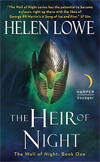
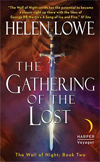
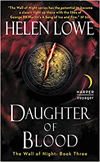
The Wall of Night series (USA)

When readers first meet Asantir in The Heir of Night (Book One), she is already captain of the Earl's Honor Guard, and unlike Brienne, she stays within her House's chain of command, and advances to command its armies. In this sense, her path is closer to that of Adjunct Tavore, who leads the Malazan Seventh Army throughout most of the ten-book Malazan series.

Tavore and Asantir are also more alike in personality than Brienne. Both are confident in themselves, keen minded, and experienced and successful soldiers. Brienne is equally adept as a warrior, but lacks Tavore and Asantir's confidence -- although, like them, her arc in the HBO shows her not only becoming a knight, i.e. recognized for her fighting prowess, but also commanding a wing of the army that faces the Night King. 

A major difference between Tavore, as opposed to both Brienne and Asantir, is the question mark over the sacrifice of her young sister, Felisin, to further her own rise in the service of the Malazan Empress.

Malazan #1

Asantir, however, is renowned in Night for her unwavering honor, loyalty, and duty, while Brienne is equally unswerving in her loyalty to Renly and in keeping faith with her pledge to find and protect the Stark sisters.  

As a woman following a warrior path, Brienne breaks the conventions of her society, yet in her knightly conduct and service she upholds them. In this sense, she may be something of a paradox, but otherwise, what you see with Brienne of Tarth is unquestionably who and what she is.  Conversely, with both Tavore and Asantir there are always hidden depths -- but a diversity of Fantasy heroines just adds more zest to the genre fun. 

The Wall of Night series (UK)

.

Prior Posts: A Year of Heroines in Fantasy

February: Aerin, Elfrid, & Malian of Night
March: Yeine Darr & Rowan Birchmoon
~*~

About Helen Lowe

Helen Lowe is the award-winning author of Thornspell and The Wall Of Night fantasy series, as well as a poet, blogger, and lover of story. She has recently completed writing the final book in The Wall of Night series, which is now with its publisher.

Helen posts regularly on her “…on Anything, Really” blog, monthly on the Supernatural Underground, and tweets @helenl0we.