Thursday, July 16, 2026

Fiction Predictions: ChickieNobs Anyone?

Oryx and Crake By Nidaou on DeviantArt

Can you imagine buying a protein product that was grown in a vat, completely detached from a brain, a beak, or a central nervous system? While you're at it, picture a medical facility where a human life is saved using a heart harvested from a genetically engineered pig. If this sounds like a far-fetched future dystopia, it was, but now these are literal snapshots of modern reality. 

Welcome back to Fiction Predictions

This month we explore Margaret Atwood’s chilling 2003 dystopia, Oryx and Crake. Decades before biotech startups began serving cultivated meat and surgeons successfully crossed the species barrier in organ transplantation, Atwood mapped it out for us in story. But was she seeing the future, or, as she claims, simply following a logical thread to its conclusion

Author & Book Overview

The Author: Margaret Atwood is a literary icon, a master of speculative fiction who anchors her worlds in harsh realities rather than fairytale fantasy.

The Book: Make no mistake, Oryx and Crake (2003), the first book in her MaddAddam trilogy, is a dystopian novel that can take a hot minute to get into. Once hooked, it will reveal itself through the eyes of Snowman (formerly Jimmy), the lone human survivor of a man-made apocalyptic plague. Told through flashbacks, the story immerses us in a corporate-controlled world where we meet Jimmy's genius childhood friend, Crake, and the mysterious woman they both loved. Not unlike themes in Mary Shelley's Frankenstein and Taneth Lee's Silver Metal Lover, we live through unchecked scientific hubris that doomed humanity. Not for the faint of heart!

The Setting: As you can imagine, it's a bleak, corporate-dominated future where gene-splicing is a consumer-driven pastime and society is strictly divided between wealthy tech compounds and chaotic slums.


The "Predictions"

Lab-Grown Meat: Enter "ChickieNobs," genetically modified organism chunks that grow breasts and wings without brains or feelings. This mirrors today's rapidly advancing cultivated and cellular meat industries. (Forget about shopping organic, pesticide-free, non-GMO, let alone no bad oils).

Spliced Animals: And here we have "pigoons" (pigs bred to grow human organs for transplants) and "splices" like "snats" (snake-rats). The word sounds cute, but trust me, they aren't. Today, scientists are already onto it, growing human organs inside pig embryos (xenotransplantation).

Biotech Pandemics: The plot revolves around a man-made global pandemic engineered inside a corporate lab to wipe out humanity. It perfectly mirrors, if not reality, then the modern anxieties regarding synthetic biology and biosecurity.

Extreme Climate & Hyper-Consumerism: The book depicts a world of blistering UV rays, collapsed ecosystems, and corporations commercialising everything from youth serums to suicide.

Was Atwood a "Seer"?

I want to say yes, but I know Atwood famously claims she does not predict the future; she simply looks at the present and follows the trends to their logical conclusions. Still, is that now a form of 'seeing'? Is that so much different from Shelly, Lee, Ballard, the rest...?

What do you think? I would love to see your thoughts in the comments.

Kim 📘 🙏🏼 💙

* * * 

About Kim Falconer
The Amassia Series


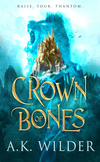
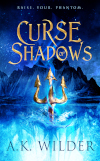
Kim Falconer, also writing as AK Wilder, has released Crown of Bones, a YA Epic Fantasy with Curse of Shadows as book 2 in the series. 


 Quantum Enchantment
Kim can be found on AKWilder.com, Twitter, Facebook, Instagram and KimFalconer.com

Throw the bones on the AKWilder.com site. See you there!

Read Blood and Water, a PNR alt history that will leave you questioning every natural disaster ever endured.

“There is no doubt fiction makes a better job of the truth.” 


Monday, July 13, 2026

From the Backlist: "Faith and Fantasy" by Jeaniene Frost

 .
We think this is a fabulous post, by the great Jeaniene Frost, so we hope you enjoy this revisit. :)


Faith and Fantasy

by Jeaniene Frost

...

As a paranormal writer, I’ve often been asked how my supernatural creatures differ from others. Take my vampires. One of the things they can do that many others in fiction can’t is walk around in the daylight. Yes, just like in the original Dracula by Bram Stoker, my vampires have no lethal aversion to sunlight. Something else that repels many vampires in modern fiction, but also has no effect on mine, is crosses. I originally decided on that because I couldn't come up with an answer to the question of how a vampire who pre-dated Christianity would cringe away from a cross, and I have some vampires in my novel who are much older than two thousand years.* Therefore, religious objects in my books don’t have any effect on vampires.

That doesn’t mean faith is absent in my stories. In fact, my idea for the origin of vampires came from the Biblical story of Cain. In my retelling of it, God’s “mark” was making Cain into the first vampire, cursed to forever drink blood as punishment for spilling his brother Abel’s (or so the vampires claim. Ghouls in my books have a different version of what Cain was turned into, heh). So right from the beginning, I knew I’d have to deal with the element of faith in my supernatural world.

Still, the idea than an entire species would agree about spiritual beliefs seemed an impossible notion even for a work of supernatural fiction. Therefore, even though I made up a fictitious creationist history for the undead based on the biblical character of Cain, this doesn't make the vampires or ghouls in my book automatically Judeo-Christian. Instead, they represent a wide range of beliefs, including atheists, Christians, Jews, Muslims, Hindus, Buddhists, agnostics, pagans, voodoo, and more. Mencheres, the hero in my upcoming novel, Eternal Kiss of Darkness, still believes in the ancient Egyptian gods -- which gave me an excuse to indulge my love of Egyptology with more research about them!

...

To read the full post, click here

To visit with Jeaniene Frost and discover her latest series, try her website

Thursday, July 2, 2026

A Year of Heroines in Fantasy: Amat Kyaan, Rachael Boucher, & Nhairin

 .
Well here we are again -- it's heroines time and I have another line-up of three from my Fantasy hall of fame.

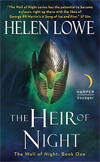
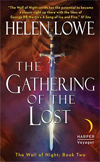
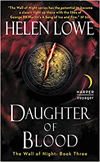
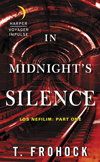
My July trio are Amat Kyaan from Daniel Abraham's  Shadow in Summer, #1 in the Long-Price Quartet, Rachael Boucher in T Frohock's Miserere, and Nhairin from my own The Wall of Night series.

All three are deeply troubled characters, chiefly because of circumstances, although their personalities also play a part. The other thing this particular three have in common is that they have no superpowers, unlike many of their fellow protagonists in each story. 

Amat Kyaan is an ageing bookkeeper, and single woman, who loses almost everything in the city of Saraykeht's cutthroat commercial society. She could well have ended up as just another piece of human flotsam on the city's ruthless tides. Instead, she sets out to take over the city's criminal establishment and take down her enemies. An enterprise that demands tenacity, nerves of steel, considerable daring – and forensic use of double-entry book-keeping.

Rachael Boucher is a Judge in the battleground realm of Woerld, which stands between the contending forces of heaven and hell. In the story's past, her lover abandoned her in Hell, where she was infected by a demon. Although Rachael managed to escape, she has been fighting the demon's encroaching possession ever since.

Like Amat Kyaan, Rachael is staunch. She is also toughminded, self-disciplined, and self-reliant -- she has to be, because the possession makes her an outcast. Perhaps Rachael's most important quality, though, despite the adversity she's suffered, is that she remains merciful. Like Amat Kyaan, she's a great favorite of mine.

Nhairin is also a character who has lost, and suffered, a great deal, both emotionally and physically. She was badly wounded defending her best friend, who was subsequently exiled and is believed dead, and only just escaped with her own life. Nhairin also feels betrayed by another childhood friend, and remains deeply troubled. She is also far less resilient than either Amat or Rachael, which leads her to close in on herself, and eventually fall prey to a predatory madness.

Although very different characters, I've identified the circumstances common to all three heroines. The greatest commonality, though, is the way all three -- yes, even Nhairin -- keep going, until one achieves victory, one is saved, and the third finds forgiveness. They are definitely heroines that endure in the face of great adversity -- which is why, if you haven't met them already, I believe they'll repay a visit. 


Prior Posts: A Year of Heroines in Fantasy


~*~

About Helen Lowe

Helen Lowe is the award-winning author of Thornspell and The Wall Of Night fantasy series, as well as a poet, blogger, and lover of story. She has recently completed writing the final book in The Wall of Night series, which is now with publisher, Harper Voyager.

Helen posts regularly on her “…on Anything, Really” blog, monthly on the Supernatural Underground, and tweets @helenl0we.