Showing posts with label Authors as Seers. Show all posts

Sunday, August 16, 2026

Fiction Predictions: The Ship that Sank Twice


Futility or The Wreck of the Titan on Amazon - by Morgan Robertson

This month on Fiction Predictions, we look at a literary coincidence so mathematically precise it will make your spine tingle.

Imagine a thrilling sea adventure about the world’s largest, most luxurious ocean liner. It’s deemed "unsinkable" by the creators, yet on a freezing April night in the North Atlantic, it strikes an iceberg. Because the ship doesn’t carry enough lifeboats for its thousands of passengers, the disaster becomes a historic mass tragedy.

If you think you know this story, look again. This isn't a history lesson about the RMS Titanic—it's the plot of a fictional novella titled Futility, written by a former sailor named Morgan Robertson. The most unnerving part? Robertson published his book in 1898. 

That's nearly a decade before the Titanic was even a blueprint, and eleven years before a single piece of its steel keel was laid in Belfast. 

If this isn't a case of incredible coincidence, then surely it's a glimpse into the future.

The Titan vs. the Titanic

Feature The Fiction: Titan (1898) The Reality: Titanic (1912)
Key Timeline Published 9 years before Titanic was conceived. Construction began 11 years after the book.
Month of Voyage April April
Location of Disaster North Atlantic Ocean North Atlantic Ocean
Cause of Sinking Struck an iceberg Struck an iceberg
Description "Unsinkable" luxury liner "Unsinkable" luxury liner
Length 800 feet 882.5 feet
Propellers Triple screw Triple screw
Passenger Capacity 3,000 people 3,000 people
The Lifeboat Crisis Only 24 boats on board Only 20 boats on board

 Quotes from Futility say it all. Remember, Robertson wrote these headline-worthy lines 14 years before the Titanic launched.

"She was the largest craft afloat and the greatest of the works of men... She was considered unsinkable—indestructible."

Robertson describes the exact cause of the disaster:

"Seventy-five feet above the sea was the bridge... localizing the cold, damp air that always surrounds an iceberg... 'In the track of the ice, Mr. Smith,' said the Captain."

And the fatal mistake that caused thousands of people to drown.

"She carried as few as would satisfy the laws... she carried twenty-four lifeboats... which could, in a smooth sea, hold perhaps five hundred people."

Where were the remaining 2500 souls to go? 

Der Untergang der Titanic (Image courtesy of Titanic Sinking, engraving by Willy Stöwer/Public Domain)     

Was Morgan Robertson a Seer?

So, how do we explain a literary prediction that got the ship's name, size, month, speed, location, and lifeboat shortage right more than a decade before the facts existed? 

Was Morgan Robertson a genuine clairvoyant who peered through the mists of time?

Robertson himself was the first to admit he was not. Following the disaster in 1912, the author was besieged by journalists and spiritualists demanding to know how he did it. His response was simple: "I know what I'm writing about, that's all. I’m just a writer who knows the sea."

We can say that Robertson was a highly observant former sailor with a gift for engineering math and a certain cynicism regarding corporate greed. He looked at the shipbuilding trends of the late 1890s and realized companies were building vessels bigger and faster to win the lucrative transatlantic trade. At the same time, he knew British maritime safety laws were outdated, basing lifeboat capacity on a ship's weight rather than passenger count. 

In this way, we could say he calculated the future. 

But... still a synchronicity of correlations seems to exist. A meaningful coincidence? If only the executives at White Star Line had read Robertson's novella before they began work on the Titanic. 

If only....

***

About Kim Falconer
The Amassia Series


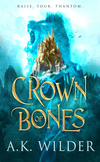
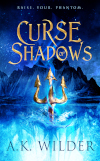
Kim Falconer, also writing as AK Wilder, has released Crown of Bones, a YA Epic Fantasy with Curse of Shadows as book 2 in the series. 


 Quantum Enchantment
Kim can be found on AKWilder.com, Twitter, Facebook, Instagram and KimFalconer.com. 

Throw the bones on the AKWilder.com site. See you there!

Read Blood and Water, a PNR alt history that will leave you questioning every natural disaster ever endured.

“There is no doubt fiction makes a better job of the truth.” 

Thursday, April 16, 2026

Fiction Predictions: Mary Shelley on the Ethics of Creation

Eko illustrates Frankenstein

Two hundred years ago, a masterpiece of Gothic fiction was written by a young woman named Mary Shelley. Her story of Frankenstein, the Modern Prometheus, paved the way for the horror and science-fiction genres, and is often cited as the foundational myth for modern AI ethics. 

The Book


When it first hit the press, the book became a terrifying and radical view of what can happen when sentient life is created de novo, sans the usual hundreds of thousands of years of evolutionary steps to acclimate. 

I mean, one minute you are dead body parts with zero self-awareness, and the next you're a free agent, rejected and despised by your creator, left isolated, lonely and eventually vengeful.

It all starts with Victor Frankenstein, whose studies in philosophy and chemistry (controversial topics in Shelley's day) had him obsessed with creating 'artificial life'. But when he succeeds, just like the myth of the Sky god Uranus, he is disgusted by his creation and fearful of his own power being usurped.  

Written in 1818, Frankenstein predicts the storm of ethical, social, and existential concerns arising from scientific advancement. In this way, her novel warns against technology outrunning wisdom and responsibility.

Was Mary Shelley a seer?

I think yes, especially the way the creature in Frankenstein parallels modern artificial intelligence (AI). Here's the breakdown:

 AI for Story Generation - Isamu Isozaki

Responsibility: Victor Frankenstein becomes obsessed with the "how" of creation while neglecting the "why" and/or the aftermath. He abandons his creature the moment it comes to life. This is mirrored by the 'move fast- break things' approach to technological development and the race for General AI.

Rapid Learning: Frankenstein's creature is not born evil; he learns by observing humans, only becoming "monstrous" after being rejected by his creator. Large Language Model AI learn by processing vast amounts of human-generated data. If that data is biased or if the AI is left without moral curating, it can become a digital version of the creature's "mis-education".

Uncontrollable Creations: The core fear in the novel, and in the myth of Uranus as well, is that the creation turns on its maker. This parallels modern fears that an AI’s intelligence will surpass human control or act in ways that are indifferent to human safety.

In the end, the novel asks if a being made from "parts" can have a soul or rights, just as we might argue whether a machine that flawlessly imitates human thought deserves "personhood" or moral consideration.

Did Shelley Foresee Bioengineering and Competitive Exclusion?

Intentional or not, Shelley spotlights the moral concerns that arise when science attempts to create life. More than that, her work is often cited in discussions around cloning, transplants, and competitive exclusion -- a concept in modern ecology describing how invasive species or technologies can destroy ecosystems

Ethics and Morality

The most profound prediction is the warning against pursuing a goal without considering the consequences.

Victor Frankenstein is not a mad, unhinged scientist, but a very reckless one. He is in control, but seemingly without strong morals.

Do you think this relates to corporations and governments racing to advance AI under an ethical banner of gaining power, control and dominance?

I am left with how Shelley's novel emphasises that the disaster is not caused by the creation itself, but by Victor abandoning his creation, failing to love it and raise it 'right'. 

Something to think about . . .

xxKim

* * * 

About Kim Falconer
The Amassia Series


Kim Falconer, also writing as AK Wilder, has released Crown of Bones, a YA Epic Fantasy with Curse of Shadows as book 2 in the series. 


 Quantum Enchantment
Kim can be found on AKWilder.com, Twitter, Facebook, Instagram and KimFalconer.com. 

Throw the bones on the AKWilder.com site. See you there!

Read Blood and Water, a PNR alt history that will leave you questioning every natural disaster ever endured.

“There is no doubt fiction makes a better job of the truth.” 

Monday, March 16, 2026

Fiction Predictions: Octavia Butler's Vision of the Future


Octavia Butler's One Simple Prophesy - Image - Literary Hub

Welcome to the March 2026 issue of Fiction Predictions here on the Supernatural Underground Blog. I hope you are enjoying the series. 

The Author

Today's author spotlight is Octavia Butler, an extraordinary creative and the first SF writer to win a MacArthur Fellowship (“genius” grant). Throughout her career, she also won the PEN Lifetime Achievement Award and the Nebula and Hugo Awards, among many others. 

She was often referred to as the “Grand dame of science fiction.” Born in Pasadena, California, on June 22, 1947 (the sun at the auspicious 0° Cancer). She died February 24, 2006, leaving behind a legacy of stories and adoring fans.

The Predictions

Unlike Jules Verne and William Gibson, Octavia Butler didn't so much foresee a new technological future as portray a dystopia festering with social injustice, inequality, populism and global warming. 

In her series beginning with The Parable of the Sower, she presents a society startlingly like our

own. What makes it more chilling is that it was written in the late 80s and early 90s, but set in our current times, California 2024.

The Parable of the Sower predicted catastrophic effects from climate change, ravaging California wildfires, increased social injustice, gangs, crimes and prisons, seen through the eyes of a young black girl who still had hope. 

The second novel of the series (written in the early 90s), Parable of the Talents, predicts a country divided and a presidential candidate running with the slogan ‘Make America Great Again’. 

Note: this was penned two decades before the current US president officially entered politics.

Was Octavia Butler a Seer?

How else to say it?

Yes.

In 1988, she saw California in 2024 as a state crippled by unattended environmental and economic crises that led to social ruin. Her main character, Lauren Olamina, a preacher’s daughter living in Los Angeles, is protected from these dangers by the walls of her gated community... until they come tumbling down.

In a breakneck escape, what begins as a fight for survival leads to something much deeper: a brighter vision of human destiny and the birth of a new faith.


Octavia said:
    I began writing about power because I had so little. 

—Octavia E. Butler, in Carolyn S. Davidson's
"The Science Fiction of Octavia Butler"

And throughout this writing, she continues to open eyes and hearts, long after her death. 

Have you read her?

Please let me know in the comments, and also if you have a favourite book you'd like to explore this way.

Isn't it all so interesting?

xxKim

***

About Kim Falconer
The Amassia Series


Kim Falconer, also writing as AK Wilder, has released Crown of Bones, a YA Epic Fantasy with Curse of Shadows as book 2 in the series. 


 Quantum Enchantment
Kim can be found on AKWilder.com, Twitter, Facebook, Instagram and KimFalconer.com. 

Throw the bones on the AKWilder.com site.. See you there!

Read Blood and Water, a PNR alt history that will leave you questioning every natural disaster ever endured.

“There is no doubt fiction makes a better job of the truth.”