Showing posts with label Fiction Prediction Series. Show all posts

Wednesday, September 16, 2026

Fiction Predictions: Rumi's Mystical Atoms


Rumi didn't sit at a desk to write! He danced! Art from Pinterest

Welcome to the next edition of the Fiction Predictions series. Today we go back 800 years to 13th-century Persia and visit the poet and philosopher known to us as Rumi. We will look at his "Poem of the Atoms" (or Zarrah in Persian) that reads uncannily like a description of subatomic particle spin, orbital mechanics, and quantum entanglement. [1] 

Rumi's Creative Process


In our imaginations, we might see Rumi bent over an ancient scrolltop desk, studying Greek philosophers and their notions of 'atomism'. Or maybe we envision him holed up in a candle-lit garret, learning Sufi mysticism teachings. But Rumi didn't tap his creative genius in such an academic way. Instead, danced.

In a state of ecstasy, Rumi whirled about, Dervish-style, channelling his creative works seemingly out of 'thin air'. If it weren't for his disciple, his 'recorder' as he would be called in my stories of Ash, all his beautiful and enlightening words would never have reached our ears.

Fortunately for us, chasing closely behind him was his scribe. He eagerly recorded every word Rumi uttered, scratching away with his reed pen, filling sheet after sheet of handmade rag paper before it was too late. Before the words were gone.

This was the raw, chaotic creative process of Jalal al-Din Rumi and his constant companion, Husam al-Din Chalabi.

In this way, Rumi gave us depth and understanding that science would verify 800 years later. 

Rumi and Quantum Physics


Long before the birth of quantum mechanics, Rumi described a universe made of tiny, ecstatic, perpetually spinning building blocks (zarrah in Persian, meaning the smallest indivisible speck) that was then translated into the ancient Greek word for Atom (in the 5th-century BCE, the Greeks theorised that the universe was made of indivisible units ("atoms") moving through a void (universe). 

But Rumi experienced these atoms in ways that might be hard for us to believe. We have to ask, did this ancient Sufi master somehow tap into the subatomic secrets of the cosmos long before our instruments could identify them?

Rumi's Atomic Universe of Love

From his famous Poem of Atoms, we find:

"O day, arise! Shine your light, the atoms are dancing.
Thanks to Him the universe is dancing,
Overcome with ecstasy, free from body and mind.
I'll whisper in your ear where their dance is leading them.
All the atoms in the air and in the desert are dancing,
Puzzled and bemused to the ray of light, they seem insane.
Every single atom, happy or miserable,
Becomes enamoured of the Sun, of which nothing can be said." [1, 2, 3]

Rumi's Atoms vs. Modern Physics

Rumi's Mystic Verse (13th Century) The Parallel in Modern Physics (20th–21st Century)
"O day, arise! Shine your light, the atoms are dancing... Overcome with ecstasy..." Quantum Wave-Particle Fluctuations: Subatomic particles are never still; the quantum vacuum is a constant "dance" of fluctuating energy.
"Every single atom... Becomes enamoured of the Sun..." Fractal Orbital Mechanics: The fundamental design of matter involves objects orbiting a central nucleus, a central star, or a galactic core.
"Behind every atom of this world hides an infinite universe." Subatomic Complexity: A single proton contains a practically infinite landscape of quarks and gluons bound by immense nuclear forces.

 Was Rumi a Seer of the Future?

Sufi Dance by Maryam Mughal
FineArtsAmerica
How do we evaluate a 13th-century poet who spoke of the universe as if reading from a quantum physics textbook? Did he look through time and grasp the truth of subatomic matter?

Again how?

There were no particle accelerators back then, or mathematical equations to prove the nature of quantum reality. But he was educated in Islamic philosophy, which had preserved the ancient Greek concept of the zarrah—the smallest, indivisible unit of matter. 

Where Rumi Begged to Differ

Western science later treated the atom as cold, dead, mechanical building blocks of the universe, Rumi’s Sufi mysticism saw the entire cosmos as a living manifestation of divine love (Ishq). And, to Rumi, love required a dance and an orbital centre to spin around. Through living this dance, he tapped into a universal truth: that the same laws governing the human soul must govern the physical world as well. 

Modern quantum physics eventually built the tools to prove that the universe is as dynamic, vibrating, and deeply interconnected as Rumi said it was eight hundred years ago. Perhaps he wasn’t a seer of this scientific data but more a manifestation of cosmic harmony, proving that sometimes, the heart will map the universe long before the mind can verify it.

What do you think?

***

About Kim Falconer
The Amassia Series


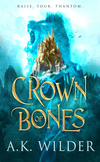
Kim Falconer, also writing as AK Wilder, has released Crown of Bones, a YA Epic Fantasy with Curse of Shadows as book 2 in the series. 


 Quantum Enchantment
Kim can be found on AKWilder.com, Twitter, Facebook, Instagram and KimFalconer.com. 

Throw the bones on the AKWilder.com site. See you there!

Read Blood and Water, a PNR alt history that will leave you questioning every natural disaster ever endured.

“There is no doubt fiction makes a better job of the truth.” 

Sunday, August 16, 2026

Fiction Predictions: The Ship that Sank Twice


Futility or The Wreck of the Titan on Amazon - by Morgan Robertson

This month on Fiction Predictions, we look at a literary coincidence so mathematically precise it will make your spine tingle.

Imagine a thrilling sea adventure about the world’s largest, most luxurious ocean liner. It’s deemed "unsinkable" by the creators, yet on a freezing April night in the North Atlantic, it strikes an iceberg. Because the ship doesn’t carry enough lifeboats for its thousands of passengers, the disaster becomes a historic mass tragedy.

If you think you know this story, look again. This isn't a history lesson about the RMS Titanic—it's the plot of a fictional novella titled Futility, written by a former sailor named Morgan Robertson. The most unnerving part? Robertson published his book in 1898. 

That's nearly a decade before the Titanic was even a blueprint, and eleven years before a single piece of its steel keel was laid in Belfast. 

If this isn't a case of incredible coincidence, then surely it's a glimpse into the future.

The Titan vs. the Titanic

Feature The Fiction: Titan (1898) The Reality: Titanic (1912)
Key Timeline Published 9 years before Titanic was conceived. Construction began 11 years after the book.
Month of Voyage April April
Location of Disaster North Atlantic Ocean North Atlantic Ocean
Cause of Sinking Struck an iceberg Struck an iceberg
Description "Unsinkable" luxury liner "Unsinkable" luxury liner
Length 800 feet 882.5 feet
Propellers Triple screw Triple screw
Passenger Capacity 3,000 people 3,000 people
The Lifeboat Crisis Only 24 boats on board Only 20 boats on board

 Quotes from Futility say it all. Remember, Robertson wrote these headline-worthy lines 14 years before the Titanic launched.

"She was the largest craft afloat and the greatest of the works of men... She was considered unsinkable—indestructible."

Robertson describes the exact cause of the disaster:

"Seventy-five feet above the sea was the bridge... localizing the cold, damp air that always surrounds an iceberg... 'In the track of the ice, Mr. Smith,' said the Captain."

And the fatal mistake that caused thousands of people to drown.

"She carried as few as would satisfy the laws... she carried twenty-four lifeboats... which could, in a smooth sea, hold perhaps five hundred people."

Where were the remaining 2500 souls to go? 

Der Untergang der Titanic (Image courtesy of Titanic Sinking, engraving by Willy Stöwer/Public Domain)     

Was Morgan Robertson a Seer?

So, how do we explain a literary prediction that got the ship's name, size, month, speed, location, and lifeboat shortage right more than a decade before the facts existed? 

Was Morgan Robertson a genuine clairvoyant who peered through the mists of time?

Robertson himself was the first to admit he was not. Following the disaster in 1912, the author was besieged by journalists and spiritualists demanding to know how he did it. His response was simple: "I know what I'm writing about, that's all. I’m just a writer who knows the sea."

We can say that Robertson was a highly observant former sailor with a gift for engineering math and a certain cynicism regarding corporate greed. He looked at the shipbuilding trends of the late 1890s and realized companies were building vessels bigger and faster to win the lucrative transatlantic trade. At the same time, he knew British maritime safety laws were outdated, basing lifeboat capacity on a ship's weight rather than passenger count. 

In this way, we could say he calculated the future. 

But... still a synchronicity of correlations seems to exist. A meaningful coincidence? If only the executives at White Star Line had read Robertson's novella before they began work on the Titanic. 

If only....

***

About Kim Falconer
The Amassia Series


Kim Falconer, also writing as AK Wilder, has released Crown of Bones, a YA Epic Fantasy with Curse of Shadows as book 2 in the series. 


 Quantum Enchantment
Kim can be found on AKWilder.com, Twitter, Facebook, Instagram and KimFalconer.com. 

Throw the bones on the AKWilder.com site. See you there!

Read Blood and Water, a PNR alt history that will leave you questioning every natural disaster ever endured.

“There is no doubt fiction makes a better job of the truth.” 

Thursday, July 16, 2026

Fiction Predictions: ChickieNobs Anyone?

Oryx and Crake By Nidaou on DeviantArt

Can you imagine buying a protein product that was grown in a vat, completely detached from a brain, a beak, or a central nervous system? While you're at it, picture a medical facility where a human life is saved using a heart harvested from a genetically engineered pig. If this sounds like a far-fetched future dystopia, it was, but now these are literal snapshots of modern reality. 

Welcome back to Fiction Predictions. 

This month we explore Margaret Atwood’s chilling 2003 dystopia, Oryx and Crake. Decades before biotech startups began serving cultivated meat and surgeons successfully crossed the species barrier in organ transplantation, Atwood mapped it out for us in story. But was she seeing the future, or, as she claims, simply following a logical thread to its conclusion

Author & Book Overview

The Author: Margaret Atwood is a literary icon, a master of speculative fiction who anchors her worlds in harsh realities rather than fairytale fantasy.

The Book: Make no mistake, Oryx and Crake (2003), the first book in her MaddAddam trilogy, is a dystopian novel that can take a hot minute to get into. Once hooked, it will reveal itself through the eyes of Snowman (formerly Jimmy), the lone human survivor of a man-made apocalyptic plague. Told through flashbacks, the story immerses us in a corporate-controlled world where we meet Jimmy's genius childhood friend, Crake, and the mysterious woman they both loved. Not unlike themes in Mary Shelley's Frankenstein and Taneth Lee's Silver Metal Lover, we live through unchecked scientific hubris that doomed humanity. Not for the faint of heart!

The Setting: As you can imagine, it's a bleak, corporate-dominated future where gene-splicing is a consumer-driven pastime and society is strictly divided between wealthy tech compounds and chaotic slums.


The "Predictions"

Lab-Grown Meat: Enter "ChickieNobs," genetically modified organism chunks that grow breasts and wings without brains or feelings. This mirrors today's rapidly advancing cultivated and cellular meat industries. (Forget about shopping organic, pesticide-free, non-GMO, let alone no bad oils).

Spliced Animals: And here we have "pigoons" (pigs bred to grow human organs for transplants) and "splices" like "snats" (snake-rats). The word sounds cute, but trust me, they aren't. Today, scientists are already onto it, growing human organs inside pig embryos (xenotransplantation).

Biotech Pandemics: The plot revolves around a man-made global pandemic engineered inside a corporate lab to wipe out humanity. It perfectly mirrors, if not reality, then the modern anxieties regarding synthetic biology and biosecurity.

Extreme Climate & Hyper-Consumerism: The book depicts a world of blistering UV rays, collapsed ecosystems, and corporations commercialising everything from youth serums to suicide.

Was Atwood a "Seer"?

I want to say yes, but I know Atwood famously claims she does not predict the future; she simply looks at the present and follows the trends to their logical conclusions. Still, is that now a form of 'seeing'? Is that so much different from Shelly, Lee, Ballard, the rest...?

What do you think? I would love to see your thoughts in the comments.

Kim 📘 🙏🏼 💙

* * * 

About Kim Falconer
The Amassia Series


Kim Falconer, also writing as AK Wilder, has released Crown of Bones, a YA Epic Fantasy with Curse of Shadows as book 2 in the series. 


 Quantum Enchantment
Kim can be found on AKWilder.com, Twitter, Facebook, Instagram and KimFalconer.com. 

Throw the bones on the AKWilder.com site. See you there!

Read Blood and Water, a PNR alt history that will leave you questioning every natural disaster ever endured.

“There is no doubt fiction makes a better job of the truth.” 


Tuesday, June 16, 2026

Fiction Predictions: Silver Metal Peptides

Image by Flame_Fox_Games from Pixabay

It's time for another post in the Fiction Predictions Serie! This month, I have chosen one of my favourite fantasy authors and books, Tanith Lee's Silver Metal Lover. Many jumping-off points in this novel sing of predictions, but my focus, to start, is on the story's common little capsules everyone is popping like peptides.

We've all heard about peptides, right? Those ingestible, topical or injectable molecules that can change one's appearance, just like that. With peptides, you lose weight, drop belly fat, build your ideal physique, and even change the appearance of aging markers or the colour of your skin, all without lifting a finger at the gym or salon.

Yes, there are some serious side effects and health risks, but it's easy to see why these highly marketable drugs are making a big splash across the globe, IRL.

What you may not realise is that 45 years ago, the Fantasy author Tanith Lee, in her hauntingly beautiful style, predicted such a popularised innovation. 

In the 1981 novel, The Silver Metal Lover, she described a world where humans use ingestible biochemistry to turn their bodies into synthetic art, while simultaneously engineering machines that become increasingly organic, emotional, and human. It portrays an ironic crossover -- humans becoming more manufactured, and machines becoming more 'real'.

The Peptide Connection

Jane, our protagonist, explains it best herself:

I am sixteen years old and five feet four inches tall, but mother says I may grow a little more. When I was seven, my mother had a Phy-Excellence chart done for me, to see what was the ideal weight and muscle tone aesthetically for my frame, and I take six-monthly capsules so I stay at this weight and tone, which means I’m a little plump, as apparently my frame is Venus Media, which is essentially voluptuous. My mother also had a coloressence chart made up to see what hair color would be best for my skin and eyes. - Lee, Tanith. The Silver Metal Lover (Gateway Essentials Book 390) (p. 4). (Function). Kindle Edition. 

Body as Maliable Art

In Lee's World, physical appearance is a fluid, hyper-customisable commodity driven by aesthetics and convenience.

Our Reality mirrors this by how peptides like Melanotan II (for tanning) and GLP-1s (for dramatic weight loss and body recomposition) are being integrated into modern culture. Physical transformation is shifting from "hard work and genetics" to a chemical choice, creating the exact fluid, aesthetics-driven society Lee envisioned.


But Lee's predictions don't end here. She also gives us a powerful parallel between the advancement of sentient machines and Mary Shelley's Frankenstein.

Sociology and Artificial Life


Lee’s exploration of the robot, Silver, provides a beautiful, tragic contrast to Mary Shelley’s Frankenstein.

Shelley’s Creature is abandoned by his creator out of horror, leading to a cycle of rejection, isolation, and violent revenge. The monster is a warning about the irresponsibility of creation.

Lee’s Silver is an autonomous, synthetic musician who is designed for pleasure and entertainment but develops genuine, deep emotional sentience. Unlike Frankenstein's monster, Silver is loved by a human (Jane), reversing the trope of the unlovable creation. 

The Dynamic: Where Shelley warns us about the dangers of abandoning our creations, Lee warns us about the heartbreak of treating sentient creations as mere commodities or property. 

Have you read The Silver Metal Lover?

Do you find she predicts not just the technologies but also the psychology behind them?

Comments always welcome.

🙏🏼 Kim

* * * 

About Kim Falconer
The Amassia Series


Kim Falconer, also writing as AK Wilder, has released Crown of Bones, a YA Epic Fantasy with Curse of Shadows as book 2 in the series. 


 Quantum Enchantment
Kim can be found on AKWilder.com, Twitter, Facebook, Instagram and KimFalconer.com. 

Throw the bones on the AKWilder.com site. See you there!

Read Blood and Water, a PNR alt history that will leave you questioning every natural disaster ever endured.

“There is no doubt fiction makes a better job of the truth.” 


Saturday, May 16, 2026

Fiction Predictions: Ballard's Electronic Wallpaper

The Surrealist Mindscapes of J.G. Ballard

J. G. Ballard (1930 - 2009), known for his prophetic short stories and apocalyptic novels, was a foundational figure in the British New Wave. He ignored tropes like rockets, robotics or aliens, and instead explored the depths of the human psyche and an artificially accelerated evolutionary biology. 

Add to that his flair for surrealism and a gifted writing style, and I can see how his confronting plots and violent imagery fueled controversy, while also producing famous works like Empire of the Sun. 

For today, in the Fiction Predition Series, I want to take a closer look at his 1975 work, High Rise.

This is the third novel Ballard wrote in a trilogy that explores changes in modern society and their effects on human behaviour. In the 70s, at a time when 'advanced tech' referred to 8-track tapes, pocket calculators and electric typewriters, he said:

“... All this, of course, will be mere electronic wallpaper, the background to the main programme in which each of us will be both star and supporting player. Every one of our actions during the day, across the entire spectrum of domestic life, will be instantly recorded on video-tape. In the evening, we will sit back to scan the rushes, selected by a computer trained to pick out only our best profiles, our wittiest dialogue, our most affecting expressions filmed through the kindest filters, and then stitch these together into a heightened re-enactment of the day. Regardless of our place in the family pecking order, each of us within the privacy of our own rooms will be the star in a continually unfolding domestic saga, with parents, husbands, wives and children demoted to an appropriate supporting role.” -High-Rise by J. G. Ballard (1975)     

Now, if that doesn't describe an influencer on TikTok, Instagram, or YouTube, I don't know what would. 

High Rise has been described by Joachim Boazas as 'a virulent strain of Lord of the Flies syndrome' but afflicting adults, instead of children, crammed into an “island-like” building.'

It depicts the trend towards creator economies and influencer culture that leans into social media as an alternative to one-to-one familial relationships, set in an isolate buiding designed only for the very rich.

What could go wrong?

Searching the predicted technology issues first, we find: "Doomscrolling" or "zombie scrolling" can have profound negative effects on mental, emotional, and physical well-being, from increased anxiety and depression to physical symptoms like headaches, eye strain, and poor posture.

But Ballard didn't stop there. He took it to an extreme, horrific to witness as a reader, yet irresistible given his beautiful writing. 

The question today is, was J. G. Ballard a seer? 

I will answer yes, but hope very much to be wrong.

* * * 

About Kim Falconer
The Amassia Series


Kim Falconer, also writing as AK Wilder, has released Crown of Bones, a YA Epic Fantasy with Curse of Shadows as book 2 in the series. 


 Quantum Enchantment
Kim can be found on AKWilder.com, Twitter, Facebook, Instagram and KimFalconer.com. 

Throw the bones on the AKWilder.com site. See you there!

Read Blood and Water, a PNR alt history that will leave you questioning every natural disaster ever endured.

“There is no doubt fiction makes a better job of the truth.” 

Thursday, April 16, 2026

Fiction Predictions: Mary Shelley on the Ethics of Creation

Eko illustrates Frankenstein

Two hundred years ago, a masterpiece of Gothic fiction was written by a young woman named Mary Shelley. Her story of Frankenstein, the Modern Prometheus, paved the way for the horror and science-fiction genres, and is often cited as the foundational myth for modern AI ethics. 

The Book


When it first hit the press, the book became a terrifying and radical view of what can happen when sentient life is created de novo, sans the usual hundreds of thousands of years of evolutionary steps to acclimate. 

I mean, one minute you are dead body parts with zero self-awareness, and the next you're a free agent, rejected and despised by your creator, left isolated, lonely and eventually vengeful.

It all starts with Victor Frankenstein, whose studies in philosophy and chemistry (controversial topics in Shelley's day) had him obsessed with creating 'artificial life'. But when he succeeds, just like the myth of the Sky god Uranus, he is disgusted by his creation and fearful of his own power being usurped.  

Written in 1818, Frankenstein predicts the storm of ethical, social, and existential concerns arising from scientific advancement. In this way, her novel warns against technology outrunning wisdom and responsibility.

Was Mary Shelley a seer?

I think yes, especially the way the creature in Frankenstein parallels modern artificial intelligence (AI). Here's the breakdown:

 AI for Story Generation - Isamu Isozaki

Responsibility: Victor Frankenstein becomes obsessed with the "how" of creation while neglecting the "why" and/or the aftermath. He abandons his creature the moment it comes to life. This is mirrored by the 'move fast- break things' approach to technological development and the race for General AI.

Rapid Learning: Frankenstein's creature is not born evil; he learns by observing humans, only becoming "monstrous" after being rejected by his creator. Large Language Model AI learn by processing vast amounts of human-generated data. If that data is biased or if the AI is left without moral curating, it can become a digital version of the creature's "mis-education".

Uncontrollable Creations: The core fear in the novel, and in the myth of Uranus as well, is that the creation turns on its maker. This parallels modern fears that an AI’s intelligence will surpass human control or act in ways that are indifferent to human safety.

In the end, the novel asks if a being made from "parts" can have a soul or rights, just as we might argue whether a machine that flawlessly imitates human thought deserves "personhood" or moral consideration.

Did Shelley Foresee Bioengineering and Competitive Exclusion?

Intentional or not, Shelley spotlights the moral concerns that arise when science attempts to create life. More than that, her work is often cited in discussions around cloning, transplants, and competitive exclusion -- a concept in modern ecology describing how invasive species or technologies can destroy ecosystems

Ethics and Morality

The most profound prediction is the warning against pursuing a goal without considering the consequences.

Victor Frankenstein is not a mad, unhinged scientist, but a very reckless one. He is in control, but seemingly without strong morals.

Do you think this relates to corporations and governments racing to advance AI under an ethical banner of gaining power, control and dominance?

I am left with how Shelley's novel emphasises that the disaster is not caused by the creation itself, but by Victor abandoning his creation, failing to love it and raise it 'right'. 

Something to think about . . .

xxKim

* * * 

About Kim Falconer
The Amassia Series


Kim Falconer, also writing as AK Wilder, has released Crown of Bones, a YA Epic Fantasy with Curse of Shadows as book 2 in the series. 


 Quantum Enchantment
Kim can be found on AKWilder.com, Twitter, Facebook, Instagram and KimFalconer.com. 

Throw the bones on the AKWilder.com site. See you there!

Read Blood and Water, a PNR alt history that will leave you questioning every natural disaster ever endured.

“There is no doubt fiction makes a better job of the truth.” 

Monday, March 16, 2026

Fiction Predictions: Octavia Butler's Vision of the Future


Octavia Butler's One Simple Prophesy - Image - Literary Hub

Welcome to the March 2026 issue of Fiction Predictions here on the Supernatural Underground Blog. I hope you are enjoying the series. 

The Author

Today's author spotlight is Octavia Butler, an extraordinary creative and the first SF writer to win a MacArthur Fellowship (“genius” grant). Throughout her career, she also won the PEN Lifetime Achievement Award and the Nebula and Hugo Awards, among many others. 

She was often referred to as the “Grand dame of science fiction.” Born in Pasadena, California, on June 22, 1947 (the sun at the auspicious 0° Cancer). She died February 24, 2006, leaving behind a legacy of stories and adoring fans.

The Predictions

Unlike Jules Verne and William Gibson, Octavia Butler didn't so much foresee a new technological future as portray a dystopia festering with social injustice, inequality, populism and global warming. 

In her series beginning with The Parable of the Sower, she presents a society startlingly like our

own. What makes it more chilling is that it was written in the late 80s and early 90s, but set in our current times, California 2024.

The Parable of the Sower predicted catastrophic effects from climate change, ravaging California wildfires, increased social injustice, gangs, crimes and prisons, seen through the eyes of a young black girl who still had hope. 

The second novel of the series (written in the early 90s), Parable of the Talents, predicts a country divided and a presidential candidate running with the slogan ‘Make America Great Again’. 

Note: this was penned two decades before the current US president officially entered politics.

Was Octavia Butler a Seer?

How else to say it?

Yes.

In 1988, she saw California in 2024 as a state crippled by unattended environmental and economic crises that led to social ruin. Her main character, Lauren Olamina, a preacher’s daughter living in Los Angeles, is protected from these dangers by the walls of her gated community... until they come tumbling down.

In a breakneck escape, what begins as a fight for survival leads to something much deeper: a brighter vision of human destiny and the birth of a new faith.


Octavia said:
    I began writing about power because I had so little. 

—Octavia E. Butler, in Carolyn S. Davidson's
"The Science Fiction of Octavia Butler"

And throughout this writing, she continues to open eyes and hearts, long after her death. 

Have you read her?

Please let me know in the comments, and also if you have a favourite book you'd like to explore this way.

Isn't it all so interesting?

xxKim

***

About Kim Falconer
The Amassia Series


Kim Falconer, also writing as AK Wilder, has released Crown of Bones, a YA Epic Fantasy with Curse of Shadows as book 2 in the series. 


 Quantum Enchantment
Kim can be found on AKWilder.com, Twitter, Facebook, Instagram and KimFalconer.com. 

Throw the bones on the AKWilder.com site.. See you there!


Read Blood and Water, a PNR alt history that will leave you questioning every natural disaster ever endured.

“There is no doubt fiction makes a better job of the truth.”