Showing posts with label poetry. Show all posts

Wednesday, September 16, 2026

Fiction Predictions: Rumi's Mystical Atoms


Rumi didn't sit at a desk to write! He danced! Art from Pinterest

Welcome to the next edition of the Fiction Predictions series. Today we go back 800 years to 13th-century Persia and visit the poet and philosopher known to us as Rumi. We will look at his "Poem of the Atoms" (or Zarrah in Persian) that reads uncannily like a description of subatomic particle spin, orbital mechanics, and quantum entanglement. [1] 

Rumi's Creative Process


In our imaginations, we might see Rumi bent over an ancient scrolltop desk, studying Greek philosophers and their notions of 'atomism'. Or maybe we envision him holed up in a candle-lit garret, learning Sufi mysticism teachings. But Rumi didn't tap his creative genius in such an academic way. Instead, danced.

In a state of ecstasy, Rumi whirled about, Dervish-style, channelling his creative works seemingly out of 'thin air'. If it weren't for his disciple, his 'recorder' as he would be called in my stories of Ash, all his beautiful and enlightening words would never have reached our ears.

Fortunately for us, chasing closely behind him was his scribe. He eagerly recorded every word Rumi uttered, scratching away with his reed pen, filling sheet after sheet of handmade rag paper before it was too late. Before the words were gone.

This was the raw, chaotic creative process of Jalal al-Din Rumi and his constant companion, Husam al-Din Chalabi.

In this way, Rumi gave us depth and understanding that science would verify 800 years later. 

Rumi and Quantum Physics


Long before the birth of quantum mechanics, Rumi described a universe made of tiny, ecstatic, perpetually spinning building blocks (zarrah in Persian, meaning the smallest indivisible speck) that was then translated into the ancient Greek word for Atom (in the 5th-century BCE, the Greeks theorised that the universe was made of indivisible units ("atoms") moving through a void (universe). 

But Rumi experienced these atoms in ways that might be hard for us to believe. We have to ask, did this ancient Sufi master somehow tap into the subatomic secrets of the cosmos long before our instruments could identify them?

Rumi's Atomic Universe of Love

From his famous Poem of Atoms, we find:

"O day, arise! Shine your light, the atoms are dancing.
Thanks to Him the universe is dancing,
Overcome with ecstasy, free from body and mind.
I'll whisper in your ear where their dance is leading them.
All the atoms in the air and in the desert are dancing,
Puzzled and bemused to the ray of light, they seem insane.
Every single atom, happy or miserable,
Becomes enamoured of the Sun, of which nothing can be said." [1, 2, 3]

Rumi's Atoms vs. Modern Physics

Rumi's Mystic Verse (13th Century) The Parallel in Modern Physics (20th–21st Century)
"O day, arise! Shine your light, the atoms are dancing... Overcome with ecstasy..." Quantum Wave-Particle Fluctuations: Subatomic particles are never still; the quantum vacuum is a constant "dance" of fluctuating energy.
"Every single atom... Becomes enamoured of the Sun..." Fractal Orbital Mechanics: The fundamental design of matter involves objects orbiting a central nucleus, a central star, or a galactic core.
"Behind every atom of this world hides an infinite universe." Subatomic Complexity: A single proton contains a practically infinite landscape of quarks and gluons bound by immense nuclear forces.

 Was Rumi a Seer of the Future?

Sufi Dance by Maryam Mughal
FineArtsAmerica
How do we evaluate a 13th-century poet who spoke of the universe as if reading from a quantum physics textbook? Did he look through time and grasp the truth of subatomic matter?

Again how?

There were no particle accelerators back then, or mathematical equations to prove the nature of quantum reality. But he was educated in Islamic philosophy, which had preserved the ancient Greek concept of the zarrah—the smallest, indivisible unit of matter. 

Where Rumi Begged to Differ

Western science later treated the atom as cold, dead, mechanical building blocks of the universe, Rumi’s Sufi mysticism saw the entire cosmos as a living manifestation of divine love (Ishq). And, to Rumi, love required a dance and an orbital centre to spin around. Through living this dance, he tapped into a universal truth: that the same laws governing the human soul must govern the physical world as well. 

Modern quantum physics eventually built the tools to prove that the universe is as dynamic, vibrating, and deeply interconnected as Rumi said it was eight hundred years ago. Perhaps he wasn’t a seer of this scientific data but more a manifestation of cosmic harmony, proving that sometimes, the heart will map the universe long before the mind can verify it.

What do you think?

***

About Kim Falconer
The Amassia Series


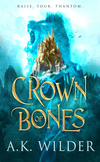
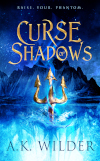
Kim Falconer, also writing as AK Wilder, has released Crown of Bones, a YA Epic Fantasy with Curse of Shadows as book 2 in the series. 


 Quantum Enchantment
Kim can be found on AKWilder.com, Twitter, Facebook, Instagram and KimFalconer.com. 

Throw the bones on the AKWilder.com site. See you there!

Read Blood and Water, a PNR alt history that will leave you questioning every natural disaster ever endured.

“There is no doubt fiction makes a better job of the truth.” 

Tuesday, December 24, 2024

From the Backlist - Bells Bells Bells


Christmas Night by Juli Snowwhite
 

For our final Supernatural Underground Backlist post of the year, we all wanted to wish you a wonderful Holiday Season, however you gather and celebrate!

This holiday wish is from a post of Dec 24, 2016 where we give you The Bells by Edgar Allan Poe.

The Bells

Hear the sledges with the bells--- Silver Bells!
What a world of merriment their melody foretells!
How they tinkle,tinkle,tinkle, In the icy air of night!
While the stars that oversprinkle
All the heavens seem to twinkle
With a crystalline delight;
Keeping time, time, time,
In a sort of Runic rhyme,
To the tintinnabulation that so musically wells
From the bells, bells, bells, bells,Bells, bells, bells,---
From the jingling and tinkling of the bells.

- Edgar Allan Poe -

See the entire post here... 

See you in 2025!


Monday, October 1, 2012

Spring, Autumn — & Something New for the Supernatural Underground


Those of you who visit me on my blog will know the tagline tells you that I am a "novelist, poet, interviewer and lover of story." 

Wordsworth's "Daffodils", a favourite spring poem   
The main focus of my posts here on the Supernatural Underground is as a novelist, but I have also done a couple of interviews now, with Juliet Marillier last month, here, and Beth-Anne Miller a while back, here. And on 1 August I talked about The Awesomeness of Story... So all bases covered, right — but no, hold on a minute, there's something from that tagline list that hasn't yet been covered on the Supernatural Underground.

Did you spot it, too? That's right, I realized that I hadn't yet done a poetry post. And since I was also reflecting on the slight disconnect of it being spring here in the southern hemisphere, where I'm writing this, while those reading it in the northern half of the world are just stepping into autumn — I thought. what better than sharing two poems, one for spring, and one for autumn...

For spring: 

The Begonias
Magnolia stellata


Mal pushes
each seedling down,
grime lining
the cracks in her hands,
eyes narrowed
against the sun's
low angle.  Usually
she crams her hair up
beneath an old hat—the floppy kind
that cricketers wear—
but today the hat is perched
amongst magnolia stellata
and Mal's hair
is a fraying rope
that follows the curve
of her spine, swinging
to every movement
of bend forward, sit back,
as she pauses, wiping
dirt across her face.  "I thought
you didn't like begonias,"
I say.  Mal shrugs.
"Mum always planted them here.
I thought I might as well …"
She seizes the hat,
pulls it low
across her eyes.

© Helen Lowe

Published in moments in the whirlwind, Ed. Barbara Strang, New Zealand Poetry Society, 2009

—

For autumn:

First snowfall
Autumn

Aaaah, autumn,
the dying season of the year,
when shadows turn to grape,
chilled by the first, faint curl of mist
around the edges of the days,
foreshortened into clear, green twilights
as night shifts from summer's deep velvet
to frosty black, the stars glow colder,
more distant, the leaves turn
gold, bronze, crimson, scarlet,
Turning colors
bravura counterpoint to cooling days –
then fall in deep, rustling drifts
beneath austere branches, the earth
dark beneath their shadow, filled
with pale secrets, bulbs lying in
wait for spring's warm ambush
to burst out upon the world,
while far above their blind heads
smoke smudges the evening air,
breath hanging in the stillness
as feet stamp crisply, briskly,
knowing winter is almost here.


© Helen Lowe

Commended, Yellow Moon Competition (18: August 2005); Published Yellow Moon 18, Summer 2006

 —

So how about you, Supernatural Undergrounders: do you have a favourite seasonal poem?  Or simply a favourite poem? Let me know with a comment. :)