Showing posts with label Elizabeth Knox. Show all posts

Tuesday, September 1, 2020

Year of Worldbuilding in Fantasy #8: "Southland" in Elizabeth Knox's "Dreamhunter" Series, & "Mortal Fire"

 .

#YoW Year of Worldbuilding
#WiF Worldbuilding in Fantasy
 

Introduction:

My blogging theme for 2020 is Worldbuilding in Fantasy, chiefly because it's one of the vital elements that holds all the different strands of the genre together. Plus it's always been one of the aspects of Fantasy literature that rocks my reading and writing world.

As promised from the outset, I'm trying to look at Fantasy worldbuilding over time and across a range of subgenres. So this month I'm focusing on Elizabeth Knox's Southland, from her YA series comprising the Dreamhunter (2005) / Dreamquake (2007) duology, and the standalone, Mortal Fire (2013.)

---

"Southland" in the YA Novels of Elizabeth Knox

Although Elizabeth Knox's Dreamhunter / Dreamquake and Mortal Fire are secondary world Fantasy, one of the magical things about Southland is that it's a Southern Hemisphere world.
 
Speaking as a Southern Hemisphere dweller, the Northern orientation of most Fantasy worlds undoubtedly has the appeal of the exotic and the magical for example, snow at Christmas / New Year, which is always high summer here. 
 
These enchantments aside, however, and at the risk of sounding parochial, there is unquestionably something very special in a Fantasy realm that is recognizably based on not just your own hemisphere, but your own country.

For although Southland is not Aotearoa -New Zealand (NZ), there are undoubted overlaps between the two. Dreamhunter's opening, with its seaside settlement of Sisters Beach, the nearby bush with its ferns, supplejack, and whiteywoods, and the driftwood fires with the smell of nearby flax and tea tree scrub, is instantly recognizable for anyone who's spent summer at a NZ beach. 
 
On seeing the map of Coal Bay, those with a feel for NZ geography may also notice similarities to Golden Bay, particularly the curve of Farewell Spit. 
 
The author, Elizabeth Knox, makes the matter plain in her opening note to Mortal Fire:
 
 "Southland is a large island republic in the South Pacific, in a world very like our ownbut not completely. ..."

The "not completely" marks the boundary between the real and the fantastic, which is where the art of Fantasy begins – and there is a great deal more to Southland than the overlap to elements of the New Zealand landscape and culture.

Dreamhunter and Dreamquake are set in the early nineteenth century, in a distinctly Edwardian milieu of trains, cars with cranks, and cameras that still require tripods for ease of use. In the Southland of this era, the holiday settlement lies close by a mysterious region known as The Place, which is environmentally very different to the rest of Southland. Only dreamhunters can venture there, to capture dreams that are then publicly shared in "dream palaces", similar to the "picture palaces" of the early twentieth century in our world. 
 
As your may imagine, dreamhunting comes with its dangers, including the secret origin of The Place and its mysterious golems, as well as the ambitions of those who seek to use dreams to achieve authoritarian power.  
 
Mortal Fire is set much later, in a 1959 that closely resembles 1950s New Zealand, including the aftereffects of polio on Marli, a close friend of the protagonist, Canny Mochrie. Canny is of Southland and (Pacific) Shackle Island descent, but her mother never speaks of her father's origins or identity. 
 
Although the events of the Dreamhunter period are now relegated to Southland history, Canny has always been able to see something Extra in the world. When her half-brother and his girlfriend take her on a camping trip into the remote Zarene Valley, inhabited exclusively by the extended Zarene family, Canny discovers that her Extra is magic – and the valley is rife with it. The magic centres on Ghislain Zarene, imprisoned in his farmhouse for thirty years, and in unravelling his secrets, Canny discovers the key to her own identity.
 
In terms of worldbuilding, the magic of Southland is always fascinating. The world of the Zarene Valley is also a fascinating combination of a rural, 1950s farming community grafted onto a slightly later era commune, but where the alternative lifestyle is shaped by magic use rather than by environmental or social philosophy.
 
So whether you fancy a dip into a Southern Hemisphere world, or love the sound of shared dreaming and dream hunting, or the occurrence of strange and compelling magic in a remote, rural community, then Elizabeth Knox's Southland novels could be exactly what you're looking for.
 

Note: Mortal Fire's Canny Mochrie was one of the fantasy heroines that rocked my world, in the SF Signal post series of the same name. To find out why, click on:

Helen Lowe on the Fantasy Heroines That Rock Her World: Canny Mochrie in Elizabeth Knox’s MORTAL FIRE

 
---

Previous Months:

February: The Lion, the Witch & the Wardrobe (Chronicles of Narnia) by CS Lewis
March: A Wizard of Earthsea by Ursula Le Guin
April: Sparrow Hill Road by Seanan McGuire
May: Palimpsest by Catherynne M Valente
June: Ship of Magic & the Liveship Traders series by Robin Hobb
July: Gideon the Ninth by Tamsyn Muir
August: Tymon's Flight (Chronicles of the Tree) by Mary Victoria
---

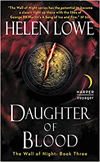
Helen Lowe's first novel, Thornspell (Knopf), was published to critical praise in 2008. The second,The Heir of Night (The Wall Of Night Series, Book One) won the Gemmell Morningstar Award 2012, and the sequel, The Gathering Of The Lost, was shortlisted for the Gemmell Legend Award in 2013. Daughter Of Blood (Book Three), was published in 2016 and Helen is currently completing the final novel in the series. She posts regularly on her “…on Anything, Really” blog, monthly on the Supernatural Underground, and tweets @helenl0we

Tuesday, May 16, 2017

To Dream or Not to Dream

The World - Shadowscapes Tarot 
I just finished reading Laini Taylor's new book, Strange the Dreamer. It's a story about a boy named Lazlo Strange who dreams of things no low-born orphan could hope to aspire to. The plot revolves around the blue skinned godspawn, a past slaughter, a lost city and the lucid dreaming of Lazlo and Sarai. It got me thinking about dreamscapes in fiction, something I've explored in my own novels as well. The funny thing is, while researching dreams in Fantasy Fiction, most of the sites that come up say, Don't do it!

Seriously? Why not?

It's considered something to avoid, but don't tell that to Laini Taylor, Elizabeth Knox - The Dreamhunter Duet, Suzanne Young and Tom DeLonge - Poet Anderson ...of Nightmares, and hundreds of thousands of writers who have used dreams successfully in their fiction.

So which is it. Avoid, or use? 

Yvonne Woon's Dead Beautiful Series uses dreams as vision, 
intragal to the plot.

Reasons to Avoid Dream Scenes in Fiction

According to K M Weiland, "A story opening that features a dream is a story opening that almost always fails to present a strong hook, character, setting, conflict, or frame."

Jackal Editing agrees saying, “Don’t put dreams in novels” isn’t a rule; it’s advice that emerged from readers’ negative reactions to dreams in novels, and it’s practical advice."

Surveys show that dreams sequences in fiction are often skimmed or skipped entirely. Readers report them as boring, distracting and irrelevant to RL, the real life of the story. It's a valid point. Because dreams aren't RL, they have no stakes. No matter what happens, what's revealed, learned or accomplished, in the end, 'is just a dream.' 

Jungian analysis aside, a dream sequence may have no relevance to the story save to tell the reader something about the dreamer's subconscious mind, repressed emotions or secret fears and desires. That may move the story along, or come off as a transparent plot device.

Other cons include:

Dreams in stories almost never ring true. Symbol is the language of the subconscious so in dreams, there is no order, no beginning, middle and end. Hence, dreams that play out as a textual mini-series can't happen, unless you premise your story-world with that ability, and explain why.

Dreams used to flesh out a character may be lazy writing. As Jackal says, "If you can’t develop your character while they’re awake, you’re already in serious trouble."

Dreams in RL are tricksters. They mislead, have dead ends, and rarely portray any concrete ah ha moments when considered rationally. NOTE: This could be both a pro and a con for writing dreams into the story, depending on how its used. 

Harry Potter is led astray by subconscious thoughts implanted by a dastardly villain. 

Reasons for Dreams in Fiction

If the dreams are visions, essential to the plot, as we see happening to the character Renée Winters in the Dead Beautiful series, by Yvonne Woon, and in all seven novels of the Harry Potter series, then they belong in the narrative. In these examples, dreams are portrayed as powerful, mysterious, dangerous, and a source of power. Good additions.

Our own Supernatural Author Helen Lowe adds, "Dream magic is an important part of the Wall of Night series world and also figured in Thornspell. You will notice, the dreams are not alternate to the main story but an integral part of it."

She has written about her approach to dreams in fiction here:


I find Dreams belong in the prose if they are forms of magical communication. Laini Taylor's Strange the Dreamer and Heartless (Tales of Goldstone Wood #1) by Anne Elisabeth Stengl are examples. Also George R. R. Martin uses dreams for prophecy and communication (particularly the wolf dreams of the Stark children) and in the above mentioned Elisabeth Knox duet, dreams are the premise for the entire story. 

Dreams may also bring humor, a kind of comic relief for the characters. This can work by highlighting their reaction to it, and the reactions of other characters when told the dream.

For writers, if you are Homer, Shakespeare, Dickens, Dostoyevsky, Tolstoy, Carrol, Bronte, Orwell and others of that calibre who have used dream narratives to great success, then don't hesitate. Dream sequences CAN work. But it might help to reread some of your favorite authors and see how they managed it.

For readers, I'm wondering how you feel about dreams in novels? Do you ever skim? Get distracted? Bored? Or do the dreams seem like integral, captivating additions to the plot? Somewhere in between?

I'd love to hear your take!

Kim Falconer's latest release is out now - The Blood in the Beginning - and Ava Sykes Novel. Find this novel in a store near you.

You can also learn more about Kim at AvaSykes.com, the 11th House Blog, and on FaceBook and Twitter.  Or on GoodVibeAstrology.com where she teaches law of attraction and astrology.

Kim posts here at the Supernatural Underground on the 16th of every month and runs Save the Day Writer's Community on Facebook. Check out her daily Astro-LOA Flash horoscopes on Facebook

Monday, September 1, 2014

"Supernaturally" Tips For Aspiring Writers

.
Over the weekend, I had the very great pleasure to chair the "Supernaturally" event with YA authors Laini Taylor and Elizabeth Knox at the WORD Christchurch Writers & Readers' Festival.


L-R: Laini, Elizabeth, moi.
(My thanks to HachetteNZ & The Realm for the photo.)

With authors of Laini and Elizabeth's calibre speaking it's not surprising that the question time included a request for "tips for aspiring writers."

So I thought I'd share something from their replies and add a few "extry" tips of my own today.

Laini Taylor
The remark Laini made that really resonated with me was (& I paraphrase):

Tip 1:
"Writing takes at least 100% of what you have to give so it's important to make other life choices that support your ability to give that 100%+, for example choosing an undemanding part-time or day job."

While Elizabeth Knox made an equally important observation (and again I paraphrase):

Elizabeth Knox
Tip2:
 "No matter how demanding the writing life we need to make sure we keep having fun with our writing."

Yes indeed to both these points. I'd also add the following from my own experience:

Tip 3:
Write, not necessarily what you know (in which case no Fantasy would ever be written—a point both Laini and Elizabeth also made!) but what you love because that is the creative touchstone from which almost everything else follows.

Helen Lowe (that's me again!)
Tip 4:
"Life," to quote Hippocrates, "is short but the art long." So don't wait. Start now!

Tip 5:
The writing flows easily—keep going; the writing comes hard—keep going. Keep going!

Everything else is up to the writer, because every creative voice is unique and must find its own 'right path."

Write on—and may the muses be with us all.