Showing posts with label Gothic horror. Show all posts

Saturday, April 30, 2016

The Los Nefilim omnibus is here!

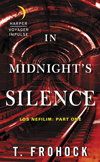
When I wrote the novella, In Midnight's Silence, it was essentially a stand-alone; I had no intention of furthering Diago's story in novella form. However, when my editor asked if I had more novellas planned, it was exceptionally easy for me to devise the stories Without Light or Guide and The Second Death, both of which would build on the first.


I talked about writing the novellas as pulp novels here on the Supernatural Underground with my post Writing Serialized Novellas--The Shadow Knows, and even as they follow the noir format, there is something a little different about Los Nefilim.

The protagonist Diago is gay, and rather than looking for love, he is already in a committed relationship with a member of Los Nefilim, Miquel. Although Diago and Miquel share intimate moments, the characters are not fetishized, because the stories aren't about falling in love and sex. That was a conscious decision on my part based on comments made to me by several readers, who were very tired of seeing gay men portrayed as always being on the prowl for sex.

If you give Los Nefilim a surface reading, the novellas are simply three adventure stories. If you look a little closer, you will see that they aren't about Diago accepting himself--or his father issues, or his son--as much as the tales are about the necessity of having supportive friends and family to help a person grow.

Diago's story has been a great deal of fun to write. In spite of all of the cool aspects of angels, daimons, and Nefilim, I think I enjoyed writing the intimate scenes of family and friends with Diago, Miquel, Rafael, Juanita, and Guillermo the most. Each of these small moments helped peel back another layer of not just Diago's personality, but of the unique people who surround and support him.

If you haven't had a chance to check out the individual novellas, Harper Voyager Impulse has now released all three novellas in an omnibus edition:

Collected together for the first time, T. Frohock’s three novellas—In Midnight’s Silence, Without Light or Guide, and The Second Death—brings to life the world of Los Nefilim, Spanish Nephilim that possess the power to harness music and light in the supernatural war between the angels and daimons. In 1931, Los Nefilim’s existence is shaken by the preternatural forces commanding them … and a half-breed caught in-between.

Diago Alvarez, a singular being of daimonic and angelic descent, is pulled into the ranks of Los Nefilim in order to protect his newly-found son. As an angelic war brews in the numinous realms, and Spain marches closer to civil war, the destiny of two worlds hangs on Diago’s actions. Yet it is the combined fates of his lover, Miquel, and his young son, Rafael, that weighs most heavily on his soul.

Lyrical and magical, Los Nefilim explores whether moving towards the light is necessarily the right move, and what it means to live amongst the shadows.


The Los Nefilim ominbus is available in an ebook edition right now at Amazon, Apple, Barnes and Noble, HarperCollins, and Kobo.

Currently the mass market paperback is available for pre-order and will be published on June 14, 2016. You can find the pre-order buttons for Los Nefilim at Amazon, Barnes and Noble, HarperCollins, and don't forget to check with your local independent bookstore--find the store closest to you at Indiebound.

So if you've been waiting for the series of novellas to conclude before purchasing them, now is the time! If you'd rather sample each novella--In Midnight's Silence: Los Nefilim Part One, Without Light or Guide: Los Nefilim Part Two, and The Second Death: Los Nefilim Part Three--they are all still available as ebook editions at $0.99 each.

Will there be more adventures with Diago, Miquel, and Rafael? I can't say right now. A lot will depend on pre-orders and sales, but in my heart of hearts I hope so. I already miss Diago and his friends and their unique world.

If you're on the fence as to whether or not the stories are for you, there was a lovely review for the series at Fantasy Faction.

Wednesday, September 30, 2015

And now for something creepy: The Black Spider by Jeremias Gotthelf


It's almost-not-quite-October, and after numerous false starts on this post, I've decided to throw caution to the wind and talk about a creepy little novella that might have flown under your radar. First written in 1842, The Black Spider, remains one of my favorites, and I've read it a couple of times since discovering it last year.

Before we start, let me clarify that when I talk about horror, I don't think of slasher fiction, or torture porn. Those types of fiction simply aren't my speed.

I enjoy the gentle dread concealed within dark fairy tales and Gothic horror. The stories tend to be more intricate and rely heavily on a sense of mood and place. The Black Spider falls neatly on the side of the macabre, but Gotthelf does not rely on graphic descriptions of blood and gore. His is a much more subtle touch, one that I think you might enjoy.

The Black Spider is a Christian fairy tale filled with the familiar themes on the dangers of outsiders and dealing with the devil. There is an evil knight, frightened villagers, the devil, a good priest, and ... oh, a spider.

The story flips from the present to the past and back to the present. The prose is simple but exceedingly visual.

During a "modern day" (modern in 1842, anyway) christening party, the godmother of the child notices that although the grandparents' house is new, it contains a black post, which appears to be much older than the rest of the house. The child's grandfather then spins the tale of the black spider where we find that many, many years ago, the village was ruled by a Teutonic knight, who made terrible demands on his subjects. The villagers were too weak to deny him, and each task became more outrageous, more arduous.

The knight's cruelty culminates with a command to replant trees from a distant mountain to his estate. He wants a shady path to his castle. The people are faced with the terrible choice of either moving the trees and neglecting their harvests--thereby starving to death over the long winter--or resisting the knight and facing his wrath.

In pops the devil to the rescue.

Well, he doesn't actually "pop in," he sort of shows up in the guise of a "helpful hunter," known throughout the story as "the green man." All the green man wants in return for the boon of helping the villagers is a newborn unchristened child. Such a small thing to ask.

Of course, the villagers decline the offer.

Moving the trees becomes increasingly difficult, and as the knight's deadline and the harvest draw closer, one of the villagers, a woman named Christine, devises a plan. Christine advocates making the deal with the green man. Let him help them move the trees, and then when he comes for the newborn, she tells the villagers to have a priest present at the birth. That way, the priest can christen the child before the green man can claim the child.

Frightened of the green man, the villagers send Christine to negotiate the terms. Confident that her plan cannot go wrong, she meets the green man on the road, but Christine forgets one very important detail: the devil always finds a way to claim what is his. The green man seals their deal by giving Christine a kiss on the cheek.

No ordinary kiss is this.

"Basler-Kopp Die Schwarze Spinne"
by Franz Karl Basler-Kopp
Time goes by and one of the village women becomes pregnant. When she has her baby, the priest is called, and he christens the child before the green man can claim it. Everyone is fine, except for Christine, who feels as if "a glowing iron had suddenly been pressed to the spot where she had received the green man's kiss."

With each passing day, Christine suffers more and more from the green man's kiss. A black spot grows on her cheek. She appeals to the unsympathetic villagers, and begs them to give the green man the next unchristened infant. The villagers refuse to alleviate Christine's pain, and thus the spider is born.

Filled with dark delights that will leave the reader shivering, The Black Spider is an excellent story to kick off the haunted month of October.

Give it a read. You won't be sorry you did ... or maybe you will be ... just a little bit ... after dark.