Showing posts with label Los Nefilim. Show all posts

Wednesday, May 13, 2026

From The Backlist: Words Is Your Bizness -- Writing The Blurb

.
We love this post by the wonderful T Frohock on writing blurbs, which is an essential skill in the modern-day author's toolkit.

Definitely a must-read for those pursuing a writing life, and informative for all those interested in it. Enjoy!

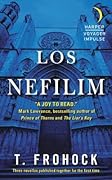
Los Nefilim

Words Is Your Bizness -- Writing The Blurb

by T Frohock

I know a lot of authors tend to think that once they've gotten past the initial query letter, they'll never have to face the horror of condensing their novel into two paragraphs again.

Unfortunately, that is not the case.

In Midnight's Silence

With both the blurb and the query, you're trying to sell your novel, which is long and deep and complicated, in just a few words, and I know that is hard. One thing I did that helped me immensely was browse in a bookstore. I wandered the fiction section and jotted down taglines and blurbs that caught my attention. Then I went home and analyzed them.

A good blurb is about communicating the essence of your story to the reader, not the details.

Without Light or Guide

Let's look at mine. This was an incredibly difficult blurb to write, because we were combining three novellas into three paragraphs. Here are a few things I learned:

Know your audience. If I am writing historical fantasy with nephilim, I want to target people who love history and magic. So I will design my blurb around the dates, the conflicts, and the how the magic works.

Nail it with a sentence. The biggest argument that I hear from authors is that their story is too complicated. You're a writer. Words is your bizness. Use them well.

The Second Death

Know what appeals to your fans and zoom the lens of your words on the aspects of your story that will appeal most strongly to your reader.

My Los Nefilim blurb encompasses three novellas with one sentence:

T. Frohock's three novellas--In Midnight's Silence, Without Light or Guide, and The Second Death--bring to life the world of Los Nefilim, Spanish Nephilim that possess the power to harness music and light in the supernatural war between the angels and daimons.

What have I told you in that sentence? The names of the previous novellas, what Los Nefilim are (Spanish Nephilim), how they use their magic (through music and light), and finally the nature of the big picture conflict (the supernatural war between angels and daimons).

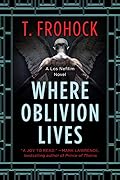
Where Oblivion Lives

Narrow the conflict to the protagonist. The next sentence is:

In 1931, Los Nefilim's existence is shaken by the preternatural forces commanding them ... and a half-breed caught in-between.

Here I center the reader in the time period (1931), because this is historical fantasy. I tell the reader all is not well in the world of Los Nefilim (their existence is shaken), and then I zoom the lens one phrase closer to my protagonist and his place within the conflict (a half-breed caught in-between). The word "caught" indicates the protagonist isn't a willing participant in this war.

Who is the protagonist and what makes them special? Now that I've given the reader the set-up for the world, I tell them about my protagonist:

Diago Alvarez, a singular being of daimonic and angelic descent, is pulled into the ranks of Los Nefilim in order to protect his newly found son.

Diago is not human, nor is he normal by the nephilim's standards (a singular being of daimonic and angelic descent). He is not in Los Nefilim entirely by choice (is pulled into the ranks), but he has a reason to be there (in order to protect his newly found son).

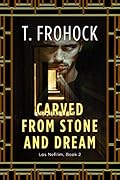
Carved from Stone and Dream

What is the protagonist's conflict? This comes in the last two sentences.

As an angelic war brews in the numinous realms, and Spain marches closer to civil war, the destiny of two worlds hangs on Diago's actions. Yet it is the combined fates of his lover, Miquel, and his young son, Rafael, that weigh most heavily on his soul.

Here I have reintroduced the angelic war and tied it into the Spanish Civil War while alluding to Diago's role in the course of events. I also introduce the fact that Diago is gay (his lover, Miquel) and that the fates of Miquel and Rafael are Diago's primary concern, which adds a very relatable human element to the story.

Sum it all up. The last line sums up the crux of the story:

Lyrical and magical, Los Nefilim explores whether moving toward the light is necessarily the right move, and what it means to live among the shadows.

This sentence refers to Diago questioning his decision to join Los Nefilim throughout the novellas...

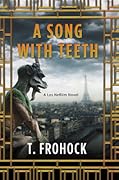
A Song with Teeth


To read the full post, go here

To catch up with T Frohock, visit her here

Thursday, January 9, 2025

From the Backlist: "Character Development and Pacing" -- by T Frohock

 .
T Frohock is the author of two fabulous Los Nefilim novella series. The first is a trio of linked novellas; the second a novel trilogy. And lookout for her standalone Miserere which is being rereleased on 21 January -- we think that rocks, too.

This post centers on The Second Death, the third of the linked novellas, but the ideas in terms of character development are gold for all writing, particularly (but not exclusively) in its longer forms.

Character Development and Pacing--Make Room for Quiet Moments

by T Frohock

... One thing readers seem very unified about is the relationship between Diago and Miquel, and the quiet family moments that involve Diago's son, Rafael. These are what some readers might call the boring bits, but I never do. I place these familial scenes within the story, not just for character development, but also to help the pacing.


When I worked in radio--many, many, many years ago--I was told to think of the musical segments as waves. Begin with a soft tune, then choose songs that gradually build the tempo until the third or fourth song was upbeat and fast before moving the pace back toward softer music.

The technique was all about pacing the music so that the sounds would be pleasing to the listener. We do the same thing in stories by making the action rise and fall in a logical manner.


Even in shorter works, such as novellas, readers need a little breathing room between the action scenes, or in cases such as The Second Death: Los Nefilim, Part 3, before the action takes off. Most often, I use these scenes as a break from the action, but every now and then, I start the story with them, especially in one like The Second Death.

The logic behind beginning with an intimate scene in The Second Death was to bring the reader back up to speed with what had transpired in Without Light or Guide: Los Nefilim, Part 2 while adding enough new content to keep the reader engaged. My key to making these scenes work is keeping them short and intimate through the use of dialogue.

In this snippet, which is about 600 words, I am reminding the reader of how other members of Los Nefilim view Diago, and by extension daimons, through the peripheral character Lucia, an angel-born Nefil who hates daimons. Since I didn't want to give any spoilers, I had to choose one of the more innocuous conversations for this post.


For those new to the series: Rafael is Diago's six-year-old son, and Miquel is Diago's partner.

Diago followed Rafael into the bathroom and picked up his comb.
“No! No!” Rafael ran his wet fingers over his unruly locks. “You don’t need to comb it, Papa. I’m Gitano.” He shook his head. “My hair is wild like my spirit.”
“Wild spirits in this house comb their hair.” Diago grabbed a towel and wiped his son’s damp fingers. Stray hairs drifted into the sink’s basin and joined those of Miquel and Diago. He wiped the strands off the porcelain. “It looks like a family of bears lives here.”
Rafael giggled and raised his arms over his head, hands clenched like claws. He roared until the comb snagged a tangle. “Ow!”
Diago leaned forward and kissed his cheek. “Then stay still. Even bear cubs don’t wiggle when their papas comb their hair.” 
“Bears don’t comb their hair.” The child’s busy fingers found a chip in the sink’s porcelain. “When I’m grown up, I’m never combing my hair.”
“Don’t you want to look nice for Ysa today?”
He picked at the sink’s scar. “I want to stay home today.”
“You can stay with Lucia and Ysa for a little while.”
Rafael said nothing.
“Don’t you like playing with Ysa?”
“Yes.” Rafael rubbed his thumb around the chip.
“So?” Diago worked his fingers through a snarled lock and held his breath. Had he and Ysa fought? A generous girl, Ysa could sometimes be overbearing, but Diago had never known her to intentionally hurt another person. “Why don’t you want to go?”
He shrugged.
Diago kept his tone even as a suspicion caught up with him. “Is it Lucia?”
A moment passed and Diago thought Rafael wasn’t going to answer him. Finally, his son nodded.
“And what does she say?” Because it was Lucia, it had to be something out of her vicious mouth.
Another shrug. “Just things.”
“What kind of things?”
“She said I should never go to Morocco, because I am small and dark like a monkey. She said someone would see that I am daimon and stuff me in a bottle and make me a jinni. Then she laughs like it’s a joke, but her eyes are all hard and mean.”
Jesus.
Lucia. Ysabel’s governess made no secret of her hatred for Diago, which was fine with him, but taking her pettiness out on Rafael was a step too far.
Diago was careful to keep his anger out of his face and voice. He didn’t want Rafael to think he was upset with him. Instead, he took his son’s shoulders and gently turned the child so he could see his face. He realized a river of tears would be preferable to the hurt he saw in Rafael’s eyes. “You know what? You can come with us this morning. I’ll bet Father Bernardo has someplace where you can sit and draw pictures while we talk, hmm?” He smoothed Rafael’s hair and glanced into the hall to see that Miquel had joined them. How much had he heard?
Diago didn’t have long to wonder.
Miquel came into the bathroom and stood behind Diago. “Pick him up.”
Diago lifted Rafael so he could see himself in the mirror. Three faces, three shades of skin that passed from Rafael’s light gold to Diago’s tawny flesh, and finally Miquel’s dusky brown.
Miquel made a great show of assessing their faces. “You know what, Rafael? I am darker than you.”
“Miquel is Gitano, too,” Diago whispered in Rafael’s ear. “And everyone thinks he is very, very handsome.” Including me, he thought as he examined his lover’s reflection.
A ghost of a smile touched Rafael’s mouth.
“And your papa is part daimon like you,” Miquel said. “No one has stuffed him in a bottle and made him a jinni.” He reached around Diago to touch Rafael’s chin. “No one is going to mistake us for monkeys, or jinn.”
“That’s right,” Diago said. “We’re a family of bears.”
Rafael gave a soft roar and the mischievousness returned to his eyes.
Quiet moments don't have to be boring. Just remember to use them to keep the story moving forward and the reader will remain engaged. This particular snippet precedes a very violent scene, which has a lot more impact, because the reader is allowed to experience a gentler moment with the family prior to the violence. By seeing how Diago, Miquel, and Rafael interact here, their subsequent actions, and the risks they take, are believable to the reader.


The other overriding theme that runs through this section is Diago's dual nature, which is an important part of the story. While Diago is growing more comfortable with both his heritage and his place within Los Nefilim, he is sacrificing the daimonic side of his nature in order to fit in. Before it's over, Diago will be forced to rely on his daimonic nature to deceive an angel. In doing so, he discovers the birth of a modern god—one that will bring about a new world order from which no one can escape.

The Second Death is coming ...
The year is 1931.
The city is Barcelona.
The war between the angels begins in earnest.
Whose side are you on?

To read the original post in full, click here.

And to find out more about the author, her books, and what she's working on now, go here. 

Sunday, January 31, 2021

An Interview With T Frohock – Talking Magic in "A Song With Teeth" & The LOS NEFILIM Series

.

This year, I’m focusing on magic systems in Fantasy – and wherever possible, I hope to do so by talking with a fellow author about the magic systems in their work.

Today I'm really pleased to welcome TeresaFrohock to discuss the magic systems in the world of her LOS NEFILIM series. In particular, we'll be talking A Song With Teeth, the final book in her current series, which is due out on February 9.

At which point I really must pause to vigorously deploy my fan, breathless with excitement.
J By which you may deduce that I am a keen LOS NEFILIM reader, aka a fan!

Background

By way of background for those who may not be as familiar with the storyline as I am, it is set in 1930s Spain, and Europe, during and after the Spanish Civil War. The preceding novel, Carved From Stone and Dream, is set on the cusp of World War 2 (WW2), and A Song With Teeth, the third and final novel takes place during the latter war.
.
Overlapping the human story of these tumultuous times is a paranormal conflict in which angels and demons war on the human plane. The nephilim (in Spanish, Los Nefilim) are the foot soldiers and frontline troops in their war. Inevitably, the conflict spills over into human politics and concerns, and also reflects them, with nefilim (I shall use the story’s Spanish spelling from this point) on opposing sides in Spain’s civil war and WW2.


Welcoming T Frohock: In Conversation On Magic Systems In A Song With Teeth (LOS NEFILIM #3)

.
HL:  Congratulations, Teresa, on the imminent release of A Song With Teeth. I imagine it feels like a considerable achievement to see the culmination of a storyline encompassing both this LOS NEFILIM series and the earlier novella trilogy?
.

TF:  Thank you! It really did. This is actually the first trilogy [tetralogy, if you count the Los Nefilim omnibus] that I’ve had the opportunity to complete for a publisher, so it’s a milestone for me. I enjoyed the ability to follow Diago’s character arc to completion, and I was very satisfied with where the story ended in both terms of plot and characterization.

.
HL:  How do you feel the magic within LOS NEFILIM influences and shapes the world and the story?
.

TF: For those who haven’t read the series, the nefilim work their magic through music, light, and movement by creating sigils. They experience sound accompanied by color—a form of chromesthesia—that enables them to use the vibrations of color to shape their sigils, which manifest their willpower into reality.

For example: if a nefil wants to influence the weather, they design a sigil—a magical symbol—that will cause rain. Then they compose the necessary tonal sounds that reflect the strength of the storm they want, and then, as the song unfolds, they use their hands to shape the colors of those sounds into the sigil. The final step is to push the sigil into the clouds.

The world the nefilim inhabit is the very real world of the early twentieth century, so their magic is quite often dependent on the science and music of the period. As they learn new things, they incorporate this knowledge into spells. A good example is Carme’s fascination with the Devil’s Fingers [Clathrus archeri], a type of fungus that she mimics with a very nasty spell that she inflicts on her enemies.

Since the nefilim spend a lot of time together, they also perform together with informal arrangements that deepen their camaraderie. Music isn’t just their way of working magic; it’s also how they relax and form bonds with one another.

When they first meet, often they play for one another. This is a way in which they can see the other nefil’s song, or their soul. They judge one another by the tonal quality of their voices and the complexity of their compositions, including their ability to play instruments.

Although their music plays an important part within their magic, they rely more on their cunning and their ability to manipulate mortals than they do magic. They navigate a treacherous world that can turn on them in a heartbeat, and they know that as the twentieth century moves forward, scientists would love to study the nefilim’s near immortality in addition to their ability to influence events.

Because they distrust mortals, the nefilim spend more time trying to stay hidden from a sense of self-preservation. They move in plain sight, but they keep their magic quiet unless threatened
.


HL: “Music” is the key word I associate with the LOS NEFILIM magic system, but given the intricacy of the magic system you’ve just described, are there deeper layers that go beyond music alone?
.

TF: It’s a complex process that relies on physical gestures, as well. Music enables the nefilim to transpose sound into emotion, which is a big component of their magic, but they also have to form the sigils that manifest their will, so it’s as much akin to dance as it is to music.

In A Song with Teeth, Diago notes a young nefil’s magic, which is inadequate because even through the nefil
“understood both technique and style—the accents landed in all the right places, the chords were precise—but the cellist’s execution seemed to lack spirit and emotion, which left the interpretation flat.” In spite of his knowledge of structure and technique, the young nefil can’t convey the necessary emotive chords necessary to work his magic.

This is why older nefilim are much more dangerous than younger ones. Older nefilim have had centuries to design a full repertoire of sigils and sounds and have perfected their techniques. They have a wealth of personal experiences to draw from, and their movements are lightning fast, while younger nefilim, especially those in their firstborn lives, are still having to think their way through their spells.

Magic is never easy. If it was, anyone could do it.


.
HL: The main character, Diago, and his magic, are unique among the nefilim. Why is that? Is it important to the resolution in A SONG WITH TEETH?
.

TF:  One aspect to the nefilim’s magic that I haven’t discussed is their distinctive vocal ranges. The angels in the Los Nefilim series have three sets of vocal cords, which allows them to manipulate sound in unique ways. As the children of angels, the nefilim are also able to produce exceptional range with their voices (think of someone like Freddie Mercury or Annie Lennox).

The angel-born nefilim (those born of an angelic parent and a nefil with angelic lineage) have exceptional range in the tonal expressions. The daimon-born, on the other hand, are better skilled at the interpretation of pieces.

Diago is unique in that his mother was an angel and his father was a daimon-born nefil. It was a rare coupling that had never been replicated until an angel manipulates Diago into the sexual relationship that produces Rafael.

Whereas Rafael is one-quarter daimon, Diago is half, which makes him the best of both worlds. His unique tonal range, along with his ability to interpret a piece of music with deadly precision, enable him to compose and work with music far beyond the range of any nefil who is merely angelic or daimonic.

He is able to drift between two distinct cultures and bring what is best to both in the nature of his personal song. His son, Rafael, accidentally discovers the secret to his father’s magic in
A Song With Teeth, and that revelation gives him a deeper understanding of both his own song and that of his father.

.
HL: Family, both born and found, is central to the main characters and the LOS NEFILIM story. Does this shape the magic system in any way?
.

TF:  In many ways, yes. The angels want to breed the perfect soldiers, and in doing so, they create nefilim with unique songs. Likewise, so do the daimons. Whoever wins their war wins control of the mortal realm.

The thing to remember is that to be chosen to parent a nefil born of their respective gods (be it angel or a daimon) is considered to be a great honor among the nefilim. Diago’s case is different, because his son’s angelic mother chose to deceive Diago and used her enchantments to rape him. She never intended to give Rafael to either the daimons or to Diago. It was only when she lost complete control of the situation that she was able to hide Rafael and get word to Diago of their son’s whereabouts.

Rather than reject his son, Diago chose to keep Rafael from his abusive daimonic family by acknowledging him and making a place for him in his home and heart. Diago’s husband, Miquel, fully supported this decision. In order to secure his son’s future, Diago joins Los Nefilim. Here, he finally finds the love and esteem that had eluded him with his daimonic kin. He is a part of a unit that respects his individuality and skills. They accept him as a person, something his daimonic family never gave him.

At the same time, the small family of Guillermo, the leader of Los Nefilim, is tight. His daughter, Ysabel, benefits greatly by the presence of her angelic mother, Juanita, who chose to remain on the mortal plane with both Guillermo and Ysabel (not all angelic parents remain in the mortal realm with their off-spring). Together, they nurture Ysabel, enabling her to grow into a strong, confident young woman.

I didn’t want the stories to indicate that either blood relations or found families were superior. The important thing is the respect and encouragement they give to one another. That is where they draw their strength.
 

.
HL: Are there any significant new developments readers should look for in the magic of A Song With Teeth?.
.

TF:  I believe A Song with Teeth probably has more magic in it than all the other books combined. We get to see the daimonic courts in action and experience some of their magic. More important, we get a glimpse of Ysabel and Rafael as young adults, which is something I had a great deal of fun writing.

The best part, for me, was that I was able to resolve all the tiny little threads that spun from the novellas through the novels. I left them all in a good place, and that was important to me, too. You never know what will happen next. I’ve got a few shorts planned for this upcoming year, and we may eventually see them all again one day … until then, watch for them.

.
HL: Teresa, I definitely shall! By the way, may I say how much I love that catchphrase “Watch for me”? It’s so evocative in itself, but also of the ongoing story. Thank you so much, too, for doing the interview today. I thought I knew the magic system of LOS NEFILIM pretty well but you’ve definitely added more depth – and no question, I shall be eagerly watching for
A Song With Teeth on February 9.

.

To find out more about A Song With Teeth and LOS NEFILIM, please visit Teresa's website or her publisher's site:
HarperVoyager –
A Song With Teeth 
They'll point you to where the book is available!


~*~

About T Frohock

T. Frohock has turned a love of history and dark fantasy into tales of deliciously creepy fiction. A real-life cyborg, T. has a cochlear ear implant meaning she can switch you on or off with the flick of a switch. Make of that what you will. She currently lives in North Carolina where she has long been accused of telling stories, a southern colloquialism for lying.

You can find T. on her website,
here and on Twitter: @T_Frohock


.
Rocking 2021 with “Magic Systems in Fantasy” on Supernatural Underground: Previous Posts
 

January 1:
Happy New Year – Ushering In A Year of Friends, Fellow Authors, & Magic Systems

January 2:
An Interview with AK Wilder – Talking Magic In Her New-Out Crown Of Bones (AMASSIA#1)


~*~

About The Interviewer:

Helen Lowe's first  novel, Thornspell (Knopf), was published to critical praise in 2008. The second,The Heir of Night (The Wall Of Night Series, Book One) won the Gemmell Morningstar Award 2012, and the sequel, The Gathering Of The Lost, was shortlisted for the Gemmell Legend Award in 2013. Daughter Of Blood (Book Three), was published in 2016 and Helen is currently completing the final novel in the series. She posts regularly on her “…on Anything, Really” blog, monthly on the Supernatural Underground, and tweets @helenl0we

Tuesday, October 1, 2019

Romance In Fantasy Fiction: Endless Love In Teresa Frohock's "Where Oblivion Lives"

.

Intro: #RIFF #YOR

Excitement reigns right now because this is the eighth (infinite eight!) instalment of my Year of Romance (#YOR) post series on Supernatural Underground. Specifically, that is, Romance in Fantasy Fiction (#RIFF) and most specifically of all, romances that I've enjoyed over many years of reading. #JustSayin' ;-)

This month I'm staying on track with my intention to switch between older and newer works, and featuring Teresa Frohock's Where Oblivion Lives, which is Book One in a new Los Nefilim trilogy.
---

Teresa Frohock's Where Oblivion Lives (Los Nefilim Series) — Diago, Miquel, and Endless Love

Firstly, a little about Los Nefilim. Teresa Frohock's series, set in 1930s, pre-Civil War Spain, began with a series of three linked novellas, first published individually and then collected in one volume as Los Nefilim.

(You can read my post on the novellas here.)

I've said before that it's hard to categorize this series: it's historical fantasy, but it's also decidedly supernatural and paranormal in focus. It's also urban fantasy, being primarily set in Barcelona, but also has a distinctly noir-thriller ethos, with horror overtones.

Los Nefilim's central premise is the eternal conflict between angels and demons, in which the nephilim — the hybrid offspring of human pairings with the supernatural beings — serve as foot soldiers in the war between the higher powers. (The 'nefilim' of the series title is simply the Spanish form of 'nephilim.') In Teresa Frohock's story, begun in Los Nefilim and continued in Where Oblivion Lives, the cosmic conflict both mirrors and intersects Spain’s descent into Civil War.

The nefilim are not immortal, but are eternally reborn to serve in the war-without-end between heaven and hell. For this reason, the nefilim's maxim, "Watch for me" is both invocation and prayer, farewell and blessing, but may also be a curse.
The characters at the center of the Los Nefilim series and its incarnation of the eternal war are Diago and Miquel. Diago and Miquel are both nefilim and their love has endured down centuries and across lives. In Where Oblivion Lives they are married, both part of Los Nefilim's Inner Guard,  and raising Rafael, Diago's son from an earlier relationship in his current incarnation.

(How Diago and Miquel find and rescue Rafael from the demons is told in the linked novellas of Los Nefilim.)

One of the things I really like about Diago and Miquel's relationship in Where Oblivion Lives is that it is presented without commentary or explanation — beyond the story of their love and its evolution, that is. What's important about Diago and Miquel in this story is not that they are gay, although very clearly they are. But authorial commentary is unnecessary because their relationship, like every other aspect of this engaging story, speaks for itself.

Having said that, the story does reflect what it means to be gay in  a world that doesn't accept such relationships. The core of the story, though, is who Diago and Miquel are, as individuals and as a couple. Also their part in the larger Los Nefilim picture (which can be murky — this is heaven vs hell and immediately pre-Civil War Spain, after all.) What matters, too, is their commitment to each other—the endless love spanning incarnations—and to their son, Rafael, as well as to their friends and fellow nefilim. In Where Oblivion Lives this is chiefly illustrated through their loyalty to Guillermo, the leader of Los Nefilim—and his to them.

If challenged to come up with a single adjective to describe Diago and Miquel, the word would be "fidelity." They are faithful to each other, to Rafael, and to their values, even where those values cut across some of Los Nefilim's traditional loyalties and behaviors.

So if you like historical fiction and supernatural/paranormal fantasy, noir thrillers, dark fantasy and/or horror, together with lovers whose fidelity and commitment fuel an endless love, then I think you'll find a lot to like in Where Oblivion Lives and Los Nefilim. 

Note: It's not necessary to read Los Nefilim first to "grok" Where Oblivion Lives but it may give you a deeper appreciation of the world and the story.

Teresa Frohock
Disclosure:
By way of disclosure, Teresa is a fellow Supernatural Undergrounder and friend-in-writing. I obtained my reading copy via our publisher-in-common, HarperCollins Voyager and my editor, the awesome Kate Nintzel.

 .
Helen Lowe is a teller of tales and purveyor of story, chiefly by way of novels and poetry; she also blogs and occasionally interviews fellow writers. Her first novel, Thornspell (Knopf), was published to critical praise in 2008. The second,The Heir of Night(The Wall Of Night Series, Book One) won the Gemmell Morningstar Award 2012, and the sequel, The Gathering Of The Lost, was shortlisted for the Gemmell Legend Award in 2013.Daughter Of Blood (Book Three), was published in 2016 and Helen is currently completing the final novel in the series. She posts regularly on her “…on Anything, Really” blog, monthly on the Supernatural Underground, and is also on Twitter:@helenl0we.