.
Introduction
Today I’m delighted to welcome fellow New Zealand author, Lee Murray,
to the Supernatural Underground today, to share her insight into the magical
and supernatural elements of her writing.
Lee has carved out a significant name for herself in
the Horror genre, both with her Taine McKenna
novel series and the recent short fiction collection, Grotesque: Monster Stories, as well as a considerable number of
journal and ’zine publications.
On first reading Into The Mist (Taine
McKenna #1) I enjoyed how Lee wove the New Zealand landscape and
Māori myth into a fast-paced, military action-based, “creature horror” tale – a
tradition continued in the subsequent (also standalone) novels. I am also
impressed by the way Lee’s short fiction blends the traditions of her
Chinese-New Zealand heritage with Maori mythology and mainstream NZ settings,
all in a compelling and (as is only fitting when writing horror) unsettling way.
So I am delighted to welcome Lee to the Supernatural
Underground today, to talk the magical elements and supernatural influences in
her work.
Lee: Thank you for having me, Helen. Delighted to
chat with you.
Welcoming Lee Murray: In Conversation on "Fear Beyond Boundaries" – Magic & the Supernatural In Her Writing
Helen: So what is the
place of magic in the Horror genre, in your view, Lee? And what makes the magic
of horror unique?
Lee: What’s interesting about horror, unlike fantasy and
certain other speculative subgenres, is that it doesn’t have to incorporate
magical elements at all. Horror, by definition, describes work that instills
feelings of fear, the intensity of which appears on a spectrum that extends
from vague unease all the way to bone-rattling, white-knuckle terror. But the
elements that make up our horror stories, the things that contribute to those
feelings of fear, can either be anchored in reality or imbued with supernatural
elements according to the needs of the story and the preferences of the author.
For me, magic and the supernatural are a natural way to approach horror, partly
because in New Zealand myth and monsters hover just beyond us in the shadows.
The Māori term “tipua”, for example, relates to
‘uncanny’ and inexplicable things, like a log which refuses to sink, or the
mists of Te Urewera National Park which obscure the mischievous patu-paiarehe
(fairies)—these aspects of our landscape are imbued with their own unique
power. The fauna isn’t exempt; I’ll admit to getting goose bumps when a little
morepork owl, a harbinger of death, hoots from the shadows, or to feeling a
connection with the pīwakawaka-fantail as it flits back and forth on a forest
trail, carrying its messages from the gods. And, of course, we have our legendary
monsters. There are the ferocious taniwha-serpents, which reside in our rivers
and inlets, and the maero-ogres which dwell in a caves in the Waikato region,
for example.
For New Zealanders, these magical places, objects, and
creatures are afforded a place in our everyday. NZ’s Māori people, when they
introduce themselves, do so by invoking their ancestors, which are the very
mountains and rivers which surround us. And it isn’t just the Māori who feel
this way. Consider this passage from The Woman at the Store (1912), a
short story by iconic New Zealand writer, Katherine Mansfield:
“There
is no twilight in our New Zealand, but a curious half hour when everything appears
grotesque—it frightens—as though the savage spirit of the country walked abroad
and sneered at what it saw. Sitting alone in the hideous room I grew afraid.”
The other reason I turn to magic and the
supernatural in my horror is because fantastical elements offer a way of
addressing some of the hardest themes through metaphor and allegory. For
example, the theme of sexual abuse of a teen in my Bram Stoker Award®-nominated
story, Dead End Town.
In another example, The Good Wife, a Chinese-New Zealand
fairy tale which appears in Weird Tales
364, a neglected Chinese woman must save her miner husband who has been
captured by a fierce taniwha-serpent. Set in New Zealand’s Arrowtown in the
1800s goldrush, as well as revealing the quiet power of Asian women in the face
of systemic oppression and abuse, the story juxtaposes New Zealand and Asian
notions of the dragon to highlight the character’s feelings of otherness and
isolation.
Helen: How do you see the magic elements of the Horror genre evolving currently?
Lee: Putting the supernatural
aside for just a moment, 2020-2021 has been an apocalypse bingo card of
real-life possibilities for horror writers. In the past 14 months, we’ve dealt
with forest fires, a global pandemic, floods, storms, economic collapse, even
Asian murder hornets. And the themes on offer have covered issues like racism,
isolation, poverty, and loss—complex subjects that lend themselves to magical
approaches if only to create some distance from the enormity of the challenges
we’re facing.
My debut horror
collection, Grotesque: Monster Stories, for example, features a monster theme—the perfect
metaphor for our fears, as Literary Hub contributor Erica Swyla writes in an
article released last year: “Monsters are stand-ins…for all the things we
cannot control. I’ll never outgrow them the way one can never outgrow the
outside world.”
I agree with her
entirely: “…comfort arises from the power of capturing those monsters on the
page,” I told the Gingernuts of Horror in a piece titled In
Defence of Monster Stories. “When we set our fears down on paper, we introduce an element of
distance, of safety. And it’s from that place of safety that we can reflect,
analyse, evaluate, perhaps even devise some viable solutions to the things that
haunt us. In an increasingly dark and ominous world, monster stories gird us
with hope.”
In fact, given recent
world events, there is so much scope for fresh horror that the genre has
experienced a renaissance of sorts, with writers taking advantage of the
isolation to knock off that dusty writing project. The demand by consumers has
also exploded as noted in the opening comments of a Library Journal article by my colleague Becky Spratford:
“Horror surrounds us this year, both on the page
and, in so many gut-wrenching ways, in the real world. While life amid a
pandemic has wreaked havoc, it has also been a boon for the genre. … As David
Pomerico, editorial director for Harper Voyager U.S., notes, ‘The biggest trend
in horror is that horror is trending. … What we’re seeing is that there’s
desire for more stories, and room on the shelves for them, too.’”
That said, the literary horror community has been
affected by the pandemic downturn much like everyone else, with several small
presses folding, and others being forced to push back projects until there is
more economic certainty.
As for my own horror writing, it is also evolving, with
my work on Black Cranes: Tales of
Unquiet Women (currently Bram Stoker Award®- and Aurealis
Award-nominated and listed on the Locus Recommended List) resulting in a deep
desire to investigate the monsters of my Asian heritage further, particularly
on the themes of otherness, tradition, and expectation.
The Black
Cranes anthology includes two of my stories, both of which tease at the
magical traditions of my mixed heritage. In the first, Phoenix Claws, I draw on the name and the mythology underpinning
the famous dish, which is made from steamed chicken’s feet. In the story, the
perpetual resurrection of chicken feet is a metaphor for the ever-present
prejudices which arise on both sides of mixed-race partnerships, and how, if
left unaddressed, those same small things that might have seemed charming can
become overwhelming.
In the second, Frangipani
Wishes, a story plucked from my own family diaspora, I examine the hungry
ghost mythology, the voracious monsters typically portrayed as greedy women
with extended necks and bloated distended bellies.
Later this year, I’ll
be taking up residency in Auckland as the Grimshaw Sargeson Fellow for 2021,
where I’ll be working on a prose-poetry collection with the working title Fox
Spirit on a Distant Cloud. The work will explore the Asian diaspora in New
Zealand as it applies to women through the various interactions of a
shape-shifting fox spirit. I’m also working on a non-fiction title called Unquiet
Spirits with my fellow Black Crane, Space and Time publisher Angela
Yuriko Smith. We expect this work, an exploration of Asian monsters through a
series of essays and responses, will be released in late 2022.
Helen: Your work draws on Māori myth and legend, the
magical themes of your Chinese heritage, and also the Western European
tradition. Do you find it easy weaving all three magic traditions
together? Or have there been challenges, unexpected or otherwise?
Lee: Do I find weaving magical traditions from various
cultures easy? Sometimes. Like all authors, occasionally I am blessed with a
story that spools onto the page, lazily, like the curls of steam from a teacup.
But that’s rare. Mostly, I smack my head repeatedly against my desk and over
several days the story might seep through the cracks in my skull.
As I noted earlier though, given the blending and
confrontation of ideas that occurs at the intersection of culture, myth, and
magic, there is so much to explore here in New Zealand that I don’t want for
homegrown ideas. Perhaps that’s why I tend to think of myself as a New Zealand
storyteller ahead of a horror writer, speculative writer, poet, or any other
classification.
Of course, it’s always important to remember that
one person’s mythology is another person’s faith, so as writers we need to
ensure that, when it comes to the supernatural, our work is as authentic as
possible. This means reading widely, consulting actively, researching deeply,
and approaching the writing with sensitivity and compassion. It means being
prepared to revise our work when our privilege and our biases are exposed. In
some ways, poking at the intersection of supernatural beliefs held by people of
different cultures contributes to the essential growth that authors experience
even as their characters evolve. All creativity is discovery after all. Just as
there is no story without conflict.
In terms of craft, I think selecting the right
perspective can be a helpful tool in overcoming the challenge of blending magical
systems from different cultures. First person and second person narratives,
while they have their limitations in terms of breadth of view, offer readers an
intimate exploration of a character’s core belief structures, magical or
otherwise. Third person limited perspectives, coupled with skillful use of
close internal thought, can offer similar insights to various characters’
beliefs.
With the Taine McKenna series, where the novels
typically include a cast of thousands, I’ve found the mosaic, or ensemble, method
of telling a story via various perspectives to be especially helpful, since any
prejudices, superstitions, and beliefs can be revealed for what they are, from
the characters’ perspectives, and, ultimately, it’s up to the reader to
make up their own minds. Of course, whether we employ dual or multiple
perspectives, or any other technique for that matter, authors have a certain
responsibility to guide their readers towards inclusivity, understanding and
tolerance, but we can only go so far. The reader will bring their own
experience, their own prejudices, and we can only hope that, through reading,
they’ll be moved to greater understanding and respect.
I’ve also been fortunate to co-write the Path of Ra supernatural crime-noir
series with Wellington writer Dan Rabarts (Ngāti Porou), in a he-said she-said
brother-sister narrative. In that series, we each brought the magical
underpinnings of our personal heritage to the narrative: my Chinese upbringing
and Dan’s Māori background. The skies are bright with the fires of ancient
Polynesian explorers who made it to the southern ice, and the ground rumbles the
discontent of Rūamoko, the god of volcanoes. We layered in Egyptian notions of
the supernatural too, drawing on the parallels with the Māori sun god Rā and
his famous Egyptian equivalent.
The series of is a
smorgasbord of supernatural, the collaborative nature of the series giving us
confidence to explore and blend the myth and magic in ways which, I believe,
hadn’t been seen before in New Zealand fiction.
Helen: Given the diverse traditions that inform your
work, Lee, and your international engagement in the genre, do you feel there is
a unique, Antipodean flavor to Horror writing – or is it a case of books and
writing not having or requiring passports?
Lee: What an excellent question. I do feel my work
represents a very Antipodean response to horror. For example, down here in the
Shaky Isles there’s an underlying anxiety that at any moment the country will
be torn apart by a pending earthquake. Just look at the
tragedy that took place on New Zealand’s Whakaari (White Island)
only two years ago, as well—proof that the danger is simmering ominously beneath
our feet.
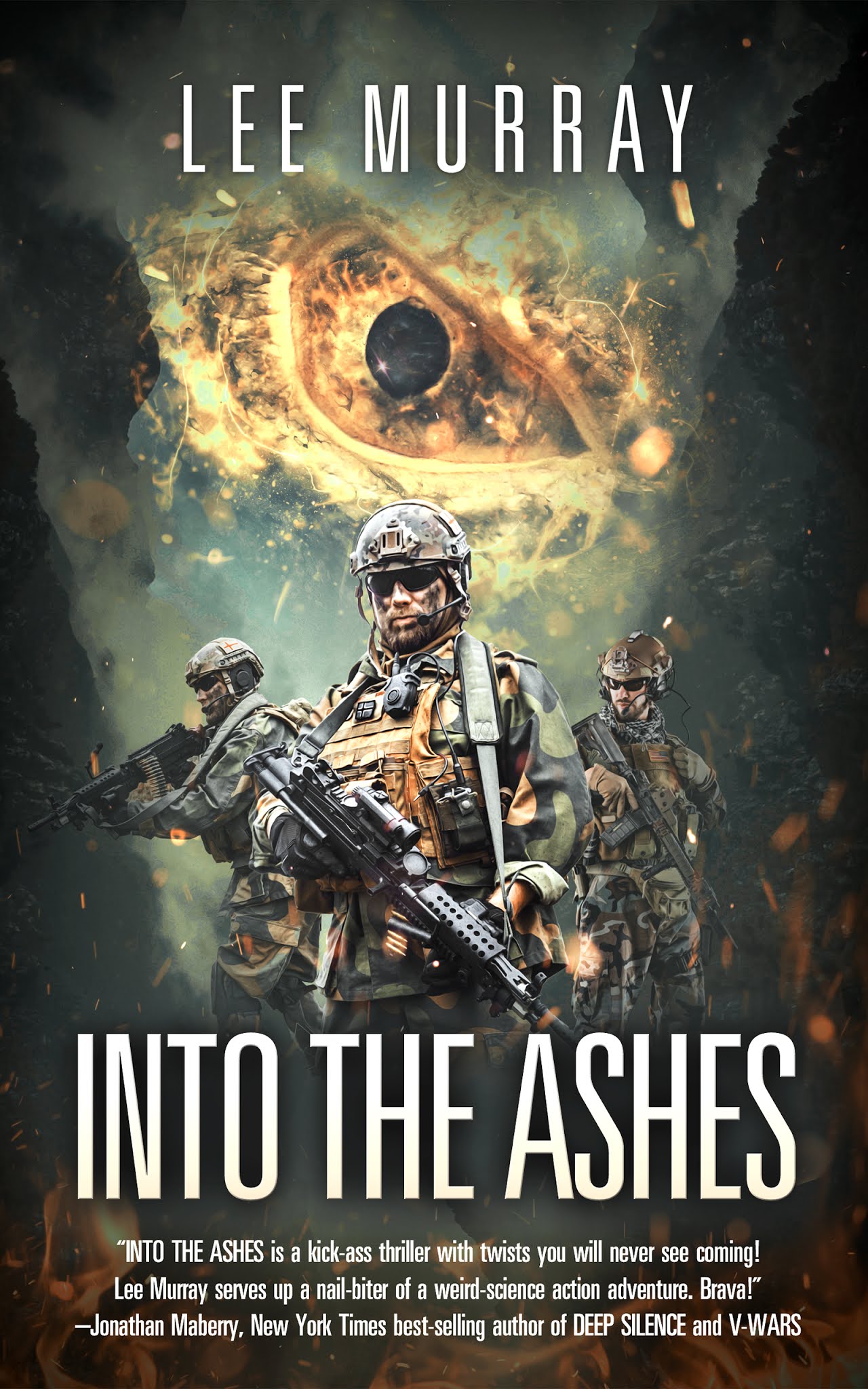
Perhaps, that’s why my Taine McKenna novel Into
the Ashes appealed to local readers in the same way Jane Harper’s The Dry,
with its ever-present threat of drought and forest fire, resonated for our
Australian neighbours. However, whereas Harper’s work is based firmly in the
real world, the Taine McKenna series
draws heavily on local supernatural lore. My hero, Taine McKenna, a New Zealand
Defence Force sergeant who is also a Māori matakite or seer, speaks to the
spirit of his mentor, Temera, through various means, but most often through the
resonance of a pūrerehua-bullroarer. The main conflict of the story involves
the eruption of Lake Taupo’s super-crater prompted by the legendary love
triangle between ancestor mountains of the central plateau, with McKenna and
his section caught in the crossfire.
That’s not to say traditional gothic horror—the
stuff of graveyards and haunted houses—doesn’t feature in antipodean horror
texts, but our unique geography offers different terrors. For anyone interested
in reading Lovecraft works from Antipodean authors, I recommend IFWG’s Cthulhu
Deep Down Under series (Volumes 1-3), and, in particular, Cthulhu:
Land of the Long White Cloud.
 |
|
Interestingly US colleagues
Carina Bissett and Hillary Dodge are currently curating an exciting anthology
called Shadow Atlas: Dark Landscapes of the Americas, based on the
geography and folklore of the Americas. I’m expecting the work to reflect a
different set of fears derived and inspired from that unique landscape. (I
lived for four years in the American midwest, so I’m hoping to draw on my
experiences during that time). Nevertheless, your comment about writing not
requiring passports is insightful. There are some things which engender terror
no matter the place or the people. Universal fears, like dark places, uncertainty,
otherness. Persecution. Suffering. Death. Those kinds of fears don’t respect
boundaries.
Helen: Thank you so much, Lee, for sharing your
fascinating insight into the Horror genre and the unique “Kiwi” (New Zealand)
perspective your writing brings to it, including that of your Chinese-New
Zealand family heritage – all of which I’m sure readers appreciate greatly. The
best of luck, too, for the outcome of the Bram Stoker Award® nomination, your
forthcoming Grimshaw Sargeson Fellowship, and Fox Spirit on a Distant Cloud.
~*~
About Lee Murray |
| Lee Murray |
Lee Murray is a multi-award-winning author-editor from Aotearoa-New Zealand (Sir
Julius Vogel, Australian Shadows), and a five-time Bram Stoker Award®-nominee. A
third generation Chinese New Zealander, her work includes military thrillers,
the Taine McKenna Adventures, supernatural crime-noir series The Path of Ra
(with Dan Rabarts), and debut collection Grotesque: Monster Stories.
Lee
is proud to have edited sixteen volumes of speculative fiction, including
several international award-winning titles. She is co-founder of Young NZ
Writers and of the Wright-Murray Residency for Speculative Fiction Writers, HWA
Mentor of the Year for 2019, NZSA Honorary Literary Fellow, and Grimshaw
Sargeson Fellow for 2021 for her poetry collection Fox Spirit on a Distant
Cloud.
To find out more, please visit Lee at leemurray.info or on the following sites:
~*~
.
Previous Posts:
January 1: Happy New Year – Ushering In A Year of Friends, Fellow Authors, & Magic Systems
January 5: An Interview with AK Wilder – Talking Magic In Her New-Out Crown Of Bones (AMASSIA #1)
February 1: An Interview with T Frohock – Talking Magic In A Song With Teeth & The LOS NEFILIM Series
March 1: An Interview with Courtney Schafer – Talking Magic In The "Shattered Sigil" Series
April 1: An Interview with Kristin Cashore –Talking Magic In Winterkeep & The "Graceling Realm" Series
.
~*~
 About The Interviewer:
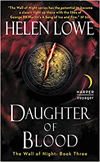
Helen Lowe's first novel, Thornspell (Knopf), was published to critical praise in 2008. The second,The Heir of Night (The Wall Of Night Series, Book One) won the Gemmell Morningstar Award 2012, and the sequel, The Gathering Of The Lost, was shortlisted for the Gemmell Legend Award in 2013. Daughter Of Blood (Book Three), was published in 2016 and Helen is currently completing the final novel in the series. She posts regularly on her “…on Anything, Really” blog, monthly on the Supernatural Underground, and tweets @helenl0we