Showing posts with label Magic Systems. Show all posts

Wednesday, December 1, 2021

Magic in Fantasy #12: "The Wall of Night" Series

 .

Well, here we are: together we've reached No. 12 in this year's post series on Magic in Fantasy fiction.

I've had a pretty good time with it, both the author interviews in the first half of the year, and my reflections on a range of books in the second. So I hope you have as well, on the reading side of the blog. :-)

If you want to look back or see what's come before, a compleat list is included at the end of this post.

It's by no means a complete exploration of the wondrous arrays of magics and magic systems that characterize the fantasy genre  – but that, dear readers, would be the work of at least a decade, if not a lifetime, rather than my twelve-month span.

So to wrap up the year, I'm going to look at the magic in my own The Wall Of Night series. 


.

Magic in Fantasy #12: "The Wall of Night" Series

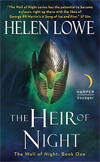
When Robin Hobb provided a cover quote for The Heir Of Night, (The WALL OF NIGHT (Book One)  she affirmed “A richly told tale of strange magic…” 


That focus felt right, because although for me, to be Fantasy there must be at least a glimmering of magic – but the Wall of Night series is absolutely full of magic, and some of it is exceedingly strange indeed.

I’m not sure it qualifies as a “system” in the Brandon Sanderson sense of the word, or even so much as in Courtney Schafer’s Shattered Sigil series. (Read the interview with Courtney from earlier this year.)

Shattered Sigil, Book 3

The magic of the Wall of Night universe is chaotic, natural, and diverse. There may, however, be some method in the magic, so let’s take a closer look.


The Magic Of The Derai

Firstly, there’s the magic of the Derai Alliance and their ancient enemy the Swarm, both of whom are alien to the world of Haarth, where they now find themselves. The magic of the Derai falls into four main areas: 

  • The Golden Fire, which comprised living entities, but was also a power source. At the time the story opens, the Golden Fire is believed extinguished; 
  • The Blood: those Derai that are both strongest in magic and traditionally most closely aligned with the Golden Fire;
  • Dream magic, comprising prophetic visions as well as manipulation of the dream plane; and 
  • The Magic of the Gods, which chiefly manifests through prophecy and artifacts, such as the three divinely-wrought weapons of the Derai’s greatest hero.


The magic of the Blood and the Derai’s lesser adepts covers a range of forms, including the ability to command objects and forces, both natural and physical; understanding the speech of beasts and birds; acute eyesight and hearing, including seeing in the dark and hearing outside normal human range; the chameleon ability to blend into surrounding materials and elements; prophetic dreaming; an empathic spirit bond; farseeing and foreseeing; fire calling; illusion working; mindspeaking; mind- and spiritwalking; psychic shielding; prophecy; seeking; truthsaying; and weatherworking.

Plus a few more! The unifying element, despite their chaotic diversity, is that all magic is grounded in the individual, like any other skill or talent. So an important limitation is the user’s physical endurance and psychic strength. Traditionally that limitation was enhanced by the bond to the Golden Fire, so the loss of the Fire represents a major reduction in the power of the Derai.


Dream Magic

Dream magic merits a section in its own right, because it is a form practiced by Derai adepts through sleeping dreams and waking visions. It is also used to access the Gate of Dreams, which is a realm-of-being in its own right, while offering access to other planes of existence. As is the way with dreams, the workings of this realm are frequently chaotic, jumbled, and mysterious, but can be clear as well.


The Gate of Dreams is also closely associated with portent. Truth may be discerned here, but it is equally likely that foretelling may only imperfectly reflect events in the waking or “daylight” world. Nothing is certain – and every action a protagonist takes acts on the dream realm, creating alternative possibilities for a dream or vision's fulfillment.

To further compound the mystery, the Gate of Dreams has its own denizens, including a long-dead hero who has been promised that her successor will not have to stand alone; the Huntmaster, who may not be more powerful than the hero, but is “older…and much, much darker”; and a ghost that guards a cavern of sleepers and holds the key to a millennia-old riddle. 


The Magic of Haarth

One of the interesting elements of The Wall of Night series is that the Derai and their archenemy, the Swarm, have long been the only players in the magic game. Until now, on the world of Haarth, which they are discovering has magic of its own... 


The story’s main protagonists, Malian and Kalan, are Derai, and only beginning to discover the magic of Haarth. What they have learned is that some elements are similar to their own powers: for example, Haarth magicians can access the Gate of Dreams. There is a deeper magic, however, which is tied to the world itself – what Malian calls a green magic and thinks of as the Song of Haarth. She is even beginning to suspect that the world itself may be sentient, although that is not yet certain.

This deeper magic also weaves together the magic of the natural world with the power of the three gods of Haarth – a magic that can take older, darker forms, such as the demons that walk during the dark of the moon, or the blood magic practiced in the land of Jhaine.
.


Conclusion

So there you have it: gods and ghosts and heroes; dream realms and blood and artifacts of power; mystery, mythology and more than a hint of chaos. I suspect that does add up to Robin Hobb’s “strange magic”, but with enough method in the mix to qualify as a magic system. :-)

~*~

Previous Posts In The “Magic In Fantasy” Year:

January 1: Happy New Year – Ushering In A Year of Friends, Fellow Authors, & Magic Systems

January 5: An Interview with AK Wilder – Talking Magic In Her New-Out Crown Of Bones (AMASSIA #1)

February 1: An Interview with T Frohock – Talking Magic In A Song With Teeth & The LOS NEFILIM Series

March 1: An Interview with Courtney Schafer – Talking Magic In The "Shattered Sigil" Series

April 1: An Interview with Kristin Cashore –Talking Magic In Winterkeep & The "Graceling Realm" Series
.
May 1: An Interview With Lee Murray – Talking Magic, the Supernatural & Horror

June 1: An Interview With Amanda Arista – Talking Magic In the MERCI LANARD & DIARIES OF AN URBAN PANTHER Series

July 1: The Magic of Magic In Fantasy -- & A Solstice Shift

August 1: More Magic In Fantasy: Lighting The Spark

October 1: The Magic of SF-nal Worlds

November 1: The Magic Next Door

~*~

About The Author:

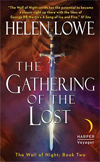
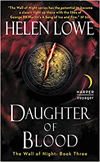
Helen Lowe's first  novel, Thornspell (Knopf), was published to critical praise in 2008. The second,The Heir of Night (The Wall Of Night Series, Book One) won the Gemmell Morningstar Award 2012, and the sequel, The Gathering Of The Lost, was shortlisted for the Gemmell Legend Award in 2013. Daughter Of Blood (Book Three), was published in 2016 and Helen is currently completing the final novel in the series. She posts regularly on her “…on Anything, Really” blog, monthly on the Supernatural Underground, and tweets @helenl0we

Monday, November 1, 2021

Magic In Fantasy: The Magic Next Door

 .

Well, I was going to focus on the magic of Halloween—but I have posted on that topic before, albeit a (relatively) Long Blogging Gal Ago: 

All Hallows Eve

Besides which, I figure there'll be very many mighty fine posts on the Halloween topic currently out there in the blogging wilds. Not to mention, that if anyone is looking for Books That Go Bump In The Night, right here on Supernatural Underground is a great place to start—so do check out the excellent authors and reads featured in the sidebar.

So I've decided to hone in on one of my favorite types of magic—'the magic next door', alternatively known as 'the magic of the everyday.' 

Of course, the real magic of this brand of fantasy lies in the juxtaposition of the magic with the everyday, usually in what is very recognizably our world. The juxtaposition lies at the heart of urban fantasy and its (almost identical) twin, paranormal fantasy, and is also a vital ingredient of magic realism.


Arguably, though, it can be found in almost every type of Fantasy, to a greater or lesser degree. So even the most famous secondary world fantasies may have a grounding in everyday or 'next door' magic. The Lion, The Witch and The Wardrobe, for example, begins (and ends) with the wardrobe—and the everyday realities of the four children in the strange house, and the game of hide and seek that leads Lucy to hide in the wardrobe, underlines the magic that follows.

Bag End

Similarly, in Tolkien's The Lord of the Rings, the magnitude of subsequent events are juxtaposed with the story's 'everyday' beginnings in the Shire, which is very much a society-next-door. The novel follows a transition, too: from the everyday to the epic; from the Shire to Bree. Much in the same way Lucy, and then her three siblings, transition through the wardrobe.


Today, though, I'm going to focus on three books where the magic is juxtaposed with an everyday that feels very like this world throughout, albeit always told 'slant.'

The Harry Potter Series: The Philosopher's Stone by JK Rowling (1997)

I don't think it's possible to discuss the magic next door and its juxtaposition with the everyday, and not feature Harry Potter—particularly Harry Potter and the Philosopher's Stone, which is where the magic and the worldbuilding for the series are both established.

No world could be more ordinary than Privet Drive, but from the outset and the baby Harry's arrival there, readers know that far-from-everyday elements are in play. The initial glimpse of 'something more' is cemented with the gradual intrusion of magic into the young Harry's life, until his magical invitation to attend Hogwarts is confirmed—and Hagrid introduces him to the magical world juxtaposing the one we all know. 

This introduction begins with the wonders of Diagon Alley, from the Leaky Cauldon to Gringotts Goblin Bank, and shopping for back-to-school supplies that includes wands, cauldrons, and owls. And magical juxtapositions would have to go a long way to beat Platform 9 3/4, which while located in the very real King's Cross Station, is accessed by running fil tilt at a brick wall. 

En route to Platform 9 3/4

The juxtapositions of the real-world-as we-know-it and magic don't stop when Harry and his friends reach the magical Hogwarts School, but are cemented by the familiar school round of lessons, albeit on magical topics, being sorted into school houses, and sports teams—the very magical quidditch, played on broomsticks.

You already know all this, of course, but since Harry Potter is the quintessence of "the magic next door", it absolutely must be part of this post. :-)

Sunshine by Robin McKinley (2003)


Sunshine is a vampire novel, set in what is recognizably this world—only it's a post-apocalyptic this-world in which, following the Voodoo Wars,  humanity must contend with vampires and demons, and where sorcery has become part of everyday life. 


Enter Rae Seddon, aka Sunshine, who works as a baker and is distinguished chiefly for her cinnamon-scrolls-of-awesome—until the evening she is kidnapped by vampires and clearly intended to be the dinner for a powerful, and very hungry, captive vampire: Constantine.

Yet Sunshine survives the night and subsequently escapes with Constantine, an event that opens the door onto her own unique power, which centers on channeling sunlight, i.e her nickname is a clue. It also highlights that Constantine is more than just your average vampire. 

The story evolves from that point, centered on the cafe, Sunshine's home, and the way the forces aligning against Constantine—and now Sunshine—intrude into both, with her allies including a biker wizard, SOF (Special Other Forces) officers with demon powers, and a mentor who is also a powerful medium.

In short, the supernatural is everywhere but it is Sunshine herself who has shut awareness of it out of her life—and therein lies the unfolding of the tale...

The River Midnight by Lilian Nattel (1998)

In July, I discussed the magic realism of Joanne Harris's Chocolat—and Lilian Nattel's The River Midnight occupies a similar space in the Fantasy spectrum. The magic is a delicate presence, but one that enchants the reader as much as the story's characters and historical setting.

The River Midnight is set in a shetl, a small town with a large, or predominantly Jewish population, in 1890s Poland. The foreground of the story comprises the intertwined lives of its inhabitants, particularly four women who were childhood friends, but have grown apart.

Although containing multiple point-of-view threads, the story centers on Misha, the shetl's midwife and a free and independent spirit. Yet beneath the everyday surface of this particular shetl (the imaginary Blaszka), the reader encounters angels and demons, chiefly in the form of the enigmatic Director and the Traveler. And then there's Misha's own maternal heritage of witchcraft...

If this is the warp of The River Midnight 's magic, the weft is Blaszka's everyday encounters with the supernatural, from ghosts to secret transformations into creatures as seemingly odd as tree frogs—and the life of the village itself, with its flaws, richness of characters and traditions, and warmth of community.

The century is turning, change the juggernaut striding in its wake, and time is a trickster. Yet there's enough magical presence in the story to give destiny a nudge: in short, the telling thereof is magical and mysterious, as well as real.

~*~

Previous Posts In The “Magic In Fantasy” Year:

January 1: Happy New Year – Ushering In A Year of Friends, Fellow Authors, & Magic Systems

January 5: An Interview with AK Wilder – Talking Magic In Her New-Out Crown Of Bones (AMASSIA #1)

February 1: An Interview with T Frohock – Talking Magic In A Song With Teeth & The LOS NEFILIM Series

March 1: An Interview with Courtney Schafer – Talking Magic In The "Shattered Sigil" Series

April 1: An Interview with Kristin Cashore –Talking Magic In Winterkeep & The "Graceling Realm" Series
.
May 1: An Interview With Lee Murray – Talking Magic, the Supernatural & Horror

June 1: An Interview With Amanda Arista – Talking Magic In the MERCI LANARD & DIARIES OF AN URBAN PANTHER Series

July 1: The Magic of Magic In Fantasy -- & A Solstice Shift

August 1: More Magic In Fantasy: Lighting The Spark


October 1: The Magic of SF-nal Worlds

~*~
.

About The Author:

Helen Lowe's first  novel, Thornspell (Knopf), was published to critical praise in 2008. The second,The Heir of Night (The Wall Of Night Series, Book One) won the Gemmell Morningstar Award 2012, and the sequel, The Gathering Of The Lost, was shortlisted for the Gemmell Legend Award in 2013. Daughter Of Blood (Book Three), was published in 2016 and Helen is currently completing the final novel in the series. She posts regularly on her “…on Anything, Really” blog, monthly on the Supernatural Underground, and tweets @helenl0we

Friday, October 1, 2021

Magic In Fantasy: The Magic Of SF-nal Worlds

 .

Hello October! The month in which our northern hemisphere peeps are definitely in autumn and looking forward to Halloween, while here in the south the new green of spring is everywhere and the days are definitely longer, but there’s still snow on the mountains.
.
All in all it sounds rather magical, whether looking forward to the eeriness of Samhein or the bonfires of Beltane—which brings me to my theme of magic in fantasy fiction.
.
The unifying theme of this month’s trio is the Magic of Fantasies that take place in worlds that are SF-nal in premise. Enjoy!
J


.
Magic In Fantasy: The Magic Of SF-nal Worlds

I like to start with an older book, so first off the blocks is a 1989 Locus nominee for Best First Novel:


The Gate Of Ivory by Doris Egan

The Gate of Ivory is one of those wonderful works where the premise of the worldbuilding is SF-nal, but the tale itself is pure fantasy.
.
The heroine, Theo (Theodora), finds herself stranded on the planet called Ivory, where magic is real and assassination a fact of everyday life. Her fortunes become entangled with that of sorcerer, Ran Cormallon, and the internal and external struggles of the Cormallon clan. As you may suspect from the synopsis, The Gate of Ivory is fantasy with romantic elements.
.
I have always loved Theo’s “voice” and her character, who is smart, stubborn, and definitely not a
pushover. Her entry into the magic of Ivory is through the tarot, but the in addition to fully fledged sorcery, magic ranges from touchstones that capture memories, to formal, sorcerous duels.
.
There is also a great backstory, involving space travel and genetic manipulation, as to why Ivory is the only known world where magic is real, and a logical rationale to how its magic works.
.
Above all, though, it’s a fun and adventurous, as well as a magical fantasy, and one that I believe still reads well in 2021, thirty-two years after first publication.
J 

.

Trail of Lightning by Rebecca Roanhorse

Rebecca Roanhorse’s Trail of Lightning also has a SF-nal setting, in this case a post-climate change world in which Dinétah, the Diné or Navajo nation, has survived but is now, by an act of traditional magic, walled off from the rest of the USA. Within its walls, the traditional gods, but also the monsters of the Diné have woken to life.
.
The protagonist, Maggie Hoskie, is a monster hunter, with the ability to draw on family powers that enhance her ability to go toe-to-toe with monsters and demons. As well as her trusty double-barrel shotgun  and seven-inch Böker knife, Maggie must also use traditional magic to overcome her mythic and supernatural opponents.

.
Maggie is feisty, savvy, and tough enough to punch well above her weight, especially when fighting monsters involves negotiating the machinations of gods such as Coyote and Neizgháni, the Monster Slayer. She also has a worldweariness that I felt was a really believable characteristic with someone whose dayjob is not only fighting monsters, but dealing with the consequences of their rampages.
.
The story is imbued with the magic and medicine, as well as the monsters, of Diné legend, as well as being tale-spinning in the tradition of both Buffy and Mad Max’s Furiosa.
.

Harrow the Ninth by Tamsyn Muir

Last year, I discussed the worldbuilding in Tamsyn Muir’s Gideon the Ninth, which was published as “space fantasy.” Effectively, the world is one of an interplanetary empire spanning a 10,000-year period, but the story is not only one swashbuckling fantasy, in which cavaliers duel with rapiers and broadswords, but imbued by its magic system, which is entirely necromancy.
.
Harrow the Ninth, published 2020, is the second instalment and follows the necromancer, Harrow (Harrowhark) who has ascended to lyctorhood. Although the story takes place in space, rather than on Gideon’s ruined planet, it’s still fantasy and necromancy is still the raison d’être of the story.
.
Where Gideon was extroverted, Harrow is an introvert par excellence, a natural circumstance compounded by necromantic plots-within-plots. The magic of Harrow the Ninth also delves into dream magic and the alternate realm of The River, which is both an astral plane and afterlife, inhabited by ghosts. The ghosts include the dead from
Gideon and also revenant spirits of necromantically destroyed planets, bent on a vengeance quest…
.
Harrow the Ninth, perhaps reflecting the character of Harrow, is more complex and arcane than Gideon, but if you love bones and skeletons, corpses and ghosts, and the magic of the tomb, whether locked or unlocked, you’ll still be hooked.
.

~*~

Previous Posts In The “Magic In Fantasy” Year:

.
January 1: Happy New Year – Ushering In A Year of Friends, Fellow Authors, & Magic Systems

January 5: An Interview with AK Wilder – Talking Magic In Her New-Out Crown Of Bones (AMASSIA #1)

February 1: An Interview with T Frohock – Talking Magic In A Song With Teeth & The LOS NEFILIM Series

March 1: An Interview with Courtney Schafer – Talking Magic In The "Shattered Sigil" Series

April 1: An Interview with Kristin Cashore –Talking Magic In Winterkeep & The "Graceling Realm" Series
.
May 1: An Interview With Lee Murray – Talking Magic, the Supernatural & Horror

June 1: An Interview With Amanda Arista – Talking Magic In the MERCI LANARD & DIARIES OF AN URBAN PANTHER Series

July 1: The Magic of Magic In Fantasy -- & A Solstice Shift

August 1: More Magic In Fantasy: Lighting The Spark

September 1:  Drawing On Fairytale, Folklore, and Myth

~*~
.

About The Author:

Helen Lowe's first  novel, Thornspell (Knopf), was published to critical praise in 2008. The second,The Heir of Night (The Wall Of Night Series, Book One) won the Gemmell Morningstar Award 2012, and the sequel, The Gathering Of The Lost, was shortlisted for the Gemmell Legend Award in 2013. Daughter Of Blood (Book Three), was published in 2016 and Helen is currently completing the final novel in the series. She posts regularly on her “…on Anything, Really” blog, monthly on the Supernatural Underground, and tweets @helenl0we

Wednesday, September 1, 2021

Magic In Fantasy: Drawing On Fairytale, Folklore, and Myth

 .

Introduction

Here we are on 1 September—and absolutely time for a little more magic in Fantasy!

Currently, I’m sharing three books each month where the magic and/or magic systems have spun my reading wheels.

The element today’s books have in common, besides my liking their magical vibe, is that they all draw on myth, fairytale, or folklore to spin their reading spell. Arguably all Fantasy does so, but these are works where that particular aspect really caught my attention.

Consistent with previous posts, I’ll begin with an older publication and move forward to something more recent. I *believe* they’re all YA, too, but if not published as such, they certainly have that ‘feel’ to the storytelling.
.

Magic In Fantasy: Drawing On Fairytale, Folklore, and Myth

The Godmother by Elizabeth Ann Scarborough

In The Godmother, author Elizabeth Ann Scarborough takes a number of classic fairytales, such as Snow White (only in this case it’s Seven Vietman Vets on a sweatlodge retreat rather than seven dwarfs), Cinderella, Hansel and Gretel, and Puss In Boots, and weaves them into one story, set in contemporary Seattle. The Godmother premise includes a secret order of fairy godmothers, or godmothers with magical power at least, who endeavor to undo harms and right wrongs. The godmother on the case in Seattle is Felicity Fortune, with a magical budget to work within and a great many dilemmas to set right.

Although it’s been a while since first reading, I remember my fairytale lover’s delight at recognizing the interwoven fairytales in this book, and also my admiration for the author’s deftness in stringing them together into a seamless whole. Like fairytales themselves,
The Godmother has its dark side, but it also has a great deal of humor and a light touch that I really enjoyed. I found it quite magical, in fact.
J

Another two books were published subsequently:
The Godmother’s Apprentice, for those of you who like your fairytales and folklore with an Irish twist, and The Godmother’s Web set in the American Southwest and drawing on Navajo and Hopi folklore.
.

Guardian of the Dead by Karen Healey

Transitioning from 1994 to 2009, and not only from the Northern hemisphere to the Southern, or even to New Zealand, but right to my home city of Christchurch, I come to Karen Healey’s Guardian of the Dead.

Guardian of the Dead
is an intriguing mix of urban fantasy brought together with Maori* legends of the patupaiarehe (fairies) and taniwha (think a cross between demons and dragons, that can be either malign or benign), as well as the myth of Hine-nui-te-Po, the Great Woman of the Night and goddess of death.

There’s also an element of Greek myth woven into the story, which makes for a fun read, magic-wise.

*Maori are New Zealand’s tangata whenua (literally ‘people of the land’, or first people).
.

The Library Of The Dead by T.L. Huchu

The Library Of The Dead is a 2021 publication, set in a dystopian, not-too-distant future Edinburgh where the heroine, Ropa, is a licensed medium-cum-psychopomp. Her main work, or “dayjob” is carrying messages from the dead to the living (for a fee, of course), although she also casts out spirits and learns magic from her grandmother, who is from Zimbabwe.

Ropa’s power, in dealing with the dead, draws on her grandmother’s teaching, and she uses the music of the mbira, aka an African thumb piano, to communicate with the ghosts. Yet the magical beings she must deal with are also drawn from Scottish folklore, such as “brounies”, as well as an underground society of magicians, based in the Library of the Dead.

Sounds like fun?—I thought so, not least for the storytelling’s dynamic blend of magics. 

~*~
.

Previous Posts In The "Magic In Fantasy" Series: 

January 1: Happy New Year – Ushering In A Year of Friends, Fellow Authors, & Magic Systems

January 5: 
An Interview with AK Wilder – Talking Magic In Her New-Out Crown Of Bones (AMASSIA #1) 

February 1: An Interview with T Frohock 
– Talking Magic In A Song With Teeth & The LOS NEFILIM Series


March 1:  An Interview with Courtney Schafer – Talking Magic In The "Shattered Sigil" Series


April 1:  An Interview with Kristin Cashore –Talking Magic In Winterkeep & The "Graceling Realm" Series

.

May 1: An Interview With Lee Murray – Talking Magic, the Supernatural & Horror

June 1: An Interview With Amanda Arista – Talking Magic In the MERCI LANARD & DIARIES OF AN URBAN PANTHER Series


July 1: The Magic of Magic In Fantasy -- & A Solstice Shift

August 1: More Magic In Fantasy: Lighting The Spark


~*~

About The Author:

Helen Lowe's first  novel, Thornspell (Knopf), was published to critical praise in 2008. The second,The Heir of Night (The Wall Of Night Series, Book One) won the Gemmell Morningstar Award 2012, and the sequel, The Gathering Of The Lost, was shortlisted for the Gemmell Legend Award in 2013. Daughter Of Blood (Book Three), was published in 2016 and Helen is currently completing the final novel in the series. She posts regularly on her “…on Anything, Really” blog, monthly on the Supernatural Underground, and tweets @helenl0we