Showing posts with label folklore. Show all posts

Thursday, July 10, 2025

From The Backlist: "What If? Folklore As A Source" by Melissa Marr

 .
We love this post by the great Melissa Marr on where her stories come from, specifically their folklore origins. We're sure you'll love it, too, so read on and enjoy!

"What If?" Folklore As A Source

 by Melissa Marr

One of the questions every writer hears regularly is “where do you get your ideas?” Answers to this one range from quips to “everything” to very specific “this story came from ___.” All of these are true answers (or, they can be. . . writers being writers, there are inevitably truth-bendings going on sometime. ...) Every story I have started begins with a “what if” or a “what next.” Moreover, every one of those is connected to folklore or/and fairy tales in some way.


Life and Lore in My Texts

My first novel, Wicked Lovely, utilizes a few fairy tale tropes--in part for the purpose of defying them. There's a curse that can only be broken by finding the "fated love"...of course, the fated love doesn't quite want to be found, and the cursed faery is already in love with someone he hoped was his fated love, but wasn't...sorta, maybe. I had good fun playing with questions of volition and power here, the idea of what happily-ever-after means, and other fairy tale tidbits like a "woken with a kiss" scene wherein being "woken" is an awakening (i.e. epiphany rather than literally awakening). That novel is also very rooted in a folklore, specifically tales of Cailleach Bheur and of the King of Summer.

I used some of the same lore and fairy tale tropes in a short story in Cricket in 2007. It derives, in part, from my on-going love of Cailleach Bheur, but in it the protag is a girl who carries "Winter's Kiss" and feels it a burden rather than a joy. I added this to a world in which global warming is a problem, and threw in my childhood dream of traveling with an ice-bear (polar bear) that is a result of a fairy tale, & well, it became a story about a girl who carries winter and boy who is also a bear. ...


Why Write From Folklore

I didn’t intend to write these things. In many ways, writing is a bit of an accident for me. I grew up with these sorts of stories, the supernatural wasn’t just the stuff in my books, it was/is real in my family. I’ve been told not to go places because of the various creatures lurking out there; I’ve also been sent out to “catch” a faery that was lurking around the woodpile. I’m passing that tradition on to my children as best I can.
 ...


How Do I Learn This Stuff?

It’s really a case of write what I know. After a folklore saturated childhood, I grew up and became a lit major and after that a lit teacher at university. My focus areas were Romantic, Victorians, & the American South. Mmmm. Ghosts, Byronic heroes, Frankenstein, Dracula, the “Mortal Immortal,” Southern Gothic! Oh yes, literature is riddled with some weird stuff. Delicious, macabre, and addictive. Stir the lit into the lore, and I was on my way to being where I am now. Somewhere in there, I also discovered scholarly journals . . . FOLKLORE and THE LION AND THE UNICORN and MARVELS AND TALES (among others). ...

*pauses*

Yeah, I get to read what interests me, drown in it, and I know that somewhere along the line, I’ll get that moment where I say, “oooooh, what if . . .”


What a fabulous post! It's a lovely indepth one, too, so we've only given you the abridged version here. To absorb the complete goodness, just click on through to the original, here.

To read more about Melissa and her writing, go here.

Saturday, March 9, 2024

From The Backlist: "Modern Day Faery Tales Drawn From Fantasy and Folklore"

 .

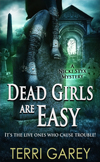
We love this post from one of Supernatural Underground's founder authors, the great Terri Garey.

It's a wonderful exploration of the origins and unique characteristics of the awesome that is paranormal urban fantasy.

We love what Terri has to say even more! So here goes:

Urban Fantasy: Modern Day Faery Tales Drawn From Fantasy and Folklore 

by Terri Garey

As an author with an all-too-vivid imagination, I've never had a whole lot of trouble with “suspension of disbelief”. Ghosts, near-death experiences, haunted houses - anything that frightens or intrigues me is very likely to end up in one of my books. 


I write Urban Fantasy, which is basically fiction that’s set in the real world, yet contains aspects of the supernatural or fantastic. Urban Fantasy was first defined as an acknowledged sub-genre in the late 1980’s and early ‘90s, but in my opinion, “Urban Fantasy” has always been around, from the earliest days when spooky stories were first told around warm fires on cold nights. Ancient gods and goddesses, elves, witches, faeries and werewolves. Dragons, trolls, giants. By the standards of the era (whether it be Classical, the Dark Ages, the Middle Ages, the Victorian, etc.) any of these stories could be considered Urban Fantasy, for they all involved a mixture of the real and the fantastic. Lewis Carroll’s Alice In Wonderland, Mary Shelley's Frankenstein, Bram Stoker's Dracula, Robert Lewis Stevenson's Jekyll and Hyde – these are all fictional tales that were based in the real world, yet include elements of the supernatural.

In Urban Fantasy, the supernatural elements are limited only by the author’s imagination, but certain themes, however, remain constant. These “literary tropes” are at the heart of every good fantasy novel, whether it’s Urban Fantasy, Sci-Fi Fantasy (Star Wars, Star Trek), Historical Fantasy (Lord of the Rings, Game of Thrones), or Young Adult Fantasy (Harry Potter). 


1) First comes the over-arching theme of Good vs. Evil. The stakes can be as high as the fate of the world, or as simple as saving the life of one individual, but there is always a goal that serves the greater good. Whether the protagonist is a supernatural bounty-hunter who keeps demons from taking over the world, or a single mom who finds out her neighbor is a vampire, moral dilemmas—and the consequences of them—are a mainstay of Urban Fantasy.

2) Second is the journey of the self – protagonists often start out ill-equipped, or even unwilling, to deal with the situations they find themselves in, but through character development (which the author shows by their ongoing actions and insights), find within themselves the strength to meet ever-increasing challenges.

.

3) Third is A Major Secret – one that puts the protagonist outside the realm of “normal”, but forces them to behave as though they were just like you and me. By placing the protagonist in an urban, “everyday” setting, the author creates a sense of kinship with the reader, fostering the much-needed suspension of disbelief.

..."

To read the full post and the comments, click here.

And to discover more about Merrie and her writing, visit her on: Terri Garey

Wednesday, September 1, 2021

Magic In Fantasy: Drawing On Fairytale, Folklore, and Myth

 .

Introduction

Here we are on 1 September—and absolutely time for a little more magic in Fantasy!

Currently, I’m sharing three books each month where the magic and/or magic systems have spun my reading wheels.

The element today’s books have in common, besides my liking their magical vibe, is that they all draw on myth, fairytale, or folklore to spin their reading spell. Arguably all Fantasy does so, but these are works where that particular aspect really caught my attention.

Consistent with previous posts, I’ll begin with an older publication and move forward to something more recent. I *believe* they’re all YA, too, but if not published as such, they certainly have that ‘feel’ to the storytelling.
.

Magic In Fantasy: Drawing On Fairytale, Folklore, and Myth

The Godmother by Elizabeth Ann Scarborough

In The Godmother, author Elizabeth Ann Scarborough takes a number of classic fairytales, such as Snow White (only in this case it’s Seven Vietman Vets on a sweatlodge retreat rather than seven dwarfs), Cinderella, Hansel and Gretel, and Puss In Boots, and weaves them into one story, set in contemporary Seattle. The Godmother premise includes a secret order of fairy godmothers, or godmothers with magical power at least, who endeavor to undo harms and right wrongs. The godmother on the case in Seattle is Felicity Fortune, with a magical budget to work within and a great many dilemmas to set right.

Although it’s been a while since first reading, I remember my fairytale lover’s delight at recognizing the interwoven fairytales in this book, and also my admiration for the author’s deftness in stringing them together into a seamless whole. Like fairytales themselves,
The Godmother has its dark side, but it also has a great deal of humor and a light touch that I really enjoyed. I found it quite magical, in fact.
J

Another two books were published subsequently:
The Godmother’s Apprentice, for those of you who like your fairytales and folklore with an Irish twist, and The Godmother’s Web set in the American Southwest and drawing on Navajo and Hopi folklore.
.

Guardian of the Dead by Karen Healey

Transitioning from 1994 to 2009, and not only from the Northern hemisphere to the Southern, or even to New Zealand, but right to my home city of Christchurch, I come to Karen Healey’s Guardian of the Dead.

Guardian of the Dead
is an intriguing mix of urban fantasy brought together with Maori* legends of the patupaiarehe (fairies) and taniwha (think a cross between demons and dragons, that can be either malign or benign), as well as the myth of Hine-nui-te-Po, the Great Woman of the Night and goddess of death.

There’s also an element of Greek myth woven into the story, which makes for a fun read, magic-wise.

*Maori are New Zealand’s tangata whenua (literally ‘people of the land’, or first people).
.

The Library Of The Dead by T.L. Huchu

The Library Of The Dead is a 2021 publication, set in a dystopian, not-too-distant future Edinburgh where the heroine, Ropa, is a licensed medium-cum-psychopomp. Her main work, or “dayjob” is carrying messages from the dead to the living (for a fee, of course), although she also casts out spirits and learns magic from her grandmother, who is from Zimbabwe.

Ropa’s power, in dealing with the dead, draws on her grandmother’s teaching, and she uses the music of the mbira, aka an African thumb piano, to communicate with the ghosts. Yet the magical beings she must deal with are also drawn from Scottish folklore, such as “brounies”, as well as an underground society of magicians, based in the Library of the Dead.

Sounds like fun?—I thought so, not least for the storytelling’s dynamic blend of magics. 

~*~
.

Previous Posts In The "Magic In Fantasy" Series: 

January 1: Happy New Year – Ushering In A Year of Friends, Fellow Authors, & Magic Systems

January 5: 
An Interview with AK Wilder – Talking Magic In Her New-Out Crown Of Bones (AMASSIA #1) 

February 1: An Interview with T Frohock 
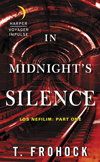
– Talking Magic In A Song With Teeth & The LOS NEFILIM Series


March 1:  An Interview with Courtney Schafer – Talking Magic In The "Shattered Sigil" Series


April 1:  An Interview with Kristin Cashore –Talking Magic In Winterkeep & The "Graceling Realm" Series

.

May 1: An Interview With Lee Murray – Talking Magic, the Supernatural & Horror

June 1: An Interview With Amanda Arista – Talking Magic In the MERCI LANARD & DIARIES OF AN URBAN PANTHER Series


July 1: The Magic of Magic In Fantasy -- & A Solstice Shift

August 1: More Magic In Fantasy: Lighting The Spark


~*~

About The Author:

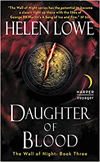
Helen Lowe's first  novel, Thornspell (Knopf), was published to critical praise in 2008. The second,The Heir of Night (The Wall Of Night Series, Book One) won the Gemmell Morningstar Award 2012, and the sequel, The Gathering Of The Lost, was shortlisted for the Gemmell Legend Award in 2013. Daughter Of Blood (Book Three), was published in 2016 and Helen is currently completing the final novel in the series. She posts regularly on her “…on Anything, Really” blog, monthly on the Supernatural Underground, and tweets @helenl0we

Monday, October 1, 2018

Halloween Is Coming!


.
Halloween "is" Coming!
It may only be 1 October today, with Halloween way-aways at the end of the month—but having turned the seasonal corner into October and with the equinox already two weeks past, my mind is already turning toward jack o' lanterns and trick-or -treating. All the elements that make for a great Halloween!

As some or all of you may know, I live in the Southern Hemisphere, which means that Halloween here falls in spring. The festival does get celebrated, but I can't help feeling that Halloween goes so much better with its autumnal origins: there's something about ghost tales and the supernatural that fits perfectly with the nights drawing in, firesides and candlelight, and shadows dancing on the walls.

Exactly the conditions that are optimal for tall tales, spooky yarns, and "books that go bump in the night" as well—the latter being something of our raison d'etre, here on the Supernatural Underground. In fact, if you cast your eyes right to the sidebar, you'll find some great paranormal stories and undead tales right there!

The origins of Halloween go back a long way, at least as far as the Celtic era when the festival of Samhain marked the end of the harvest season and the passage of the year out of summer and into the cold and dark of winter. As such, Samhain was also a “day of the dead,” when the spirits of those who had passed must be placated with offerings of food.

Art: PJ Fitzpatrick
Once Christianity became dominant, the 31 October/1 November date for the Celtic festival of Samhain was transformed into the religious festival of All Hallows’ Eve, or All Saints’ Day, followed immediately by All Souls. The Celtic traditions persisted, however, which is why Halloween is still a festival for "ghosties and ghoulies, long-leggetie beasties, And things that go bump in the night."

As a kid, one of my favorite Halloween stories was that of Tam Lin, a young mortal man stolen away by the fey, whose soul was to be lost to Hell on Halloween unless his lover, Janet, can win him back. I particularly liked the retelling in Rosemary Sutcliff’s children's book, The Armourer’s House, as recounted in the Chapter titled “A Tale for Hallowe’en."


Subsequently I have read several other Tam Lin retellings, including Pamela Dean's Tam Lin and Patricia McKillip's Solstice Wood (which won the 2007 Mythopoeic Fantasy Award for Adult Literature.)

Although not specifically set at Halloween, Raymond E Feist's Faerie Tale delves into the crossover between the mortal and supernatural worlds, while Roger Zelazny's A Night in the Lonesome October specifically focuses on Halloween (with a cast of fictional protagonists and antagonists, such as Sherlock Holmes, Jack the Ripper, and Victor Frankenstein thrown in.)


Neil Gaiman's The Graveyard Book also has Halloween overtones (aside from being set in a graveyard) when the living and the dead come together to dance 'the macabray' (the danse macabre.) 

And although I can't help but feel that Halloween itself best suits the autumn of its Northern Hemisphere origins, another great supernatural read that brings me back, not only to the Southern Hemisphere but to my home city of Christchurch, is the great Margaret Mahy's The Changeover.

These are just a few, Halloween-suitable reads that I've enjoyed over the ears. But with the eve of Jack O' Lanterns and ghosties coming up fast I'd love a few more recommendations for fireside tales.

So if you have a favorite, do tell me in the comments!

—


Helen Lowe is a novelist, poet, and blogger whose first novel, Thornspell (Knopf), was published to critical praise in 2008. Her second, The Heir of Night (The Wall Of Night Series, Book One) won the Gemmell Morningstar Award 2012. The sequel, The Gathering Of The Lost, was shortlisted for the Gemmell Legend Award in 2013. Daughter Of Blood, (The Wall Of Night, Book Three) is Helen's most recent book and she is currently working on the fourth and final novel in The Wall Of Night series. Helen posts regularly on her “…on Anything, Really” blog and is also on Twitter: @helenl0we