Showing posts with label Guy Gavriel Kay. Show all posts

Wednesday, September 2, 2026

A Year of Heroines in Fantasy: Beatritz de Barbentain, Mneri of the Khentor, & Korriya of Night

 .
This month's trio of heroines have a considerable amount in common. All three are supporting rather than major characters, but still have  a part to play in the main story, and all three are priestesses. 

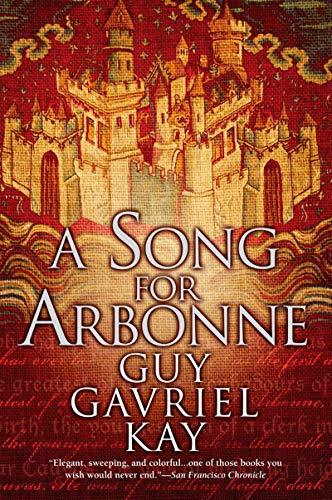
Beatritz is High Priestess of the goddess Rian in Guy Gavriel Kay's A Song for Arbonne. She is also the daughter of Arbonne's ruling countess but was so determined to pursue her spiritual calling that she blinded herself voluntarily (a now archaic practice in Arbonne, but traditionally thought to enhance prescience) to ensure she would not be coerced into a dynastic marriage. 

That's commitment, right?! But the prescience she gains thereby, however fleeting and partial, turns out to be crucial in saving Arbonne from Gorhaut, its traditional enemy. 

In A Song for Arbonne the stakes are Arbonne's independence and the freedom to worship Rian, whereas in both Joy Chant's Red Moon and Black Mountain and my own The Wall of Night series, the characters face an existential evil that threatens all life.

In Red Moon and Black Mountain, the young woman called Mneri is one the Khentor, the nomadic warrior tribes of the plains. She is called to the role of priestess by her people, which gives her greater standing in a world where women are subservient to men and the worship of the mother goddess is respected, but must be practiced in underground sanctuaries. Yet although an honor, in the world of the Khentor where the tribe is all, refusal is not a real option for Mneri. 

Mneri's part in her story is less crucial than Beatritz's, but when the final destructive force unleashed by the antagonist must be overcome -- although it is primeval, rather than evil in itself -- she unmasks the potential solution. 

Korriya's part in The Heir of Night is also less critical than Beatritz's role. She is the most circumscribed of the three in terms of her personal circumstances as well. In the world of the warrior Derai, priests are discriminated against and segregated from mainstream society, so Korriya was not only forced into the temple life, but effectively imprisoned within it. Over time, she has become a senior priestess, but when the story opens, events force her to challenge Derai segregation in order to alert the wider community to the paranormal forces that threaten all.

As noted at the outset, Beatritz, Mneri, and Korriya are all supporting characters in a wider epic-heroic story. What their part illustrates is that defeating the "big bad" is not only about the "captains and kings" but also about everyone playing their part -- even when their societies don't recognize or respect their role or contribution. Or in Beatritz's case, know about the key element at all, which must remain forever secret... 

Nonetheless, all three step up when circumstances demand it, and serve their societies and worlds as faithfully as any champion wielding lightning bolts or swords -- which is why they've more than earned their place in my pantheon of Fantasy heroines.


Prior Posts: A Year of Heroines in Fantasy

~*~

About Helen Lowe

Helen Lowe is the award-winning author of Thornspell and The Wall Of Night fantasy series, as well as a poet, blogger, and lover of story. She is currently editing the the final book in The Wall of Night series. 

Helen posts regularly on her “…on Anything, Really” blog, monthly on the Supernatural Underground, and tweets @helenl0we.

Saturday, August 2, 2025

Great Leaders in Speculative Fiction #7: Signe in "A Song For Arbonne" by Guy Gavriel Kay

 .

In last month's post, I focused on when a book's "big bad" can also be a great leader. This month, I want to hone in on Signe de Barbentain in A Song for Arbonne by Guy Gavriel Kay. 

Signe is definitely on the side of the angels, but she has also had leadership thrust upon her, in a country -- Arbonne -- divided by a bitter rivalry for the past quarter century. 

For starters, she is an old woman, and the widow of Arbonne's ruling Count, rather than having always held the throne in her own right. The reason she does so now is because her husband died without an heir -- and the divisive rivalry is between the heads of Arbonne's two most powerful political and military families. So Signe, despite her age, must rule alone and in her own right, in order to hold the balance of power, and keep the peace, between the two.

What further complicates the situation for Signe, is that the cause of the feud was her daughter, Aelis. Aelis was married to one great nobleman, Urte de Miraval, but fell in love with the other, Bertran de Talair. She died in childbirth, but brought matters to a head by revealing the affair to Urte and telling him Bertran was the father of her child -- who also died, leaving no heir to Arbonne and a bitter feud between the two men. By the time Signe comes to rule alone, the rift is irreconcilable.


The problem for Signe is that Arbonne's neighbour, the militarily powerful and fervently religious nation of Gorhaut, makes no secret of its ambition to annexe Arbonne -- an ambition fueled by Gorhaut's desire to eradicate the worship of the goddess Rian, which prevails in Arbonne. 

Under such circumstances, Arbonne needs unity desperately, because unless Urte and Bertran reconcile, Gorhaut will conquer it. As Countess, Signe must strive to prevent that outcome. She also knows that Urte and Bertran will never work together, despite considerable effort by herself and other Arbonnais leaders. (Including 'influencers', as we would say. :-) )

Signe's unenviable dilemma is brought to a head when a very high-ranking Gorhautian noblewoman, Rosala de Garsenc, arrives in Arbonne requesting political sanctuary for herself and her about-to-be-born child. This is a considerable test for Signe in terms of living her "side of the angels" values, because granting it will give Gorhaut the perfect pretext to invade. 


The easiest, and most politically expedient, course for Signe would be to refuse Rosala and send her and the child back, irrespective of the adverse fate that awaits them. But although Signe is old, and tired, she is also astute. She understands that Gorhaut will invade at some point regardless, but most probably soon, and that sending Rosala back will very publicly negate the values that Arbonne -- and the disputed worship of the goddess Rian -- claim to stand for. So in bowing to Gorhaut, Arbonne will appear weak and craven, eroding public confidence and causing its allies to waver. 

In other words, Signe is capable of evaluating both immediate threats and a bigger picture, and -- however old, and physically frail -- of making the big calls. Yet the elephant in the Arbonne room is always the feud between Miraval and Talair, and defying Gorhaut will lay bare its consequences. 

Signe's dilemma is that Bertran de Talair is the most able military leader and must lead Arbonne's defense -- but if he does, Urte de Miraval won't fight himself or field Miraval's considerable military force. An impossible decision, but as ruler, Signe must make it. She appoints Bertran, as she must, and Urte withdraws. Leaving Arbonne's defense a forlorn hope, or so we think... 

[Herewith a "Spoiler Alert" for anyone who hasn't read this book, but thinks they might like to.] 


Signe realizes the only way to save Arbonne is to accept that she can't reconcile or compel Urte and Bertran, so she must come up with an alternate plan based on their division. But to work, complete secrecy must be maintained -- not only from Gorhaut, but from Arbonne's allies and the rest of Signe's leadership team. Only one other person, necessary to make it work, can be privy to the plan.

Here's the thing, though. Like many such secret plans, it's high risk and requires Signe to proceed on the basis of trust, even if she cannot be entirely certain of her ace in the hole. So Arbonne's fate rests on a gamble, but also Signe's nerve, wit, and determination in playing for the highest stakes.

So when I look across the array of leaders present in the Fantasy and Science Fiction genres, Signe de Barbentain is right up there in the ranks of the great. Among the many qualities that qualify her for greatness, the foremost (in my 'umble opine :-) ) is Signe's ability to accept what cannot be changed. Then use it, to defend the country, and way of life, she loves. 

~*~


About Helen Lowe

Helen Lowe is an award-winning novelist, poet, and lover of story. With four books published to date, she is currently completing the final instalment in The Wall Of Night series.
.
Helen posts regularly on her 
“…on Anything, Really” blog, monthly on the Supernatural Underground, and tweets @helenl0we.


......................................~*~

Monday, April 1, 2024

The Year of the Villain #3: “Tigana” & Brandin of Ygrath

 .

Tis April 1 – but rather than April foolery, I shall continue the Year of the Villain with a closer look at the far-from black-and white narrative of Brandin of Ygrath, the primary antagonist in Guy Gravriel Kay’s Tigana.


To recap on the series-to-date, I kicked off with the pantheon of villains in JRR Tolkien’s The Lord of the Rings, then moved on to the first Earthsea trilogy of Ursula Le Guin.

In The Lord of the Rings, we largely encounter villains as an external force, with the fate of the world at stake. By contrast, the villainy of Earthsea frequently arises out of natural forces and works its will through the human frailties (i.e. internal forces) of the characters. 

Which brings us to post #3 and Returning to Tigana – where the keen-eyed among you may have noted that I introduced Brandin of Ygrath as an “antagonist” rather than villain. The distinction is deliberate, and also the reason why he, and Tigana, are the third case study (if you will) in this year’s exploration of villains in Fantasy fiction. (Although only some of them, I hasten to add!)


I don’t believe it’s a spoiler to outline why Brandin is the prime antagonist, since it’s set out early in the book. He is both the expansionist emperor of Ygrath and possibly the world’s most powerful wizard. Yet his armies suffer an unexpected defeat in Tigana, one that also results in the death of their commander, Brandin’s favourite son.

In revenge for his son’s death, Brandin sets out to annihilate Tigana completely, not only by defeating its armies and putting the populace to the sword, but by stripping all knowledge of the country’s name, culture, and history from everyone not born to Tigana. And even those born to Tigana that still live, cannot say their country’s name aloud or speak of it to others.

If the spell cannot be lifted before everyone born before Tigana’s defeat has died, then the last memory of their country will die with them. This obliteration is the vengeance that Brandin is determined to bring about, and which the story’s heroes are equally committed to undoing. 


So to the band of heroes (yes, they are a “band of brothers” in the spirit of last year’s post series J ) Brandin is the archvillain whose evil spell must be undone. What makes Tigana and Brandin interesting, is that Guy Gavriel Kay does not tell the story solely from the band-of-heroes’ perspective. Instead, he makes the antagonist real for us by means of another Tiganan, Dianora, who is a concubine in Brandin’s seraglio.

Dianora’s intention, in engineering her way into the seraglio, is to find a way to end Brandin and undo the spell. Instead, she falls in love with him and he with her, enabling readers to perceive Brandin as a person, as well as the story’s prime antagonist. Throughout, he remains deeply committed to the annihilation of Tigana in revenge for his son’s death. Nothing, including his deep love for Dianora, can sway him.

As readers, we understand Brandin’s s motivation and even feel empathy for it – but he and his obliteration spell remain the evil that must be overcome in order to restore Tigana and ensure its survival. 


This nuanced treatment raises the question as to whether Brandin’s an antihero, rather than a villain – but antiheroes, however flawed, save the day in the end. Whereas Brandin remains committed to his vengeance throughout, which means that for the story’s heroes, he remains the primary antagonist to be overcome.

The power of the storytelling, though, is that as readers, we find ourselves wanting the heroes to succeed, but also wanting Brandin (and Dianora) to somehow find a way through. Nothing, as I said at the outset, is black and white – but to find out what actually happens, and experience the nuances to all of that, you really must read the book. J

© Helen Lowe

~*~

About the Author

Helen Lowe is an award-winning novelist, poet, and lover of story. With four books published to date, she is currently completing the final instalment in The Wall Of Night series.
.
Helen posts regularly on her
“…on Anything, Really” blog, monthly on the Supernatural Underground, and tweets @helenl0we.

~*~


Previous “Year of the Villain” Posts:

January:      Ushering in 2024 -- & the Year of the Villain

February:    The Year of the Villain #1: The Lord of The Rings Pantheon

March: The Year of the Villain #2: Ursula Le Guin & “Earthsea”

Saturday, June 1, 2019

Romance In Fantasy Fiction: Guy Gavriel Kay’s “Under Heaven” & When Your Ship Doesn’t Sail

.

Introduction: #YOR #RIFF


Just to recap, I have dedicated 2019 as my Year of Romance (#YOR) here on Supernatural Underground, specifically Romance in Fantasy Fiction (#RIFF). Because as I indicated last month, Fantasy is how I roll. :D

I began in March with JRR Tolkien’s The Lord Of The Rings (aka when romance is missing-in-action), continuing in April with LainiTaylor’s Daughter of Smoke and Bone, which is romance of the kind I categorize as “my enemy, my love.” Last month, I featured Patricia McKillip’s Riddlemasterseries, with the additional tagline of “Constancy Amid Tumult.”

As I indicated at the outset, this series is all about my personal favorites as opposed to any sort of endeavor to faithfully document the evolution of romance in Fantasy, or hone in on its most significant examples. I’ll include this reminder from time to time, just in case you’re wondering why your personal favorites, or various landmark works, haven’t been mentioned yet. ;-)

However, one thing I am trying to do with the #YOR #RIFF series is alternate older works with more recent publications. So I started with Tolkien (mid 1950s), leapt forward to Laini Taylor (2011), then it was back to the late 1970s for Patricia McKillip’s Riddlemaster trilogy. By doing this, you may get some sense of how romance has manifested in the genre since Tolkien and The Lord of the Rings. If that adds additional interest for readers, then so much the better – I’m entirely good with that!

For now, however, onward to our June feature, Guy Gavriel Kay’s Under Heaven, which was published in 2010.

Guy Gavriel Kay’s Under Heaven:
Li-Mei & Meshag’s Tale 
or ‘When Your Ship Doesn’t Sail’


Also known as: When The Stars Don’t Align, aka It Could Never Be – even though you, as reader, would really love to have that ship sail!

By way of context, “shipping” is a fandom phrase, in which fans of a series or show advocate for characters to get together romantically. If the series does end with your preferred characters getting together, then your “ship” has sailed. In other cases, it may sink without a trace… One well-known example of “shipping” (where the ship did not sail) is from the original animated show Avatar: The Last Airbender, in which fans shipped Katara and Zuko, arguing for their “ship” until the end. J

So that probably gives you an idea, if the tagline didn’t already give it away, of where this is going… ;-)

Guy Gavriel Kay’s Under Heaven is a Fantasy loosely based (as I understand it) on events during China’s Tang dynasty. Like most of Kay’s novels, there are several point-of-view (pov) characters and – in this novel, anyway – several important romantic relationships. My personal favorite, however, is the story of Li-Mei and Meshag.

Li-Mei is a noblewoman of the Kitai (i.e. China, Middle Kingdom) empire, who has been adopted into the imperial family for the specific purpose of being married off, as a gift or tribute bride, to one of the nomadic, barbarian (to the Kitai, anyway) tribes (the Bogū) from beyond the Great Wall. Needless to say, her opinions on this arrangement were not consulted.


Meshag, son of Hurok, is the eldest son of the BogÅ« kaghan (ie khan), but has fallen victim to a sorcerous attack in which is soul and life have been bound to that of a steppe wolf. The only reason the attack failed is because Li Mei’s brother, Tai, thwarted the spellcasting – which was itself instigated by Meshag’s brother, who wished to become heir, then kaghan, himself.

So when Li Mei is sent beyond the empire to marry the evil brother, Meshag undertakes to rescue her and return her to her home. His primary motivation is to repay the debt he owes Tai for his life, soul, and freedom; the secondary objective is to thwart his brother’s rise to power. The story that ensues (woven together with the others in the book, but you can also read it is a standalone sequence—true confessions: which I sometimes do, it being a favorite tale!—by following Li-Mei’s pov chapters.) is one of a flight and pursuit, in which the (in many ways) polar opposites of Li-Mei and Meshag are thrown together.

The reason I say “in many ways” is because although Li-Mei and Meshag come from vastly different backgrounds they do have common ground on which to meet. Initially that common ground is Tai’s part in both their lives, but as the story develops they turn out to have personal qualities in common as well: chiefly grit, resolve, and personal integrity, as well as humor. These are important qualities that play a considerable part in their survival and the feelings that develop between them.

I could argue that any moderately attractive, moderately intelligent young woman and man, thrown together in such circumstances, are likely to develop feelings for each other, which makes this an inevitable outcome of the story. I believe, though, that it is those important qualities in common that make Li-Mei and Meshag’s relationship more than just one of circumstance and survival.

To my mind, their tale is a romance, but a delicate, almost ephemeral one. At the very least, their journey has unquestionable romantic elements: i.e. the author has definitely “shipped” them. As a reader, however, you know that their ship is unlikely ever to sail, because the stars of events and their disparate worlds are highly unlikely to align. Li-Mei and Meshag know this, too. And yet there is that indefinable “something” present between them – and detectable to the reader.

I love this kind of storytelling, where the “certain something” is conveyed so powerfully and yet cannot be – and you, as reader, also feel the rightness that it cannot be. In terms of romance, therefore, Li-Mei and Meshag’s story fits into the ‘bittersweet’ quadrant of the compass, without being saccharine or bleak.

I also note that, while Guy Gavriel Kay’s writing is often thought of in conjunction with high or epic fantasy, Li-Mei and Meshag’s tale aligns with elements associated with paranormal fantasy – particularly the spell that binds Meshag to the wolf:

“Meshag, son of Hurok, is strange beyond words, barely human at times, but he is helping her, because of Tai. And his dead eyes do not undermine or refute steadiness and experience. He killed a swan with a single arrow. And he has the wolves.”

I think an important element of their ‘ship’ is that Meshag ends helping Li-Mei for her own sake, too.

All in all, Li-Mei and Meshag’s story is one of my favorites, and their journey and relationship has remained with me, long after other books and their ‘ships’ have long set sail into rose-tinted sunsets.

I therefore consider Under Heaven, but particularly Li-Mei and Meshag’s part in it, a worthy inclusion in my Year of Romance #YOR, with its closer look at some of my favorites Romances in Fantasy Fiction. #RIFF

See you all again next month!

--
Helen Lowe is a teller of tales and purveyor of story, chiefly by way of novels and poetry; she also blogs and occasionally interviews fellow writers. Her first novel, Thornspell (Knopf), was published to critical praise in 2008. The second,The Heir of Night (The Wall Of Night Series, Book One) won the Gemmell Morningstar Award 2012, and the sequel, The Gathering Of The Lost, was shortlisted for the Gemmell Legend Award in 2013. Daughter Of Blood (Book Three), was published in 2016 and Helen is currently completing the final novel in the series. She posts regularly on her “…on Anything, Really” blog, monthly on the Supernatural Underground, and is also on Twitter: @helenl0we.