Showing posts with label art of adaptation. Show all posts

Thursday, October 16, 2025

The Art of Adaptation - Take Five


Seabreeze Jazz Fest

Welcome to the Sup!

Today's instalment of my 2025 series, The Art of Adaptation, is focused on taking five. 

In other words, taking a break. 

In this context, we know that most authors have adapted to an intense and competitive work expectation, but is this good for us? Our creativity?

Do we have to work so hard to meet deadlines and other expectations? 

No, we do not.

Before you shrug this off for any multitude of reasons, consider some interesting facts from our historians and evolutionary biologists.

Rest Versus Work from a Historical Perspective


Before AI, the internet and the home computer, before jazz, the industrial revolution and even the pyramids, our ancestors knew how to take a break. They did it all the time, and they benefited greatly from it.

Evolutionary biologists speculate that the average cavewoman/man worked less than 15 hours a week and spent the rest of the time in leisure, eating, digesting, dancing, socialising, playing music and hanging out with the kids.

Even up to medieval times, before the Industrial Revolution, rest and sleep were revered, but cycled between two major nighttime blocks. We'd wake in the middle of the night for an hour or two and enjoy intimacy, prayer, food and reflection, then go back to sleep for another block of rest. During the day, food breaks and naps were considered normal, even for basic labourers. 

But, somewhere along the way, our modernisation with a 9 to 5 mentality has produced work-machines, with some cultures placing the work ethic high above everything else, including health, joy, community and wellbeing. Now, the 40 - 90-hour work week and powerhouse, 8- 16-hour work days, depending on the profession, is the norm.

Unfortunately, writers belong to the professions that entail very long hours and often for so little financial reward that a second or third job becomes necessary. It can be gruelling.

I'm not going to elaborate on the average hourly income for a mid-list author, but you can think of the minimum wage in a third-world country and halve it, if you want a prompt.

Back to the notion of rest versus work. A pro-production/anti-rejuvenation lifestyle can harm our health, well-being and even capacity for creative inspiration. 

Here's why.

The harms of Overworking

Neglecting relaxation can lead to physical damage, constant anxiety, and a decline in overall well-being and joy. 

This is because chronic stress leads to inflammation, which leads to disease, ending in conditions like cardiovascular diseases, cancer, autoimmune diseases, and respiratory illnesses such as COPD and asthma... you get the idea. Stress is bad for our health!

How can we avoid it?

Simple. 

Take Five.

The Benefits of Taking Breaks


There's no disputing that relaxation reduces stress, improves focus, and replenishes energy. 

Consistent downtime allows the body to recover from stress hormones, which lowers blood pressure and heart rate and gives the mind a chance to reset. This opens the way to better concentration, creativity, memory, and positive thinking. 

My friend Jeannette Maw puts it like this:

Our culture tends to promote hard work as a way of proving we’re worthy of the reward. It’s easy to get caught up in that routine, since we’re often managed for productivity (or even manage ourselves for it) – constantly looking for ways to be more efficient and get more done.

That’s why it’s counter-cultural – or even radically revolutionary to put it all on pause to do a lot of nothing... (but) there’s something magical about doing nothing that invites our favorite dreams to come true! Read more here...

Great Ways to Take Five

Jeannette asks: What does a good break look like?

First, close your eyes: Tune in.

And then, be intentional. Choose leisure activities you love or are keen to try: Games, yoga, Tai Chi, meditation, grounding, napping...

Do what calls to you. 


YaoYao Ma Van As Art

It could be nothing, or maybe it’s something fun to do. It could be solo, or maybe it’s with others.

The idea is to incorporate short breaks throughout the day and longer periods of rest to allow your brain to switch between different states of activity and rest... to allow you to recover from STRESS.

Conclusions

When in doubt, or wound tight in stress with deadlines closing in, don't do more. Do less.

Take a break.

Have a nap. Goofoff. Explore the infinite possibilities of leisure. 

You and your creative life will thank you for it.

Meanwhile, I'm taking five, and loving every minute of it.

Are you?

xxKim

***

Other Posts in the Art of Adaptation 2025

January - The Art of Adaptation - Films in 2025

February - The Art of Adaptation - Authors' Response to External Pressures

March - The Art of Adaptation - The Healing Magic of KDrama

April - The Art of Adaptation -  Reader Persuasion

May - The Art of Adaptation - Fantasy Monsters Part 1

June - The Art of Adaptation - Fantasy Monsters Part 2 

July - The Art of Adaptation - Alternate History

August - The Art of Adaptation - AI: A New Chapter for Writers

September - The Art of Adaptation - Crafting Mood with Language

October - The Art of Adaptation - Take Five

November - The Art of Adaptation - On Time

***

About Kim Falconer


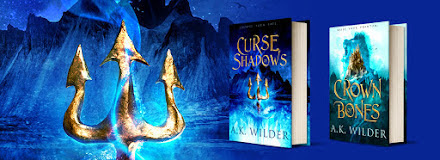
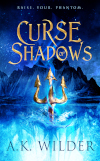
Kim Falconer, also writing as AK Wilder, has released Crown of Bones, a YA Epic Fantasy with Curse of Shadows as book 2 in the series. 

Currently, she is ready with the third book, planned to be out in 2025. TBA

Kim can be found on AKWilder.com, Twitter, Facebook, Instagram and KimFalconer.com. 

Throw the bones on the AKWilder.com site.. See you there!

Read Blood and Water, a PNR alt history that will leave you questioning every natural disaster ever endured.

“There is no doubt fiction makes a better job of the truth.”

Tuesday, September 16, 2025

The Art of Adaptation - Crafting Mood with Language

Sam Reid as Lestat de Lion Court in the 2022 series Interview with the Vampire,
based on the novel by Anne Rice.

Welcome, everyone, to another post in the Art of Adaptation Series. Today, let's look at the power of language and how we can use it to change mood, feelings and emotional response to the narrative.

The Power of Language

Language is a remarkable tool that shapes not only what we say but how we feel. It's something we often take for granted, but just like a carefully curated soundtrack can transform the mood of a film scene—from suspenseful to serene—so too can the choice of words and dialogue style shift the emotional landscape of a written narrative. Today, let’s explore how language can evoke different moods and feelings, illustrating this concept with examples from two beloved vampire series: Anne Rice's "The Vampire Chronicles" and Charlaine Harris's "Southern Vampire Mysteries."

Examples of Tone and Voice in Creating Mood


Take a moment to think about a pivotal dialogue scene. Imagine a character from Rice's "Interview with the Vampire" quizzing another on the nuances of immortality, wrapped in rich, poetic language and introspective tags. You might find lines dripping with existential angst, underscored by the sombre, contemplative tones typical of gothic novels. 

Top ten BEST Vampire Anime - By Rosie Knight

***

Here’s a sample dialogue exchange:

Louis (his voice a mere whisper, burdened with centuries of sorrow): “To be eternally damned is a gift that weighs far heavier than mere shadows.”

Lestat (with a smirk, eyes dancing mischievously): “Ah, but what is eternity to a creature of night? A playground, dear Louis, not a prison!”

***

Now, imagine taking the same lines but changing up the tags and emotional reflections. If we were to transport our characters to the Southern Vampire Mysteries universe, the mood could shift dramatically. Instead of centuries-old regrets, we’d encounter a lively banter with a more humor-driven and casual tone.

***

Louis  (half-laughing, rolling his eyes): “I swear, Lestat, this eternal life is starting to feel like a bad sitcom.”

Lestat  (grinning, as he twirls a wine glass): “Then let’s make it one worth watching, mon ami! Who needs a plot when the punchlines are eternal?”

***

In these two versions, despite the dialogue being essentially the same, the mood alters completely. The first paints a picture steeped in tragedy and introspection, while the second introduces playful levity, infusing the scene with a completely different emotional resonance.

This exercise highlights an essential truth: the way we use language is potent and multifaceted. It can be adapted to evoke terror in a horror narrative, charm in a romance, or elicit intrigue in a mystery. 

Each genre has its distinctive style and lexicon—think of the chilling descriptors in horror versus the lush imagery of romance, or the clipped, terse exchanges found in mystery narratives. Yet, the magic occurs within every scene, even when the essential text remains unchanged. 

What’s even more fascinating is how a slight alteration in tags and character reflections can magnify or diminish emotional weight. It’s a reminder that every word we choose, every pause, and every inflection matters. 

As writers and storytellers, we hold the fascinating power to shape mood through language. Whether you are weaving tales of romance, horror, or adventure, the way we present dialogue and reflect on our characters’ emotions can redefine the reader's experience.

Next time you sit down to write a scene, or read one, consider how the choices in language and dialogue create not just different genres but a spectrum of moods that resonate with us long after the last word is read.

Thank you for joining me in exploring the transformative power of language in storytelling!

xxKim

***

Have you read a powerful evocation of emotion in a story recently? We'd love to hear about it in the comments!

Other Posts in the Art of Adaptation 2025

January - The Art of Adaptation - Films in 2025

February - The Art of Adaptation - Authors' Response to External Pressures

March - The Art of Adaptation - The Healing Magic of KDrama

April - The Art of Adaptation -  Reader Persuasion

May - The Art of Adaptation - Fantasy Monsters Part 1

June - The Art of Adaptation - Fantasy Monsters Part 2 

July - The Art of Adaptation - Alternate History

August - The Art of Adaptation - AI: A New Chapter for Writers

September - The Art of Adaptation - Crafting Mood with Language

October - The Art of Adaptation - Take Five

November - The Art of Adaptation - On Time

***

About Kim Falconer


Kim Falconer, also writing as AK Wilder, has released Crown of Bones, a YA Epic Fantasy with Curse of Shadows as book 2 in the series. 

Currently, she is ready with the third book, planned to be out in 2025. TBA

Kim can be found on AKWilder.com, Twitter, Facebook, Instagram and KimFalconer.com. 

Throw the bones on the AKWilder.com site.. See you there!

Read Blood and Water, a PNR alt history that will leave you questioning every natural disaster ever endured.

“There is no doubt fiction makes a better job of the truth.”

Saturday, August 16, 2025

The Art of Adaptation - AI: A New Chapter for Writers

AI and Writing Detection - Justin Gluska, October 2024


Embracing AI: A New Chapter for Fantasy Authors 

In the enchanting realm of fantasy literature, where dragons soar and magic zings through the air, we find ourselves on the brink of a transformative wave—the rise of artificial intelligence. As we dive into this brave (or frightening) new world, I want to reflect on how AI might shape the landscape for fantasy authors and, in turn, the stories we cherish. 


Writing in a World of AI 

For many authors, writing is a deep, personal process, rich in emotion and intricately woven with their unique voice. AI presents an intriguing proposition here. With tools that can analyze narrative structures, suggest plot twists, or even help in world-building, could these innovations enhance the creative process? Some authors may find that AI serves as a brainstorming partner, helping to overcome writer's block or providing endless possibilities to consider. 

Can blending human creativity with AI capabilities result in more intricate and layered stories? If so, the concern remains: will the essence of storytelling be lost? 

The distinctive nuances of characters crafted from personal experiences, the way an author captures the intricacies of human emotions, or the intimate connection formed through relatable dilemmas might get overshadowed if automated systems take the wheel. Still, the heart of fantasy has always been its capacity to transport readers to new realms—perhaps AI can assist authors in doing just that, allowing them more freedom to focus on the emotional depth of their characters. 

1968 film inspired by
Arthur C Clarke
 

Marketing Magic in the Digital Age 

What about marketing, you ask? 

As the publishing industry continues to evolve, so too will the strategies authors employ to connect with their audiences. Marketing in the age of AI could redefine how fantasy authors approach their readers. Personalized marketing campaigns powered by AI analytics may better target specific demographics, allowing authors to reach niche audiences who are eager for their tales. 

Imagine a world where illustrations, interactive maps, and additional digital content can be effortlessly integrated into a book’s marketing strategy. By leveraging AI, authors could create an immersive experience that complements their storytelling, enticing readers to dive into the world they've crafted even before turning the first page. 

But what does this mean for authenticity? Will the charm of grassroots marketing—intimate book signings and personal interactions with fans—be sacrificed for distant algorithms? Navigating this slope will require a fine balance between innovation and the warmth that the community of readers and writers cherish. 


The publishing industry itself stands on the precipice of transformation as AI tools become more prevalent. From manuscript evaluations to editing, the potential for automating certain tasks could streamline the process. Publishers may gain the ability to sift through pitches more thoroughly, identifying hidden gems that previously might not have received any attention. 

Nonetheless, this shift raises important questions. If AI tools become standardized, will all fantasy stories begin to resemble one another, lacking the quirks and spark that make each narrative unique? Or could this be an opening for more adventurous, experimental works, as the time and barriers to entry are reduced for storytellers? 

The Human Touch 

At the end of the day, the most significant question remains: what does this mean for our experience as readers? Will the magic of reading mature into something more profound and immersive, or could it lose its heartfelt touch in the quest for efficiency? As avid fantasy lovers, we must be vigilant. 

Asimov's SF short stories 1940 - 1950
Proyas 2004 film with Will Smith
Our barometer for what constitutes a good story should always center on the depth of emotion and relatability it evokes. AI may alter the tools we use to craft and discover stories, but the soulful heart of storytelling will always thrive. The narratives we adore are stitched together not solely by structure, but by the human touch—the ability to connect, to inspire, and to transport us to realms beyond our own imagination. 


Adapt or Perish?

In 1968, a French literary critic and theorist named Roland Barthes wrote an essay called The Death of the Author. His thesis was that “The birth of the reader must be at the cost of the death of the author”. 

One way to understand this is to say that every text is eternally written here and now. But every time it is read, it is rewritten by the reader, and given a different meaning depending on the reader's mood, knowledge and perspective. In this way, the author (or artist) must step aside for the art to stand on its own and create new meaning.

Essentially, the author dies so the reader may be born. 

As AGI evolves, are authors to face a new kind of death, or was Barthes seeing sixty years into the future?

Conclsions
As we venture forward into the uncharted territory of AI, can we celebrate the fusion of creativity and technology, while holding on to the essence of what makes fantasy fiction so wonderfully captivating?
After all, the story is still ours to tell—wrought from the tapestry of dreams, imagination, and the undeniable human spirit. Isn't it?

Do you think AI will change the way fantasy authors create? I’d love to hear your thoughts and experiences in the comments below! 

Disclaimer

If you've read all the way to the end, my AI buddy and I thank you.

That's right, I actually didn't write this post. 

To exemplify the ideas here, I took 2 minutes to set up an AI blog platform on Grammarly with ideas, tone and keywords to explore. I pressed GO, and two seconds - one, two - later, this article appeared.

2009 Novel with the quantum sentient
“Being” JARROD.


I edited it a little, changing a word here and there, and adding different punctuation, but it's not really me, my research (which I would have spent 6 hours minimum doing, not 2 minutes) or my voice. 

Except for one heading and two paragraphs that follow it (and this disclaimer).

Can you tell which is me in the sea of AI (gathered and compiled in 2 seconds)? I'd love to hear your guess in the comments. 

xxKim

* * * 


Other Posts in the Art of Adaptation 2025

January - The Art of Adaptation - Films in 2025

February - The Art of Adaptation - Authors' Response to External Pressures

March - The Art of Adaptation - The Healing Magic of KDrama

April - The Art of Adaptation -  Reader Persuasion

May - The Art of Adaptation - Fantasy Monsters Part 1

June - The Art of Adaptation - Fantasy Monsters Part 2 

July - The Art of Adaptation - Alternate History

August - The Art of Adaptation - AI: A New Chapter for Writers

September - The Art of Adaptation - Crafting Mood with Language

October - The Art of Adaptation - Take Five

November - The Art of Adaptation - On Time

***


About Kim Falconer 


Kim Falconer, also writing as AK Wilder, has released Crown of Bones, a YA Epic Fantasy with Curse of Shadows as book 2 in the series. 

Currently, she is ready with the third book, planned to be out in 2025. TBA

Kim can be found on AKWilder.com, Twitter, Facebook, Instagram and KimFalconer.com. 

Throw the bones on the AKWilder.com site.. See you there!

Read Blood and Water, a PNR alt history that will leave you questioning every natural disaster ever endured.

“There is no doubt fiction makes a better job of the truth.”

― Doris May Lessing, Under My Skin: Volume One of My Autobiography, to 1949


Thursday, January 23, 2025

The Art of Adaptation - Films in 2025

Adaptation to Social Environment No.2 Drawing
Jirasak Plabootong
Hello, Sup fans. 
Welcome to the fantastic year of 2025!

Since wrapping up my Choose Your Weapon series 2024, I've pondered what will be next, hoping for something, IDK, deeper, more diverse, less derived. The three Ds.

3D! 

The realization fueled the idea for The Art of Adaptation.

Let's Look Deeper


    ADAPTATION 
    1. a process of changing one medium to another. "She adapted the novel to a TV series."
    2. a physiological change to outer stimuli. "The cat's eyes adjust quickly to light."
    3. a response to external pressures. "It snowed so she put on her coat." 


In essence, adaptation is 
changing to make one thing suitable for a new or altered purpose. Sometimes we are compelled to adapt. Other times, it is part of the act of creating.

It's this second idea I want to explore today, ie, authoring a screen adaptation from a literary source. It's harder than it might seem. 

First of all, the 'property', the book or novella, has to have a producer interested in securing the rights to use the work. Usually, it is 'optioned' for a fee and the producer then has x amount of time (a year or ten?) to come up with the funding to go ahead.

Then, they need writers to create the script, hopefully sticking to the spirit of the original work. At that point, writers will want an essential understanding of the characters, plot and genre/feel. Face it. That's not always easy to grasp or even easy to agree upon. 

And Diversify


Finally, there is the logistics. Take this example from 5 Tips from the Pros for Adapting Books into Film Scripts by Jourdan Aldredge:
"Some tribes of American Indians had a word to describe those of their brethren who sat around thinking deep thoughts. Literally the word translated to The Disease of Long-Thinking. ... often lead characters in novels suffer from this disease. When essential plot information is presented only in a character’s thought or in the character’s internal world, one solution is to give this character a sounding board, another character, to which his thoughts can be voiced aloud. Either adapt an existing character from the novel or create a new one..." 
With these ideas in mind, look at a few anticipated Spec Fic adaptations to the screen coming in 2025.

Beyond the Derivative

The Midnight Library
by Matthew Haig

I read Matthew Haig's The Midnight Library a few years back and though depressing at times, it was a powerful experience. What's not to love about a magical library that hovers between life and death. Imagine my delight to hear that it's being produced by StudioCanal and Blueprint Pictures, offering us a rendition of the main, Nora Seed, and her incredible journey. 

We are promised a glimpse of her introduction to the incredible library that allows her to live different lives... I can't wait!

Klara And The Sun by Kazuo Ishiguro

This is the first novel by Kazuo Ishiguro since he was awarded the Nobel Prize in Literature 2017. In Klara and The Sun, Kazuo Ishiguro looks at our rapidly changing world through the perspective of an A.I., specifically asking what it means to love.

From her place in the store, Klara, an Artificial Friend with outstanding observational qualities, watches carefully the behaviour of those who come in to browse, and of those who pass in the street outside. She remains hopeful a customer will soon choose her, but when the possibility emerges that her circumstances may change forever, Klara is warned not to invest too much in the promises of humans. Amazon.com

The exciting news is that, not only will Klara and the Sun be adapted to film, it will be directed by Taika Waititi, with Jenna Ortega and Amy Adams starring! Ortega will play the A.I. "robot" that Adams' character buys "for her teenager."

I imagine the biggest challenge will be staying true to the unique narrative perspective of the non-human, sentient robot. How will they handle it?

The Electric State by Simon Stalenhag

From Amazon.com... Soon to be a Netflix film starring Millie Bobby Brown and Chris Pratt.

A teen girl and her robot embark on a cross-country mission in this illustrated science fiction story, perfect for fans of Stranger Things and Black Mirror.

Like Klara and the Sun, we have another youngstee-with-compantion-robot story. Interesting trend, do you think?

In late 1997, a runaway teenager and her small toy robot travel west through a strange American landscape where the ruins of gigantic battle drones litter the countryside, along with the discarded trash of a high-tech consumerist society addicted to a virtual-reality system.

 As they approach the edge of the continent, the world outside the car window seems to unravel, as if somewhere beyond the horizon, the hollow core of civilization has finally caved in...

And more from Netflix - Millie Bobby Brown is breathing life into a new character in the movie adaptation of The Electric State! Starring alongside Chris Pratt, she'll team up with an unlikely anti-hero (Pratt) and a robot as they all search for something in this heartwarming movie about what could happen in a world where technology rules all.

I can't wait to see how this adaptation measures up!

See more in Sup posts from our backlist: Adapting to Survive and The Down Side of Adaptation, and let us know what you think! Fav adaptation? Most true? Most divergent? 

Other Posts in the Art of Adaptation 2025

January - The Art of Adaptation - Films in 2025

February - The Art of Adaptation - Authors' Response to External Pressures

March - The Art of Adaptation - The Healing Magic of KDrama

April - The Art of Adaptation -  Reader Persuasion

May - The Art of Adaptation - Fantasy Monsters Part 1

June - The Art of Adaptation - Fantasy Monsters Part 2 

July - The Art of Adaptation - Alternate History

August - The Art of Adaptation - AI: A New Chapter for Writers

September - The Art of Adaptation - Crafting Mood with Language

October - The Art of Adaptation - Take Five

November - The Art of Adaptation - On Time

*** 

About Kim Falconer

Kim Falconer, also writing as AK Wilder, has released Crown of Bones, a YA Epic Fantasy with Curse of Shadows as book 2 in the series. Currently, she is working on the third book, out in 2025.


Kim can be found on AKWilder Twitter, Facebook, Instagram and KimFalconer.com. 

Throw the bones, read your horoscopes or Raise Your Phantom on the AKWilder.com site See you there!