Showing posts with label the Art of Adaptation. Show all posts

Tuesday, December 16, 2025

Art of Adaptation - 11 Ways Authors Must Adapt

My Demon adaptation on Webtunes!

Hello, Sup readers and writers!

We have arrived at the end of the year, and it seems most fitting that I make this post a wrap-up of the previous eleven months, highlighting how authors must use adaptation in their writing.

Some of the best film adaptations on Netflix!
From adapting novels to film, games and videos to writing with AI, and all the way to dealing with the illusion of time, join me in this recap of the Art of Adaptation.

Adaptation to Film

Let's begin with the most obvious interpretation of adaptation with January's post on The Art of Adaptation - Films in 2025. In essence, this is the making of one medium suitable for another. As in, a novel to a film or series. 

Why do this? Sometimes we are compelled to adapt. Other times, it is part of the act of creating. Mostly is it is through the very hard work of an agent selling film rights to a producer. However they get there, this is where the author doesn't hesitate. Doesn't bulk. They give a resounding YES, sign the agreement and get out the confetti. But don't think for a moment this process is easy...


Adaptation to External Pressure

In February, the focus was on the adjustments authors make when turning their manuscripts into books. Basically, it's pressure to change some part of the submitted story, a process called revision. I give some great examples here.

Where do these pressures come from?

It might be from the author's agent, suggesting changes that will make the work easier to sell. Or, maybe it's the editorial department asking for a change that puts the work more in line with the imprint. Perhaps it is from sensitivity readers if the book succumbs to stereotyping, racial profiling, cultural appropriation or biases. 

Whatever the pressure, if it is meaningful to the book's publication and success, writers usually will adapt...

Adapting to International Films

Next, let's look at the Healing Magic of KDramas. 

KDramas, once categorised as foreign films but now referred to as 'international', have a magical appeal,

tempting viewers with new settings, customs, styles and ideologies while staying firmly rooted in familiar feelings, narratives and archetypes. Think of them as the epitome of immersion into another culture, the next best thing to being there. 

As well, watching KDramas activates multiple areas of the brain. Think of viewing these films and reading the subtitles as enhancing comprehension, memory, recall and attention to detail. It's stimulating and entertaining all in one!

Narrative Persuasion

Next, I explore how the reader might adapt to the story world based on the writer's ability to persuade...


in other words, how the author might push readers out of their comfort zone and into new experiences and perspectives.

Can stories really do this? Cause us to change our attitudes in real life

Simply put, storytelling has the potential to effect change through a technique called narrative persuasion...

Fantasy Monsters 

This form of adaptation as multiple aspects, so I divite it into two parts: 

Part 1 - Exploring the physicality and psychology of our darkest nightmares and how they have adapted and changed over time. 

Part 2 - Here I share some wonderful and eclectic new examples, all released this year, 2025!


Alternate History

To create an Alternate History work, you usually start with a 'real-life' event and then take a big 'ol step backward to alter how that event was shaped. Of course, the story will then have to adapt to the changes you envision, becoming something else entirely. Hopeful, it will be provocative, and inspiring... or maybe just haunting. You'll find great examples here!

AI 

For many authors, writing is a deep, personal process, rich in emotion and intricately woven with their unique voice. AI presents an intriguing proposition here. With tools that can analyse narrative structures, suggest plot twists, or even help in world-building, could these innovations enhance the creative process? Could they destroy it? 

This post had an element of controversy as I asked AI to write it, then deleted one paragraph and rewrote it myself. The goal was to see if readers could spot the difference, and thus far, no one has. Can you? 

Crafting Mood with Language

In the same way a carefully curated soundtrack can transform the mood of a visual scene, so too can the choice of words shift the emotional landscape of a written narrative. In this Art of Adaptation post, I explore how language can evoke different moods and feelings, using examples from two beloved vampire series: Anne Rice's "The Vampire Chronicles" and Charlaine Harris's "Southern Vampire Mysteries."

Take 5

We know that most authors have adapted to an intense and competitive work expectation, but is this good for us? Our creativity?

Do we have to work so hard to meet deadlines and other expectations? 

No, we do not. Before you shrug this off for any multitude of reasons, consider some interesting facts
from our historians and evolutionary biologists on Taking 5...

On Time

This is hands down my favourite post of the series. 

It looks at how easily we adapt to time without thinking. From an author's belief in rigid time constraints, to the readers' suspension of disbelief in 'reality'.

My big question to you is, what would happen if we changed our story and started saying, "I have all the time in the world?"

Let's find out in 2026!

***

I hope you enjoyed the series and this longer-than-planned recap.

Happy holidays!

xo Kim


If you have suggestions for 2026 posts, let me know. I am still brainstorming the topic for the year!

January - The Art of Adaptation - Films in 2025

February - The Art of Adaptation - Authors' Response to External Pressures

March - The Art of Adaptation - The Healing Magic of KDrama

April - The Art of Adaptation -  Reader Persuasion

May - The Art of Adaptation - Fantasy Monsters Part 1

June - The Art of Adaptation - Fantasy Monsters Part 2 

July - The Art of Adaptation - Alternate History

August - The Art of Adaptation - AI: A New Chapter for Writers

September - The Art of Adaptation - Crafting Mood with Language

October - The Art of Adaptation - Take Five

November - The Art of Adaptation - On Time


***


About Kim Falconer


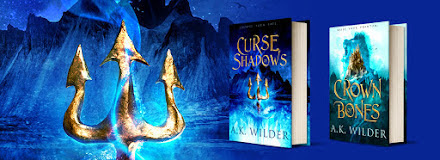
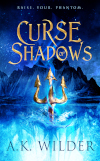
Kim Falconer, also writing as AK Wilder, has released Crown of Bones, a YA Epic Fantasy with Curse of Shadows as book 2 in the series. 

Currently, she is ready with the third book, planned to be out in 2025. TBA

Kim can be found on AKWilder.com, Twitter, Facebook, Instagram and KimFalconer.com. 

Throw the bones on the AKWilder.com site.. See you there!

Read Blood and Water, a PNR alt history that will leave you questioning every natural disaster ever endured.

“There is no doubt fiction makes a better job of the truth.”

Sunday, November 16, 2025

The Art of Adaptation - On Time

French chef Yeon Ji Yeong wins a top competition but mysteriously lands in Joseon Dynasty, where she must cook fusion royal cuisine for a tyrannical king with an extremely sensitive palate.
Bon Appétit Your Majesty 

Welcome to the Sup!

Today's instalment of my 2025 series, The Art of Adaptation, is focused on TIME and the direction it flows. 

I've written about this before when discussing Arrows of Time from my 2008 Quantum Enchantment series. It basically challenges every concept of time so far imagined. But today, I want to look at how easily we adapt to time, from an author's belief that they are under time constraints to the readers' suspension of disbelief of time's reality.


Let's start with constraints. For most of us, our understanding of time follows a linear path: we assume a "First, Then, Finally" mindset, evaluating tasks and scheduling our commitments as neatly into order as possible. However, what if we took a moment to explore alternative perspectives by adopting a mindset that embraces the opposite, a "Finally, Then, First," perspective? As my first publisher at Voyager pointed out, the English language doesn't have the language to easily describe this.

Enter the world of literature and time-travel novels. 

These stories invite us to rethink our assumptions about temporality. Works like “The Time Machine” by H.G. Wells or “11/22/63” by Stephen King, and even my own series like Quantum Enchantment and Amassia, can provoke thoughts, at least while in the story, that time could move differently, or maybe not exist at all. They can spin our traditional notions of causality right off the board by suggesting that time is malleable, allowing for sequences that defy our everyday understanding. When a character leaps forward or backward in time, it ignites a possibility within us—what if we could navigate like that, too? 

Wouldn't that be amazing? We might even start saying things like, "I have all the time in the world."

It sounds more supportive than our usual "time-poor" thinking: I don't have enough time. And, as Einstein suggested, time is an illusion, and the constricting nature of our schedules may be more a product of our mindset than an absolute reality. Adopting a perspective that allows for fluidity in how we engage with time might just create space for new possibilities.

Repeat after me: I have all the time in the world!

Consider how this idea, and that of backward causation in quantum physics—where effects can precede their causes or even change the past—challenges us to think outside the conventional timeline box. Could we consider allowing our future goals and desires to inform our present actions rather than simply reacting to our past?

Engaging with film and literature that plays with concepts of time can create a bridge to this new way of thinking. As we lose ourselves in these narratives, we might adapt to a less rigid belief and align with non-judgmental experiences flowing from a well of infinite possibilities. 

Maybe it's less about whether time is "real" and more about how we relate to it. 

So, in the spirit of exploration, let’s challenge our perceptions and embrace the myriad ways we could redefine our relationship with time. After all, the narratives we engage with not only touch our imagination but also offer novel insights that can inspire realities.

Start Simple by changing thoughts from I'm out of time to I have all the time in the world, and see where it leads.

xxKim

***

Other Posts in the Art of Adaptation 2025

January - The Art of Adaptation - Films in 2025

February - The Art of Adaptation - Authors' Response to External Pressures

March - The Art of Adaptation - The Healing Magic of KDrama

April - The Art of Adaptation -  Reader Persuasion

May - The Art of Adaptation - Fantasy Monsters Part 1

June - The Art of Adaptation - Fantasy Monsters Part 2 

July - The Art of Adaptation - Alternate History

August - The Art of Adaptation - AI: A New Chapter for Writers

September - The Art of Adaptation - Crafting Mood with Language

October - The Art of Adaptation - Take Five

November - The Art of Adaptation - On Time

***

About Kim Falconer


Kim Falconer, also writing as AK Wilder, has released Crown of Bones, a YA Epic Fantasy with Curse of Shadows as book 2 in the series. 

Currently, she is ready with the third book, planned to be out in 2025. TBA

Kim can be found on AKWilder.com, Twitter, Facebook, Instagram and KimFalconer.com. 

Throw the bones on the AKWilder.com site.. See you there!

Read Blood and Water, a PNR alt history that will leave you questioning every natural disaster ever endured.

“There is no doubt fiction makes a better job of the truth.”

Thursday, October 16, 2025

The Art of Adaptation - Take Five


Seabreeze Jazz Fest

Welcome to the Sup!

Today's instalment of my 2025 series, The Art of Adaptation, is focused on taking five. 

In other words, taking a break. 

In this context, we know that most authors have adapted to an intense and competitive work expectation, but is this good for us? Our creativity?

Do we have to work so hard to meet deadlines and other expectations? 

No, we do not.

Before you shrug this off for any multitude of reasons, consider some interesting facts from our historians and evolutionary biologists.

Rest Versus Work from a Historical Perspective


Before AI, the internet and the home computer, before jazz, the industrial revolution and even the pyramids, our ancestors knew how to take a break. They did it all the time, and they benefited greatly from it.

Evolutionary biologists speculate that the average cavewoman/man worked less than 15 hours a week and spent the rest of the time in leisure, eating, digesting, dancing, socialising, playing music and hanging out with the kids.

Even up to medieval times, before the Industrial Revolution, rest and sleep were revered, but cycled between two major nighttime blocks. We'd wake in the middle of the night for an hour or two and enjoy intimacy, prayer, food and reflection, then go back to sleep for another block of rest. During the day, food breaks and naps were considered normal, even for basic labourers. 

But, somewhere along the way, our modernisation with a 9 to 5 mentality has produced work-machines, with some cultures placing the work ethic high above everything else, including health, joy, community and wellbeing. Now, the 40 - 90-hour work week and powerhouse, 8- 16-hour work days, depending on the profession, is the norm.

Unfortunately, writers belong to the professions that entail very long hours and often for so little financial reward that a second or third job becomes necessary. It can be gruelling.

I'm not going to elaborate on the average hourly income for a mid-list author, but you can think of the minimum wage in a third-world country and halve it, if you want a prompt.

Back to the notion of rest versus work. A pro-production/anti-rejuvenation lifestyle can harm our health, well-being and even capacity for creative inspiration. 

Here's why.

The harms of Overworking

Neglecting relaxation can lead to physical damage, constant anxiety, and a decline in overall well-being and joy. 

This is because chronic stress leads to inflammation, which leads to disease, ending in conditions like cardiovascular diseases, cancer, autoimmune diseases, and respiratory illnesses such as COPD and asthma... you get the idea. Stress is bad for our health!

How can we avoid it?

Simple. 

Take Five.

The Benefits of Taking Breaks


There's no disputing that relaxation reduces stress, improves focus, and replenishes energy. 

Consistent downtime allows the body to recover from stress hormones, which lowers blood pressure and heart rate and gives the mind a chance to reset. This opens the way to better concentration, creativity, memory, and positive thinking. 

My friend Jeannette Maw puts it like this:

Our culture tends to promote hard work as a way of proving we’re worthy of the reward. It’s easy to get caught up in that routine, since we’re often managed for productivity (or even manage ourselves for it) – constantly looking for ways to be more efficient and get more done.

That’s why it’s counter-cultural – or even radically revolutionary to put it all on pause to do a lot of nothing... (but) there’s something magical about doing nothing that invites our favorite dreams to come true! Read more here...

Great Ways to Take Five

Jeannette asks: What does a good break look like?

First, close your eyes: Tune in.

And then, be intentional. Choose leisure activities you love or are keen to try: Games, yoga, Tai Chi, meditation, grounding, napping...

Do what calls to you. 


YaoYao Ma Van As Art

It could be nothing, or maybe it’s something fun to do. It could be solo, or maybe it’s with others.

The idea is to incorporate short breaks throughout the day and longer periods of rest to allow your brain to switch between different states of activity and rest... to allow you to recover from STRESS.

Conclusions

When in doubt, or wound tight in stress with deadlines closing in, don't do more. Do less.

Take a break.

Have a nap. Goofoff. Explore the infinite possibilities of leisure. 

You and your creative life will thank you for it.

Meanwhile, I'm taking five, and loving every minute of it.

Are you?

xxKim

***

Other Posts in the Art of Adaptation 2025

January - The Art of Adaptation - Films in 2025

February - The Art of Adaptation - Authors' Response to External Pressures

March - The Art of Adaptation - The Healing Magic of KDrama

April - The Art of Adaptation -  Reader Persuasion

May - The Art of Adaptation - Fantasy Monsters Part 1

June - The Art of Adaptation - Fantasy Monsters Part 2 

July - The Art of Adaptation - Alternate History

August - The Art of Adaptation - AI: A New Chapter for Writers

September - The Art of Adaptation - Crafting Mood with Language

October - The Art of Adaptation - Take Five

November - The Art of Adaptation - On Time

***

About Kim Falconer


Kim Falconer, also writing as AK Wilder, has released Crown of Bones, a YA Epic Fantasy with Curse of Shadows as book 2 in the series. 

Currently, she is ready with the third book, planned to be out in 2025. TBA

Kim can be found on AKWilder.com, Twitter, Facebook, Instagram and KimFalconer.com. 

Throw the bones on the AKWilder.com site.. See you there!

Read Blood and Water, a PNR alt history that will leave you questioning every natural disaster ever endured.

“There is no doubt fiction makes a better job of the truth.”

Monday, June 16, 2025

The Art of Adaptation - Fantasy Monsters Part 2

@fredthepig on DeviantArt gives us a fresh reimaging of Little Red Riding Hood. 

Hello, Sup Readers!

In Part 1 of The Art of Adaptation - Fantasy Monsters, we explored the traditional tropes in the genre, like Vampires, Frankenstein, and Fae. It's clear these creatures are evolving over time, becoming more complex and less predictable. Today, I'm sharing some wonderful and eclectic new examples, all released this year.

Let's start with Rachel Gillig's The Knight and the Moth, out May 2025


From BookTok sensation and NYT bestselling author Rachel Gillig, comes the next big romantasy phenomenon: a gothic, mist-cloaked tale of a prophetess who is forced beyond the safety of her cloister on an impossible quest to defeat the gods with the one knight whose future is beyond her sight.

Sybil Delling has spent nine years dreaming of having no dreams at all. Like the other foundling girls who traded a decade of service for a home in the great cathedral, Sybil is a Diviner. In her dreams she receives visions from six unearthly figures known as Omens. From them, she can predict terrible things before they occur, and lords and common folk alike travel across the kingdom of Traum's windswept moors to learn their futures by her dreams.

Just as she and her sister Diviners near the end of their service, a mysterious knight arrives at the cathedral. Rude, heretical, and devilishly handsome, the knight Rodrick has no respect for Sybil's visions. But when Sybil's fellow Diviners begin to vanish one by one, she has no choice but to seek his help in finding them. For the world outside the cathedral's cloister is wrought with peril. Only the gods have the answers she is seeking, and as much as she'd rather avoid Rodrick's dark eyes and sharp tongue, only a heretic can defeat a god.

* * *

And then, expected publication June 19, 2025, is The Return of the Sistah Samurai by Tatiana Obey.

Afro Samurai meets The Boondocks in this anime-inspired novel. A fresh take on ancient ideas.

I've wanted nothing more than to become a Sistah Samurai. When I was expelled from the training academy for sneaking in my stupid ex-boyfriend, I still had hope that I could cry enough to convince them to take me back. Then, demons invaded the capital and decimated the clan, and there went my dreams of ever naming my own pair of pink swords.

Until I heard a rumor of one last Sistah Samurai. I packed my favorite outfits and my trusty teddy bear, and recruited my forever bestie to help me find her. If we could manage not to interrupt her lunch, maybe we could convince her to train us? We were ready to do whatever she asked, even if that meant confronting old flames and taking down the patriarchy.

As long as we looked good while doing it.

The sequel of Sistah Samurai is an Action Fantasy novella that is an homage to the anime, Afro Samurai. Both works feature a feudal Japan-inspired setting that is rife with anachronisms. In the words of Samuel L. Jackson, “Is that a motherf—ing RPG?”

* * *


How about The Devils by Joe Abercrombie? This is what happens when the devils are on your side! Out May 2025.

Holy work sometimes requires unholy deeds.

Brother Diaz has been summoned to the Sacred City, where he is certain a commendation and grand holy assignment awaits him. 

But his new flock is made up of unrepentant murderers, practitioners of ghastly magic, and outright monsters, and the mission he is tasked with will require bloody measures from them all in order to achieve its righteous ends.

Elves lurk at our borders and hunger for our flesh, while greedy princes care for nothing but their own ambitions and comfort. With a hellish journey before him, it's a good thing Brother Diaz has the devils on his side.

* * *

And finally, The Floating World by Axie Oh.

From the New York Times-bestselling author of The Girl Who Fell Beneath the Sea, Final Fantasy meets Shadow and Bone in this romantic fantasy reimagining the Korean legend of Celestial Maidens.

Sunho lives in the Under World, a land of perpetual darkness. An ex-soldier, he can remember little of his life from before two years ago, when he woke up alone with only his name and his sword. Now he does odd-jobs to scrape by, until he comes across the score of a lifetime—a chest of coins for any mercenary who can hunt down a girl who wields silver light.

Meanwhile, far to the east, Ren is a cheerful and spirited acrobat traveling with her adoptive family and performing at villages. But everything changes during one of their festival performances when the village is attacked by a horrific humanlike demon. In a moment of fear and rage, Ren releases a blast of silver light—a power she has kept hidden since childhood—and kills the monster. But her efforts are not in time to prevent her adoptive family from suffering a devastating loss, or to save her beloved uncle from being grievously wounded.

Determined to save him from succumbing to the poisoned wound, Ren sets off over the mountains, where the creature came from—and from where Ren herself fled ten years ago. Her path sets her on a collision course with Sunho, but he doesn't realize she's the girl that he—and a hundred other swords-for-hire—is looking for. As the two grow closer through their travels, they come to realize that their pasts—and destinies—are far more entwined than either of them could have imagined...


What contemporary monsters are you reading right now? I'd love to hear about them!

xKim


Other Posts in the Art of Adaptation 2025

January - The Art of Adaptation - Films in 2025

February - The Art of Adaptation - Authors' Response to External Pressures

March - The Art of Adaptation - The Healing Magic of KDrama

April - The Art of Adaptation -  Reader Persuasion

May - The Art of Adaptation - Fantasy Monsters Part 1

June - The Art of Adaptation - Fantasy Monsters Part 2 

July - The Art of Adaptation - Alternate History

August - The Art of Adaptation - AI: A New Chapter for Writers

September - The Art of Adaptation - Crafting Mood with Language

October - The Art of Adaptation - Take Five

November - The Art of Adaptation - On Time

***

About Kim Falconer 


Kim Falconer, also writing as AK Wilder, has released Crown of Bones, a YA Epic Fantasy with Curse of Shadows as book 2 in the series. Currently, she is ready with the third book, planned to be out in 2025. TBA

Kim can be found on AKWilder.com, Twitter, Facebook, Instagram and KimFalconer.com. 

Throw the bones on the AKWilder.com site.. See you there!


Friday, May 16, 2025

The Art of Adaptation - Fantasy Monsters Part 1


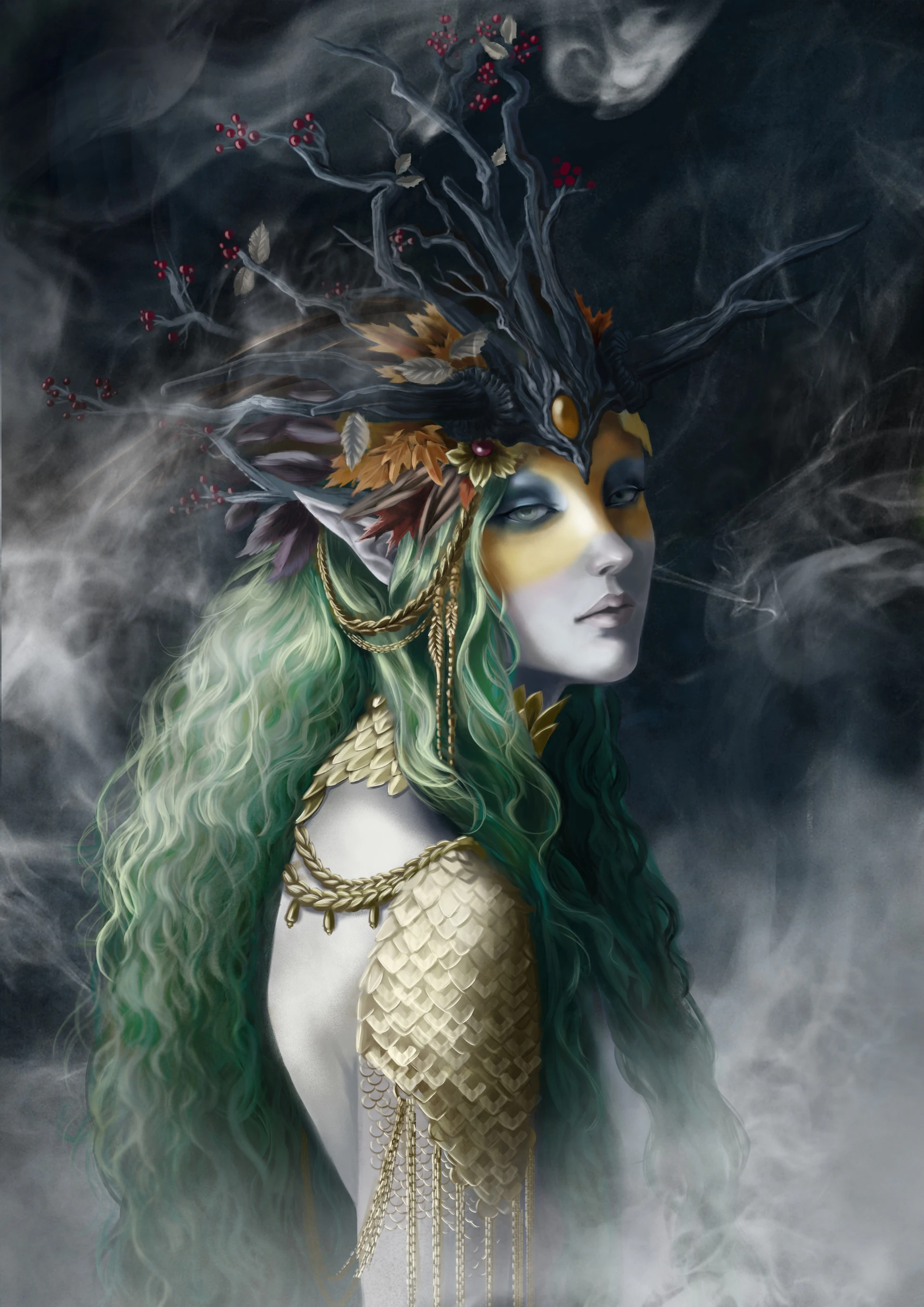
Theresa Konigseder Haller dark-fae-finalSee full size image


Hello Sup readers and writers,

Let me introduce you to today's topic in the Art of Adaptation series. It's all about Monsters!

In Fantasy Fiction, there are many kinds of 'evil' antagonistic creatures: classic monsters reimaged, new monsters with historical twists, and monsters from cultures beyond our familiar Western tropes. Through these creatures, we explore the physicality and psychology of our darkest nightmares and how they have adapted and changed over time. 

Classic Monsters


Mary Shelley's Frankenstein is often cited as the first published SF/horror story. Exploring themes of humanity, divinity, power and abuse, it has been frequently reimaged. the results are everything from the comedic Young Frankenstein film by Mel Brooks to Pádraig Kenny's middle-grade read, Stitch. 

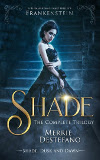
One of our own Sup authors, Merrie Destefano, has written an entire series in this theme, starting with book #1, Shade.

A dangerous holiday. A deadly curse brought to life.

When Mary Wollstonecroft Godwin accepted an invitation to Lord Byron's house party deep in the Swiss Alps, she hoped it would serve as a welcome distraction from her broken heart. Instead, she finds herself surrounded by enigmatic guests with their own dangerous secrets to hide....

Another classic monster is seen in The Strange Case of Dr Jekyll and Mr Hyde, an 1886 Gothic horror novella by  Robert Louis Stevenson. It follows Gabriel John Utterson, a London-based legal practitioner who investigates a series of bizarre occurrences between his old friend, Dr. Henry Jekyll, and a murderous criminal named Edward Hyde. 

I think we are all familiar with at least one of the modern-day spinoffs, The Incredible Hulk. But this powerful monster has adapted to new motivations triggered by emotions. Through rage, he becomes incredibly powerful, but unlike the murdering Hyde, he often tries to help or protect others. 

Vampires Revissioned

The classic origin of vampires is usually cited as Bram Stoker's 1897 novel, Dracula. Here we see a hideous, ravenous monster, as portrayed in the film Nosferatu, but slowly, over time, a transformation in these creatures is occurring. The image of the vampire, still wicked and powerful, is now the alluring and attractive creatures of The Vampire Diaries and The Southern Vampire Mysteries. 

In more examples, four of our own Sup authors have contributed to the expanding genre with an anthology titled Supernatural Underground, Vampires Gone Wild! Have you read it?

A deeper dive into this relationship between readers, writers and vampires is HERE in The Evolution of the Vampire. One of the more intriguing aspects is ... not so much of the monsters themselves, but of our relationship to them. We don’t see evil like we used to! - From Vampire Evolution - 2011

The Fae and Other Forest Creatures

From Pixies to the Unseelie Court, books featuring Fae - revisioned or otherwise -  are extremely popular. Originally, we meet this brand of Fantasy creatures in the 1697 "Tales of Mother Goose," by Charles Perrault. It includes familiar stories like "Little Red Riding Hood," "Cinderella," and "Puss in Boots." 

Perrault's work was followed in 1812 by Grimms' Fairy Tales, which included stories like "Hansel and Gretel," "Rapunzel," and "Snow White". 

Many of these Fae from ancient folklore were dangerous, deadly so, but modern adaptations see them differently. Still risky and highly mercurial, contemporary Fae have something akin to a human heart. Consider Holly Blacks Folk of the Air, and Seanan McGuire's "Every Heart a Doorway.

Our own Helen Lowe began her Fantasy Fiction career with the publication of Thornspell - a reimaging of Sleeping Beauty from the point of view of the prince!
Further Shores - Dragons East and West

Chinese Dragon VS Western Dragon: Here's What You Need To Know

When dragons take the form of East or West, they split our cultural psychologies in half. They used to, anyway. Nowadays, you know when you are face to face with a Dragon, but you may not know what kind it is - one that brings the best day of your life, or the worst.

For example, Eastern dragons are benevolent, representing good luck and prosperity, a rain deity to be honoured, while Western dragons are commonly depicted as fire-breathing, treasure-hording, Smaug-like, destructive monsters that must be slayed. 

But contemporary storytelling in the West is changing as our dragons adapt to a more blended representation. Anne McCaffrey dedicated her life, intentionally or not, to this cause with her 25 volumes of Dragon Riders of Pern. 


Where to begin? Anne McCaffrey's first novel is Dragonflight 

In this world, dragons bond telepathically with a single human when they hatch, and then the pair spends their lives together protecting the planet from deadly Thread that falls from the sky. Those growing up with, or even reading her books for the first time, experience a new dragon psychology that is warmer, yet challenging, empowering, but full of risks. 


Compare this to the novels released in the last few decades featuring Eastern Dragons, such as Alison Goodman's Eon and Eona. Can you feel the adaptations, in both directions?


If you are drawn to a specific type of 'monster', I would love to hear about it! 
And, be sure to check back next month for part 2 in the Art of Adaptation - Fantasy Monsters

:) Kim

Other Posts in the Art of Adaptation 2025

January - The Art of Adaptation - Films in 2025

February - The Art of Adaptation - Authors' Response to External Pressures

March - The Art of Adaptation - The Healing Magic of KDrama

April - The Art of Adaptation -  Reader Persuasion

May - The Art of Adaptation - Fantasy Monsters Part 1

June - The Art of Adaptation - Fantasy Monsters Part 2 

July - The Art of Adaptation - Alternate History

August - The Art of Adaptation - AI: A New Chapter for Writers

September - The Art of Adaptation - Crafting Mood with Language

October - The Art of Adaptation - Take Five

November - The Art of Adaptation - On Time

***


About Kim Falconer 


Kim Falconer, also writing as AK Wilder, has released Crown of Bones, a YA Epic Fantasy with Curse of Shadows as book 2 in the series. Currently, she is ready with the third book, out in 2025. TBA

Kim can be found on AKWilder.com, Twitter, Facebook, Instagram and KimFalconer.com. 

Throw the bones on the AKWilder.com site.. See you there!