Showing posts with label dragons. Show all posts

Friday, May 16, 2025

The Art of Adaptation - Fantasy Monsters Part 1


Theresa Konigseder Haller dark-fae-finalSee full size image


Hello Sup readers and writers,

Let me introduce you to today's topic in the Art of Adaptation series. It's all about Monsters!

In Fantasy Fiction, there are many kinds of 'evil' antagonistic creatures: classic monsters reimaged, new monsters with historical twists, and monsters from cultures beyond our familiar Western tropes. Through these creatures, we explore the physicality and psychology of our darkest nightmares and how they have adapted and changed over time. 

Classic Monsters


Mary Shelley's Frankenstein is often cited as the first published SF/horror story. Exploring themes of humanity, divinity, power and abuse, it has been frequently reimaged. the results are everything from the comedic Young Frankenstein film by Mel Brooks to Pádraig Kenny's middle-grade read, Stitch. 

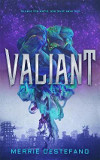
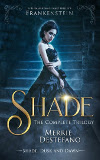
One of our own Sup authors, Merrie Destefano, has written an entire series in this theme, starting with book #1, Shade.

A dangerous holiday. A deadly curse brought to life.

When Mary Wollstonecroft Godwin accepted an invitation to Lord Byron's house party deep in the Swiss Alps, she hoped it would serve as a welcome distraction from her broken heart. Instead, she finds herself surrounded by enigmatic guests with their own dangerous secrets to hide....

Another classic monster is seen in The Strange Case of Dr Jekyll and Mr Hyde, an 1886 Gothic horror novella by  Robert Louis Stevenson. It follows Gabriel John Utterson, a London-based legal practitioner who investigates a series of bizarre occurrences between his old friend, Dr. Henry Jekyll, and a murderous criminal named Edward Hyde. 

I think we are all familiar with at least one of the modern-day spinoffs, The Incredible Hulk. But this powerful monster has adapted to new motivations triggered by emotions. Through rage, he becomes incredibly powerful, but unlike the murdering Hyde, he often tries to help or protect others. 

Vampires Revissioned

The classic origin of vampires is usually cited as Bram Stoker's 1897 novel, Dracula. Here we see a hideous, ravenous monster, as portrayed in the film Nosferatu, but slowly, over time, a transformation in these creatures is occurring. The image of the vampire, still wicked and powerful, is now the alluring and attractive creatures of The Vampire Diaries and The Southern Vampire Mysteries. 

In more examples, four of our own Sup authors have contributed to the expanding genre with an anthology titled Supernatural Underground, Vampires Gone Wild! Have you read it?

A deeper dive into this relationship between readers, writers and vampires is HERE in The Evolution of the Vampire. One of the more intriguing aspects is ... not so much of the monsters themselves, but of our relationship to them. We don’t see evil like we used to! - From Vampire Evolution - 2011

The Fae and Other Forest Creatures

From Pixies to the Unseelie Court, books featuring Fae - revisioned or otherwise -  are extremely popular. Originally, we meet this brand of Fantasy creatures in the 1697 "Tales of Mother Goose," by Charles Perrault. It includes familiar stories like "Little Red Riding Hood," "Cinderella," and "Puss in Boots." 

Perrault's work was followed in 1812 by Grimms' Fairy Tales, which included stories like "Hansel and Gretel," "Rapunzel," and "Snow White". 

Many of these Fae from ancient folklore were dangerous, deadly so, but modern adaptations see them differently. Still risky and highly mercurial, contemporary Fae have something akin to a human heart. Consider Holly Blacks Folk of the Air, and Seanan McGuire's "Every Heart a Doorway.

Our own Helen Lowe began her Fantasy Fiction career with the publication of Thornspell - a reimaging of Sleeping Beauty from the point of view of the prince!

Further Shores - Dragons East and West

Chinese Dragon VS Western Dragon: Here's What You Need To Know

When dragons take the form of East or West, they split our cultural psychologies in half. They used to, anyway. Nowadays, you know when you are face to face with a Dragon, but you may not know what kind it is - one that brings the best day of your life, or the worst.

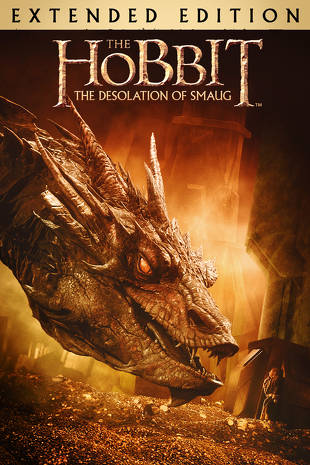
For example, Eastern dragons are benevolent, representing good luck and prosperity, a rain deity to be honoured, while Western dragons are commonly depicted as fire-breathing, treasure-hording, Smaug-like, destructive monsters that must be slayed. 

But contemporary storytelling in the West is changing as our dragons adapt to a more blended representation. Anne McCaffrey dedicated her life, intentionally or not, to this cause with her 25 volumes of Dragon Riders of Pern. 


Where to begin? Anne McCaffrey's first novel is Dragonflight 

In this world, dragons bond telepathically with a single human when they hatch, and then the pair spends their lives together protecting the planet from deadly Thread that falls from the sky. Those growing up with, or even reading her books for the first time, experience a new dragon psychology that is warmer, yet challenging, empowering, but full of risks. 


Compare this to the novels released in the last few decades featuring Eastern Dragons, such as Alison Goodman's Eon and Eona. Can you feel the adaptations, in both directions?


If you are drawn to a specific type of 'monster', I would love to hear about it! 

And, be sure to check back next month for part 2 in the Art of Adaptation - Fantasy Monsters

:) Kim

Other Posts in the Art of Adaptation 2025

January - The Art of Adaptation - Films in 2025

February - The Art of Adaptation - Authors' Response to External Pressures

March - The Art of Adaptation - The Healing Magic of KDrama

April - The Art of Adaptation -  Reader Persuasion

May - The Art of Adaptation - Fantasy Monsters Part 1

June - The Art of Adaptation - Fantasy Monsters Part 2 

July - The Art of Adaptation - Alternate History

August - The Art of Adaptation - AI: A New Chapter for Writers

September - The Art of Adaptation - Crafting Mood with Language

October - The Art of Adaptation - Take Five

November - The Art of Adaptation - On Time

***


About Kim Falconer 


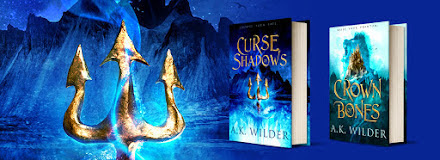
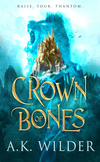
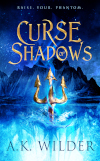
Kim Falconer, also writing as AK Wilder, has released Crown of Bones, a YA Epic Fantasy with Curse of Shadows as book 2 in the series. Currently, she is ready with the third book, out in 2025. TBA

Kim can be found on AKWilder.com, Twitter, Facebook, Instagram and KimFalconer.com. 

Throw the bones on the AKWilder.com site.. See you there!


Friday, May 2, 2025

Great Leaders in Speculative Fiction #4 -- John Aversin & "Dragonsbane"

 .
Just squeaking in under the wire here, but made it for May 2 -- phew! And am stoked to be featuring post #4 in the Great Leaders of Speculative Fiction series.

This month we're back to Fantasy with the legendary John Aversin, from Barbara Hambly's Dragonsbane.  

I always think of John Aversin as a fairly ordinary kind of guy, at face value. He is the local, and only, ruler left in what was once the northernmost province of an empire. The Winterlands province has been abandoned and the inhabitants left to fend for themselves for over a century. No light matter, when the fending off involves regular raiding by barbarian tribes, the return of demons and monsters as the population dwindles, and the brutalization of that human population as dangers, poverty, and deprivation deepen.

As the local lord, it falls to John Aversin to organise, equip, and lead the local militia against these threats and maintain the rule of law, thereby supporting the local community and sustaining civilization. All of which he does, from a commitment to the aforementioned civilization and the rule of law, and because if he didn't, all those seeking to maintain those values in the Winterlands would perish. 

So-o, just another smalltime, local lord, abandoned by the world's great powers and fighting a losing battle, so doomed to be forgotten by history. That's one way the story could go. Except that John Aversin has a claim to fame that has spread beyond the Winterlands -- because he has slain a dragon, something that is notoriously difficult to do. And completely impossible, as Jenny Waynest, the local witch, puts it, if the knight tries to take: 

"...a three-foot steel blade against twenty-five feet of (airborne) spiked and flaming death."

Needless to say, John hasn't done anything nearly that stupid. Consequently, he is the only living Dragonsbane, aka successful dragonkiller. So when a dragon (Morkeleb the Black) infests the capital city of the Kingdom of Belmarie, the crown prince (Gareth) seeks out John Aversin, to ride to the south and slay it. Initially, John has no intention of going, since as he points out to Gareth, he is the Winterlands' only knight and military leader, whereas the king has hundreds at his command. 

Although my summary is just the beginning of the story, I hope it's already clear why I consider John Aversin one of the great leaders of speculative fiction. First and foremost, he lives his commitment to his people, the values of civilization, and the rule of law, and puts himself at continual hazard to uphold those values. It is, in fact, the only reason he fought the dragon.

It's also the reason he does eventually go south to take on Morkeleb the Black -- because Gareth promises him, in the king's name, that if he does, then Belmarie will re-establish civil government in the Winterlands, and send the soldiers necessary to defend them. So once again, John will hazard himself to secure a future for his people.

When he (and Jenny) reach the capital, however, they find a court far from universally supportive of Gareth's mission. Worse, some factions are prepared to tolerate the dragon's depredations (devouring, destroying, and burning) in order to further their acquisition of wealth and power. John, therefore, rather than being welcomed and helped, finds his reputation disputed and his appearance and speech mocked. He is also hindered at every turn.

What makes John a great leader is that despite the baiting, verbal abuse, and obstacles put in his way, he continues to place the larger mission and the Winterlands' wellbeing ahead of personal affront. He also, despite his rough northern speech and patched armor, exemplifies the behavior of a true knight and person of honor, by defending the refugees that the dragon has forced into the city, including those of nonhuman species, who are being falsely accused of summoning the dragon and persecuted accordingly.  

Defending the weak and persecuted might just make John Aversin a hero. The reason I believe it also makes him a great leader, is because he is capable of convincing others to emulate the behavior he models. And because in doing so, he is motivated by the same values and vision that led him to slay the first dragon and be prepared to fight the second -- the commitment to civilized behaviour, the rule of law, and the wellbeing, primarily of the Winterlands community (his people), but also of all people.

So yes, when it comes to great leaders of speculative fiction, John Aversin is not only right up there. He rocks. 

~*~

About Helen Lowe

Helen Lowe is an award-winning novelist, poet, and lover of story. With four books published to date, she is currently completing the final instalment in The Wall Of Night series.
.
Helen posts regularly on her 
“…on Anything, Really” blog, monthly on the Supernatural Underground, and tweets @helenl0we.


......................................~*~

Sunday, July 1, 2018

'Here Be Dragons' — Sailing Off The Edge Of The Map

.
"Here Be Dragons";
art by Antonio Javier Caparo
Last month, Kim Falconer gave us a wonderful post on the origins of dragons, including how our innate terrors may have been one driver for the presence of dragons in myth and legend.

Kim mentioned several other great reasons for the power of dragons over our imaginations. However, I've found myself returning to the association with fear, but also with awe and danger, that is encapsulated by the phrase "Here Be Dragons."

These three potent words appeared (in Latin: Hic sunt dracones) reputedly on a 16th century globe (the Hunt-Lenox Globe ca. 1510), and have since become a popular catchphrase for those regions where a mapmaker's knowledge runs out.
.

From The New York Public Library: Hunt-Lenox Globe

In this sense, the phrase was a synonym for the unknown and all the potential dangers that went with it—when exploration meant navigating perilous oceans in small and fragile vessels. For a very long time, too—until the last 250 years, in fact—such voyages were made without any accurate means of measuring longitude. On land, travel also meant going beyond the known, not only in terms of terrain but also of people, language, customs and cultures.

A tale of Shangri La
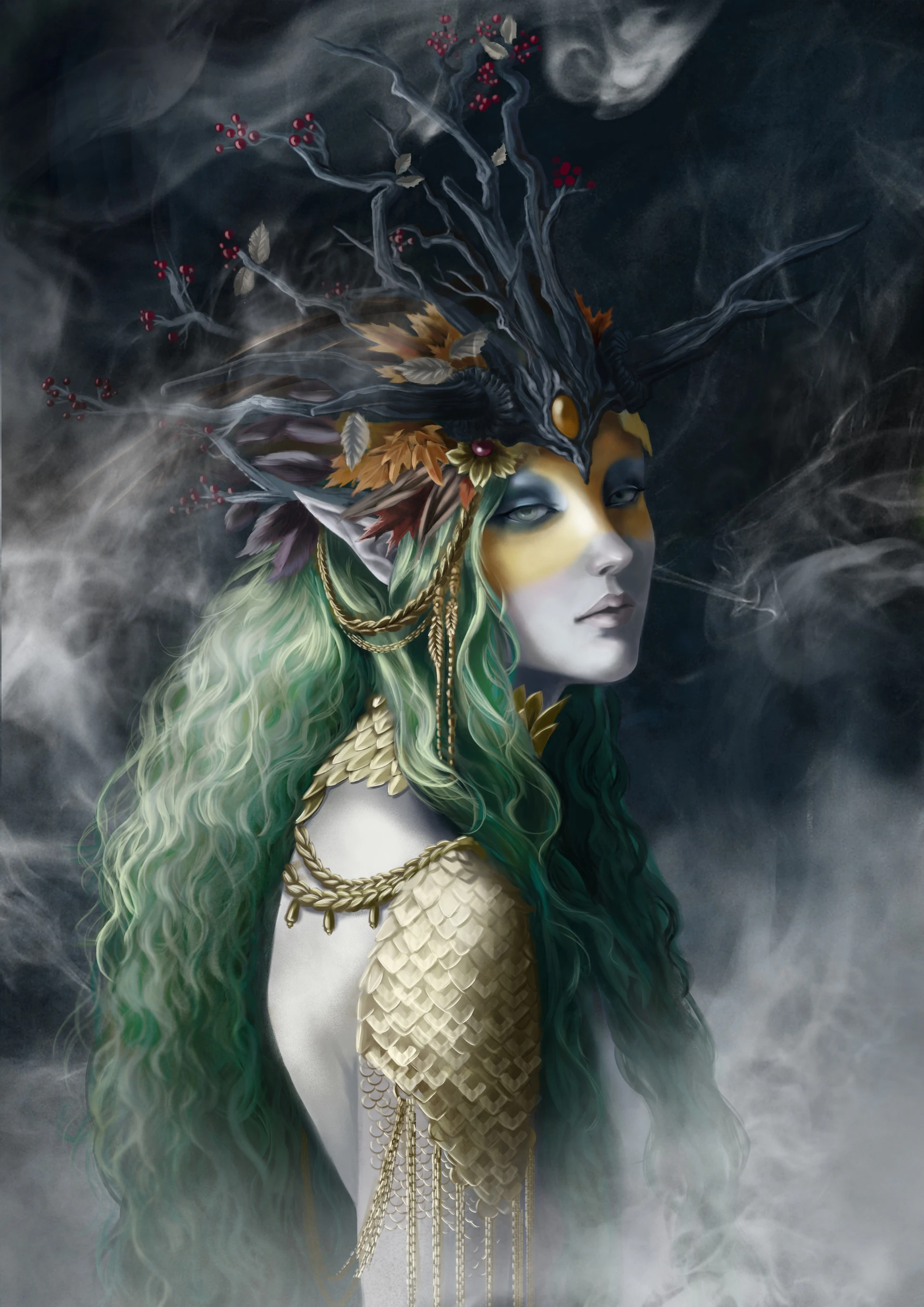
Yet the payoff for the dangers and fears that went with venturing the unknown was the hope of wonders: whether encountering dragons, discovering the fabled city of El Dorado, or happening upon a Shangri La of the Ever Young. For when the voyager passes the edge of the mapmaker's knowledge, she sails the ship of adventure into territory that is confined only by imagination...

The territory of dragons, indeed—but also of Fantasy fiction, both in Children's and Adult literature.

As early as the tale of Jason and the Argonauts, from Greek myth, the heroes sail to the mysterious land of Colchis to recover a magical golden fleece, which is guarded by a dragon.

In CS Lewis's children's classic,  The Voyage of the Dawn Treader, the ship sailing to the world's end has a prow that is carved (rightly we feel) into the shape of a dragon.

Perhaps more than any other author, Ursula Le Guin's Earthsea novels capture the sense that isolated and unknown terrain, 'beyond the known world', is the territory of dragons. These are powerful, awe-inspiring, but also frightening beings such as Orm Embar and Kalessin.

Such tales are not restricted to children's literature, however. Robin Hobb's Liveship Trader series (Ship of Magic; The Mad Ship; Ship of Destiny) involves voyages to unknown and dangerous waters—inhabited by sea serpents that have their own connection to dragons. Although the most perilous terrain of all of may be the hearts and minds of the protagonists...

In Guy Gavriel Kay's The Wandering Fire, the ship Prydwen is almost destroyed by the giant sea serpent called Soulmonger—an unknown peril lurking in the deep ocean.

Sometimes the boundaries that must be crossed and the dangers encountered are more metaphysical in form. For example, in Elizabeth Knox's Dream duology (Dreamhunter and Dreamquake), the dreamhunters must pass a mystical border to capture and bring back dreams. Yet not all the hunters survive and not all the captured dreams are benign...

At one time, too, the words for 'dragon' and 'demon' were close to synonymous. Courtney Schafer captures this overlap in Labyrinth of Flame (Shattered Sigil #3). Here, the remote deserts are inhabited not only by physical dangers and unfamiliar peoples, but the working of magic has intersected the unknown power and danger of demons.

These are only a very few examples and I'm sure you can point to many more. But as on the Hunt-Lenox Globe, so too in Fantasy fiction: when the protagonist and reader sail off the edge of the map together, they enter the territory of 'dragons', where fear, awe, and danger; treasure, wonders, and magic, may—and almost certainly will—all be encountered.

~~~
. 
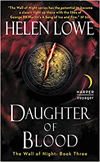
Helen Lowe is a novelist, poet, and blogger whose first novel, Thornspell (Knopf), was published to critical praise in 2008. Her second, The Heir of Night (The Wall Of Night Series, Book One) won the Gemmell Morningstar Award 2012. The sequel, The Gathering Of The Lost, was shortlisted for the Gemmell Legend Award in 2013. Daughter Of Blood, (The Wall Of Night, Book Three) is Helen's most recent book and she is currently working on the fourth and final novel in The Wall Of Night series. Helen posts regularly on her “…on Anything, Really” blog and is also on Twitter: @helenl0we

Saturday, June 16, 2018

Origins of Dragons


A dragon statue in Ljubljana, Slovenia (Wikicommons)
I can't leave the theme of mythical creatures and paranormal others behind without discussing the bedrock of some of the best fantasy series ever written -- enter the dragon!

From Tolkien's Smaug the Calamitous to McCaffery's Mnementh, a bronze dragon in the Benden Weyr, Eon's mirror dragon to the Hungarian Horntail faced by Harry Potter, some of the best stories feature the mythologies and histories of dragons. 

Friend or foe, dragons are usually ancient, sentient and wise, but also dangerous, a deadly beast of enormous strength and power. Some have a penchant for gold or young maidens, others a telepathic link to a bond mate or extraordinary powers of luck. No matter the role they play, you have to wonder where in the world they all came from. 

I mean, what corner of our ancestors' minds created dragons? Or, were they once real?

The Archetypes


According to Jung, the notion of dragons is archetypal, ie. it appears in all places, all peoples, and all times.  

Archaeopteryx fossils
For example, we have the European dragon, derived from folk traditions that filtered down from Greek and Middle Eastern mythologies. Then there's the Chinese dragon, with counterparts in Japan, Korea and other East Asian countries. 

Of course, the Americas have their feathered, winged serpents, Australia the Rainbow Serpent. Dragons of Africa include the Great Healing Serpent Masingi to the dangerous Wadjet, who ate the souls of the unjust. It's hard to imagine every culture in the world thinking up these creatures long before there was any kind of trade, exchange or internet to share ideas.

The Theories


One theory behind the global myth of dragons is based on dinosaur remains. If an ancient shaman or storyteller came upon the fossil of, say Qijianglong, they could have understandably mistaken them for dragon bones. 


Another theory, detailed in the book An Instinct for Dragons, by anthropologist David E. Jones, states evolution "embedded an innate fear of predators in the human mind." Just as monkeys exhibit a fear of snakes and large cats, Jones thinks that fearing large predators—such as pythons, birds of prey and elephants—has been selected for in hominids." 

"These universal fears have been frequently combined in folklore and created the myth of the dragon. "

Maybe, but that doesn't explain why many stories, especially from the Eastern myths, are of dragon companions, dragons as healers, or the luck and benevolence one receives from befriending one.

Our stories

Whatever the origins, dragon stories are some of our richest in the speculative fiction genre, including films like How to Train Your Dragon to Game of Thrones, and many other narratives we know and love.

Do you have a favorite dragon story? I'd love to hear about it in the comments. I think mine has to be The Dragonriders of Pern. 

* * *


Kim Falconer's latest release comes out in 2019 - The Bone Throwers, book one in the Amassia series, writing as A K Wilder. Find her new page on Facebook - AKWilder Author and on Twitter as AKWilder.

Her latest novel is out now - The Blood in the Beginning - and Ava Sykes Novel.

Learn more about Kim on Facebook and chat with her on Twitter. Check out her pen name, @a.k.wilder on Instagram, or visitAKWilder on FB and website.

Kim also runs GoodVibeAstrology.com where she teaches the law of attraction and astrology. 

Kim posts here at the Supernatural Underground on the 16th of every month, hosts Save the Day Writer's Community on FB and posts a daily astrology weather report on Facebook.