Showing posts with label archetypes. Show all posts

Friday, November 16, 2018

Tricksters Afoot in Fiction

Image by Maroczna Postac

Fantasy fiction is rich with archetypal figures, characters that appear in all cultures, in all places, in all times. Think of them as the wise old man, the hero, the mentor, the villain, the innocent, the witch/shaman, the enchanter, the messenger, the ally, the ghost, the bad place... So many. But the figure I want to focus on today is the wily, enigmatic Trickster.

No matter how storytelling changes over time, through centuries and millennia, the Trickster remains one of the most beguiling and disturbing characters of them all. She, or he, goes by many names, the fool, the clown, the jester the disrupter, the rebel, but all describe a single entity with a powerful purpose.

Spike may be the most honest of all the BTVS characters.

What is the Trickster energy?


At the core of the Trickster is disruption, the intention to pull on the threads of order so the old rule will unravel, allowing for insight, growth and change. The Trickster presents the hero with a new perspective, one that might both excite and terrify. It certainly provides the opportunity for contrasting views.

“The Trickster’s function is to break taboos, create mischief, stir things up. In the end, the Trickster gives people what they really want: some sort of freedom.” — Tom Robbins

Take Spike in Buffy the Vampire Slayer. As a villain, he never hides his intentions to do as much harm as possible. But he loves his evilness so much, his joy in it becomes contagious, an act only a Trickster can accomplish. He laughs at the rules and invites the reader/viewer, and Buffy herself, to consider an alternative perspective.

Why we Need the Trickster
Bob the Skull in the Dresden Files

Tricksters come along when the hero, or the story, is stuck. They tip the apple cart, tell the truth, blow the roof off the house and crack open the windows, setting everything upside down. The dust stirred up by the Trickster restores the hero's vitality, returning to flow of the creative life force. Where once there were walls, gates and thick forests, a pathway opens.


Tricksters in Fiction

Some Tricksters are obvious, Mr Nancy in Neil Gaiman's American Gods, Katniss Everdeen in The Hunger Games, Matilda by Roald Dahl, Fitz in Robin Hobb's the fool, Bob the Skull in the Dresden Files.... but one example that strikes me as more enigmatic than most is Tom Bombadil in LOTH. 

He's a Trickster from the start and knows the way's of nature, has command over Old Man Willow and his entire forest, yet  Frodo's ring has no power over him. He speaks in riddles and rhymes and seems to exist outside the rest of the story. So far outside that Peter Jackson deleted his scenes to make room for more vital characters. Fortunately, Tom Bombadil remains in the books.

As Trickster, Bombadil allows the reader to wonder, giving a breathing space to see the larger picture in the history of the Ring. In him, we meet a character who exists beyond the constructs of the story, which shows us, and Frodo, that even for a moment, we can stand in that space too. 

“‘…even in a mythical Age there must be some enigmas, as there always are.  Tom Bombadil is one (intentionally).'” (Tolkien, Letter 144, p 174)

Salia concept art by Anna Campbell
A favourite Trickster character in my own writing, found in The Blood in the Beginning, Blood and Water and in the upcoming The Bone Throwers, is Salila. She's much like Spike in her disregard for the natural order of things, for rules and morals and codes. She blasts into scenes with the irreverence and evil of a demon, all while capturing the readers' hearts.

How about your favourite Tricksters? I'd love to hear about them.

***

Kim Falconer's New YA Fantasy Series is out in 2019 - The Bone Throwers. Also check her urban fantasy out now - The Blood in the Beginning - and Ava Sykes Novel and the SFF Quantum Enchantment Series. You can find Kim on Twitter, Facebook and Instagram.

Kim also runs GoodVibeAstrology.com where she teaches the law of attraction and astrology. 

Catch her here at the Supernatural Underground on the 16th of every month.

Saturday, June 16, 2018

Origins of Dragons


A dragon statue in Ljubljana, Slovenia (Wikicommons)
I can't leave the theme of mythical creatures and paranormal others behind without discussing the bedrock of some of the best fantasy series ever written -- enter the dragon!

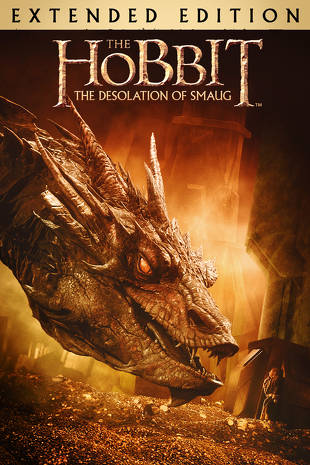
From Tolkien's Smaug the Calamitous to McCaffery's Mnementh, a bronze dragon in the Benden Weyr, Eon's mirror dragon to the Hungarian Horntail faced by Harry Potter, some of the best stories feature the mythologies and histories of dragons. 

Friend or foe, dragons are usually ancient, sentient and wise, but also dangerous, a deadly beast of enormous strength and power. Some have a penchant for gold or young maidens, others a telepathic link to a bond mate or extraordinary powers of luck. No matter the role they play, you have to wonder where in the world they all came from. 

I mean, what corner of our ancestors' minds created dragons? Or, were they once real?

The Archetypes


According to Jung, the notion of dragons is archetypal, ie. it appears in all places, all peoples, and all times.  

Archaeopteryx fossils
For example, we have the European dragon, derived from folk traditions that filtered down from Greek and Middle Eastern mythologies. Then there's the Chinese dragon, with counterparts in Japan, Korea and other East Asian countries. 

Of course, the Americas have their feathered, winged serpents, Australia the Rainbow Serpent. Dragons of Africa include the Great Healing Serpent Masingi to the dangerous Wadjet, who ate the souls of the unjust. It's hard to imagine every culture in the world thinking up these creatures long before there was any kind of trade, exchange or internet to share ideas.

The Theories


One theory behind the global myth of dragons is based on dinosaur remains. If an ancient shaman or storyteller came upon the fossil of, say Qijianglong, they could have understandably mistaken them for dragon bones. 


Another theory, detailed in the book An Instinct for Dragons, by anthropologist David E. Jones, states evolution "embedded an innate fear of predators in the human mind." Just as monkeys exhibit a fear of snakes and large cats, Jones thinks that fearing large predators—such as pythons, birds of prey and elephants—has been selected for in hominids." 

"These universal fears have been frequently combined in folklore and created the myth of the dragon. "

Maybe, but that doesn't explain why many stories, especially from the Eastern myths, are of dragon companions, dragons as healers, or the luck and benevolence one receives from befriending one.

Our stories

Whatever the origins, dragon stories are some of our richest in the speculative fiction genre, including films like How to Train Your Dragon to Game of Thrones, and many other narratives we know and love.

Do you have a favorite dragon story? I'd love to hear about it in the comments. I think mine has to be The Dragonriders of Pern. 

* * *


Kim Falconer's latest release comes out in 2019 - The Bone Throwers, book one in the Amassia series, writing as A K Wilder. Find her new page on Facebook - AKWilder Author and on Twitter as AKWilder.

Her latest novel is out now - The Blood in the Beginning - and Ava Sykes Novel.

Learn more about Kim on Facebook and chat with her on Twitter. Check out her pen name, @a.k.wilder on Instagram, or visitAKWilder on FB and website.

Kim also runs GoodVibeAstrology.com where she teaches the law of attraction and astrology. 

Kim posts here at the Supernatural Underground on the 16th of every month, hosts Save the Day Writer's Community on FB and posts a daily astrology weather report on Facebook.