Showing posts with label Robin Hobb. Show all posts

Monday, June 1, 2020

Year of Worldbuilding in Fantasy #5: "Ship of Magic" & The Liveship Traders Series by Robin Hobb


#YoW Year of Worldbuilding
#WiF Worldbuilding in Fantasy


Introduction:

My blogging theme for 2020 is worldbuilding in Fantasy, chiefly because it's one of the vital elements that holds all the different strands of the genre together. I also believe the distinctive worlds are a big part in what makes Fantasy fiction such fun. 

I'm trying to look at a range of Fantasy worlds and types of Fantasy, as well as choosing both older books as well as more recent works. The primary focus, though, is always worldbuilding that has rocked my fantasy-reading world—which means I absolutely can't go past Robin Hobb and her Liveship Traders series, comprising Ship of Magic, The Mad Ship, and Ship of Destiny. 
.

Ship of Magic & the Liveship Traders Series by Robin Hobb

.
The Liveship Traders is my absolute favourite of Robin Hobb's many series and the worldbuilding is a major reason for that being the case.

Although set in the same world as the earlier Farseer trilogy, which commenced the linked trilogies that make up the larger Fitz and the Fool storyline, the Liveship series is set far to the south of Farseer's Six Duchies. Although the story encompasses a wider geography, the pivotal and defining parts of the worldbuilding encompass the Rain Wilds and Bingtown, with their family-based trading societies, and the sentient liveships that tie them together. Having said this, the Pirates Isles play their part and the whole region is known as The Cursed Shore.

I have always loved sailing ships, and Robin Hobb's Liveship worldbuilding channels the age of sail and many of the historical aspects that accompanied it, including exploration and mercantile expansion, colonialism, slaving, piracy, and the nautical history of the whaling and sealing era. In terms of both the ships and societies, i.e. technology and cultures, the historical ethos "slides" between the 17th and 19th centuries—which I found very 'fresh' when I first read it, and have always enjoyed on rereading, since adventurous and epic fantasy often has a more medieval or archaic world focus.

Fear not, though: this is still fantasy through and through, starting with the highly prized, sentient liveships, which are the only vessels able to survive the acid waters of the Rain Wild river and engage in the lucrative trade of the resource-rich river, including artefacts of the long-vanished but magically and technologically advanced Elderlings. Through the ships, this trade is controlled by the Bingtown and Rain Wild trading families. The magical elements also include the dragon Tintaglia, who plays a vital part in the later story. 

Both Bingtown and the Rain Wilds are colonies, but the denizens of the latter are more mysterious, with both men and women always appearing veiled when dealing with their Bingtown counterparts. The reason for this is one of the story's evolving threads, so I shall not reveal more now. In terms of worldbuilding, though, I believe the Rain Wilds are one of the most compelling creations in epic fantasy. The world is not only the liveships and the vast river (think Amazon) with its acidic waters, but the immense impenetrable rainforests that can only be traversed by means of the river. Owing to the challenging and often lethal environment, the mysterious Rain Wild-ers live among the great trees rather than on the forest floor.

In both Bingtown and the Rain Wilds, the societies are shaped culturally and socially by their physical environment, as well as economically—and, as the story progresses through the three books, politically as well, with significant tensions between the colonial societies and the powers that founded them. This also accords with the historical era that gives the Liveship worldbuilding its texture. 

But wait, just to underline my point regarding the richness and depth of Robin Hobb's compelling worldbuilding, there's more! The final, major element to the Liveship Traders worldbuilding, which brings in an alien wildness that both contrasts with and enhances the rest, is that of giant sea serpents and their migration across the oceans plied by the liveships and their traders, as well as the pirates. Initially distinct, the story threads of the liveships, the trader communities and pirates, the sea serpents, and the dragon Tintaglia, all come together in the final book.

In short, the worldbuilding of the Liveship Traders trilogy is a longstanding favourite and one that has been a constant traveling companion since I first read Ship of Magic.

Previous Months:


February: The Lion, the Witch & the Wardrobe by CS Lewis
March: A Wizard of Earthsea by Ursula Le Guin
April: Sparrow Hill Road by Seanan McGuire
May: Palimpsest by Catherynne M Valente


---

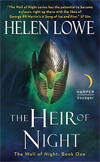
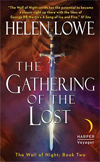
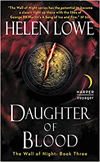
Helen Lowe is a teller of tales and purveyor of story, chiefly by way of novels and poetry. Her first novel, Thornspell (Knopf), was published to critical praise in 2008. The second,The Heir of Night (The Wall Of Night Series, Book One) won the Gemmell Morningstar Award 2012, and the sequel, The Gathering Of The Lost, was shortlisted for the Gemmell Legend Award in 2013. Daughter Of Blood (Book Three), was published in 2016 and Helen is currently completing the final novel in the series. She posts regularly on her “…on Anything, Really” blog, monthly on the Supernatural Underground, and tweets @helenl0we

Friday, November 16, 2018

Tricksters Afoot in Fiction

Image by Maroczna Postac

Fantasy fiction is rich with archetypal figures, characters that appear in all cultures, in all places, in all times. Think of them as the wise old man, the hero, the mentor, the villain, the innocent, the witch/shaman, the enchanter, the messenger, the ally, the ghost, the bad place... So many. But the figure I want to focus on today is the wily, enigmatic Trickster.

No matter how storytelling changes over time, through centuries and millennia, the Trickster remains one of the most beguiling and disturbing characters of them all. She, or he, goes by many names, the fool, the clown, the jester the disrupter, the rebel, but all describe a single entity with a powerful purpose.

Spike may be the most honest of all the BTVS characters.

What is the Trickster energy?


At the core of the Trickster is disruption, the intention to pull on the threads of order so the old rule will unravel, allowing for insight, growth and change. The Trickster presents the hero with a new perspective, one that might both excite and terrify. It certainly provides the opportunity for contrasting views.

“The Trickster’s function is to break taboos, create mischief, stir things up. In the end, the Trickster gives people what they really want: some sort of freedom.” — Tom Robbins

Take Spike in Buffy the Vampire Slayer. As a villain, he never hides his intentions to do as much harm as possible. But he loves his evilness so much, his joy in it becomes contagious, an act only a Trickster can accomplish. He laughs at the rules and invites the reader/viewer, and Buffy herself, to consider an alternative perspective.

Why we Need the Trickster
Bob the Skull in the Dresden Files

Tricksters come along when the hero, or the story, is stuck. They tip the apple cart, tell the truth, blow the roof off the house and crack open the windows, setting everything upside down. The dust stirred up by the Trickster restores the hero's vitality, returning to flow of the creative life force. Where once there were walls, gates and thick forests, a pathway opens.


Tricksters in Fiction

Some Tricksters are obvious, Mr Nancy in Neil Gaiman's American Gods, Katniss Everdeen in The Hunger Games, Matilda by Roald Dahl, Fitz in Robin Hobb's the fool, Bob the Skull in the Dresden Files.... but one example that strikes me as more enigmatic than most is Tom Bombadil in LOTH. 

He's a Trickster from the start and knows the way's of nature, has command over Old Man Willow and his entire forest, yet  Frodo's ring has no power over him. He speaks in riddles and rhymes and seems to exist outside the rest of the story. So far outside that Peter Jackson deleted his scenes to make room for more vital characters. Fortunately, Tom Bombadil remains in the books.

As Trickster, Bombadil allows the reader to wonder, giving a breathing space to see the larger picture in the history of the Ring. In him, we meet a character who exists beyond the constructs of the story, which shows us, and Frodo, that even for a moment, we can stand in that space too. 

“‘…even in a mythical Age there must be some enigmas, as there always are.  Tom Bombadil is one (intentionally).'” (Tolkien, Letter 144, p 174)

Salia concept art by Anna Campbell
A favourite Trickster character in my own writing, found in The Blood in the Beginning, Blood and Water and in the upcoming The Bone Throwers, is Salila. She's much like Spike in her disregard for the natural order of things, for rules and morals and codes. She blasts into scenes with the irreverence and evil of a demon, all while capturing the readers' hearts.

How about your favourite Tricksters? I'd love to hear about them.

***

Kim Falconer's New YA Fantasy Series is out in 2019 - The Bone Throwers. Also check her urban fantasy out now - The Blood in the Beginning - and Ava Sykes Novel and the SFF Quantum Enchantment Series. You can find Kim on Twitter, Facebook and Instagram.

Kim also runs GoodVibeAstrology.com where she teaches the law of attraction and astrology. 

Catch her here at the Supernatural Underground on the 16th of every month.

Monday, April 16, 2018

Nom de Plume

From the book by Lemony Snicket, nom de plume of Daniel Handler.
A nom de plume, Webster's dictionary tells us, is French for “pen name”; an invented name under which the author writes. They cite Mark Twain as the nom de plume of Samuel L. Clemens.

It's a good example, but I can think of others that make me smile. Lemony Snicket, for one. I mean, what a delightful name for a children's author.

Why use a nom de plume?

Reasons for a nom de plume very, but basically, it is to hide the identity of the author. Here's why: 

1. Parents

Dr. Seuss, born Theodore Geisel, chose Seuss (pronounced Zoice) as it was his mother's maiden name. He added the 'Dr.' because his father was so disappointed in him for dropping out of an Oxford PhD program in favor of writing children's books. 

1.  Gender bias

Being female had, and still can have, its limitations in the publishing industry. The solution is to adopt a male or androgynous pen name in the hopes of being successful. 

We see this in some of our most cherished SF/F books. Alice Mary Norton wrote under Andre Norton, Andrew North and Allen Weston. Alice Sheldon wrote under James Tiptree, Jr. 

Of course, one of the most celebrated authors in the world, Jane Austen, published anonymously all her life. Her name didn't appear on a single book until after she died.

2. Distinguishing genres

A name change can help distinguish writers who publish in different genres. Kim Wilkins, the wonderful Fantasy writer, publishes her historical fiction under Kimberly Freeman. Our own Nicole Murphy also writes romance under Elizebeth Dunk. 

2.  Humor

It seems some authors over the ages have enjoyed ridiculousness pen names for no other reason than humor. A fun example is William Makepeace Thackeray who wrote satire such as Vanity Fair. He chose hilarious nom de plumes like George Savage Fitz-Boodle, Théophile Wagstaff, and C.J. Yellowplush. 

4. Collaboration

When authors collaborate, they may choose a nom de plume as in the case of the Kate Daniels series by Ilona Andrews. This is the pen name of Ilona and Andrew Gordon, a successful husband-and-wife team writing urban fantasy and romance.

5. $$$

The reasons to go with a pen name can be financial/sales. One of my publishers told me about a fantastic writer, Margaret Lindholm, whose books just weren't selling. They worked out a nom de plume -- Robin Hobb -- and her next series sold over a million copies. 


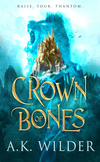
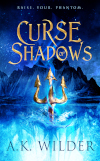
With a new YA Fantasy series coming out next year, I have chosen the nom de plume, AK Wilder. 
If I check my list above, reasons include #1 Parents - Wilder is a family name. #2, Genre distinction - even though all my books are SF/F, I feel good keeping the YA and Adult Fantasy separate. #3 Collaboration - the new series is co-written with my son. His first initial is A, I'm the K and well, we are both Wilders by blood. 

Have you any nom de plumes to share? I'd love to hear them.

***

Kim Falconer's latest release comes out in 2019 - The Bone Throwers, book one in the Amassia series, writing as A K Wilder. Find her new page on Facebook - AKWilder Author and on Twitter as AKWilder.

Her latest novel is out now - The Blood in the Beginning - and Ava Sykes Novel.

Learn more about Kim on Facebook and chat with her on Twitter. Check out her pen name, @a.k.wilder on Instagram, or visitAKWilder on FB and website.

Kim also runs GoodVibeAstrology.com where she teaches the law of attraction and astrology. 

Kim posts here at the Supernatural Underground on the 16th of every month, hosts Save the Day Writer's Community on FB and posts a daily astrology weather report on Facebook.