Showing posts with label LOTR. Show all posts

Saturday, November 16, 2024

Choose Your Weapon - Invisibility


"Timely, relevant, and genuinely terrifying, Leigh Whannell’s The Invisible Man recontextualizes a classic Universal monster into a modern examination of abuse, toxicity, and gaslighting." - Jeffrey Zhang

What is Invisibility?

Today we are looking at another weapon used in the Fantasy genre: invisibility. Simply stated, it is the state in which you are not seen.

Types of Invisibility

There are myriad ways of being invisible in Speculative Fiction.

Consider Magical rings, cloaks, potions and spells. Or magic conferred by a mythical creature, sorcerer, witch, or perhaps an ancient curse. 

And then there is Psychological, as in mind control, glamours ... your basic smoke and mirrors.

Also, we think of technology, which is seen mostly in SF via things like stealth tech, futuristic camouflage, DNA manipulation and advanced refraction of light.

Now, let's look at how these types of invisibility play out in our history of storytelling.

Early Fiction

Invisibility as a Weapon appears in very early fiction. Think of Hades (the god, not the destination) and his magic-imbibed helm of invisibility. Homer (circa late 8th or early 7th century BC) tells us he wore it when emerging from the underworld. In the light of day, Hades sees us but we don't see him.

Things are complicated with this helm when Perseus borrows it from Athena and uses it to assassinate the sleeping Medusa...


Later, in 1897, HG Wells gave us The Invisible Man, a SF novella about a scientist who turns himself invisible through technology. He uses his chemical inventions to lower the refractive index of a substance to that of air. This makes the substances, ie. his body, invisible to light. Although he intends to use his invention for self-indulgence, he ends up overwhelmed by isolation and falls into a mental spiral of madness and terror.

More Recent Fiction

Along the lines of The Invisible Man, Translucent, an original character from the Amazon series The Boys (not known in the comics series but replacing the alien Jack From Jupiter). Translucent can become invisible and repel bullets with his carbon metamaterial skin. It's pure technology, not magic. Like many, he is known to misuse his superpowers on unsuspecting innocents. He also gets depressed.

Forget-me-nots

Some writers give characters the ability to become so obscure they are forgotten or never noticed. Terry


Pratchett does this in Discworld, a comedic fantasy book where Granny Weatherwax and Tiffany Aching remain visible, but are extremely difficult to notice. The Grey Men in Robert Jordan's Wheel of Time have this skill as well.

This technique appears in the Arcane Ascension, a series by Andrew Rowe. We also see magical objects with similar abilities.   

Oh, and for a more contemporary/mystery/thriller/fantasy, The Sudden Appearance of Hope by Claire North is riveting: "... the tale of a girl no one remembers, yet her story will stay with you forever."

Magical Items

Night Angel by Brent Weeks has a character who is given a magic device that makes him the perfect assassin. Is it a call back to JRR Tolkien's LOTR? Of course, I must mention this cursed/magic ring forged in the Cracks of Doom.

The Crimson Shadow trilogy by RA Salvatore is also an example. Here, the MC has a cloak that grants him invisibility, but when he uses it, it leaves behind a crimson shadow burnt into the ground.

Deals with Devils

In David Eddings' Elenium series, two of the knights, Tynian and Ulath, make a deal with the Troll Gods whereby they can exist in the smallest fraction of every moment, meaning no one can see or hear them yet they can perceive everyone else. The narrator acknowledges this as faulty logic, the explanation being it works because the Troll Gods are so neurologically divergent they think it will work.  So it does.

More recently penned, though set in the 1800s, we meet a young woman who makes a Faustian bargain to live forever but is cursed to be forgotten by everyone she meets. I'm talking about The Invisible Life of Addie LaRue by VE Schwab. Poor Addie can interact with others, but after a while, they forget she ever existed. The psychological repercussions are, at times, devastating. 

Mind Control

In the Books of Raksura by Martha Wells, one of the Queens has the ability to turn off people's awareness of her presence, and she becomes invisible in social and/or action sequences. Of course, we all remember this technique from Star Wars when Obi-Wan uses the Force to 'erase' himself when convenient.

Fun, Fear and Folly

The ability of invisibility can help our beloved characters get through a tough spot, but in most cases, they suffer consequences as a result. From Frodo's stolen ring to Rosette in the Quantum Enchantment series who uses a glamour to hide herself from danger, the actions come with a price. They hear something they shouldn't. They see an unforgettable horror. Or they are exposed unexpectedly, at the worst possible moment.

Invisibility is undeniably a powerful weapon, but would it be your first choice?

Let us know in the comments!

xx Kim

Choose Your Weapon Series 2024

Poison

The Perfect Storm

The Sword

Firearms

Ranged

Spells

Unarmed

Curses

Time Travel

Invisibility

***

About Kim Falconer

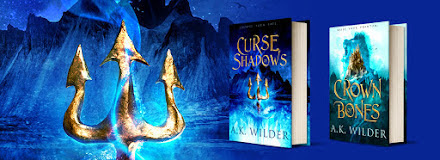
Kim Falconer, writing also as AK Wilder, has released Crown of Bones, a YA Epic Fantasy with Curse of Shadows as book 2 in the series. Currently, she is working on the third book, out in 2025.


Kim can be found on AKWilder Twitter, Facebook, Instagram and KimFalconer.com. 

Throw the bones, read your horoscopes or Raise Your Phantom on the AKWilder.com site See you there!

Sunday, April 16, 2023

Backstory - More than Meets the Eye

Jinx/Powder from the adult animation Arcane by Pxfuel

 What is a Backstory?

The backstory in creative work is more than meets the eye.  It is a background or history made to support or explain a character, land or kingdom so that the plot will make sense. As far as Fantasy novels go, there are abundant examples as the often complex storylines and generation-spanning scope can take some explaining. Just think of Anne McCaffrey's Pern and the dragons who fight thread, how Harry Potter was orphaned and why the Shire is in danger... every major aspect of a story has a history, informing the characters' actions, thoughts, ideologies and decisions. The question becomes not so much about what backstory is but about how much of it to utilize.

Why Have a Backstory?

The backstory can get a bad rap, mainly from its potential to bog the story down with too much tell and not enough show. The paradox is, too much backstory can feel like a yawn-inducing biography; but not enough and the character's actions or plot make no sense. It's a fine balance that goes deeper than 'she is like this because'....

Take Powder, later known as Jinx in the Sci-Fi Fantasy series Arcane. If we weren't shown how her childhood shaped her, how her miscalculation backfired, she wouldn't be easy to love. As it is, the heart pinches at her tragic story, her loss and her need. Her insanity...

Ash, wordsmith and recorder in Crown of Bones.

Writing a Backstory that Works

The goal of the backstory is to bring characters to life, making them more relatable, even if they are unlikable. In the case of Ash, her backstory unfolds through all three books, offering readers a chance to understand the intricacies of the plot in ways that aren't an obvious info dump. Again, too much backstory tells the story, giving the plot away. Not enough robs readers of a deeper connection to the characters, and the story as a whole.

I explore a few different ways to reveal the backstory in my current Amassia series: through the use of prologs where the reader can watch earlier events unfold in real-time. Through conversations with others, or inner diolog with oneself as in this example of Ash after her interview with Master Brogal.

... “That’s all I found, Master, but about my role in the Sanctuary—”

“I have a class to teach. Bring me the delegate report as soon as possible. That will be all.” He’s out the door in three strides, and I’m left staring at an empty desk. 

My eyes start to well and I exhale sharply, putting a stop to that. The chair scrapes the floor as I rise, shouldering my satchel. “I had a good trip to Tangeen, Master, save for the crossing,” I say to nobody. “No chance of me becoming a seafaring scribe anytime soon. How have you been?” But it’s a conversation we’ll never have. Master Brogal may be my guardian, but he’s no father. Not a warmhearted one, anyway. I’ve known this about him since I was eight years old, but still I yearn for…something more. It’s foolish—I could kick myself—it’s so foolish. I know better than to wish for what I can’t have...

Over the course of the three books, we learn just how deep the rabbit hole between Brogal and Ash but in a few sentences at the end of a scene, the groundwork is laid.

Game of Thrones with mega-multiple POV characters

Edit for Info-Dumps

Info-dumps are packets of information that we want the reader to know to better understand the world, the characters and plot. It's like in The Matrix where you get to download years of Jujitsu training in a matter of seconds (which works in the film). But, in a novel setting, instead of this info-dump being part of the story, it is separate, and out of sync. Instead of moving the story forward, it brings it to a screeching halt while we stop to say, by the way, you must know this about that... 

Note that the practice of info-dumping is human nature, especially for people sitting somewhere on the spectrum. (Think 75,000,000). 
“Info dumping,” or talking about an interest or passion, usually in detail and at length, is frequent in both ADHD and autism. In ADHD, the impulsivity plus passion equals a “spilling” kind of feeling, and the motor behind it can feel as if it's whirring. - The Washington Post

Given that this form of communication can be natural, it pays to watch closely for it in our writing. When you see it, get out the red pen.

Conclusions 

One thing worth remembering is that mystery, especially in the first chapter or prolog, is golden. It's okay to hold back. Release things slowly. You can offer insights when readers need to know, slipping in those Easter Eggs beforehand that they will reflect on later. Sometimes, as in Curse of Shadows, it's the very last chapter of the book that reveals the whole truth.

And remember, to overwrite the backstory is to be human. Don't beat yourself up for that while you get the story down, but do edit and rewrite until it flows. The beauty of this approach is,that when the author fully understands the backstory, they may not even need to include it. Their deep and rich understanding of what shapes the characters and the lands will shine through in the choices they make, the mannerisms exhibited, and the range of temperaments expressed. 

In this way, the backstory will shine through as the story unfolds--unforced, unhurried and uncluttered.

Does anyone have a favorite or memorable backstory to tell?  Comments welcome!
xxKim

Posts in the 'More Than Meets the Eye' Series

Book Titles

The End

Backstory

Environment

Styling Characters

Desire

***

Kim Falconer, currently writing as A K Wilder, has released Crown of Bones, a YA Epic Fantasy with Curse of Shadows as book 2 in the series. Currently she is working on the third out in 2024

Kim can be found on  AKWilder Twitter, Facebook and Instagram. 

Throw the bones, read your horoscopes or Raise Your Phantom on the AKWilder.com site 


Tuesday, July 16, 2019

Print to Screen - Do They Get it Right?

The Chilling Adventures of Sabrina show has surprising
differences to the comic book.
The recent explosion of SFF titles developed into films is exciting for us readers and writers alike. How glorious is it to see the genre we love splashed across the screen, larger than life?

Unless they haven't gotten it right.

Tom Bombadilo's Godberry, the River's Daughter.
The wave of Fantasy adaptations started with Tolkien's LOTR and J. K. Rowling's Harry Potter almost twenty years ago and moved on to properties like Charline Harris's True Blood and Stephenie Myer's Twilight, both released in 2008. 

They were followed quickly by L. J. Smiths The Vampire Diaries in 2009 which brought us to a peak in the realm of VampLit. 

But readers of our genre tend to be sticklers for authenticity. Keeping to the 'spirit of the book' isn't always enough. 

For example, a strong character from LOTR was omitted from the film adaptation.  (I've mentioned this before so you can tell I'm one of those reacting.) The enigmatic Tom Bombadil is nowhere to be seen. In this interview, Peter Jackson explains why:

AICN: Will you be including Tom Bombadil? The Ralph Bakshi production cut it out, as did the BBC radio drama.

PJ: At this point in time Bombadil is out. The main reason is not just time or pace, but one of simple narrative focus ... the Bombadil sequence has so little to do with Sauron or the Ring, it is difficult to justify the screen time. It simply doesn't give us any vital new information. A very simplest rule of thumb that I use in movie storytelling is to try and further the story with each new scene. 

I wonder what Tolkien would say about that!
In other adaptations, readers had trouble adjusting to a dark-haired, slightly tragic Elena Gilbert of the TVD series. After all, L. J. Smith made a big deal in the books about her long blond hair, blue eyes and snarky attitude. A reader elaborates:

...it became immediately obvious that TV Elena was more of a mild-mannered doormat instead of an ice queen with a sacred, sworn duty to ensnare the hot new student. - Read more...

An interview with TVD creators Julie Plec and Kevin Williamson explained that actor Nina Dobrev was perfect for the parts of Elena and her doppelganger Katherine (who isn't a doppelganger in the books BTW) and the gal just wasn't blond. They also found the book Elena too unsympathetic and decided to write her a different way. 

Some readers still haven't forgiven them.

In 2011, episode one of Game of Thrones appeared and yes, the first five seasons are drawn heavily from the books because they were already written. HBO had direct material. But... seasons six, seven, and eight aren’t based so specifically on Martin's next books. Regrets? 

GRRM himself says he wishes the show had found time to include Lady Stoneheart. "I can't imagine how different the show would be with her in it."


From Marvel and DC Comics' The Avengers, I Zombie
From Marvel and DC Comics' The Avengers, I Zombie, Umbrella Academy, Aquaman, to Terry Brook's Netflix release of the Sword of Shannara, print versions differ from the scripts. 

Apparently, there are four major reasons why this happens: 

1. Time
2. money
3. technology
4. storytelling. 

After all, it is an adaptation, not a direct translation.

In iZombie, our main character in the show has a change of name, location, occupation, origins, memory, friends and enemies from her comic book counterpart. In many ways, it's a completely different story, but a good one, on both platforms.

How about you? Have any pet peeves from print to screen adaptations? Favourites? I'd love to hear about them.

* * *


Kim Falconer's New YA Fantasy Series is out in 2020 - The Bone Throwers. 

Also, check her urban fantasy out now - The Blood in the Beginning - and Ava Sykes Novel and the SFF Quantum Enchantment Series. 

You can find Kim on Twitter, Facebook and Instagram.

Friday, March 1, 2019

Romance in Fantasy Fiction: "The Lord Of The Rings" Effect

.
In last month's post, I promised that 2019 would be my Year of Romance (#YOR) in Fantasy fiction (#RIFF).

To begin, though, I 'm going to feature what is in many ways the least romantic story in Fantasy, The Lord Of The Rings (LoTR) by JRR Tolkien.

The reason I want to start with LoTR is because it's so hugely influential, particularly in the epic fantasy subgenre. And yet it's also a story in which romance is almost entirely missing-in-action—a trend that has come to characterize the epic fantasy subgenre as a whole.

(Although  recent years have seen a shift in this respect, with books like NK Jemisin's The Hundred Thousand Kingdoms having a strong romantic element.)

For a long time, though, epic fantasy has been the purview of major world events, conflict, and war—a trifecta in which love and romance haven't had much of a look in.

At least in part, I believe this is because LoTR is the yardstick against which subsequent epic fantasy has been measured. If you read on, I believe you may see why. :-)

Aragorn and Arwen: Love As Loss
LoTR
contains three "main" romances, although only one (Eowyn and Faramir) is in any way integral to the story. Arguably, it's not the most important relationship, though. That is, or "should" be the love between Aragorn, the leader of an old, lost kingdom in the north of the world, and also heir to the throne of Gondor, in the south.

Aragorn in the LoTR films
Arwen is an Elven princess and immortal, but if they marry she must lose her immortality. It's never quite clear why this "must" be so, but it certainly adds up to love as doom, and sacrifice, for Arwen. They can't marry, though, until the great evil, Sauron, is defeated and Aragorn becomes King in Gondor. So there are certainly strong elements of "star-crossed love", although they do win through to their "happy ever after."

Or so you think, if you don't delve into the Appendices. If you do, however, you'll realize that mortality ends up being a bitter cup for Arwen, one she must drink to the lees, ending up living alone long after Aragorn has died and all her kindred have gone. Of course, this will only matter if, as a reader, you care about Arwen.

Arwen in the LoTR films
But why should you care about Arwen? Because here's the thing: if you rely on the book itself and not the appendices, the love between Aragorn and Arwen comes as a complete surprise at the end of the third book. It did for me anyway, when suddenly at the end of everything Arwen arrives, and she and Aragorn are getting married because they've had this great and amazing love story going on...

Except that the great and amazing love story has been signaled by pretty much two prior incidents: in Book One (The Fellowship Of the Ring) when the hobbit, Frodo, sees Aragorn standing by Arwen's chair in the elvish community of Rivendell; and at the beginning of Book Three (The Return Of The King) when the northern rangers bring Aragorn a banner that Arwen has made for him.

Arwen & Aragorn: the film ending
I think I may be forgiven for not adding those two incidents together into the great love story of their age. (Just sayin')

And the subtext, particularly when reading the appendices, is that love between a man and a woman, and particularly its consummation, exacts a high price, including considerable loss and grief, for the woman.

The most intriguing thing about the romance between Aragorn and Arwen, though, is it's absence from the story, when (again) arguably romance, love, and relationship are central to the human condition.

Eowyn and Aragorn;  Eowyn and Faramir: The Schoolgirl Crush and Love As Consolation Prize
Eowyn - not a bit part
Unlike Arwen, Eowyn is unquestionably a major character in the story, really the only female character who gets major page time. (Although a case could be made for Galadriel in terms of quality if not quantity of page time.) As the lone female character-of-significance the main romantic elements in the story also center on Eowyn.

Eowyn & Faramir
In the first instance she has the equivalent of a schoolgirl crush on Aragorn, a love that is definitely not requited. Later, toward the end of the third book, Eowyn and Faramir fall in love, in what is truly the only romantic episode in the book.

In the book, too, their romance comes across as a love between equals, and as Faramir has been established as a cool character in his own right, their romance does not feel like a "consolation prize" for Eowyn. In the film, however, possibly because so much of the story was truncated and also because the character of Faramir was not so well developed, it did feel a little "consolation prize"-ish.

So, the schoolgirl crush and unrequited love for our heroine, but a truer and more equal love at the end—so there is some romantic light, just a little, at the end of the LoTR tunnel. ;-)

Sam Gamgee and Rosie Cotton: The Boy and Girl Next Door and Happy Ever After
Sam Gamgee on the Ring quest
Lastly, we have Sam Gamgee and Rosie Cotton, who if not quite childhood sweethearts are definitely the (farm)boy and (farm)gal next door. Is it romantic, though? Sam, after all, heads off (seemingly) without a backward look in support of "Master Frodo" and to see elves and face equally great dangers and wonders.

At the end, he returns to the Shire, and Rosie to the pages of the book, so they can finally get married and live happily ever after. Arguably, Rosie has remained steadfast in his absence, although we, as readers, don't actually know this.

Sam & Rosie: the happy return
After all, we could equally well assume that no one better has come along in the meantime, since Sam's absence has been a longish one... (Although as Anne of Green Gables would say, that is seeing the world as prose rather than poetry. ;-) )

Suffice it to say that Sam and Rosie seem to see the matter in poetry, rather than prose, and get married and—as in inferred in the book and recorded in the Appendices—live long and happily ever after.

Conclusion:
Aragorn and Arwen, Eowyn and Faramir, Sam and Rosie: unarguably, love makes an appearance in The Lord Of The Rings. And Eowyn and Faramir's story does qualify as a romantic episode. Yet given the importance of The Lord Of The Rings in shaping contemporary epic fantasy, I believe it's not surprising that until very recently epic was perceived as a subgenre that eschewed romance.

Given its importance to Fantasy literature overall, and also because I am currently writing an epic fantasy series myself, I felt The Lord Of The Rings effect should not be overlooked in my Year of Romance in Fantasy. Next month, though, I'll try and pick a book where love is far closer to the core of what makes the story tick.

Until then, read on with a #RIFF and a #YOR in your year. :-)

---

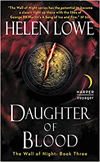
Helen Lowe is a novelist, poet, and blogger whose first novel, Thornspell (Knopf), was published to critical praise in 2008. Her second, The Heir of Night (The Wall Of Night Series, Book One) won the Gemmell Morningstar Award 2012. The sequel, The Gathering Of The Lost, was shortlisted for the Gemmell Legend Award in 2013. Daughter Of Blood, (The Wall Of Night, Book Three) is Helen's most recent book and she is currently working on the fourth and final novel in The Wall Of Night series. Helen posts regularly on her “…on Anything, Really” blog and is also on Twitter: @helenl0we

Friday, November 16, 2018

Tricksters Afoot in Fiction

Image by Maroczna Postac

Fantasy fiction is rich with archetypal figures, characters that appear in all cultures, in all places, in all times. Think of them as the wise old man, the hero, the mentor, the villain, the innocent, the witch/shaman, the enchanter, the messenger, the ally, the ghost, the bad place... So many. But the figure I want to focus on today is the wily, enigmatic Trickster.

No matter how storytelling changes over time, through centuries and millennia, the Trickster remains one of the most beguiling and disturbing characters of them all. She, or he, goes by many names, the fool, the clown, the jester the disrupter, the rebel, but all describe a single entity with a powerful purpose.

Spike may be the most honest of all the BTVS characters.

What is the Trickster energy?


At the core of the Trickster is disruption, the intention to pull on the threads of order so the old rule will unravel, allowing for insight, growth and change. The Trickster presents the hero with a new perspective, one that might both excite and terrify. It certainly provides the opportunity for contrasting views.

“The Trickster’s function is to break taboos, create mischief, stir things up. In the end, the Trickster gives people what they really want: some sort of freedom.” — Tom Robbins

Take Spike in Buffy the Vampire Slayer. As a villain, he never hides his intentions to do as much harm as possible. But he loves his evilness so much, his joy in it becomes contagious, an act only a Trickster can accomplish. He laughs at the rules and invites the reader/viewer, and Buffy herself, to consider an alternative perspective.

Why we Need the Trickster
Bob the Skull in the Dresden Files

Tricksters come along when the hero, or the story, is stuck. They tip the apple cart, tell the truth, blow the roof off the house and crack open the windows, setting everything upside down. The dust stirred up by the Trickster restores the hero's vitality, returning to flow of the creative life force. Where once there were walls, gates and thick forests, a pathway opens.


Tricksters in Fiction

Some Tricksters are obvious, Mr Nancy in Neil Gaiman's American Gods, Katniss Everdeen in The Hunger Games, Matilda by Roald Dahl, Fitz in Robin Hobb's the fool, Bob the Skull in the Dresden Files.... but one example that strikes me as more enigmatic than most is Tom Bombadil in LOTH. 

He's a Trickster from the start and knows the way's of nature, has command over Old Man Willow and his entire forest, yet  Frodo's ring has no power over him. He speaks in riddles and rhymes and seems to exist outside the rest of the story. So far outside that Peter Jackson deleted his scenes to make room for more vital characters. Fortunately, Tom Bombadil remains in the books.

As Trickster, Bombadil allows the reader to wonder, giving a breathing space to see the larger picture in the history of the Ring. In him, we meet a character who exists beyond the constructs of the story, which shows us, and Frodo, that even for a moment, we can stand in that space too. 

“‘…even in a mythical Age there must be some enigmas, as there always are.  Tom Bombadil is one (intentionally).'” (Tolkien, Letter 144, p 174)

Salia concept art by Anna Campbell
A favourite Trickster character in my own writing, found in The Blood in the Beginning, Blood and Water and in the upcoming The Bone Throwers, is Salila. She's much like Spike in her disregard for the natural order of things, for rules and morals and codes. She blasts into scenes with the irreverence and evil of a demon, all while capturing the readers' hearts.

How about your favourite Tricksters? I'd love to hear about them.

***

Kim Falconer's New YA Fantasy Series is out in 2019 - The Bone Throwers. Also check her urban fantasy out now - The Blood in the Beginning - and Ava Sykes Novel and the SFF Quantum Enchantment Series. You can find Kim on Twitter, Facebook and Instagram.

Kim also runs GoodVibeAstrology.com where she teaches the law of attraction and astrology. 

Catch her here at the Supernatural Underground on the 16th of every month.

Tuesday, January 16, 2018

The End is Near


Happy New Year! In my first post of 2018 I'm writing about endings. Crazy, I know, but what can I do? Endings are important to a writer, and not just to nail the book. It's also thrilling to come to that last scene, in the last chapter and say, Done.


Do we Judge Books by their Endings?


After 400 pages of story, you'd think readers would consider the whole experience, but no. They walk away from the book, TV series, play or movie, thinking of how it ended. They might be left pondering, cheering, crying or disappointed, but The End is what sticks.

For an author, a good ending means readers feel satisfied, even if profoundly sad or disturbed. They talk about the book, passing on its greatness by word of mouth. A bad ending is one where readers feel cheated, let down or worse, unmoved. They don't talk about the book or lend it to a friend. They throw it at the wall, eventually picking it up and putting it in the trash.

What Makes a Good Ending?


Feelings. Emotions. Whether comedic, tragic or fantastic, the ending needs to make readers feel deeply. It can come out of left field at the time, but there has to be, on reflection, a sense of logic, of possibility. Good authors will seed the ending in ways readers won't see it coming but later they find the rationale.

There are many types of endings and some of them are tethered to a genre. Romance novels, paranormal or otherwise, have an HEA (happy ever after). Trillers require an unsettling twist (Gone Girl). Fantasy may end with everyone receives a medal (Star Wars) or with the goal reached, but with varying degrees of fallout (LOTR).

YA Lit is changing but in the past 'happy and optimistic' endings were considered the norm. Yet, the most important ingredient in a good ending is its honesty. It may come as a shock, but it needs to ring true to the story. I remember being disturbed by the ending in The Forest of Hands and Teeth. I didn't like it, but it felt right. See below for changing perspectives in children's literature.

The fact that texts for children express hope, and therefore typically have happy endings, raises a question about their accuracy and honesty. - Perry Nodelman and Mavis Reimer‘s The Pleasures of Children’s Literature,

An Eclectic Group of Endings that Work for me

Some endings summerize; others shock. Some come full circle. Some hang us off a cliff until the next in the series; others leave us guessing. Here's a mix of some of my favorites.

"Then she bade the white horse take her through the door, leaving the snow to close in behind them and winter to obliterate any trace of her passing. - The Heir of Night, Helen Lowe

"Later on he will understand how some men so loved her, that they did dare much for her sake." - Dracula, Bram Stoker

"The scar had not pained Harry for nineteen years. All was well." - Harry Potter and the Deathly Hallows, J.K. Rowling

"He was soon borne away 
by the waves and lost in darkness and distance." - Frankenstein, Mary Shelley

"Are there any questions?" - The Handmaid's Tale, Margaret Atwood

"She looked down and for an instant it seemed she held a ragged teddy, torn and chewed with one button eye missing, but when she blinked she saw it was only Teg’s fingers laced in her own." - Journey by Night, Kim Falconer


"She opened the door wide and let him into her life again." - The Girl Who Kicked the Hornet’s Nest, Stieg Larsson

She closes her eyes again and I begin to sing softly:
'''V'la l'bon vent, v'la l'joli vent
V'la l'bon vent, ma mie m'appelle.'''
Hoping that this time it will remain a lullaby. That this time the wind will not hear. That this time - please just this once - it will leave without us." - Chocolat, Joanne Harris

"And then we continued blissfully into this small but perfect piece of our forever." - Breaking Dawn, Stephenie Meyer

"When they finally did dare it, at first with stolen glances then candid ones, they had to smile. They were uncommonly proud. For the first time they had done something out of Love." - Perfume: The Story of a Murderer, Patrick Süskind

"Hector turns and sees me and the world around us disappears. - The November Girl, Lydia Kang

How about you? I'd love to hear your most liked, or disliked, endings.

xxKim

Kim Falconer's latest release comes out in 2018 The Bone Throwers, book one in the Amassia series, writing as A K Wilder. Find her new page on Facebook - AKWilder Author and on Twitter as AKWilder.

Her latest novel is out now - The Blood in the Beginning - and Ava Sykes Novel.

Learn more about Kim on Facebook and chat with her on Twitter. Check out her pen name, @a.k.wilder on Instagram, or visitAKWilder on FB and website.

Kim also runs GoodVibeAstrology.com where she teaches the law of attraction and astrology. 

Kim posts here at the Supernatural Underground on the 16th of every month, hosts Save the Day Writer's Community on FB and posts a daily astrology weather report on Facebook.