Showing posts with label film adaptations. Show all posts

Thursday, April 15, 2021

Adapting to Survive


Cursed - the legend of King Arthur is reenvisioned on Netflix.

Adapting a book to the screen has many names - remake, reboot, revision... But they all have one thing in common: the story is, in part or whole, rewritten to survive.

From the point of view of the book, this isn't always good, where 'good' equals accurate or in the spirit of.... As I mentioned once in The Down Side of Adaptation, Pulitzer Prize-winning novelist Jeffrey Eugenides reminds us that the book's story radically changes once it becomes visual. 

"It's no longer a book, and to try to insist on it being a book will usually make it a poorer film." - Jeffrey Eugenides

In the world of storytelling, adaptation is about the book withstanding a translation to 'motion pictures' and in the wild kingdom, adaptation means exactly the same thing

The okapi
The okapi has survived 16 million years through adaptations.

For today's post, I thought it would be fun to compare three evolutionary adaptations -- structural, physiological and behavioral -- in nature with those found in storytelling. For example, the okapi demonstrates structural and physiological adaptations that have allowed it to survive. 

    1) they have scent glands on their feet to mark their territory
    2) they use infrasonic calls to communicate with their calves so predators can't hear
    3) their tongues are 14-18 inch-long tongues used for browsing and washing their ears and eyes

Shadow and Bone | Six of Crows Macmillian 

A book adaptation with just as surprising structural and physiological changes as the Okapi is the new Netflix series adaptation of Shadow and Bone by Leigh Bardugo. In this revision, characters and environments are combined to survive as something new.

Instead of solely adapting its namesake book, the show combines it with characters and geography from Bardugo’s duology Six of Crows. - Nerdist

Another interesting form of adaptation in nature is based on behavoral changes. 

When it comes to this kind of adaptations in nature, squirrels take the cake. Did you know they can hibernate for up to 12 months? 

Photography: Alamy - Grey Squirrel Study at UE

A new series, also to Netflix, took the behavioral route when it adapted the time-honoured story of King Arthur. You might notice right away that Merlin doesn't quite behave the way we expect given a Disney upbringing. If you haven't seen it, you'll want to prepare yourself!

(the old) Merlin is a figure of great power and wisdom. His magical abilities are substantial and he’s generally depicted as a sort of all-seeing sage, who engineers the birth of Arthur and the rise of Camelot before falling victim to an ill-timed romance.

 Gustav Skarsgard’s performance brings this very different kind of Merlin to life.

In Cursed, Merlin is, to be blunt, a world-weary mess. Stripped of his magic and overly fond of alcohol, this character seems the furthest thing possible from an all-knowing, all-powerful wizard. And that’s not just an intentional choice on the part of Wheeler – it’s one that places this Merlin closer to his Welsh beginnings than many versions of the character that came afterward. - Den of Geeks

Love them or not, the revisions films tell of our beloved books are different, including sometimes shocking and unexpected takes. But, just like in nature, they have been adapted to survive new challenges in the environment, for better or worse.

How about you? What are your favorite adaptations? Most appalling? We'd love to hear your thoughts.

* * *

Crown of Bones audio sample
Try the Audio Sample

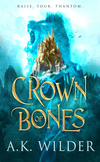
Kim Falconer, currently writing as A K Wilder, has just released Crown of Bones, a YA Epic Fantasy.

Kim can be found on  AKWilder TwitterFacebook and Instagram

Throw the bones, read your horoscopes or Raise Your Phantom on the AKWilder.com site or have a listen to the audio version on the right.


Tuesday, July 16, 2019

Print to Screen - Do They Get it Right?

The Chilling Adventures of Sabrina show has surprising
differences to the comic book.
The recent explosion of SFF titles developed into films is exciting for us readers and writers alike. How glorious is it to see the genre we love splashed across the screen, larger than life?

Unless they haven't gotten it right.

Tom Bombadilo's Godberry, the River's Daughter.
The wave of Fantasy adaptations started with Tolkien's LOTR and J. K. Rowling's Harry Potter almost twenty years ago and moved on to properties like Charline Harris's True Blood and Stephenie Myer's Twilight, both released in 2008. 

They were followed quickly by L. J. Smiths The Vampire Diaries in 2009 which brought us to a peak in the realm of VampLit. 

But readers of our genre tend to be sticklers for authenticity. Keeping to the 'spirit of the book' isn't always enough. 

For example, a strong character from LOTR was omitted from the film adaptation.  (I've mentioned this before so you can tell I'm one of those reacting.) The enigmatic Tom Bombadil is nowhere to be seen. In this interview, Peter Jackson explains why:

AICN: Will you be including Tom Bombadil? The Ralph Bakshi production cut it out, as did the BBC radio drama.

PJ: At this point in time Bombadil is out. The main reason is not just time or pace, but one of simple narrative focus ... the Bombadil sequence has so little to do with Sauron or the Ring, it is difficult to justify the screen time. It simply doesn't give us any vital new information. A very simplest rule of thumb that I use in movie storytelling is to try and further the story with each new scene. 

I wonder what Tolkien would say about that!

In other adaptations, readers had trouble adjusting to a dark-haired, slightly tragic Elena Gilbert of the TVD series. After all, L. J. Smith made a big deal in the books about her long blond hair, blue eyes and snarky attitude. A reader elaborates:

...it became immediately obvious that TV Elena was more of a mild-mannered doormat instead of an ice queen with a sacred, sworn duty to ensnare the hot new student. - Read more...

An interview with TVD creators Julie Plec and Kevin Williamson explained that actor Nina Dobrev was perfect for the parts of Elena and her doppelganger Katherine (who isn't a doppelganger in the books BTW) and the gal just wasn't blond. They also found the book Elena too unsympathetic and decided to write her a different way. 

Some readers still haven't forgiven them.

In 2011, episode one of Game of Thrones appeared and yes, the first five seasons are drawn heavily from the books because they were already written. HBO had direct material. But... seasons six, seven, and eight aren’t based so specifically on Martin's next books. Regrets? 

GRRM himself says he wishes the show had found time to include Lady Stoneheart. "I can't imagine how different the show would be with her in it."


From Marvel and DC Comics' The Avengers, I Zombie
From Marvel and DC Comics' The Avengers, I Zombie, Umbrella Academy, Aquaman, to Terry Brook's Netflix release of the Sword of Shannara, print versions differ from the scripts. 

Apparently, there are four major reasons why this happens: 

1. Time
2. money
3. technology
4. storytelling. 

After all, it is an adaptation, not a direct translation.

In iZombie, our main character in the show has a change of name, location, occupation, origins, memory, friends and enemies from her comic book counterpart. In many ways, it's a completely different story, but a good one, on both platforms.

How about you? Have any pet peeves from print to screen adaptations? Favourites? I'd love to hear about them.

* * *


Kim Falconer's New YA Fantasy Series is out in 2020 - The Bone Throwers. 

Also, check her urban fantasy out now - The Blood in the Beginning - and Ava Sykes Novel and the SFF Quantum Enchantment Series

You can find Kim on TwitterFacebook and Instagram.