Showing posts with label adaptation. Show all posts

Monday, April 21, 2025

The Art of Adaptation - Reader Persuasion

What have we learned?
Riot says Farewell to Arcane in a Hauntingly Romantic Music Video 

Hello everyone! 

Welcome to another instalment of The Art of Adaptation in the written and spoken word. Today, we explore how the reader might adapt to the story world based on the author's ability to persuade... in other words, how the author might push readers out of their comfort zone and into new experiences and perspectives.

Can stories really do this? Cause us to change our attitudes in real life?

The answer is yes, they can!

Simply put, storytelling has the potential to effect change through a technique called narrative persuasion. 

What is Narrative Persuasion?


Current research on storytelling and its functional role in human experience, including how people use media to interrogate their own beliefs and feelings, shows that they can glean social meaning from books, film, TV series and games. (For a deeper dive, check out Dill‐Shackleford, K. E on the social psychology of our engagement with fictional narrative and its functional value. (2016) 

But for this phenomenon to occur, it must begin with the writer persuading the reader/viewer of the story world's truth. If successful, it may open the way to new or different responses to familiar, and possibly blocked,  situations. In this case, the reader adapts to the author's Narrative Persuasion by believing in and immersing in the story.

How?

Narrative Persuasion is an art in and of itself. Through storytelling (the narrative), readers/viewers are coaxed toward a fresh or alternate perspective, or at least the possibility that one might exist. In this process, it may be the fictional characters that have the greatest impact. Still, it takes a certain style of writing to bring them to life for the reader.

Generally, pounding the reader with exposition, info-dumping their way to justification of a new idea or alternate response doesn't work. Instead, narrative persuasion invites us to immerse ourselves in the story, and by doing so, bond deeply with the characters.

And as our favourite characters believe, so too may we.

Take the multi-layered metaphors played out through the characters in Persuasion by Jane Austen. First, society persuades Anne Elliot to betray her love interest, Frederick Wentworth. Through his deep love of the sea, he persuades himself to accept her rejection and move on. But, the results for Anne are miserable, and eventually both Anne and Frederick are persuaded yet again to give their love another chance. 

Through the experience of sympathising with this fictional couple, we may also be persuaded to change our own worldview, just like the cinematic characters in the film The Jane Austen Book Club. Played by Marc Blucas (the disenchanted husband who has given up on his marriage), and Emily Blunt (his wife, a high school French Teacher who has fallen for one of her students) becomes a persuasion, within a persuasion, within a persuasion!

Marc Blucas and Emily Blunt in The Jane Austen Book Club (2007)

In the plot thread of the film, we see the estranged couple try to love again while reading Austen's book.  As a reader/viewer, it is hard not to adapt to Austen's, and screenwriters Robin Swicord and Karen Joy Fowler's, persuasive writing as we follow the characters deeper into the story until they find renewed love.

Creating Engagement is Key


Persuasion stems from engagement and connection.

In the paper, Connecting the Dots between fantasy and reality we find that the main ingredient to identifying with the characters is the ability to get lost in a story. From the perspective of immersion in another world, the narrative persuasion urges us to adapt, changing our attitudes, beliefs, and even behavioural intentions to match the story world characters', if we are moved to do so.

This process relies on creating engaging narratives, well-developed characters, and emotional resonance to reduce resistance and increase acceptance of information and viewpoints. For example, consider how Le Guin's Left Hand of Darkness has influenced our adaptation to changing personal pronouns over the last decades. (Even though the use of the non-binary they reaches back to Geoffrey Chaucer's 14th-century Canterbury Tales, the popular usage is recent.) It all pivots around our ability to relate to narrative.

Media psychologists use terms to describe this feeling of absorption and connection in a narrative with words like transportation, engagement, flow and presence.  I particularly like the term participation mystique, a process of interconnection where the definitive disappears, creating a spiritual experience or 'truth' within the story and its characters.

How is it done?

There are standard lists of advice for creating believable, engaging characters that can be persuasive. It begins with giving them goals, flaws, challenges and often some kind of secret.

In Delirium by Lauren Oliver, we find an engaging narrative, a YA novel that exemplifies a story of intimate telling that is 

1) easy to immerse in
2) provides a main character we can root for
3) is written in a persuasive form that touches on contemporary issues without excess exposition. 

Delirium offers a chance for readers to expand their world view of their own accord, without being told how or when to do so. 

The book has conventional chapters but uses epigraphs to portray our hero, Lena's, progressively adapting perspective. In a world that treats love as an illness, we follow her slow-boil rebellion with increasing sympathy. Here is an example below:


 Chapter One

The most dangerous sicknesses are those that make us believe we are well.
-Proverb 42, The Book of Shhh


As the story progresses in the deeply personal POV of the first person present, it's easy to become so immersed that we feel what happens to Lena is happening to us. When that occurs, the narrative persuasion succeeds. We no longer question the truth of the story world, but begin, outside of reading time, to question the truth of our own sanctioned beliefs. 

Concluding Thoughts


Have you read a book recently or seen a film that changed your worldview? Have you adapted to narrative persuasion and felt, in retrospect,  changed by it?

We'd love to hear your thoughts!

Meanwhile, all the Best for the Holiday Season!

:) Kim

Other Posts in the Art of Adaptation 2025

January - The Art of Adaptation - Films in 2025

February - The Art of Adaptation - Authors' Response to External Pressures

March - The Art of Adaptation - The Healing Magic of KDrama

April - The Art of Adaptation -  Reader Persuasion

May - The Art of Adaptation - Fantasy Monsters Part 1

June - The Art of Adaptation - Fantasy Monsters Part 2 

July - The Art of Adaptation - Alternate History

August - The Art of Adaptation - AI: A New Chapter for Writers

September - The Art of Adaptation - Crafting Mood with Language

October - The Art of Adaptation - Take Five

November - The Art of Adaptation - On Time

***


About Kim Falconer 


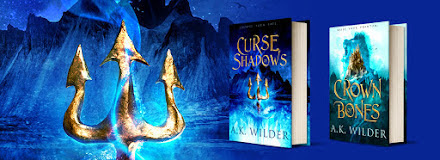
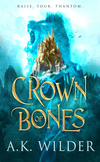
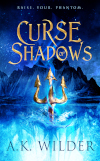
Kim Falconer, also writing as AK Wilder, has released Crown of Bones, a YA Epic Fantasy with Curse of Shadows as book 2 in the series. Currently, she is ready with the third book, out in 2025. TBA

Kim can be found on AKWilder.com, Twitter, Facebook, Instagram and KimFalconer.com. 

Throw the bones on the AKWilder.com site.. See you there!


Friday, February 21, 2025

The Art of Adaptation - Authors' Response to External Pressures

Crazy Chaos by Yaoyao Ma Van As

Welcome, my readerly and writerly friends! Let's talk about another form of adaptation, the adjustments authors make when turning their manuscripts into books. 

It falls under the category of 'revision' and, there are multiple reasons to do it.

Adapting for Marketability

This form of adaptation falls squarely under Category #3 listed in the original post - a response to external pressures. "It snowed so she put on her coat." 

Image from The Left Hand of Darkness

Here the snow is pressure to change some part of the submitted story. Putting on the coat is the willingness to make those changes.

Where does the 'snow' come from?

It might be the author's agent, suggesting changes that will make the work easier to sell. It might be the editorial department asking for a change that puts the work more in line with the imprint. Perhaps it is a more specific issue such as sensitivity readers catching where the book succumbs to stereotyping, racial profiling, cultural appropriation or biases (unless such writing is part of the character or story). 

Whatever the pressure, if it is meaningful to the book's publication and success, writers usually will adapt.

I mean, we want our stories to reach the readership in the best possible form.

Publishers are Gatekeepers

Remember, publishers are the gateway to the readers, even though their focus is on the business side of the equation.

The Gunslinger
NOTE: It's not irregular for a publisher to suggest changes to a work. Quite the opposite! It's expected. The editors are there to hone the story, find holes in the plot, suggest different structuring, snappier dialogue, more multifaceted characters etc. 

Most writers, famous or unknown, need this kind of support to do their best work. 

Hopefully, the suggested though often optional changes don't go too far, tipping over to censorship or removing the author's voice or style. 

Still, as said, even well-known authors will adapt. As an example, J K Rowling was asked to revise the HP series for greater suspense, repetition removal and the addition of details about certain characters. -From the Writer's Desk

It's known that Stephen King was asked to tone down the horror in some of his stories. Yikes!

Ursula K Le Guin was rejected outright for one of her most recognized works based on ... well, just about everything. The rejecting editor said:

" ... the book is so endlessly complicated by details of reference and information, the interim legends become so much of a nuisance despite their relevance, that the very action of the story seems to be to become hopelessly bogged down and the book, eventually, unreadable. The whole is so dry and airless, so lacking in pace, that whatever drama and excitement the novel might have had is entirely dissipated by what does seem, a great deal of the time, to be extraneous material. My thanks nonetheless for having thought of us. The manuscript of The Left Hand of Darkness is returned herewith."

Read the Process Online

To normalize this process a little more, Brandon Sanderson takes us step by step through his revision journey, a rare treat and up on his website for all to view. 

But sometimes it is too late for the author to adapt to changing society,  language, meaning and new publishing norms. 

When it is Too Late to Adapt

One example is the broadcaster Greg James who was criticised over a promotional video for the Roald Dahl novel, The Twits. Here it was suggested giving one of the principal characters a glass eye would make her disgusting - Rawlinson and Creamer

And, in February 2023, controversy followed a report that publishers at Penguin Random House were rereleasing books by Roald Dahl after sensitivity reader input. The changes included removing every instance of the words fat and ugly. So Augustus Gloop becomes “enormous,” and Mrs. Twit is “beastly” not “ugly and beastly.”  Some text was also added to The Witches: A passage about how witches are bald under their wigs now ends with, “There are plenty of other reasons why women might wear wigs and there is certainly nothing wrong with that.”  

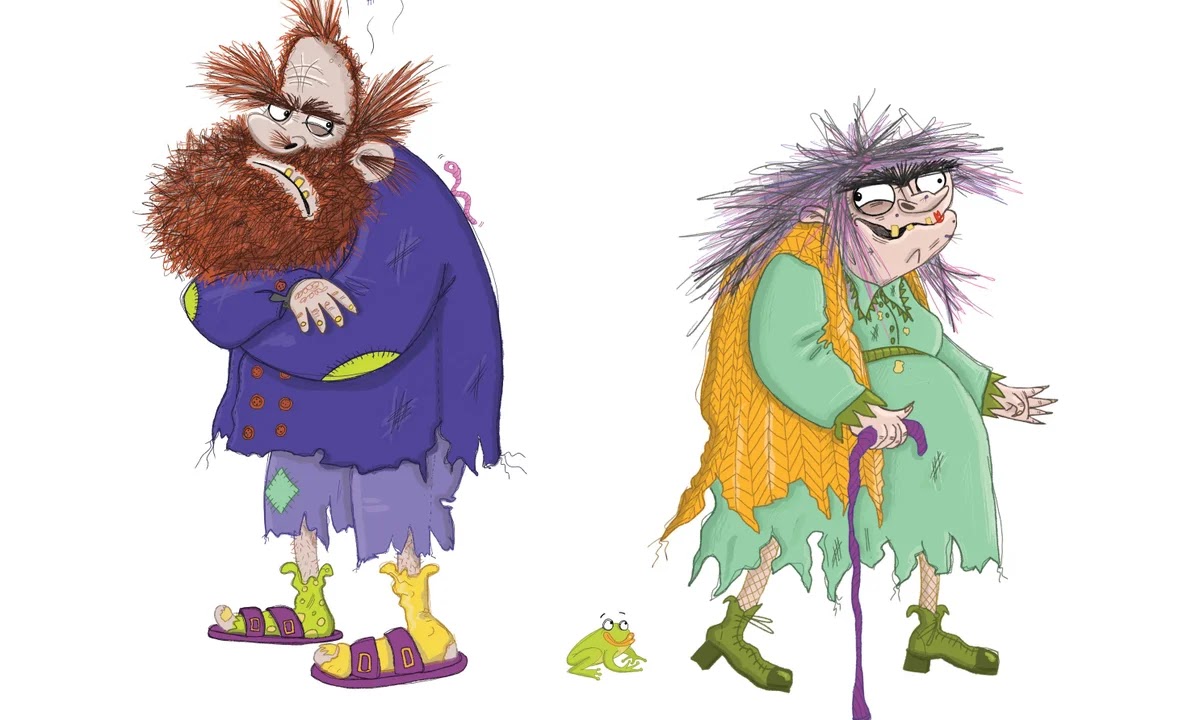
Mrs. Twit et al

Do you think these are positive changes for young readers or a muffling of Dahl's edge?

Sensitivity Readers - Support or Censorship?

The same type of arguments were raised recently when Kathryn Stockett’s The Help was published in 2009. The book attracted huge commercial success but was also criticised. The key issue was that Stockett, a white middle-class American, wrote about African American maids working in white households in Mississippi in the 1960s. The book was accused by the African American community of being a "shallow portrayal of black people’s experiences in that setting and era."

And then, the 2019 novel American Dirt attracted harsh publicity for similar reasons. A story of a Mexican mother and her child's journey to the border after their family's murder, the book has been accused of clichéd writing, and tagged “opportunistic, selfish, and parasitic” while appropriating the stories of Mexican immigrants to America. 

But is Cummmins a middle-class white woman or a person of mixed race? Until the book’s release, she had identified as white but revealed in the lead-up to publication, and during the negative scrutiny, that she has a Puerto Rican grandmother. The timing may not have been perfect.

For or against, it didn't help mitigate the outcry. Cummins’ book tour was cancelled over concerns for her safety. Though, you can see on Goodreads that in spite of all, American Dirt has sold 2+ million copies.

Summary 

Ultimately, authors need to be flexible and at least consider suggestions made by their trusted proofers, editors and sensitivity readers. Better to have a chance to adapt to wider views of a rapidly changing market before the work goes to print than to try to edit editions years down the track. 

Have any of you, as readers and/or writers, seen cases where adapting to such pressures went too far? Not far enough?  

We'd love to hear about it in the comments.

xxKim

Other Posts in the Art of Adaptation 2025

January - The Art of Adaptation - Films in 2025

February - The Art of Adaptation - Authors' Response to External Pressures

March - The Art of Adaptation - The Healing Magic of KDrama

April - The Art of Adaptation -  Reader Persuasion

May - The Art of Adaptation - Fantasy Monsters Part 1

June - The Art of Adaptation - Fantasy Monsters Part 2 

July - The Art of Adaptation - Alternate History

August - The Art of Adaptation - AI: A New Chapter for Writers

September - The Art of Adaptation - Crafting Mood with Language

October - The Art of Adaptation - Take Five

November - The Art of Adaptation - On Time

***

About Kim Falconer 


Kim Falconer, also writing as AK Wilder, has released Crown of Bones, a YA Epic Fantasy with Curse of Shadows as book 2 in the series. Currently, she is ready with the third book, out in 2025. TBA

Kim can be found on AKWilder.com, Twitter, Facebook, Instagram and KimFalconer.com. 

Throw the bones on the AKWilder.com site See you there!


Sunday, January 26, 2025

From the Back List - Adapting to Survive


The transformative power of bacteria turns plastic into eco treasures. Science 2023

Once again we have a treasure of our own from the Sup back list. It runs along parallel with Kim Falconer's latest post - The Art of Adaptation - Films in 2025

Read the entire back list post here and let us know what you think of these crazy bacterium set to save the planet!

* * * 

Adapting to Survive

 
Adapting a book to the screen has many names - remake, reboot, revision... But they all have one thing in common: the story is, in part or whole, rewritten to survive.

From the point of view of the book, this isn't always good, where 'good' equals accurate or in the spirit of.... As I mentioned once in The Down Side of Adaptation, Pulitzer Prize-winning novelist Jeffrey Eugenides reminds us that the book's story radically changes once it becomes visual. 

"It's no longer a book, and to try to insist on it being a book will usually make it a poorer film." - Jeffrey Eugenides

In the world of storytelling, adaptation is about the book withstanding a translation to 'motion pictures' and in the wild kingdom, adaptation means exactly the same thing... Read more.

* * *

We would love to hear about your favorite adaptations, in the wilds and multi-media! See you in the comments.


Thursday, April 15, 2021

Adapting to Survive


Cursed - the legend of King Arthur is reenvisioned on Netflix.

Adapting a book to the screen has many names - remake, reboot, revision... But they all have one thing in common: the story is, in part or whole, rewritten to survive.

From the point of view of the book, this isn't always good, where 'good' equals accurate or in the spirit of.... As I mentioned once in The Down Side of Adaptation, Pulitzer Prize-winning novelist Jeffrey Eugenides reminds us that the book's story radically changes once it becomes visual. 

"It's no longer a book, and to try to insist on it being a book will usually make it a poorer film." - Jeffrey Eugenides

In the world of storytelling, adaptation is about the book withstanding a translation to 'motion pictures' and in the wild kingdom, adaptation means exactly the same thing

The okapi
The okapi has survived 16 million years through adaptations.

For today's post, I thought it would be fun to compare three evolutionary adaptations -- structural, physiological and behavioral -- in nature with those found in storytelling. For example, the okapi demonstrates structural and physiological adaptations that have allowed it to survive. 

    1) they have scent glands on their feet to mark their territory
    2) they use infrasonic calls to communicate with their calves so predators can't hear
    3) their tongues are 14-18 inch-long tongues used for browsing and washing their ears and eyes

Shadow and Bone | Six of Crows Macmillian 

A book adaptation with just as surprising structural and physiological changes as the Okapi is the new Netflix series adaptation of Shadow and Bone by Leigh Bardugo. In this revision, characters and environments are combined to survive as something new.

Instead of solely adapting its namesake book, the show combines it with characters and geography from Bardugo’s duology Six of Crows. - Nerdist

Another interesting form of adaptation in nature is based on behavoral changes. 

When it comes to this kind of adaptations in nature, squirrels take the cake. Did you know they can hibernate for up to 12 months? 

Photography: Alamy - Grey Squirrel Study at UE

A new series, also to Netflix, took the behavioral route when it adapted the time-honoured story of King Arthur. You might notice right away that Merlin doesn't quite behave the way we expect given a Disney upbringing. If you haven't seen it, you'll want to prepare yourself!

(the old) Merlin is a figure of great power and wisdom. His magical abilities are substantial and he’s generally depicted as a sort of all-seeing sage, who engineers the birth of Arthur and the rise of Camelot before falling victim to an ill-timed romance.

 Gustav Skarsgard’s performance brings this very different kind of Merlin to life.

In Cursed, Merlin is, to be blunt, a world-weary mess. Stripped of his magic and overly fond of alcohol, this character seems the furthest thing possible from an all-knowing, all-powerful wizard. And that’s not just an intentional choice on the part of Wheeler – it’s one that places this Merlin closer to his Welsh beginnings than many versions of the character that came afterward. - Den of Geeks

Love them or not, the revisions films tell of our beloved books are different, including sometimes shocking and unexpected takes. But, just like in nature, they have been adapted to survive new challenges in the environment, for better or worse.

How about you? What are your favorite adaptations? Most appalling? We'd love to hear your thoughts.

* * *

Crown of Bones audio sample
Try the Audio Sample

Kim Falconer, currently writing as A K Wilder, has just released Crown of Bones, a YA Epic Fantasy.

Kim can be found on  AKWilder Twitter, Facebook and Instagram. 

Throw the bones, read your horoscopes or Raise Your Phantom on the AKWilder.com site or have a listen to the audio version on the right.


Sunday, October 16, 2016

The Downside of Adaptation


Have you ever walked out of a film thinking, "It was nothing like the book?" There's a reason for this conclusion, and it isn't necessarily bad script writing.

When Pulitzer Prize winning novelist Jeffrey Eugenides talks about adapting a novel into film, he makes a good point. The book's story radically changes once it becomes visual.
"It's no longer a book, and to try to insist on it being a book will usually make it a poorer film." - Jeffrey Eugenides
Warm Bodies
David Mitchell (the author of Cloud Atlas) agrees. He feels that a novel's size and scope has to be parred down to fit into a visual narrative. Things have to happen faster too. Where a novel can take its time world-building and developing its characters and history, giving readers thrills and elevated heart rates along with downtime and moments of chilling out, films don't have that luxury.

Mitchell says where the novel is like a DVD box set, the film, costing over $100,000 per minute to shoot, puts the human eyeball in danger of exploding after the first 180 minutes. The film's plot must be delivered at the speed of light, or something close to it, compared with the novel.

If we are in love with the book and sitting in the theater, lights going down, it can help to remember that adapting to film means transposing from one medium to another, a process that involves rethinking the entire story.

First, it moves from telling to showing. That means description, narration and internal thoughts must be translated into speech, actions, sounds and visual images. Backstory, slipped in throughout a novel, isn't going to play out visually, unless a flashback is used. There are ways to portray nostalgia and history in film, but they are very different from getting the same message across in text.

Cloud Atlas
Another consideration is the fluidity of interpretation in novels. Scenery, ideas, characters' intentions and desires are suggested in the text, open to the imagination of the reader. In a film, the writer and director, and actors, are making much more definitive statements, open not so much to the imagination but recording what is seen as fact.

Cast of characters can be an issue as well. Though HBO's Game of Thrones is managing to tell the ensemble stories, scope and scale of George RR Martin's novels, as Peter Jackson did with LOTR, it's easier to fit a multitude of characters into a book than a film. Even with a longer movie, or television series, there isn't the time or space to explore a large number of characters. There's only so much the viewer can keep track of in the period of time.

Not only will the screen writer and director, time and space have a strong influence on the adaptation, the score composer will as well. The mood the music creates controls the interpretation of any scene in ways that the novel does not. If you doubt this, watch the same scene from Pirates of the Caribbean with four different sound tracks.


In the end, you may fully enjoy a book more than the film, or vice versa, but it's fun, and revealing, to consider why.

Do you have a favourite adaptation? We'd love to hear about it in the comments.


Kim Falconer's latest release is out now - The Blood in the Beginning - and Ava Sykes Novel. Find this novel in a store near you.

You can also learn more about Kim at AvaSykes.com, the 11th House Blog, and on FaceBook and Twitter.  

She posts here at the Supernatural Underground on the 16th of every month and runs Save the Day Writer's Community on Facebook. Check out her daily Astro-LOA Flash horoscopes on Facebook.