Showing posts with label backward causation. Show all posts

Friday, January 16, 2026

Fiction Predictions - When Writers Become Seers

Better Tomorrow by YuumeiART

Hello, Supernatural Underground Community!

A new year is here, and with it begins my new monthly series of posts. The theme for 2026 (drum roll) is Fiction Preditions.

It was sparked by the question: "How can authors write a work of fiction about society or technology, and then, decades later, we are living it?"

Introduction


Even the possibility of this happening provokes a deeper exploration: how do writers operating in the realm of imagination and fantasy travel the boundaries of time by predicting future technologies, social norms, and cultural shifts? That's exactly what I want to explore, month by month, until we hopefully come up with some answers.  

Neuromancer and AI vs. The Midnight Train

To kick off our exploration, let’s take a closer look at William Gibson’s iconic novel *Neuromancer*, published in 1984. This cornerstone of cyberpunk literature introduced readers to "cyberspace," a term Gibson coined that has since become embedded in our daily vernacular. He prophesied the notion of artificial intelligence and virtual reality, fleshing out a digital landscape that now feels completely familiar. Not only did Gibson capture the essence of hacker culture, but he also accelerated conversations around technology that many of us are still navigating today.

Fast-track to 2026, and we see an exciting new release: *The Midnight Train* by Matt Haig. This narrative explores how revising the past can reshape the future. (More on backward causation/retrocausation in a moment). TMT resonates with our current climate, where the past and present intersect through the lens of technology, quantum physics theory and inner active imagination therapy. 

All very interesting, but how does this happen?

The Role of the ‘Seer’

Throughout history, figures like Nostradamus have been branded as seers, individuals with the ability to foresee events long before they happen. Some view this as pure coincidence, or as synchronicity, while others argue that these predictions stem from 'truths' -  insights into human behaviour, trends, and the cyclical nature of society. Writers often follow similar trajectories, utilising their imagination to extend beyond the constraints of their time. By examining current sociopolitical climates, technological advancements, and cultural movements, even unconsciously, writers can craft narratives that resonate with readers and reflect potential futures.

I know it's not an answer, but it's a starting point.

Let's take Isaac Asimov, for instance. While his name evokes images of robot armies and galactic empires, it’s his scientific education, observations of technological progress and of human nature that propelled him to make accurate predictions about future advancements. From the advent of computers in homes to the rise of biotechnology, Asimov’s foresight illustrates how speculative fiction can serve as a mirror to cultural and technological evolution. Or maybe, a window into. . .

Imagination vs. Reality: The Lens of Storytelling

YA Art by PrasetuaJQ

Still, how does this happen? Part of it lies in the audacity to attempt. The audacity to dream. Our speculative genre inherently invites us to stretch our imaginations and explore the possibilities that may appear outlandish today. By challenging societal norms and igniting conversations about future happenings, writers create a worldview for us to project our hopes, fears, and aspirations onto.

But here is the core, the point and the purpose of storytelling. While we call it “fiction,” it can still become rooted in reality. The ability to envision the "what ifs" of our world allows fiction to create pathways for innovation as well as to support psychological readiness for change. This brings us to our contemporary narrative world, where current writers continue to explore the motivations behind our ever-evolving 'reality'.

Backward Causation: A Curious Concept

As we reflect on our relationship with fiction, we discover the idea of backward causation, also known as retrocausation, a theory that claims the future influences the past, not the other way around. This concept challenges the way we perceive time, in a first-then-final order. Notions such as visualising a future prompt changes in the past may describe a fluid universe we are not quite prepared for!

So, is speculative fiction a self-fulfilling prophecy? If so, is the collective unconscious involved? Can innovations presented in a book inspire real-world advancements as inventors and thinkers draw from movements in the collective? These are questions I want to explore in the Fiction Prediction Series this year.

Conclusion: A Journey Begins

Can this meeting of imagination and 'real life' in speculative fiction lead us to reconsider how narratives potentially create reality? As we embark on this twelve-month journey, I plan to offer a kaleidoscope of visionary books—past and present—each prompting us to ponder a new way of seeing this topic. 

From iconic works to fresh perspectives in contemporary literature, we’ll explore how writers can be seers, capturing insights that connect us through time, forward and back. 

Please join me in this series, and feel free to drop a comment on what books you want to explore, too. Suggestions are always welcome.

Let’s see where this idea takes us! 

Happy New Year!

xx Kim

* * * 

About Kim Falconer


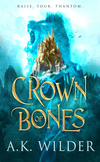
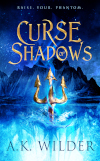
Kim Falconer, also writing as AK Wilder, has released Crown of Bones, a YA Epic Fantasy with Curse of Shadows as book 2 in the series. 

Currently, she is ready with the third book, planned to be out in 2025. TBA

 Quantum Enchantment
Kim can be found on AKWilder.com, Twitter, Facebook, Instagram and KimFalconer.com. 

Throw the bones on the AKWilder.com site.. See you there!


Read Blood and Water, a PNR alt history that will leave you questioning every natural disaster ever endured.

“There is no doubt fiction makes a better job of the truth.”


Sunday, November 16, 2025

The Art of Adaptation - On Time

French chef Yeon Ji Yeong wins a top competition but mysteriously lands in Joseon Dynasty, where she must cook fusion royal cuisine for a tyrannical king with an extremely sensitive palate.
Bon Appétit Your Majesty 

Welcome to the Sup!

Today's instalment of my 2025 series, The Art of Adaptation, is focused on TIME and the direction it flows. 

I've written about this before when discussing Arrows of Time from my 2008 Quantum Enchantment series. It basically challenges every concept of time so far imagined. But today, I want to look at how easily we adapt to time, from an author's belief that they are under time constraints to the readers' suspension of disbelief of time's reality.


Let's start with constraints. For most of us, our understanding of time follows a linear path: we assume a "First, Then, Finally" mindset, evaluating tasks and scheduling our commitments as neatly into order as possible. However, what if we took a moment to explore alternative perspectives by adopting a mindset that embraces the opposite, a "Finally, Then, First," perspective? As my first publisher at Voyager pointed out, the English language doesn't have the language to easily describe this.

Enter the world of literature and time-travel novels. 

These stories invite us to rethink our assumptions about temporality. Works like “The Time Machine” by H.G. Wells or “11/22/63” by Stephen King, and even my own series like Quantum Enchantment and Amassia, can provoke thoughts, at least while in the story, that time could move differently, or maybe not exist at all. They can spin our traditional notions of causality right off the board by suggesting that time is malleable, allowing for sequences that defy our everyday understanding. When a character leaps forward or backward in time, it ignites a possibility within us—what if we could navigate like that, too? 

Wouldn't that be amazing? We might even start saying things like, "I have all the time in the world."

It sounds more supportive than our usual "time-poor" thinking: I don't have enough time. And, as Einstein suggested, time is an illusion, and the constricting nature of our schedules may be more a product of our mindset than an absolute reality. Adopting a perspective that allows for fluidity in how we engage with time might just create space for new possibilities.

Repeat after me: I have all the time in the world!

Consider how this idea, and that of backward causation in quantum physics—where effects can precede their causes or even change the past—challenges us to think outside the conventional timeline box. Could we consider allowing our future goals and desires to inform our present actions rather than simply reacting to our past?

Engaging with film and literature that plays with concepts of time can create a bridge to this new way of thinking. As we lose ourselves in these narratives, we might adapt to a less rigid belief and align with non-judgmental experiences flowing from a well of infinite possibilities. 

Maybe it's less about whether time is "real" and more about how we relate to it. 

So, in the spirit of exploration, let’s challenge our perceptions and embrace the myriad ways we could redefine our relationship with time. After all, the narratives we engage with not only touch our imagination but also offer novel insights that can inspire realities.

Start Simple by changing thoughts from I'm out of time to I have all the time in the world, and see where it leads.

xxKim

***

Other Posts in the Art of Adaptation 2025

January - The Art of Adaptation - Films in 2025

February - The Art of Adaptation - Authors' Response to External Pressures

March - The Art of Adaptation - The Healing Magic of KDrama

April - The Art of Adaptation -  Reader Persuasion

May - The Art of Adaptation - Fantasy Monsters Part 1

June - The Art of Adaptation - Fantasy Monsters Part 2 

July - The Art of Adaptation - Alternate History

August - The Art of Adaptation - AI: A New Chapter for Writers

September - The Art of Adaptation - Crafting Mood with Language

October - The Art of Adaptation - Take Five

November - The Art of Adaptation - On Time

***

About Kim Falconer


Kim Falconer, also writing as AK Wilder, has released Crown of Bones, a YA Epic Fantasy with Curse of Shadows as book 2 in the series. 

Currently, she is ready with the third book, planned to be out in 2025. TBA

Kim can be found on AKWilder.com, Twitter, Facebook, Instagram and KimFalconer.com. 

Throw the bones on the AKWilder.com site.. See you there!

Read Blood and Water, a PNR alt history that will leave you questioning every natural disaster ever endured.

“There is no doubt fiction makes a better job of the truth.”