Showing posts with label time travel. Show all posts

Sunday, November 16, 2025

The Art of Adaptation - On Time

French chef Yeon Ji Yeong wins a top competition but mysteriously lands in Joseon Dynasty, where she must cook fusion royal cuisine for a tyrannical king with an extremely sensitive palate.
Bon Appétit Your Majesty 

Welcome to the Sup!

Today's instalment of my 2025 series, The Art of Adaptation, is focused on TIME and the direction it flows. 

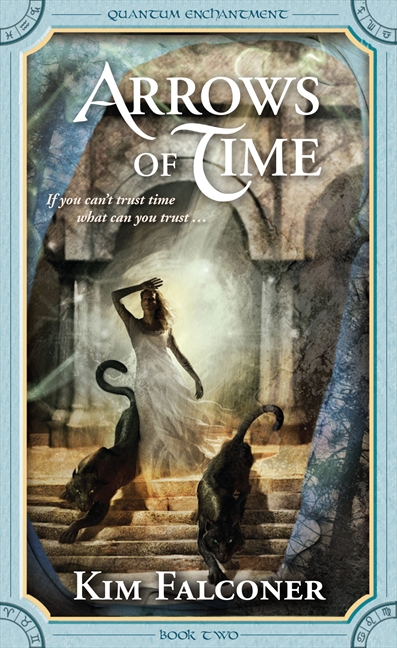
I've written about this before when discussing Arrows of Time from my 2008 Quantum Enchantment series. It basically challenges every concept of time so far imagined. But today, I want to look at how easily we adapt to time, from an author's belief that they are under time constraints to the readers' suspension of disbelief of time's reality.


Let's start with constraints. For most of us, our understanding of time follows a linear path: we assume a "First, Then, Finally" mindset, evaluating tasks and scheduling our commitments as neatly into order as possible. However, what if we took a moment to explore alternative perspectives by adopting a mindset that embraces the opposite, a "Finally, Then, First," perspective? As my first publisher at Voyager pointed out, the English language doesn't have the language to easily describe this.

Enter the world of literature and time-travel novels. 

These stories invite us to rethink our assumptions about temporality. Works like “The Time Machine” by H.G. Wells or “11/22/63” by Stephen King, and even my own series like Quantum Enchantment and Amassia, can provoke thoughts, at least while in the story, that time could move differently, or maybe not exist at all. They can spin our traditional notions of causality right off the board by suggesting that time is malleable, allowing for sequences that defy our everyday understanding. When a character leaps forward or backward in time, it ignites a possibility within us—what if we could navigate like that, too? 

Wouldn't that be amazing? We might even start saying things like, "I have all the time in the world."

It sounds more supportive than our usual "time-poor" thinking: I don't have enough time. And, as Einstein suggested, time is an illusion, and the constricting nature of our schedules may be more a product of our mindset than an absolute reality. Adopting a perspective that allows for fluidity in how we engage with time might just create space for new possibilities.

Repeat after me: I have all the time in the world!

Consider how this idea, and that of backward causation in quantum physics—where effects can precede their causes or even change the past—challenges us to think outside the conventional timeline box. Could we consider allowing our future goals and desires to inform our present actions rather than simply reacting to our past?

Engaging with film and literature that plays with concepts of time can create a bridge to this new way of thinking. As we lose ourselves in these narratives, we might adapt to a less rigid belief and align with non-judgmental experiences flowing from a well of infinite possibilities. 

Maybe it's less about whether time is "real" and more about how we relate to it. 

So, in the spirit of exploration, let’s challenge our perceptions and embrace the myriad ways we could redefine our relationship with time. After all, the narratives we engage with not only touch our imagination but also offer novel insights that can inspire realities.

Start Simple by changing thoughts from I'm out of time to I have all the time in the world, and see where it leads.

xxKim

***

Other Posts in the Art of Adaptation 2025

January - The Art of Adaptation - Films in 2025

February - The Art of Adaptation - Authors' Response to External Pressures

March - The Art of Adaptation - The Healing Magic of KDrama

April - The Art of Adaptation -  Reader Persuasion

May - The Art of Adaptation - Fantasy Monsters Part 1

June - The Art of Adaptation - Fantasy Monsters Part 2 

July - The Art of Adaptation - Alternate History

August - The Art of Adaptation - AI: A New Chapter for Writers

September - The Art of Adaptation - Crafting Mood with Language

October - The Art of Adaptation - Take Five

November - The Art of Adaptation - On Time

***

About Kim Falconer


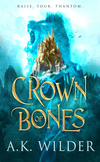
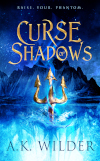
Kim Falconer, also writing as AK Wilder, has released Crown of Bones, a YA Epic Fantasy with Curse of Shadows as book 2 in the series. 

Currently, she is ready with the third book, planned to be out in 2025. TBA

Kim can be found on AKWilder.com, Twitter, Facebook, Instagram and KimFalconer.com. 

Throw the bones on the AKWilder.com site.. See you there!

Read Blood and Water, a PNR alt history that will leave you questioning every natural disaster ever endured.

“There is no doubt fiction makes a better job of the truth.”

Wednesday, October 16, 2024

Choose Your Weapon - Time Travel


Lee Dong Wooj in Tail of the Nine-Tailed Is the past repeating itself again?

Time Travel as a Weapon

You might think of time travel more as a mode of transportation, at least in film and literature, and you would be right. It certainly offers a way of moving characters into precarious and plot-twisting situations.

But it is also a weapon. 

If you don't believe me, read on to discover how deadly time travel can be.

In the 2016 series Travelers, future surviving humans send their consciousness back through time into people of the 21st century to change the path of humanity. Of course, they kill their hosts to do it...

Time Travel Defined

Think of time travel as a way to transport a) information (precognition as in The Minority Report) and/or b) characters forward, backward and sideways (into parallel universes). And note, even though Einstein's Relativity says time, travel or otherwise, is an illusion, quantum physics begs to differ. 

Brief Sidestep into Science

In quantum physics, we have the idea of time symmetry in that it flows both ways, forward from past to present to future, AND backward, from future, to present to past. The latter is the most common because an observer is essential to 'see' a thing for it to exist. 

As John Wheeler puts it, "...what the observer will do in the future defines what happens in the past—even in a past so remote that life did not then exist, and shows even more, that 'observership' is a prerequisite for any useful version of 'reality'."

Don't you love how 'reality' is in quotes? 

Time becomes both complex and illusory, but that doesn't stop us from using fiction to get a handle on it.


Wheel of Time depicts time with a seven-spoked wheel marking the seven Ages. The turning of this wheel and the events of each Age generate the Great Pattern, a predefined plan which defines the past, present and future -  not unlike Hindu and Buddhist representations of time.


The Sub Genres of Time Travel in Fiction


Writing time travel in fiction offers a way to weaponize a character as well as play with the time/space continuum. And the best part of this, to me, is you can cross genres like crazy to do it. TT includes multiple classes of Speculative Fiction from SF, Fantasy and alternate history to even more obscure niches. 

We have books and films ranging from Fantasy, like A Connecticut Yankee in King Arthur’s Court and The Dragonriders of Pern, to Fairytale like Rip Van Winkle to the War subclass like The Edge of Tomorrow (adapted from Hiroshi Sakurazaka's All You Need is Kill), Alt History like Outlander, comedy as in Groundhog Day and of course SF from H. G. Wells' 1895 classic The Time Machine to comedy/SF Back to the Future. 

I played with the symmetry of time in deadly ways in the Quantum Enchantment series, specifically Arrows of Time.

Time can change the course of history.
Right, Mr. Queen?
As well, we have works across more Spec Fic subgenres like Harry Potter and the Prisoner of Azkaban, and Wheels of Time to the wonderful array of KDramas such as Lovely Runner and Mr. Queen.

Conclusions

The point is, that time travel isn't always a glitch in The Matrix. It can be used to correct the devastating collapse of humanity (Terminator), to win the battle and save the day, for example...

"By making use of time displacement equipment, agents from both sides (pro Skynet and anti Skynet) are deployed on missions designed to either ensure, alter, or eradicate the status quo as perceived by the participants at the time." - Terminator Universe 

Now that is some weapon!


On a more subtle level, there is the temporal fugue portrayed in Creatures of Light and Darkness by Roger Zelazny where our hero moves through time, adding himself to a causality loop so his 'copies' can join the fight. The possibilities here are endless!

* * *

Do you have a favorite time travel book, film or game? I'd love to hear about it in the comments!

Choose Your Weapon Series 2024

Poison

The Perfect Storm

The Sword

Firearms

Ranged

Spells

Unarmed

Curses

Time Travel

Invisibility

* * *


About Kim Falconer

Kim Falconer, currently writing as AK Wilder, has released Crown of Bones, a YA Epic Fantasy with Curse of Shadows as book 2 in the series. Currently, she is working on the third book, out in 2024.

Kim can be found on  AKWilder Twitter, Facebook and Instagram. 

Throw the bones, read your horoscopes or Raise Your Phantom on the AKWilder.com site


Friday, January 16, 2015

Categories of Contrast

O-ssak-han yeon-ae a film with contrast.
Have you heard friends and family complain about post-holiday ‘contrast’? The phrase is often used to sugarcoat what resembles a trip through the nearest hell dimension. It’s challenging, but also a little ironic the way these moments 'lacking harmony’ are actually the most interesting to retell.

We wouldn’t have a good story without them.

Contrast, AKA conflict, is essential to any book or film, but because we tend to avoid the edgy situations in real life, it can be hard to express on the pages or screen.

Again, the irony. We want to experience peace, but nobody wants to read, or watch, a story where everyone and everything is harmonious.

“Chase your characters up trees and throw rocks at them” is a long upheld adage. But doing it in a way that lends anticipation and promise of some level of satisfaction at the end is the crux. The measure of these ingredients, especially the resolution factor, will depend on genre, author and readership.

For example, Charlaine Harris’s Southern Vampire Mysteries gave us a resolution at the end of each book that promised something new. But when it came to the last book, not everyone agreed. There was certainly a lot of controversy on how the entire series wrapped up!

Then there are dystopian books like The Forest of Hands and Teeth where author Carrie Ryan leaves us more uncomfortable in the end than when we started. The series is bleak, but given it's a dystopia, we were forewarned.

Resolution of the contrast can vary widely, even within genres, but is contrast always about conflict? The two aren't exactly the same.

Conflict can be categorized by relationship. For example in LOTR, conflict is interpersonal between Gandolf the Gray and Saurman, intra-personal within Smeagol himself, intra-group with Boromir and Frodo, and inter-group between the orcs and the Riders of Rohan.

But contrast can also be about juxtaposition where the author plays with things like time, ideologies and voice.

Anne McCaffrey in her Dragonriders of Pern shows a people united through the contrast of their own survival against the threat of the Red Star.

In The Diary of Pelly D, L J Adlington uses an unearthed diary to contrast the present day dystopian world with a more beautiful pre-acpocolytic one.

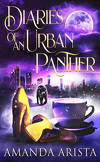
Intra-personal contrast can be shown through diaries as well, seen in L J Smith's The Vampire Diaries, and our own Amanda Arista's Diary of an Urban Panther. In my Quantum Encryption Series, major ideologies are explored through the discovery of a long lost diary.

Time can also be a powerful marker for contrast used in the form of flashbacks, flash-forwards and time travel. These techniques are seen in books like The Time Traveler's Wife, my own Arrows of Time and Isabelle Carmody's Obernewtyn Series.

Spark any ideas? Feel free to share your examples, or favorite bit of contrast in a story or film, in the comments.

Namaste all!
 xxxKim
Kim Falconer is a Supernatural Underground author writing paranormal romance, urban fantasy, YA and epic science fantasy novels.

You can find out more about Kim at GoodVibeAstrology.com,  KimFalconer.com or on the 11th House Blog, and on FaceBook and Twitter. She posts here at the Supernatural Underground on the 16th of every month. Her latest release is"Blood and Water" in Supernatural Underground: Vampires Gone Wild.