Showing posts with label dystopia. Show all posts

Friday, October 15, 2021

Love in the Time of Pandemics

Emere Necromancer by Iga Oliwiak on Art Station

Fantasy Fiction fulfils a variety of purposes. It can entertain and inspire us, stimulate and awaken us. It can also teach, offering examples of how we, as a species, respond to life-threatening conflict and challenges.

It's best not to let the elements of fantasy fool you. Most writers of this genre are constantly exploreing real-world issues in contemporary ways.

Take pandemics, for example.

In the current state of the world, it's a good time to look at SF/Fantasy stories with contagions at their core. I'm particularly interested today in books that explore how disease influences our core relationships. Here are a few favorite examples.


Warm Bodies by Isaac Marion

In this novel, zombie boy meets rebel girl and the very act awakens the cure. Here 'zombies' are those afflicted with a disease, one that threatens the entire human population.

First as his (zombie boy's) captive, then his reluctant guest, Julie (rebel girl) is a blast of living color in R’s gray landscape, and something inside him begins to bloom. He doesn't want to eat this girl—although she looks delicious—he wants to protect her. But their unlikely bond will cause ripples they can’t imagine, and their hopeless world won’t change without a fight. 

This book is a great read that doesn't shy away from a unique combination of humor, horror and human behavior in a time of dystopia.


The Electric Kingdom by David Arnold


In David Arnold's The Electric Kingdom, the world is toast. It's not clear right away why, but the story hints toward a lab, a spill, a terrible mistake. 

This full-blown dystopia is on my 'must read' list. I loved the voices, the storytelling, the weaving of the different POVs... Two were in 3rd person and one in 1st. Very clever. 

The environment and stress of survival make for a grim backdrop -- the pandemic has basically won after all -- but there are these kids, with big hearts and so much hope. It shows how much that, no matter what happens, we reset and keep on living. 

While we can...


A Beautiful Poison by Lydia Kang


There are few obvious elements of fantasy in this novel but I included it for variety, and excellent storytelling. The mystery had me guessing right up to the end!

Just beyond the Gilded Age, in the mist-covered streets of New York, the deadly Spanish influenza ripples through the city. But with so many victims in her close circle, young socialite Allene questions if the flu is really to blame. All appear to have been poisoned—and every death was accompanied by a mysterious note.

You might also like Kang's Toxic for a stronger Fantasy perspective.


Station Eleven by Emily St John Mandel

This story is thought-provoking, getting inside your head and staying there long after you put it down.

Set in the days of civilization's collapse, Station Eleven tells the story of a Hollywood star, his would-be savior, and a nomadic group of actors roaming the scattered outposts of the Great Lakes region, risking everything for art and humanity.

If you want to experience the death throes of a civilization on the brink, and still feel the warmth and resistance of love, this is it.


Bird Box by Josh Malerman

This book is creepy, on the edge of horror for sure, with a story that centres on an epidemic that forces a severe social distancing... one more extreme than ever imagined.  

Five years after it began, a handful of scattered survivors remains, including Malorie and her two young children. Living in an abandoned house near the river, she has dreamed of fleeing to a place where they might be safe. . . but the journey ahead will be terrifying: twenty miles downriver in a rowboat—blindfolded—with nothing to rely on but her wits and the children's trained ears. One wrong choice and they will die. Something is following them all the while, but is it man, animal, or monster?

Netflix has turned this into a series and Malerman's Bird Box #2 came out in 2020. 

Now it's your turn. What's your favorite pandemic novel. I'd love to hear about it in the comments.

xxKim

* * *


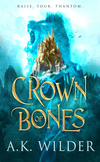
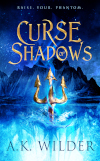
Kim Falconer, writing YA Fantasy as A K Wilder, is the author of Crown of Bonesbook #1 in the Amassia Series. The sequel, Curse of Shadowsis due for release in June 2022.

Kim can be found on  AKWilder TwitterFacebook and Instagram

You can Throw the Bones, read your monthly horoscopes or Raise Your Phantom on the AKWilder.com site or just drop a comment to chat. See you there!

Sunday, August 1, 2021

More Magic In Fantasy: Lighting The Spark

 .

Introduction

Away back in January, I resolved to make 2021 my year of magic, and magic systems in Fantasy fiction, because from "...magic realism to the highest of high epic fantasy, the magic – and by extension the magic system – is the leaven in the ... [Fantasy]...mix.” 

Magic in the mix...

Currently, I'm focusing on books where the magic or magic system have really wowed me, aiming to try and include an range of subgenres but also of older and more recent works.

In case you're wondering what "wow" looks and feels like for me, it's that flare of excitement when I start reading, usually because what I'm reading feels really authentic and (sometimes) "new-to-me."

Here are three more books that ticked that box when it comes to their treatment of magic and/or magic systems, i.e. I do think it's possible to have magic without it being systematic and /or codified.


Magic In Fantasy: Lighting The Spark

The Earthsea Trilogy by Ursula Le Guin 

Since I started my themed series in 2019 with Romance In Fantasy, I have tried not to replicate an author, but I'm going to have to give in today, because unquestionably, Ursula Le Guin was one of the first authors to wow me with the magic of her first Earthsea trilogy. 

Although I believe adults can read it just as readily, officially the first Earthsea trilogy is children's fiction, beginning with A Wizard of Earthsea.

The wow factor lay in the magic of Earthsea's strong environmental sensibility, but also the idea of limitations, both in the mage's interaction with natural and magical forces, and within themself. In the magic of Earthsea, this is conveyed through an emphasis on balance and patterning, with consequences arising out of every action and use of power -- an aspect of magic that is sometimes overlooked or glossed over in Fantasy.


Yet despite being wowed by the simplicity and power of Earthsea's magic, I was also taken aback (yes, even as a young reader) because the magic system is inherently sexist. "Weak as women's magic", the reader is told from the outset, and also "wicked as women's magic." Certainly, women do not become mages, and the association of women's magic with weakness or wickedness, is sustained through the first trilogy. Le Guin is said to have endeavored to correct this aspect of Earthsea's magic system in Tehanu (1990), although I note its a substantively different story and also pitched more to adult readers.

For me, the wow of Le Guin's overall achievement, in terms of creating a magic system, is greater than its sexism, but I do feel the latter undermines what would otherwise be an outstanding achievement, comparable with that of her (adult) science fiction novels, The Left Hand Of Darkness and The Dispossessed

Shadows Of The Apt Series by Adrian Tchaikovsky

Adrian Tchaikovsky's is epic fantasy with a steampunk sensibility. The first novel, Empire In Black and Gold was published in 2008 and from the outset I was very taken with the series' magic, which is centered upon "insect" kingdoms where the denizens ("kinden") are either technologically "apt" (e.g. wasps, beetles, ants) or "inapt." The Inapt, such as moths, spiders, and dragonflies, tend to be strong in magic, but both Apt and Inapt kingdoms are in danger of being overrun by the expanding Wasp empire. 

I should add that the various kinden are basically human form, but strongly connected in social, cultural, and organisational terms with their insect "avatars" (for want of a more -- er -- apt term.)

With ten titles in the series there is plenty to read and explore in terms of the science/tech versus magic divide, as expressed by the various kinden.

The Chimes by Anna Smaill

Anna Smaill's debut novel, The Chimes, was published in 2015 and won the World Fantasy Award in 2016.


The Chimes postulates a dystopian future UK where the written word is forbidden and music informs every aspect of life, including language, and profoundly affects memory and social structure. In The Chimes society there is only the present and to even contemplate the past is "blasphony." 

I still recall the shock of excitement I felt on beginning reading and experiencing the way in which music was embedded in the characters' thought and speech, in a way that I subsequently described as both "fascinating" and "original."

The overall story is a complex one, including the evolving relationship of the protagonists Simon and Lucien, but imbued with music throughout.

For greater insight into the book and world, you can read my 2015 interview with the author here:

An Interview with Anna Smaill

Conclusion:

And that's it for this month -- but I hope you'll find a spark of magic in one of these works, if you have not done so already!

~*~

Previous Posts In The "Magic In Fantasy" Series: 

January 1: Happy New Year – Ushering In A Year of Friends, Fellow Authors, & Magic Systems

January 5: 
An Interview with AK Wilder – Talking Magic In Her New-Out Crown Of Bones (AMASSIA #1) 

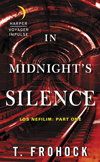
February 1: An Interview with T Frohock 
– Talking Magic In A Song With Teeth & The LOS NEFILIM Series


March 1:  An Interview with Courtney Schafer – Talking Magic In The "Shattered Sigil" Series


April 1:  An Interview with Kristin Cashore –Talking Magic In Winterkeep & The "Graceling Realm" Series

.

May 1: An Interview With Lee Murray – Talking Magic, the Supernatural & Horror

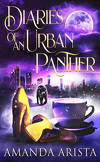
June 1: An Interview With Amanda Arista  Talking Magic In the MERCI LANARD & DIARIES OF AN URBAN PANTHER Series


July 1: The Magic of Magic In Fantasy -- & A Solstice Shift


~*~

About The Author:

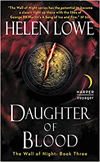
Helen Lowe's first  novel, Thornspell (Knopf), was published to critical praise in 2008. The second,The Heir of Night (The Wall Of Night Series, Book One) won the Gemmell Morningstar Award 2012, and the sequel, The Gathering Of The Lost, was shortlisted for the Gemmell Legend Award in 2013. Daughter Of Blood (Book Three), was published in 2016 and Helen is currently completing the final novel in the series. She posts regularly on her “…on Anything, Really” blog, monthly on the Supernatural Underground, and tweets @helenl0we

Friday, January 16, 2015

Categories of Contrast

O-ssak-han yeon-ae a film with contrast.
Have you heard friends and family complain about post-holiday ‘contrast’? The phrase is often used to sugarcoat what resembles a trip through the nearest hell dimension. It’s challenging, but also a little ironic the way these moments 'lacking harmony’ are actually the most interesting to retell.

We wouldn’t have a good story without them.

Contrast, AKA conflict, is essential to any book or film, but because we tend to avoid the edgy situations in real life, it can be hard to express on the pages or screen.
Again, the irony. We want to experience peace, but nobody wants to read, or watch, a story where everyone and everything is harmonious.

“Chase your characters up trees and throw rocks at them” is a long upheld adage. But doing it in a way that lends anticipation and promise of some level of satisfaction at the end is the crux. The measure of these ingredients, especially the resolution factor, will depend on genre, author and readership.

For example, Charlaine Harris’s Southern Vampire Mysteries gave us a resolution at the end of each book that promised something new. But when it came to the last book, not everyone agreed. There was certainly a lot of controversy on how the entire series wrapped up!

Then there are dystopian books like The Forest of Hands and Teeth where author Carrie Ryan leaves us more uncomfortable in the end than when we started. The series is bleak, but given it's a dystopia, we were forewarned.

Resolution of the contrast can vary widely, even within genres, but is contrast always about conflict? The two aren't exactly the same.

Conflict can be categorized by relationship. For example in LOTR, conflict is interpersonal between Gandolf the Gray and Saurman, intra-personal within Smeagol himself, intra-group with Boromir and Frodo, and inter-group between the orcs and the Riders of Rohan.

But contrast can also be about juxtaposition where the author plays with things like time, ideologies and voice.

Anne McCaffrey in her Dragonriders of Pern shows a people united through the contrast of their own survival against the threat of the Red Star.

In The Diary of Pelly D, L J Adlington uses an unearthed diary to contrast the present day dystopian world with a more beautiful pre-acpocolytic one.

Intra-personal contrast can be shown through diaries as well, seen in L J Smith's The Vampire Diaries, and our own Amanda Arista's Diary of an Urban Panther. In my Quantum Encryption Series, major ideologies are explored through the discovery of a long lost diary.

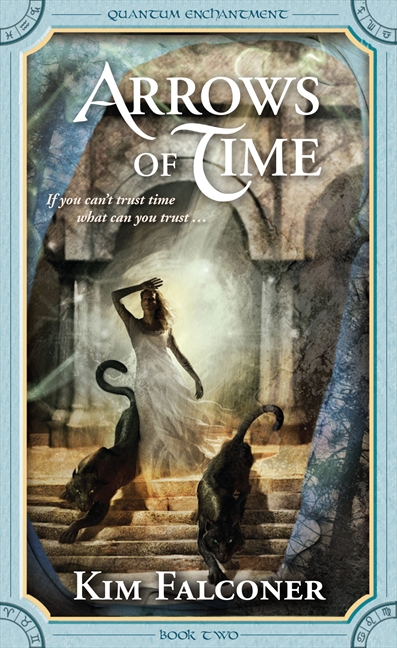
Time can also be a powerful marker for contrast used in the form of flashbacks, flash-forwards and time travel. These techniques are seen in books like The Time Traveler's Wife, my own Arrows of Time and Isabelle Carmody's Obernewtyn Series.

Spark any ideas? Feel free to share your examples, or favorite bit of contrast in a story or film, in the comments.

Namaste all!
 xxxKim
Kim Falconer is a Supernatural Underground author writing paranormal romance, urban fantasy, YA and epic science fantasy novels.

You can find out more about Kim at GoodVibeAstrology.com,  KimFalconer.com or on the 11th House Blog, and on FaceBook and Twitter. She posts here at the Supernatural Underground on the 16th of every month. Her latest release is"Blood and Water" in Supernatural Underground: Vampires Gone Wild.