Showing posts with label seers. Show all posts

Monday, February 16, 2026

Fiction Predictions - 20,000 Leagues Under the Sea


20,000 Leagues Under the Sea by nikogeyer

Welcome to the February 2026 issue of Fiction Predictions on the Supernatural Underground Blog. This next book is very dear to my heart, and also uncanny in its prediction of the future.

The History

When I was five years old, my dad took my brother and me to the drive-in to see

Salila from the Amassia Series
20,000 Leagues Under
the Sea
. 

I was basically terrified the entire time, watching through hands clutched over my eyes, fingers barely spread to catch a glimmer of the magical, frightening world of Jules Verne. 

It would be quite a few years later before I read the book, but it has stayed with me, as any of you will know if you've read my fantasies about people living under the sea... 

The Author

Jules Verne was a French poet and novelist born in 1828. He pioneered the SF/Fantasy genre, writing books about space, air, and underwater travel before any aircraft, practical submarines, or spacecraft existed. 

He was a genius with his narrative and his incredible imagination... Or did he actually see the future?  

The Predictions

Verne conceptualised the Nautilus, his underwater vessel, at a time when submarines were little more than handcrafted iron coffins. While he didn't actually invent the submarine, he predicted the sophistication and propulsion systems that would make them viable nearly 100 years later. 

William O'Connor Studios


In the novel, Verne has Captain Nemo and his crew leave the Nautilus wearing self-contained diving suits with air tanks, allowing them to walk on the ocean floor for hours. This predates SCUBA -  self-contained underwater breathing apparatus -  by 70 years when Jacques-Yves Cousteau and Émile Gagnan designed the first successful and safe open-circuit scuba. I wonder if they read 20,000 Leagues and were inspired!

The novel also introduced the notion of marine research and oceanography long before Cousteau was born. At the time, everyone thought that the only thing to be found under the sea was a vast, lifeless abyss. 

Was Jules Verne a Seer?

With so many future inventions written nearly 200 years ago, do you agree with me that authors can be seers? Or could there be a web of causality that moves forward and backward in time, a time that doesn't necessarily follow the order first - then  - finally?

Join me next month, where we will talk more about this and other ideas of backward and retro causation. 

And, please let me know in the comments if you have a favourite book you'd like to explore this way.

Isn't it all so fascinating?

xxKim

***

About Kim Falconer


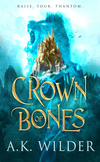
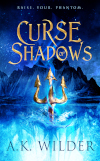
Kim Falconer, also writing as AK Wilder, has released Crown of Bones, a YA Epic Fantasy with Curse of Shadows as book 2 in the series. 

Currently, she is ready with the third book, planned to be out in 2025. TBA

 Quantum Enchantment
Kim can be found on AKWilder.com, Twitter, Facebook, Instagram and KimFalconer.com. 

Throw the bones on the AKWilder.com site.. See you there!


Read Blood and Water, a PNR alt history that will leave you questioning every natural disaster ever endured.

“There is no doubt fiction makes a better job of the truth.”

Friday, January 16, 2026

Fiction Predictions - When Writers Become Seers

Better Tomorrow by YuumeiART

Hello, Supernatural Underground Community!

A new year is here, and with it begins my new monthly series of posts. The theme for 2026 (drum roll) is Fiction Preditions.

It was sparked by the question: "How can authors write a work of fiction about society or technology, and then, decades later, we are living it?"

Introduction


Even the possibility of this happening provokes a deeper exploration: how do writers operating in the realm of imagination and fantasy travel the boundaries of time by predicting future technologies, social norms, and cultural shifts? That's exactly what I want to explore, month by month, until we hopefully come up with some answers.  

Neuromancer and AI vs. The Midnight Train

To kick off our exploration, let’s take a closer look at William Gibson’s iconic novel *Neuromancer*, published in 1984. This cornerstone of cyberpunk literature introduced readers to "cyberspace," a term Gibson coined that has since become embedded in our daily vernacular. He prophesied the notion of artificial intelligence and virtual reality, fleshing out a digital landscape that now feels completely familiar. Not only did Gibson capture the essence of hacker culture, but he also accelerated conversations around technology that many of us are still navigating today.

Fast-track to 2026, and we see an exciting new release: *The Midnight Train* by Matt Haig. This narrative explores how revising the past can reshape the future. (More on backward causation/retrocausation in a moment). TMT resonates with our current climate, where the past and present intersect through the lens of technology, quantum physics theory and inner active imagination therapy. 

All very interesting, but how does this happen?

The Role of the ‘Seer’

Throughout history, figures like Nostradamus have been branded as seers, individuals with the ability to foresee events long before they happen. Some view this as pure coincidence, or as synchronicity, while others argue that these predictions stem from 'truths' -  insights into human behaviour, trends, and the cyclical nature of society. Writers often follow similar trajectories, utilising their imagination to extend beyond the constraints of their time. By examining current sociopolitical climates, technological advancements, and cultural movements, even unconsciously, writers can craft narratives that resonate with readers and reflect potential futures.

I know it's not an answer, but it's a starting point.

Let's take Isaac Asimov, for instance. While his name evokes images of robot armies and galactic empires, it’s his scientific education, observations of technological progress and of human nature that propelled him to make accurate predictions about future advancements. From the advent of computers in homes to the rise of biotechnology, Asimov’s foresight illustrates how speculative fiction can serve as a mirror to cultural and technological evolution. Or maybe, a window into. . .

Imagination vs. Reality: The Lens of Storytelling

YA Art by PrasetuaJQ

Still, how does this happen? Part of it lies in the audacity to attempt. The audacity to dream. Our speculative genre inherently invites us to stretch our imaginations and explore the possibilities that may appear outlandish today. By challenging societal norms and igniting conversations about future happenings, writers create a worldview for us to project our hopes, fears, and aspirations onto.

But here is the core, the point and the purpose of storytelling. While we call it “fiction,” it can still become rooted in reality. The ability to envision the "what ifs" of our world allows fiction to create pathways for innovation as well as to support psychological readiness for change. This brings us to our contemporary narrative world, where current writers continue to explore the motivations behind our ever-evolving 'reality'.

Backward Causation: A Curious Concept

As we reflect on our relationship with fiction, we discover the idea of backward causation, also known as retrocausation, a theory that claims the future influences the past, not the other way around. This concept challenges the way we perceive time, in a first-then-final order. Notions such as visualising a future prompt changes in the past may describe a fluid universe we are not quite prepared for!

So, is speculative fiction a self-fulfilling prophecy? If so, is the collective unconscious involved? Can innovations presented in a book inspire real-world advancements as inventors and thinkers draw from movements in the collective? These are questions I want to explore in the Fiction Prediction Series this year.

Conclusion: A Journey Begins

Can this meeting of imagination and 'real life' in speculative fiction lead us to reconsider how narratives potentially create reality? As we embark on this twelve-month journey, I plan to offer a kaleidoscope of visionary books—past and present—each prompting us to ponder a new way of seeing this topic. 

From iconic works to fresh perspectives in contemporary literature, we’ll explore how writers can be seers, capturing insights that connect us through time, forward and back. 

Please join me in this series, and feel free to drop a comment on what books you want to explore, too. Suggestions are always welcome.

Let’s see where this idea takes us! 

Happy New Year!

xx Kim

* * * 

About Kim Falconer


Kim Falconer, also writing as AK Wilder, has released Crown of Bones, a YA Epic Fantasy with Curse of Shadows as book 2 in the series. 

Currently, she is ready with the third book, planned to be out in 2025. TBA

 Quantum Enchantment
Kim can be found on AKWilder.com, Twitter, Facebook, Instagram and KimFalconer.com. 

Throw the bones on the AKWilder.com site.. See you there!


Read Blood and Water, a PNR alt history that will leave you questioning every natural disaster ever endured.

“There is no doubt fiction makes a better job of the truth.”


Wednesday, November 15, 2017

Seers in Storytelling


Seers, psychics, oracles, mediums, prophets, diviners, astrologers, tarot readers, or even those with a smoking hot intuition, can play a powerful roles in speculative fiction. Our genre is rich with it, and has been for thousands of years.

From Homer's Pythia, priestess of Apollo, to Tolkien's Galadriel and her mirror, the Oracle in the Matrix to Whedon's River Tam in Firefly, the seer can move the story forward in tantalising ways. But writing a prognostic character has it's problems. All that foresight may just as easily ruin a plot as empower it.

If your protagonist can see into the future, the surprise is gone. 

The easy way to remedy this is to place limits, making the seer unreliable. They might be a novice, out of control, or their skill could require a ritual, tools or equipment they don't always have time for. Like the Greek sphinx, they might speak in riddles so ambiguous that no one can understand, save in hindsight

With the Oracle of Delphi, often the  urge to avoid the fate was exactly what fulfilled it. When King Laius and Queen Epicaste of Thebes had a baby boy, they asked Pythia his future. When the Priestess replied that the boy, Oedipus, would  kill his father and marry his mother, they abandoned the baby, but we know how that went...

In LOTR, Galadriel's mirror shows past, present and future events, from near or far, but is never clear on which is which. Both Sam and Frodo are invited to look, Sam seeing the destruction of the Shire and Frodo nearly touching the water with the ring (which would reveal his whereabouts to Sauron). In these cases, interpretation of what is foretold is critical to what comes next. Sam choses to stay with Frodo, even though he longs to rush back to the Shire. Frodo, on the brink of losing heart, soldiers on. Regardless of 'fate,' they make a choice, one of the key ingredients to plot propulsion.

From the Matrix, the Oracle's ability to "predict" the future is based on recognising choices before they are made. Yet telling Neo he is NOT the one is precisely what makes him begin to believe he is. In this way, the writers have created a character who can see the future but in doing so, creates a third choice that changes everything. 

In Cassandra Clare's City of Bones, if the tarot reader was on the ball, Clary's mother wouldn't have been kidnapped and the Mortal Cup never lost. Story over in chapter one. But instead, we get glimpses, hints and more mystery. Dorthea's seeing ability moves the story forward , without giving away the plot.

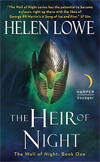
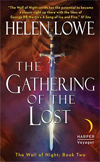
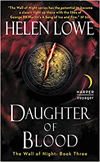
In Helen Lowe's The Wall of Night Series, the Derai prophecy says "If Night falls, all fall", which instead of foreshadowing future events, becomes a rally cry, or goad, to both sides, those who want Night to fall and those who don't. It's also a touchstone for Malian and Tarathan who have seer qualities of there own.

In the Quantum Enchantment and Quantum Encryption series, Jarrod's ability to extrapolate a likely outcome is based on infinite possibilities calculated outside of matter, and Kreshkali's understanding of astrology and synchronicity all play a part. But, like the Oracle of Delphi, Derai, and the Matrix, all seers perhaps, it is the free will of the characters that tips the scale. And we need it that way.

Otherwise, what would have us on the edge of the seat, wondering what will happen next? 

We'd love to hear about your favourite prophesies and diviners in books, film and TV. Drop a comment, and we'll see you there.

xxKim

Kim Falconer's latest release is out now - The Blood in the Beginning - and Ava Sykes Novel.

Learn more about Kim on Facebook and chat with her on Twitter. Check out her pen name, @a.k.wilder on Instagram, or visitAKWilder on FB and website.

Kim also runs GoodVibeAstrology.com where she teaches the law of attraction and astrology. 

Kim posts here at the Supernatural Underground on the 16th of every month, hosts Save the Day Writer's Community on FB and posts a daily astrology weather report on Facebook.