Seers, psychics, oracles, mediums, prophets, diviners, astrologers, tarot readers, or even those with a smoking hot intuition, can play a powerful roles in speculative fiction. Our genre is rich with it, and has been for thousands of years.
From Homer's Pythia, priestess of Apollo, to Tolkien's Galadriel and her mirror, the Oracle in the Matrix to Whedon's River Tam in Firefly, the seer can move the story forward in tantalising ways. But writing a prognostic character has it's problems. All that foresight may just as easily ruin a plot as empower it.
If your protagonist can see into the future, the surprise is gone.
The easy way to remedy this is to place limits, making the seer unreliable. They might be a novice, out of control, or their skill could require a ritual, tools or equipment they don't always have time for. Like the Greek sphinx, they might speak in riddles so ambiguous that no one can understand, save in hindsight
 With the Oracle of Delphi, often the urge to avoid the fate was exactly what fulfilled it. When King Laius and Queen Epicaste of Thebes had a baby boy, they asked Pythia his future. When the Priestess replied that the boy, Oedipus, would kill his father and marry his mother, they abandoned the baby, but we know how that went...
In LOTR, Galadriel's mirror shows past, present and future events, from near or far, but is never clear on which is which. Both Sam and Frodo are invited to look, Sam seeing the destruction of the Shire and Frodo nearly touching the water with the ring (which would reveal his whereabouts to Sauron). In these cases, interpretation of what is foretold is critical to what comes next. Sam choses to stay with Frodo, even though he longs to rush back to the Shire. Frodo, on the brink of losing heart, soldiers on. Regardless of 'fate,' they make a choice, one of the key ingredients to plot propulsion.
 From the Matrix, the Oracle's ability to
"predict" the future is based on recognising choices
before they are made. Yet telling Neo he is NOT the one is precisely what makes him begin to believe he is. In this way, the writers have created a character who can see the future but in doing so, creates a third choice that changes everything.
From the Matrix, the Oracle's ability to
"predict" the future is based on recognising choices
before they are made. Yet telling Neo he is NOT the one is precisely what makes him begin to believe he is. In this way, the writers have created a character who can see the future but in doing so, creates a third choice that changes everything.  In Cassandra Clare's City of Bones, if the tarot reader was on the ball, Clary's mother wouldn't have been kidnapped and the Mortal Cup never lost. Story over in chapter one. But instead, we get glimpses, hints and more mystery. Dorthea's seeing ability moves the story forward , without giving away the plot.
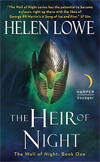
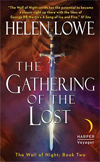
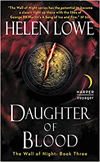
 In Helen Lowe's The Wall of Night Series, the Derai prophecy says "If Night falls, all fall", which instead of foreshadowing future events, becomes a rally cry, or goad, to both sides, those who want Night to fall and those who don't. It's also a touchstone for Malian and Tarathan who have seer qualities of there own.
 In the Quantum Enchantment and Quantum Encryption series, Jarrod's ability to extrapolate a likely outcome is based on infinite possibilities calculated outside of matter, and Kreshkali's understanding of astrology and synchronicity all play a part. But, like the Oracle of Delphi, Derai, and the Matrix, all seers perhaps, it is the free will of the characters that tips the scale. And we need it that way.
Otherwise, what would have us on the edge of the seat, wondering what will happen next?
We'd love to hear about your favourite prophesies and diviners in books, film and TV. Drop a comment, and we'll see you there.
xxKim
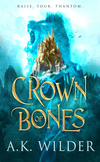
 Kim Falconer's latest release is out now - The Blood in the Beginning - and Ava Sykes Novel.
Learn more about Kim on Facebook and chat with her on Twitter. Check out her pen name, @a.k.wilder on Instagram, or visitAKWilder on FB and website.
Kim also runs GoodVibeAstrology.com where she teaches the law of attraction and astrology.
Kim posts here at the Supernatural Underground on the 16th of every month, hosts Save the Day Writer's Community on FB and posts a daily astrology weather report on Facebook.