Saturday, June 24, 2023

Styling Characters in "The Heir Of Night"

 .

Kim Falconer
I loved Kim Falconer’s latest “More Than Meets The Eye” post on Styling Characters so much I asked her if she would mind if I did some spin-off posts on styling characters in my own The Wall Of Night series. And was even more thrilled when she said “yes”!

The Styling Characters premise is that a character’s depiction through “style”, whether clothing or arms, can provide insight into their personality, as well as their part of the story’s narrative arc, or their current mood and motivation.

All of which has inspired me to take a closer look at how I’ve styled characters in The Wall Of Night books. I intend looking at each book separately, starting with (yes, you’ve got it!) Book #1, The Heir of Night.
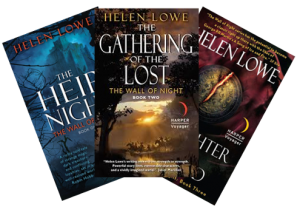

For those who may be less familiar with the story, I’ll start with a brief outline of: –

The Wall of Night World and Opening Story Premise

The Heir of Night takes place on the Wall of Night that gives the series its name. It’s not an actual wall, but a storm-blasted mountain range that forms a physical and psychic barrier between the world of Haarth and the all-destroying Swarm.
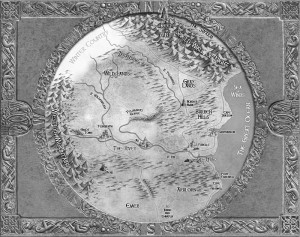

The Wall is garrisoned by a warrior society called the Derai, which holds itself distinct from the rest of Haarth. At the time the story opens, the Derai are further divided by the legacy of a civil war that decimated their fighting and magical strength.

Fortunately, the Swarm has been dormant for some time, but there are signs it may be rousing again…

USA: current

Styling Characters in The Heir of Night

Malian

Regulars here will already know (of course!) that the main character is Malian, the titular Heir of the warrior House of Night. She’s young when the story begins, with her character still being formed, but here’s what a reader gleans in the opening sequences:

Malian is adventurous and daring enough to scale the heights of a long-abandoned hall. Her clothes are not described in detail at that point, other than to mention that they’re “grubby”, but the activity implies practicality.

Soon afterward, she must dress for a feast, at which point her “grimy” and presumably comfortable, clothes must give way to “an elaborate black velvet dress” (black “because” Night, just in case you were wondering ;-) ) with a “gauze collar that stood up like butterfly wings on either side of Malian’s face” – and a train that Malian describes as “restrictive.” She goes along with it, though, because the formality is part of what it means to be Heir of Night.

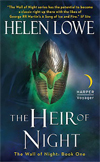
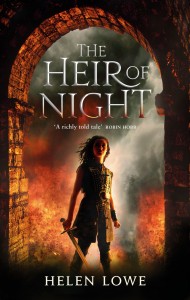
USA: original cover

What I hope I’ve managed to establish through the opening scenes is both Malian’s innate daring, but also that she is serious about her responsibilities and duties as Heir. The other nuance is that Malian’s preference is for less restrictive clothing, where it doesn’t matter if she gets dirty. All characteristics that underpin her personality through books #1 to #3.

Kalan

Kalan is al-most as important as Malian to The Wall of Night series. When we first meet him in HEIR, he is an unwilling novice priest. So unlike Malian, his garb is not a matter of choice, but “…the gray-blue robes of a temple novice, robes that were patched and far too short at wrist and ankle.” What I hope the brief description conveys is that Kalan is at an age when he is growing fast, but also a certain neglect that fits a larger picture: both the role of novices in the temple hierarchy, but also the status of priests in the larger warrior society.
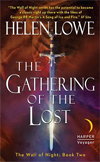
UK/AU/NZ: current

Haimyr the Golden

By contrast with Kalan’s drab apparel, the minstrel known as Haimyr the Golden lives his sobriquet. He not only has golden hair and eyes, but wears golden clothing with “sleeves flared wide … scalloped and edged and trailing almost to the floor” that cast “a fantastic shadow to either side.” The golden clothing is sewn with “tiny golden bells” so that he moves amid a constant shimmer of sound.

Clearly, Haimyr the Golden is not keeping a low profile, despite being one of the few non-Derai living on the Wall of Night, amid a notoriously xenophobic society. He is the Earl of Night’s minstrel, which implies privilege, but even so…Revealing, don’t you think?

UK/AU/NZ: original cover

When To Style

Styling is like any other aspect of story, which is that the telling thereof should only convey detail that matters. As Kim references in her Styling Characters post, it can highlight the character’s "personality, background, and place in the world."

It can also highlight points-of-interest or difference for readers, such as between Malian’s inclination and her duty, or Haimyr’s flamboyance in a hostile environment. In the case of Kalan clearly outgrowing his novice uniform, styling suggests a picture (i.e. background) beyond immediate events.

Yet for active warriors like the Earl, his honor-guard captain, Asantir, and rank-and-file warriors like Sarus and Garan, Kyr and Lira (to name only a few), their armor is so uniform it only merits mention to highlight events or a change in circumstance.

Artist's depiction of the Wall of Night. Credit: PJ Fitzpatrick

For example, when readers first meet the Earl and Asantir, their clothing or armor is not mentioned. When the story rejoins them, some time later, both have been in battle. The Earl’s “black armor …[is]… hacked and dented and the pressure line from his helmet still livid across his forehead.” In Asantir’s case, readers can assume armor in similar condition from the circumstances, but the salient detail is that she has a “bloody wound” to her shoulder.

When a character is decidedly not uniform, however, styling plays an important part in underlining difference. Haimyr gets a more detailed treatment for that reason, and so, too, does Rowan Birchmoon of the Winter People.

German cover

Like Haimyr, Rowan Birchmoon is not Derai – but she is the Earl’s consort, which is significant given Derai society. She also hails from a very different region to Haimyr, with a significantly different culture. Styling can definitely assist the reader to grasp those differences, which is why it’s highlighted when Rowan enters the story:

Malian was struck again by how alien her father's consort, the Lady Rowan Birchmoon, looked ... Pale brown hair hung down her back in a long braid, with pieces of shell and small feathers plaited into it; her long tunic and leggings of supple white leather were embroidered with beasts and birds. There was usually a white hound running at her heels, or a spotted, tuft-eared hunting cat pressed against her legs. Tonight, Malian saw with a pang of envy, it was one of the feather-footed hounds.

Full, original cover art: USA

And then, of course, there are the bad guys…They’re a shadowy force in The Heir of Night, with as many demons and monsters as more human-style antagonists. Even when the warriors are encountered directly, they may only be partially seen, whether because of circumstances or their sorcery (or both.) So when Kalan first glimpses a Swarm strikeforce (at night, in a poorly lit corridor) details are fragmentary (unlike Malian studying Rowan Birchmoon in a brightly lit hall):

“They were clad in black, but he could make out sword hilts and the keen, flame-shaped heads of spears … their helms were crowned with horn and talons like were-beasts, quite unlike anything used by the Derai.”

The bestial helmets reinforce their Swarm origins, while the partial detail is true to the circumstances but also intended to help build mystery and menace – although, as always, readers are the final arbiter as to whether or not an author’s styling has succeeded. :D
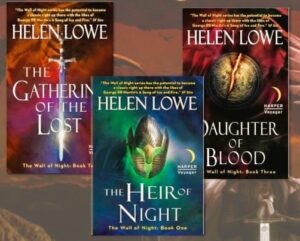

Conclusion

I’ll be back soon with Styling Characters in The Gathering of the Lost. In the meantime, I hope I’ve successfully illustrated Kim’s view that costume and style are an important element of storytelling.

And of course I'll also be back on 1 July with the next post in the Band of Brothers' series --- I wouldn't miss it! :D

~*~

About the Author

Helen Lowe is an award-winning novelist, poet, and lover of story. With four books published to date, she is currently completing the final instalment in The Wall Of Night series.

Helen posts regularly on her “…on Anything, Really” blog, monthly on the Supernatural Underground, and tweets @helenl0we.

~*~

Note: This post also features on my "...on Anything, Really" blog today.

Thursday, June 15, 2023

Styling Characters - More Than Meets the Eye


Costume and style can situate the reader in time, place and era.
 Mulan (Yifei Liu). Photo: Jasin Boland. © 2019 Disney Enterprises, Inc. 
 

Character Clothing as Depiction

Costume and style reveal much about a character and for many authors, utilizing this technique comes naturally. But in writing workshops and critiques, costume design is often overlooked. I thought it would be fun to explore the ins and outs of this topic today. There is definitely more here than meets the eye.

Think about it. If a picture equals a thousand words, then how much are those images created in the reader's head? It's the perfect opportunity to portray the character's personality, background, and place in the world. Also consider what they keep close to hand, a bag of bones, weapons, books, quills, and potions. All can say more about who they are, without having to tell a thing. 


When a character walks onto a scene wearing armour and backing firearms, we know
they are ready to fight. A Mandalorian and droid 

Rank and Power

In my Amassia Series, for example, savants who raise their phantoms wear robes, the colours of which portray their advancement and skill level. Marcus explains it like this:

        "Each banner represents a savant's robe color: brown like the earth for the potentials who come in hopes of raising their phantoms. Then comes blue for young students who stay on .... Green, like me, for those graduating to the next level. Yellow for the successful initiates who've made the journey to Aku. Orange for the upper echelons of mastery. And red for the High Saant who leads us all.... actually, not all. The black-robed Bone Throwers are a clan unto themselves..." - Marcus Adicio Heir to the throne of Baiseen.

With this hierarchy in place, whenever we meet a new character we know by just looking at them if they are savant or non-savant. If the former, we also know their level of training without adding another word to the scene. It frees up space to notice other significant aspects without getting into a long and heavy backstory about how they grew up and where they fit in.


Note how style here confers rank and level of confidence.
 Adjoa Andoh as Lady Agatha Danbury in episode 102 of Queen Charlotte:  Netflix


Personality and Mood

Depicting style also gives the writer an opportunity to utilize what the character is wearing from the start, and contrast it when necessary. So when heavy boots come off, fancy dress is replaced by pants and a button shirt tied in a knot at the waist, or a formal suit is exchanged for PJs, it is telling. Of I should say, showing...

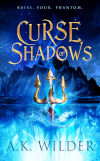
You can also use clothing to portray a deeper backstory and set your character apart. In Curse of Shadows, for example, Ash, who is non-savant, is set apart when she busts out her favourite lavender and black-lace dress. Earlier Marcus recounts having it made for her because her guardian is too auster to consider it. Marcus hides the truth by saying it was left behind by a delegate's daughter and he hopes it will fit.

It's a little Easter egg that pops up later, something the reader knows but Ash does not. Not just a warm moment, but an insight into Marcus's heart as well.


Characters may dress differently for the same event, telling volumes about their intentions.

Contrast for the Win

Another example is how Netflix' Lucifer situates all the ensemble cast in the same workspace, an LA precinct, but each of them wears very different costumes. From human souls to angels to demons and the Devil himself, their get-up offers a view into the characters' goals, desires and means to achieve them. 

So writers, be sure you are giving your characters the style that most brings the story to life, and readers, I would love to hear your favorite costumes, from books or films. Costume design is, after all, one of the Academy Awards, an essential part of storytelling.

* * *

Posts in the 'More Than Meets the Eye' Series

Book Titles

The End

Backstory

Environment

Styling Characters

Desire

***

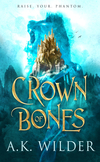
Kim Falconer, currently writing as A K Wilder, has released Crown of Bones, a YA Epic Fantasy with Curse of Shadows as book 2 in the series. Currently, she is working on the third out in 2024

Kim can be found on  AKWilder Twitter, Facebook and Instagram. 

Throw the bones, read your horoscopes or Raise Your Phantom on the AKWilder.com site 


Thursday, June 1, 2023

From "Band of Brothers" — to Bromance!

 .

My premise, of course, is that the bromance is both integral to, and a natural extension of, the "band of brothers" in Fantasy. :-)

The great film bromance...

The bromance is the platonic friendship between two companions, often from diverse backgrounds and usually part of a larger band, who are brought together by (usually adverse) circumstance and sworn closer than brothers. Once, we would have said "blood brothers", but it's the same idea.

Steve Rogers & Sam Wilson: definite bromance territory
.

And no, to be a bromance, it can't be a romantic relationship. The whole idea, imho, is the celebration of friendships that are forged in adversity and as strong, if not stronger, than romantic relationships.

Merry & Pippin -- partners in crime

Starting with the most classic of examples, The Lord of the Rings, has both the nine "companions of the Ring" and several "bromances" within it:  Frodo and Sam, Merry and Pippin, and Gimli and Legolas — and no, I'm not mistaken about the latter pair!

Legolas & Gimli -- the book bromance

Although the bromance was Legolas and Aragorn in the films, in Tolkien's book it was definitely Gimli and Legolas. In many ways, they're the most archetypal of the bromances, because of the longstanding schism and mistrust between elves and dwarves, which the friendship between the two surmounts.

Frodo & Sam
I hesitated over Frodo and Sam, because Sam is Frodo's servant, whereas a "bromance" implies a relationship between equals. Their friendship grows far beyond a master/servant relationship, though, and into one of equals in spirit, deeds, and fact. I believe Tolkien may even have said that Sam was the 'true hero" of The Lord of the Rings -- but I feel all the nine companions deserve that accolade. :-)

When it comes to Fantasy bromances, I can never go past Tenaka Khan and Ananais in David Gemmell's The King Beyond The Gate. Although a band of rebels forms about them, their experience, fighting abilities, and longstanding friendship are its core. And at the end, Tenaka sets aside his ambition (which is considerable), and sense of destiny, deferring both for Ananais's sake.


Another of the great bromances, but also one of the most tragic, is the close friendship and sworn brotherhood of Rodrigo Belmonte and Ammar ibn Khairan in Guy Gavriel Kay's The Lions of Al-Rassan. In a culturally and militarily divided realm (think the Moorish and Christian kingdoms of Spain), they serve together as mercenaries when both are exiled from their home realms. Later, events and prior loyalties see Rodrigo and Ammar on different sides, similar to Cuchulain and Ferdia in Irish legend (the Ulster Cycle.) 


x

A comparable "sistermance" (a female equivalent of "bromance" apparently) are Tarma and Kethry, swordmaster and sorceress respectively, in Mercedes Lackey's Vows and Honor series. Formerly part of the Sunhawks mercenary band, they travel the realm of Valdemar and set wrongs to right.


More recent Fantasy examples include Marcus and Belair in AK Wilder's AMASSIA trilogy. Both are savants and the heirs of neighbouring realms, but are thrown together in a way that doesn't encourage friendship. However the subsequent quest-journey tempers their relationship into personal loyalty and an unwavering alliance -- within their larger "band", which is desperately trying to stave off catastrophe for their world.

The Amassia series

Dev, a caravan scout and onetime child-thief, and Kiran, an apprentice blood mage, are the protagonists in Courtney Schafer's Shattered Sigil series. Although from very different backgrounds, Kiran is on the run for his life and initially only Dev has the wilderness knowledge and skills to get him to safety. As the dangers that surround them both intensify, their growing friendship and loyalty to each other become the rock against which their enemies founder.


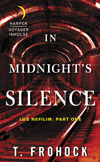
In T Frohock's Los Nefilim trilogy, the primary bonds are those of family, between the protagonist, Diago, and his husband Miquel, and son, Rafael. Conversely, the relationship between Diago and Guillermo, the leader of Los Nefilim, is not without tensions. Nonetheless, their friendship has been tempered across lifetimes and their fraternal loyalty is also one of the story's primary, and most enduring, relationships.


And yes, bromances are also found in my The Wall Of Night series. :-) In Book Two, The Gathering of the Lost, the close friendships between Audin and Hamar, Raher and Girvase -- all part of a larger band of young knights bent on winning renown and glory amid darkening events -- are definitely bromance territory. 


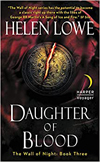
In Daughter of Blood, the battle-forged friendship between the Storm Spear, Kalan, and Tirael, a prince-captain from an opposing house is unquestionably a bromance -- to the extent that they fight side-by-side to defend a bridal caravan, and Tirael swears brotherhood to Kalan when events separate them again.


Although these are just a few examples, I know there are many more in the Fantasy genre -- and would love to discover a few of  your favorites via the Comments. :-)

~*~

About the Author

Helen Lowe is an award-winning novelist, poet, and lover of story. With four books published to date, she is currently completing the final instalment in The Wall Of Night series.

Helen posts regularly on her “…on Anything, Really” blog, monthly on the Supernatural Underground, and tweets @helenl0we.

~*~

Previous Posts:

February: Honing in on 2021—Celebrating the "Band of Brothers"
March: Celebrating the "Band of Brothers" in Fantasy #2
April: Celebrating the "Scooby Gang" #3
May: Celebrating the "Band of Sisters"

Tuesday, May 16, 2023

Environment - More Than Meets the Eye


Dune by Frank Herbert - Novel Poster 1965

Today I want to explore the impact environment can have on a story. From subtle to profound, I think you'll find there is more than meets the eye...

First off, think of stories like Dune, Frank Herbert's SFF novel recently produced as a Netflix Series. I mean, Dune! The storms that cover rich resources, the sandworms that devour all and pose a constant risk to life and limb?

Or maybe you remember the dangers on Pern, the planet where 'threads' fall from the sky and like acid, devour anything organic. Anything!

The White Dragon - art by the Unicorn Lady

You might say the environment, in these cases, takes the lead role in the plot, culture and potential outcomes of a political or simply survival nature. 

If you still aren't convinced, try a hypothetical scenario that involves a team of scientists colonizing Jupiter. There are, of course, issues of atmosphere, gravity, temperature and distance from the home world. But what if the colony landed more than five hundred years ago...

BEFORE the storm - now known as the 'red spot' - developed? That red circle turns out, for real, to be ten-thousand miles wide and gaining velocity over the centuries. Suddenly this story has a built-in antagonist to rival the sandworms on Dune or the deadly Thread on Pern.

Jupiter's Red Spot data collected by NASA's Juno spacecraft
 
Two recent YA Fantasy books released in May give further examples: Sara Beth Durst's The Lake House and Zena Shapter's When Dark Roots Hunt. 

The Lake House, as per the blurb:

Claire’s grown up triple-checking locks. Counting her steps. Second-guessing every decision. It’s just how she’s wired – her worst-case scenarios never actually come true.

Until she arrives at an off-the-grid summer camp to find a blackened, burned husk instead of a lodge – and no survivors, except her and two other late arrivals: Reyva and Mariana.

When the three girls find a dead body in the woods, they realize none of this is an accident. Someone, something, is hunting them. Something that hides in the shadows. Something that refuses to let them leave....

Can I say right away that the writing is brilliant and...it's scary. Very scary! 

Part of what makes it so is the environment - the huge, murky lake surrounded by endless, dark and thick forest. Not a soul in sight.. but did you hear that? It would be impossible to achieve the intensity in, say, a populated city or suburbia. The environment here holds sway. 

***

When Dark Roots Hunt has a sense of foreboding and dread to it as well. From the back blurb: 


Don't go out onto the lake. Wyann trees search the shallows to spear passing prey with their roots. Giant water-ants hunt anything that moves on the water-skin. Sala's village survives hidden behind a wall of poisonous ivy, because everyone agrees: don't go out onto the lake.

But when her village refuses to listen to sense, and continues squeezing beautiful pond-bred 'keeiling' fish to death for their precious saliva oils, Sala has no choice. She will risk it all to prove herself one last time, else leave everything behind for the dark shaded swamps beneath the towering hillfarms of Palude.

At least that's the plan before a strange comet crosses the night sky, throwing her and her pet pointer into a race through wyann-infested swampland to unearth long-hidden truths and stir rivalries into a terrifying conflict set to change the world of Palude forever. Sala must do whatever it takes to face the truth of who she is: to save her village, to save her family, to save herself.

If only they had listened.

This story is compelling, impossible to put down, and as you read, you quickly find that the environment is as much a key to the mysteries as the people who try to survive it.


I invite you to consider the environment in a new way as you read, to see if it too is a character with needs and wants and calamity to offer. 

If you find one or two outstanding, I would love to hear about it!

xxKim

Posts in the 'More Than Meets the Eye' Series

Book Titles

The End

Backstory

Environment

Styling Characters

Desire

***

Kim Falconer, currently writing as A K Wilder, has released Crown of Bones, a YA Epic Fantasy with Curse of Shadows as book 2 in the series. Currently, she is working on the third out in 2024

Kim can be found on  AKWilder Twitter, Facebook and Instagram. 

Throw the bones, read your horoscopes or Raise Your Phantom on the AKWilder.com site 


Wednesday, May 3, 2023

"Listen with your Heart" and other great mentor lines

 Meeting the Mentor 2.0

Meeting the Mentor is a phase in a hero's journey where the soon-to-be-Hero, who has just faced a fear and RUN the other way, needs a little encouragement to take the first step on their journey. 

Honestly, who doesn't need a little encouragement, but this one will hit the hero in a very specific way. 

The mentor is person/object that helps ease the fear of the hero that made them refuse the call in the first place. This could be through  knowledge of the new world to combat a fear of the unknown, giving the hero confidence to overcome feelings of inadequacy, or giving them hope that they can survive the trials by serving as an example.

And its not a LOT of support- they don't ever give them the answers- they only give them enough to make them take that first step on their journey.  

   Do we really need to analyze how Grandmother Willow, Miyagi, Keating, and Yoda served as mentors to their potential heroes? Didn't think so.
  
In romance novels, especially our near and dear paranormals, the mentors for the heroes are pretty obvious. In Diaries, it was Iris, the very old and very sassy former Prima of Dallas. But my main character, Violet, actually ended up being a mentor for her romantic lead. He needed an example of someone living a life they loved enough to fight for. When he got over his fear of disobeying orders, he fought to create a life he wanted to live. And then the smooching ensued.


So how do you identify mentors in your own life? How do you find the courage you might need to say ‘yes’ to your calling?

Listen. Listen to what people have done in their lives, read what people have to say about their experiences (yes- this means a few non-fictions every now and then). Remember that each of us is on a journey. Everyone has had a dark moment, a moment of resurrection, has refused a call. Listen to their stories and learn from them. Everyone is a potential mentor, a potential guide. And one person might have that one kernel of truth you have been looking for to take the next step in your journey.

Now this doesn't mean that you should let just anyone talk your ear off. But remember Mr Miyagi was the maintenance man. Mentors can be found in unexpected places. You just have to be listening and don't let fear get in the way. 

======================================================


Amanda Arista  

www.amandaarista.com

Monday, May 1, 2023

Celebrating The "Band of Sisters" in Fantasy

 .
I loved reading fantasy and science fiction from an early age, but even when quite young, I couldn't help noticing that it was so often boys and men that went out and had the adventures, while women mainly stayed at home. 

Eowyn, an outlier in the LoTR 'verse

This was certainly true in classics such as Tolkien's The Lord of the Rings, where Eowyn is very much the exception that proves the rule, as exemplified by both Arwen and Rosie Cotton's part in the story. Similarly, in A Wizard of Earthsea, the reader learns early on that "weak as women's magic" has a companion saying, "wicked as women's magic." Unsurprisingly, women do not play a large part in the subsequent story.

Arwen - a far more traditional heroine
So although I encountered many fine examples of the "band of brothers", any sisters at all, let alone bands of 'em, were in short supply.


Then, to my considerable delight, I encountered Patricia McKillip's Heir of Sea and Fire (1977), where a "band of sisters" comprising Raederle of An (the titular Heir), Tristan of Hed, and the ruler of Herun's heir and personal guard (all women) embark on a journey to locate Tristan's missing brother, who is also Raederle's love interest. They are very much a "band of sisters" and the friendship between them is the heart of the book. It's a tale I loved on first reading, which has since become an "old book friend."


The 1980s was distinguished by many fine books in which women writers and characters began carving a place in speculative storytelling. Bands-of-sisters remained relatively rare, but Barbara Hambly's The Ladies of Mandrigyn is an outstanding example. Their city has been captured by an evil and extremely powerful wizard, and all the able-bodied men enslaved in the nearby mines. Failing in their attempt to hire a mercenary army, the ladies resolve to rescue the men and free the city themselves -- and start by kidnapping a mercenary captain to train them for the task.

Granny Weatherwax & Co...
I believe The Ladies of Mandrigyn remains one of the finest examples of women's friendships and bands-of-sisters in the genre, but it's not entirely alone among 1980s fiction. In 1987, Terry Pratchett, published Equal Rites, which introduced Granny Weatherwax and paved the way for the sisterhood-of-Grannys, who remained Discworld's preeminent band-of-sisters until 2003, when they were joined by the Monstrous Regiment -- of women, of course!


My other, favourite band-of-sisters from that era are found in CJ Cherryh's Chanur novels (science fiction), which span the decade from 1983-1993. As a reviewer (correctly, imho) said, "...These swaggering, vain, tough-talking Hani heroines make Chewbacca look like a pussycat."


Unquestionably, Pyanfar Chanur and her Hani crew are tough in action as well as tough talking. :-)

Although fantasy and science fiction now offer an array of female heroes, and a degree of women's friendships, as well as bands of diverse buddies, the band-of-sisters is still not common. 

Aes Sedai: Red Ajah
First published in 1990, Robert Jordan's The Eye of the World (Wheel of Time #1) introduced readers to the Aes Sedai mages and the Aiel's warrior sisterhood, the Maidens of the Spear. Relations among the Aes Sedai are both fractured and fractious (although that is arguably true of birth siblings, including sisters), but both sisterhoods remain core to the fourteen-book series.


More recently, Tamsyn Muir's Locked Tomb series has something of a "band-of-sisters" vibe, especially in the latest book, Nona the Ninth, in which the majority of the main characters are female. There's also the core band of Nona, Camilla, and Pyrrha, to aid my case. :-)


In my The Wall of Night series, female characters are always central to the story, and in The Gathering of the Lost (Book #2) a band of young women must set aside their differences and work and fight together to survive.


I'd love to know if you have  a favorite band-of-sisters, especially in more recent fiction. If so, please do share in the comments! 

~*~

About the Author:

Helen Lowe is an award-winning novelist, poet, and lover of story. With four books published to date, she is currently completing the final instalment in The Wall Of Night series.

Helen posts regularly on her “…on Anything, Really” blog, monthly on the Supernatural Underground, and tweets @helenl0we.

~*~

Previous Posts:

February: Honing in on 2021—Celebrating the "Band of Brothers"
March: Celebrating the "Band of Brothers" in Fantasy #2
April: Celebrating the "Scooby Gang" #3