Saturday, July 16, 2022

The Road of Trials

Artist: Igor Morski 

Inspired by Helen Lowe and her Hero Series, today I'm writing about this wonderful journey we writers take when bringing a new book to life.

Joseph Campbell in his Hero of a Thousand Faces talks about how we are all on the hero's journey and knowing which stage we are in can be amazing support when things get challenging.

And holy moly, they do get challenging! 

Vi Vi Arcane 

I've discussed the stages of this mythic journey for writers, and though everyone has their own experiences, I think many will relate. (If you want to check out a full depiction of my first publishing journey, you can find it here - Writing and the Hero's Journey)

My most recent book has been a similar path, especially on the last Road of Trials. I wasn't sure I (or my book) would survive.

I'm talking about the Editing Process.

This is where the writer encounters a series of tests, tasks and ordeals in the form of editorial notes. If it's their first time, they walk in blind, like the Fool, because they thought once their manuscript was ‘completed’, all the hard work was done. 

Ha!

It has only just begun.

Example of COS Copyedits 

Depending on the publisher, the process can include many rounds of editing by different people - structural, line, copy and proofreading. All this happens under the looming 'hard deadline'. (They don't call it DEADline for nothing - it's do or die!)

Example of COS Proofreader Notes

To top it off, my editors for Curse of Shadows were all in different timezones. That meant, in the final days before the deadline, I caught quick naps between midnight and 2am. That was it...

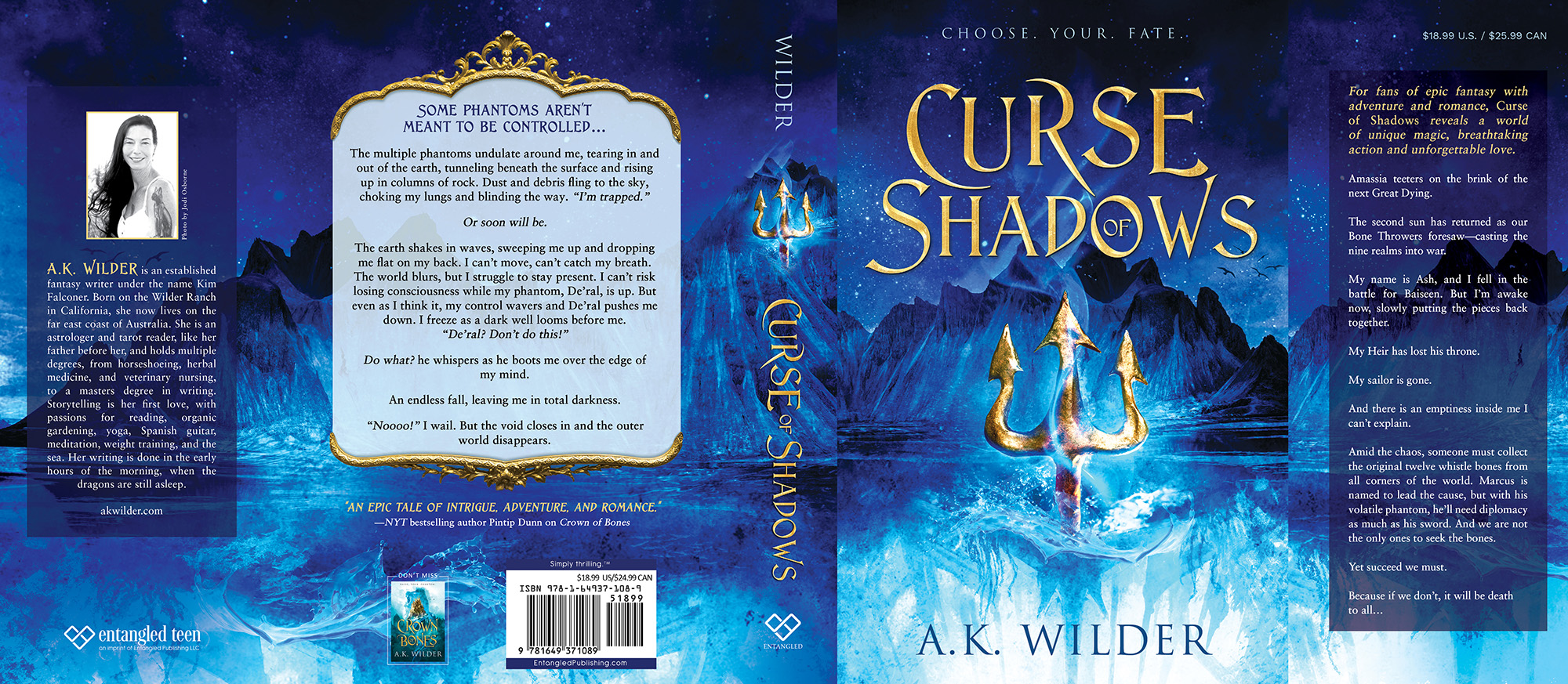
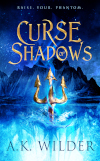
But the results, I believe, are spectacular and I'm happy to announce that Curse of Shadows made it to the printers on time! 

Which puts me up on Cloud 9. Seriously, my feet have yet to touch the ground (see Refusal to Return after the Ultimate Boon.)

Out December 6, 2022

But return I must because the process starts all over again with the next book in the series.

Just not today. Not yet.

For now, I will continue to sup with the gods.

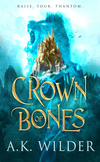
If you've yet to read Crown of Bones, it's on special now -- Kindle $2.80

Crown of Bones Special $2.80 on Kindle

And, if any of you are interested in an ARC - advanced reader copy - of Curse of Shadows, please email me with ARC for Curse of Shadows in the subject bar. Thanks!

And happy journeys.

xxkim

***

Kim Falconer, currently writing as A K Wilder, has just released Crown of Bones, a YA Epic Fantasy with Curse of Shadows coming out December 6, 2022.

Kim can be found on  AKWilder Twitter, Facebook and Instagram. 

Throw the bones, read your horoscopes or Raise Your Phantom on the AKWilder.com site 

Friday, July 1, 2022

What Makes A Hero? #5: Challenge

On 1 March, I asked the question, "What Makes A Hero?" and looked at "the Call", the first of what I then thought would be only three C's that inform my thinking on the subject.


Katniss: the Call

Yet three, however magical a number in myth, fairytale, and Fantasy fiction, is clearly insufficient to the topic of heroism—leading to last month’s post on Courage.

All the posts—Call, Circumstance, Commitment, and Courage—overlap each other when it comes to the making of heroes, whether willing or reluctant. Nonetheless, this month’s theme, which is Challenge, stems directly from last month’s post, where I wrote:


 “…in order to be a hero, it's not enough to just turn up for the regular nine-to-five of fantasy adventure, or even to go above and beyond the norms of everyday duty. The action or deed required of the protagonist has to really matter, and the risk in terms of following through has to be considerable, if not extreme.”

Samwise Gamgee: extreme circumstances

Examples cited included:

“Often, in Fantasy tales, the protagonist must risk their life for others and/or to complete the heroic quest. Yet high risk consequences may also comprise unjust imprisonment, loss of standing and/or livelihood within a society, or outright exile from family, community, nation or species.


In short, answering the call and committing to the degree required to count as heroic, must necessitate either physical and mental, or moral courage—or all three.”


Today, I thought we should take a look at the types of challenges Fantasy heroes encounter, and either overcome (a happy ending) or die trying to achieve (tragedy.) Although some stories, like George RR Martin’s A Song of Ice and Fire (aka Game of Thrones) may effectively blend happier and tragic endings.
.

Ned Stark: a champion that didn't make it.

Worlds and All Life

The classic and possibly most enduring challenge is the epic battle to save a world—or all worlds—and all life by overcoming monolithic evil. The gold standard in this category is JRR Tolkien’s enduring The Lord of the Rings, in which Frodo and his faithful sidekick, Samwise Gamgee, must take the One Ring to Mordor and cast it into the furnace of Mt Doom, while a cast of supporting heroes—chiefly Aragorn and Gandalf—must battle vast armies of evil minions to save Middle Earth.


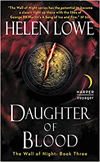
Other series where the challenge is to save worlds and all life are legion, with examples including Guy Gavriel Kay’s Fionavar series, Patricia McKillip’s Riddlemaster trilogy, Brandon Sanderson’s Stormlight Archive, AK Wilder’s Crown of Bones (Amassia), and my own The Wall of Night series—to name just a very few.


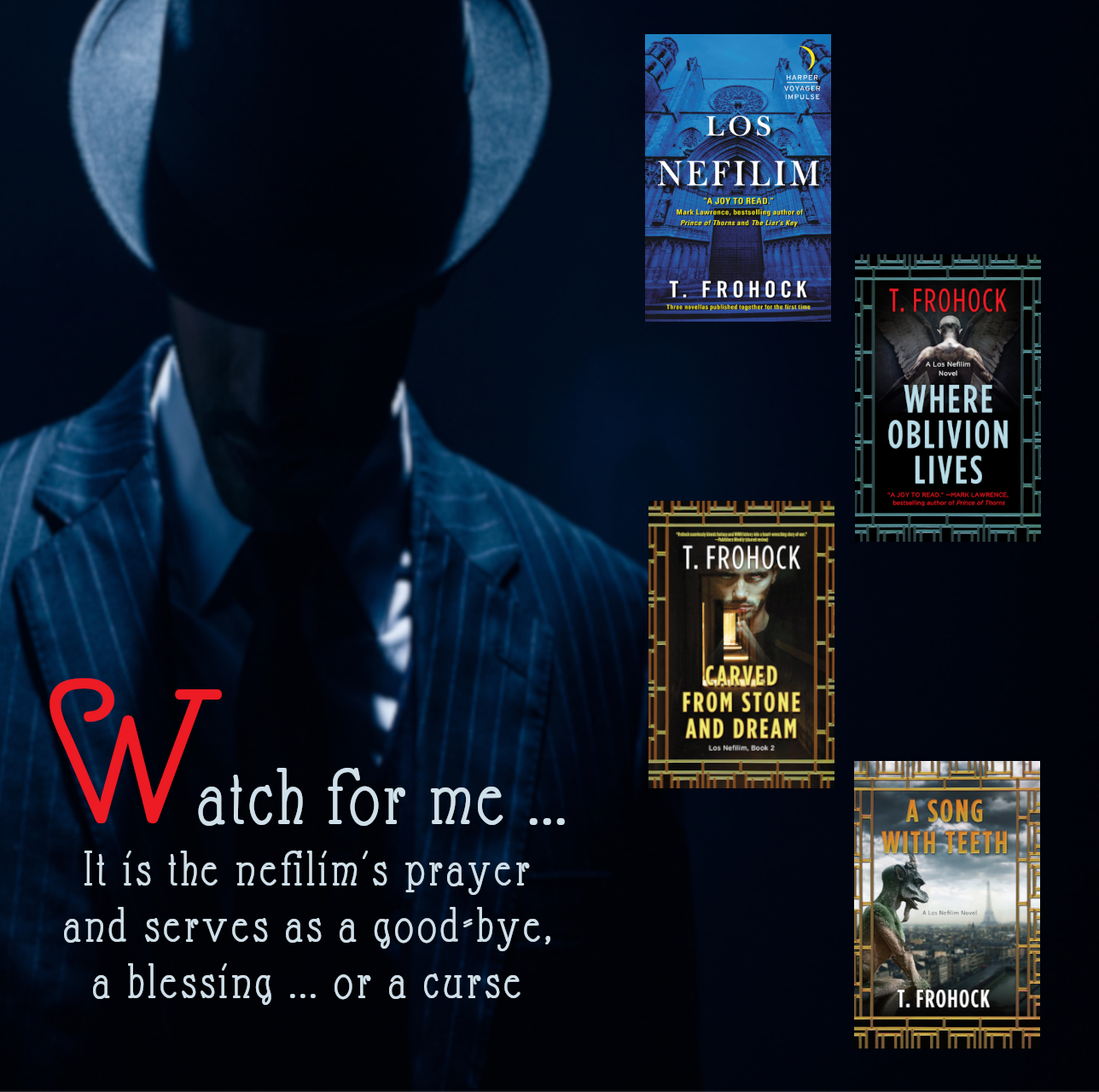
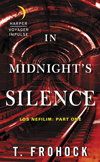
A series that bridges the epic battle for worlds and the next category of challenge, which is preserving a realm or society, is T Frohock’s Los Nefilim. While the two trilogies are framed by the Spanish Civil War and World War 2 respectively in the “real world”, the paranormal conflict between angels, nefilim, and demons, comprises a conflict between earth, heaven, and hell.


.

The Los Nefilim trilogies

Realms and Societies

Stories where the challenge involves saving a realm or a society, sometimes within one realm or operating between several, can often look very similar to the high epic “worlds and life” in terms of the threats to the protagonists and the realms they inhabit. The chief difference is that although kingdoms may fall and societies be exterminated if the challenges faced are not overcome, there is no suggestion the universe, or an entire world, or all life will end if the bad guys win.


Despite winter and the ice realm antagonists in A Song of Ice and Fire, the chief threat is to the realms and societies of the Seven Kingdoms, so I’m always inclined to put it in this category, however epic the conflict that ensues.


Other examples of realm-based protagonists include tales as diverse as Leigh Bardugo’s Six of Crows duology, Robin Hobb’s Assassins’ series, NK Jemisin’s Inheritance trilogy, and SA Chakraborty’s Daevabad series. David Gemmell’s Drenai classics such as Legend, Waylander, and The King Beyond the Gate are also realm focused, as is Courtney Schafer’s Shattered Sigil series, and my own Thornspell, which has a kingdom and the life of its princess the central stakes.
.


Cities and Families

The distinction between “Realms and Societies” and “Cities and Families” can be subtle, and once again is chiefly a reduction in scope when it comes to the hero’s challenge—although the threats to the protagonists’ life, freedom, and /or place in society is frequently just as significant.

In many ways, Six of Crows overlaps both categories, as does Raymond E Feist and Janny Wurts’ classic Daughter of the Empire – but although the Crows focus may be the city of Ketterdam, circumstance and the challenges that must be answered—life, freedom, standing and livelihood—necessitate engagement with wider considerations and other realms.


Conversely, in Daughter of the Empire, although Mara of the Acoma must contend within the context of the Empire, her focus is almost exclusively on preserving House Acoma from the enmity of another great clan, not only to save her own life but to preserve the freedom of all within it. In answering the challenge, Mara must draw on the full extent of her mental, physical, and moral courage.


Other stories where the challenge is largely family and/or city centric include Aliette de Bodard’s Dominion of the Fallen, Neil Gaiman’s Neverwhere, Elizabeth Knox’s Dream duology, and Doris Egan’s The Gate of Ivory.


I've also found that many paranormal stories sit in this quadrant of the Fantasy genre, with the predominant focus on a particular city or localised area and an extended paranormal family, either "born" or "found." 


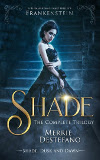
 Examples include Bon Temps and the adjoining Shreveport area in the Sookie Stackhouse (True Blood) novels; the Tri Cities area and werewolf pack in the Mercy Thompson series; Dallas and the were-community in Amanda Arista's Merci Lanard Files; and Geneva and the 1816 gathering of friends comprising Mary Godwin, her husband, the poet Shelley, Lord Byron, and John Polidori in Merrie Destefano's Shade trilogy.

I’m also including TJ Klune’s The House in the Cerulean Sea is this category, because although the wider context may be a realm, the locales where the challenges—of freedom, self-determination, and equality—must be met are confined to the capital city and (for the greater part of the book) the seaside village and neighbouring island ( both called Marsyas.) The story also centers on found family, and identity and acceptance in the wider community.
.


The Individual Quest

The individual quest is not as common as we might think, when considering the pantheon of Fantasy heroes and the challenges they face. While the farm boy or gal may go on a journey, and the prince or princess pursue a destiny, the Fantasy genre seems to have a sneaking liking for faithful companions, whether animal or human, and the “band of brothers.” 


The tradition of saving worlds and realms, societies or families, or defending the weak and/or underprivileged also mitigates against lone wolves pursuing individual quests, albeit ones that may still matter in the wider scheme of things.

One outstanding example of this is Ursula Le Guin’s A Wizard of Earthsea. The evil Ged has unleashed, through jealousy and overweening pride, will have adverse consequence for others if it takes him over, but the chief danger is to himself. He is also the only person who can terminate the evil being, so must embark on a largely solitary quest to find and end it.


I believe the challenges faced by Ropa in TL Huchu’s Library of the Dead are also largely personal in nature. Although family, community, and city all frame the story, its essence is Ropa’s journey to decide who she wants to be, what she values, and is prepared to defend in pursuing her calling as emissary between the living and the dead.


RA MacAvoy’s Damiano is also centered on the protagonist’s struggle to save his soul from the devil. And while the consequences of Elric of Melniboné’s quests not infrequently affect realms and even worlds, he is a largely lone wolf characters and his motivation for taking up challenges are frequently entirely personal.


© Helen Lowe 

~*~

Previous Posts:

January: Looking Forward To An Heroic 2022

March: What Makes A Hero -- and The Call

April: What Makes A Hero #2: Circumstance

May: What Makes A Hero #3: Commitment 

June: What Makes A Hero #4: Courage

~*~


About The Author:

Helen Lowe is an award-winning novelist, poet, and lover of story. With four books published to date, she is currently completing the final instalment in The Wall Of Night series.

Helen posts regularly on her “…on Anything, Really” blog, monthly on the Supernatural Underground, and tweets @helenl0we.

Sunday, June 19, 2022

Astrology, Sex and Character Savvy (From The Backlist)

 .
Here at Supernatural Underground we love the new — but sometimes we love looking back through our backlist as well, including this fabulous post from Kim Falconer (who some of you will also know as AK Wilder of Crown of Bones fame.)


Astrology, Sex, and Character Savvy

We all want characters that are vital and authentic. Believable. People we can fall in love with, cheer for, or shrink back from in fear. They must be ‘real’ enough to grow, change, love, shock, express ideas and have minds of their own. When all those ingredients come together, magic happens but how to get there? What makes a character come to life?

There are different ways to approach character development but my go to technique is astrology! In my novels, I’ve give my characters actual horoscopes. If I’m ever uncertain of how they might behave, I check their chart. Moon in Pisces? Disappear! Sun in Aries? Advance with sword swinging! Mercury in Libra? Discuss it with everyone for quite some time before deciding what to do. Astrology is a wonderful way to get inside a character’s head.

The horoscope tells me what makes them tick—their limiting beliefs, past patterns, core values, darkest fears and authentic goals. It answers questions about how they dress, their likes and dislikes, how they act under pressure. It can even give me hints for physical traits if I’m at a loss. Aries sun? Red hair, scar on the face. Sagittarius Moon? An old hip injury but great legs. Gemini Mercury? A stutter that only shows up under extreme duress. The horoscope can also help me see where my people, and creatures, will grow through the choices they make and the challenges they face. It also has a lot to say about their love life!

Take the ascendant, or rising sign, for example. It’s the sign that was on the eastern horizon at the moment of birth. It has long been associated with how we take action and initiate anything from journeys, fights, ideas to sex! When it comes to romance and intimacy, the rising sign gives great inspiration. Consider how each sign on the ascendant would 'make a move':

Aries — Pounce! Usually little or no warning.

Taurus — Surprisingly sensual, though ardent. They selectively fail to hear the word ‘no.’

Gemini — Much talk before action. They seduce with words—sometimes quite eloquently.

Cancer — They retreat, you follow. Not opposed to emotional manipulation and/or allure.

Leo — Beware of public places, unless you like such things! Boldness, flash and glam!

Virgo — Seduces with atmosphere, candles, music, tantric manuals. Everything just so.

Libra — Wine, dine, listen and engage until there is nothing left between you but the erotic.

Scorpio — Seduces with their eyes. Always, the eyed! Thirty seconds or less and you’re a goner.

Sagittarius — They promise the world, and usually deliver, metaphorically at least.

Capricorn — They buy you things. Excellent taste. Always first cabin.

Aquarius — They use the element of surprise—often surprisingly well. Much dialog.

Pisces — Enchantment. Their very being is an aphrodisiac. Poetry optional.

Astrology helps me write characters that ring true and that’s the sweet spot, the place where I close my eyes, watch the scenes unfold and type as fast as I can.

~ Kim Falconer


*~*

Sounds great, doesn't it? We sure hope Kim keeps 'em coming! 

 *~*


About The Author:

Kim Falconer, currently writing as A K Wilder, has recently released Crown of Bones, a YA Epic Fantasy with Curse of Shadows coming out in 2022.

Kim can be found on AKWilder Twitter, Facebook and Instagram.

Throw the bones, read your horoscopes or Raise Your Phantom on the AKWilder.com site

Wednesday, June 1, 2022

What Makes A Hero? #4: Courage

.
I believe I may have said I was going to look at "3 C's" in terms of What Makes  A Hero?—in which case I definitely misspoke, because how could that question possibly be answered without examining the part played by courage?

What makes a hero?

You're so right: it definitely can't be! So having looked at The Call, Circumstance, and Commitment, today's post is zeroing in on Courage. 

Because in order to be a hero, it's not enough to just turn up for the regular nine-to-five of fantasy adventure, or even to go above and beyond the norms of everyday duty. The action or deed required of the protagonist has to really matter, and the risk in terms of following through has to be considerable, if not extreme. 

High stakes; higher risk...
.
Often, in Fantasy tales, the protagonist must risk their life for others and/or to complete the heroic quest. Yet high risk consequences may also comprise unjust imprisonment, loss of standing and/or livelihood within a society, or outright exile from family, community, nation or species. 

In short, answering the call and committing to the degree required to count as heroic, must necessitate either physical and mental, or moral courage—or all three.


Guy Gavriel Kay's epic Fionavar trilogy contains many instances of heroic courage, but one of the early examples concerns two heroes, Paul Schafer and the hound Cabell. Paul binds himself to the summer tree of Brennin in hopes of breaking a severe drought that holds the kingdom in its grip. In order to succeed he must endure for three days and three nights. 

In mythic terms, the antecedents are to Odin on Yggdrasil with overtones of the Fisher King, i.e. "the king and the land are one." The courage required of Paul is not only self-sacrifice (because it's unusual for the person bound to the tree to survive) but that of enduring extreme physical and mental deprivation and trauma. 


In this case, the evil antagonist tries to ensure Paul fails by sending an agent in wolf form to kill him—and would have succeeded if not for the intervention of the hound, Caball. (King Arthur's hound, in an overlap of fantasy traditions.) Legendary hound or not, Caball is overmatched because the wolf is a demigod, but still fights it to a standstill. Although grievously wounded, Caball's endurance gives Paul the chance to see out the three days.

At the outset, I promised to feature non-human as well as human heroes. In the Fantasy pantheon, Paul and Caball are both exemplars of courage.


Other great examples of physical and mental courage in the face of overwhelming odds include John Aversin in Barbara Hambly's Dragonsbane, Aerin in Robin McKinley's The Hero and the Crown, Diago Alvarez in T Frohock's Los Nefilim series, and Ash in AK Wilder's Crown of Bones. 


In terms of non-human heroes, I have a great liking for the plucky and resourceful Ad (Adventure) Fox in Kristin Cashore's fourth Graceling novel, Winterkeep. Although not tested physically like Caball, Ad Fox is a great example of moral and mental courage, actively working to thwart a powerful and ruthless adversary, one bent on the destruction of sentient species and the environment, and who has already killed to achieve their ends.


Another, relatively recent example of moral courage is Madrigal in Laini Taylor's Daughter of Smoke and Bone. Madrigal is a healer rather than a warrior, and a heroine whose courage involves setting aside her society's established norms and risking the death penalty in order to seek an alternative to endless war.


The reluctant hero is one of the great tropes of heroic epic and the fantasy tradition. A recent exemplar is Kaladin, in Brandon Sanderson's The Way Of Kings. Unquestionably, Kaladin is physically brave. Arguably, though, circumstances require that of him, because he is a convict-cum-slave forced to serve as an army pioneer (a "bridgebearer") in a bitter and drawn out war. Yet Kaladin's conviction and imprisonment, which also comprises expulsion from family and community, is wrongful and grounded in class and societal divisions. So in seeking to overcome his circumstances and save the lives of his fellow Bridgebearers (and a large portion of the army) the chief courage required of Kaladin is to confront and accept who he is in terms of both identity and power.

Yet whether willing or unwilling, and regardless of whether the fortitude required is physical, mental, or moral, courage in the face of high stakes and higher risk is essential for a Fantasy hero.

© Helen Lowe 

~*~

Previous Posts:

January: Looking Forward To An Heroic 2022

March: What Makes A Hero -- and The Call

April: What Makes A Hero #2: Circumstance

May: What Makes A Hero #3: Commitment

~*~


About The Author:

Helen Lowe is an award-winning novelist, poet, and lover of story. With four books published to date, she is currently completing the final instalment in The Wall Of Night series.

Helen posts regularly on her “…on Anything, Really” blog, monthly on the Supernatural Underground, and tweets @helenl0we.