Showing posts with label #YoW. Show all posts

Sunday, November 1, 2020

Year Of Worldbuilding in Fantasy # 10: A Wealth Of Fabulous Worlds

.
#YoW Year of Worldbuilding
#WiF Worldbuilding in Fantasy

Introduction: 

Well, here we are: already on November 1, with Halloween immediately behind us, and only one more worldbuilding post date to go on December 1. (And I hope to have something special planned for that. J)

Reaching November 1 and #10 in the worldbuilding series, though, made me realize just how many fabulous worlds there are in Fantasy – far too many to encompass in eleven posts, alas. So this penultimate post is going to look at more than one author and world, just to squeeze a few more in under the wire.

Just by way of a reminder, these are worlds that have made an impression on me in their own right, evoking a “wow” response. I started the series with CS Lewis and Narnia, and he is famous for the phrase “surprised by joy” – a term I would paraphrase, in terms of Fantasy worldbuilding, as “surprised by delight.”

So here are a few more examples that have surprised me with delight, evoked moments of wow, and generally spun my fantasy-reading wheels.

The Alvin Maker Series by Orson Scott Card

I have only read the first trilogy of this series: Seventh Son, Red Prophet, and Prentice Alvin, all published in the late 1980s, although I understand there is a second trilogy, and a seventh, concluding novel potentially forthcoming.

The Alvin Maker worldbuilding made a huge impression because it was among the first epic fantasy series I read that wasn’t set in a quasi, medieval Western European milieu. It was also the first Fantasy world I encountered that drew on the folklore and history of colonial North America. 

I loved it: the weaving together of the magic/power of “making”, with “knacks” and “hexes”, together with an alternate historical geography of colonial North America that juxtaposes a Puritan republic in the north, with a Stuart kingdom-in-exile in the south, a still-extant Iroquois Confederation, here a separate republic, and a smaller United States and neighboring Appalachee somewhere in the middle.

As with most alternate histories, there is still enough real history to provide significance and recognition for readers. So this is still the colonial North America of religious difference, wars between Native Americans and white settlers, and of slavery, all of which play a significant part in the evolving story. 

There are also appearances by, or references to, real historical figures such as Benjamin Franklin, Tecumseh and his brother Tenskwatawa (the “red prophet” of the second book), and Mike Fink. 

As the series evolves, the magic of “making” evolves beyond component knacks and hexes into a symbiosis with the “greensong”, an eco-magic of the land and grounding in / balance with it – in that respect a little like Ursula Le Guin’s “equilibrium”, although otherwise these are very different worlds.

Winter’s Tale by Mark Helprin

Staying with fiction published during the 1980s and also set in the (largely) historical United States, but shifting into what is as much magic realism as alternate history, I have always been inspired by Mark Helprin’s Winter’s Tale.

 The heart of the book is the world, and the world is New York – Manhattan and Brooklyn and Up State – in a variant of Gangs of New York meets Westside Story. A world that is to all intents and purposes “real” – except, that is, for the magic: a white horse that rediscovers flight, a pursuit that traverses a century, a bridge of light to infinity… It’s a rich, mythic, and utterly fabulous world, especially if you like a Victorian Gothic overlay to your historical urban setting.
.

Chocolat by Joanne Harris

Leaping onward to the late 1990s, but lingering on the shores of magic realism imbued storytelling, brings me straight to Joanne Harris’s Chocolat. Instead of a mostly historical New York, we have contemporary French village and a tale that hooked me from the very first line:

“We came on the wind of carnival, a warm wind for February, laden with hot greasy scents … the confetti sleeting down … We are a curiosity to them, a part of the carnival, a whiff of the outlands…”

The heart of the world may be food (chiefly chocolate) but the sleepy world of village and river draw us in with their themes of self and other, light and dark, the divine and the mundane, the stranger amid a strange land that may perhaps become known… Not to mention far more than a dash of everyday magic to bring it into my fantasy lineup.
.

Northern Lights / The Golden Compass by Philip Pullman:

“Sometimes a book comes along that just seizes your imagination and for me, Philip Pullman’s Northern Lights/ The Golden Compass was one of those books. I just loved it …”

I wrote these words in 2011, but they are still just as true now as they were then – and hard to believe to, that it’s a quarter century since Philip Pullman’s tale of snow and northern lights, panzer bjorn (armor-wearing polar bears) and Finnish witches, “dust”, alethiometers and daemons, was first published. I still love its alternative historical Oxford that opens the book, and the story’s prevailing Victorian sensibility, including an age of exploration and scientific inquiry – not least “trepanning” – but also of exploitation, including of children.
.

The City & the City by China Mieville

Published far more recently, in 2009, I experienced a definite moment of worldbuilding “wow” on first encountering the interlocked and overlapping cities of Beszel and Ul Qoma in China Mieville’s The City & The City.

I enjoyed the Eastern European flavor to the divergent cultural characteristics of the two cities in terms of ethnicity, culture, religion, governance, and architecture. The way the citizens are trained from birth to “not see” the overlapping city that is all around them is also fascinating, as is the physical way in which Beszel and Ul Qoma interact, like a series of unfolding puzzle boxes. Definitely an excellent example of a world that is close to a character in its own right.

.

So Many Worlds...

Other outstanding worlds of more recent times include the cities of Sky and Shadow in NK Jemisin’s Inheritance Trilogy – while the graveyard in Neil Gaiman's The Graveyard Book is a world entire of ghosts and magic within the larger, everyday world.

The Damar of Robin McKinley’s The Blue Sword and Alan Garner’s dark and eerie Elidor from the book of the same name, are also seminal worlds for me.

And to return, in a sense, to my beginning, the world of Courtney Schafer’s Shattered Sigil series is shaped by the mountains and deserts of the American West – although the story and magic are a distinct secondary world, rather than the alternate colonial history of Alvin Maker.

So many fantastic and fabulous worlds, yet so little time to read and discover them all, yet alone post about them – almost an epic journey in itself, one you may be sure I shall keep pursuing in between my own writing. In fact, the pile on the TBR table has decided teeter-tottery characteristics…
J

.
—

Previous Months:

February: The Lion, the Witch & the Wardrobe (Chronicles of Narnia) by CS Lewis

March: A Wizard of Earthsea by Ursula Le Guin
April: Sparrow Hill Road by Seanan McGuire
May: Palimpsest by Catherynne M Valente
June: Ship of Magic & the Liveship Traders series by Robin Hobb
July: Gideon the Ninth by Tamsyn Muir
August: Tymon's Flight (Chronicles of the Tree) by Mary Victoria
September: Dreamhunter, Dreamquake, Mortal Fire, by Elizabeth Knox
October: The Many Worlds Of Kate Elliott

.
—

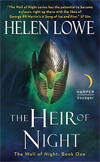
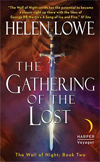
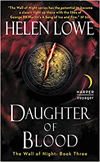
Helen Lowe's first novel, Thornspell (Knopf), was published to critical praise in 2008. The second,The Heir of Night (The Wall Of Night Series, Book One) won the Gemmell Morningstar Award 2012, and the sequel, The Gathering Of The Lost, was shortlisted for the Gemmell Legend Award in 2013. Daughter Of Blood (Book Three), was published in 2016 and Helen is currently completing the final novel in the series. She posts regularly on her “…on Anything, Really” blog, monthly on the Supernatural Underground, and tweets @helenl0we

Thursday, October 1, 2020

Year of Worldbuilding in Fantasy #9: The Many Worlds Of Kate Elliott

 .

#YoW Year of Worldbuilding
#WiF Worldbuilding in Fantasy
 

Introduction:

My blogging theme for 2020 is Worldbuilding in Fantasy, chiefly because I believe it's an essential element that all the differing subgenres have in common. Plus it's always been an aspect of speculative fiction that spins my writing and reading wheels. :-)

When it comes to this month's author, I feel she's a must-include. To be honest, I'm not sure it's even possible to pen a series on Fantasy worldbuilding without featuring Kate Elliott. Quite simply, the worlds are a wow factor in every one of her series that I've read.

---

The Many Worlds of Kate Elliott

I'm going to start at my beginning, which was The King's Dragon, first published in 1997 around the same time as A Game Of Thrones (1996). I recall reading them back-to-back and loving both of them, with the worldbuilding a standout of the Kate Elliott novel for me. 

Along, that is, with Sanglant, the eponymous King's Dragon. Definitely an ooh-la-la encounter in the epic hero stakes... ;-)

I'm not sure if I've said this previously, but I really love history and historically informed Fantasy.Consequently, it's completely unsurprising that I love The King's Dragon's kingdoms of Wendar and Varre, in the continent of Novaria. 

I believe these kingdoms are loosely based on the Holy Roman Empire in the age of Charlemagne, with an empire and civilization being forged out of the (relatively) chaotic era that followed the disintegration of the Roman Empire. In this respect, the descriptor "Holy" is accurate, as it was the Christian religion that provided the new cohesive structure for Charlemagne's kingdom.

Kate Elliott echoes this historical structure in Wendar and its adjoining kingdoms, so religion and religious structures are an important part of the worldbuilding. So, too, are the clerical civil service, but also the military structures that support the power of the King. In this world, though, magic is an important element in the power structures of both church and Court. 

The worldbuilding also reflects the differences between the poor, chiefly rural peasantry, and the knightly/landholding classes, with the Church and the service of the King offering the main paths for advancement between the classes -- albeit only to an extent. And like Charlemagne's Dark Ages' empire, the kingdom of Wendar is beset by internal divisions and external enemies. 

I guess you might be getting why I also think of Kate Elliott's storytelling as anthropological. Culture and context are always integral to the worldbuilding. Yet The King's Dragon (and the subsequent Crown Of Stars series) is still Fantasy with a capital F. 

Magic is integral to the society and its power structures, and also to the powers that threaten it. These include the nonhuman Eika raiders, the nomadic Quman, gryphons, and the Elf-like Ashioi, whose kingdom was banished into another sphere of space-time under cataclysmic circumstances, millenia before, but is now poised to return...

Two subsequent series, the Crossroads and Spiritwalker trilogies, are also excellent examples of Kate Elliott's anthropological worldbuilding crossing with fully fledged Fantasy.

In fact, I believe the author's own words probably best sum up the Spiritwalker ethos:

"...this post-Roman Afro-Celtic icepunk alt-regency adventure fantasy, with Phoenician spies, shapeshifting saber-toothed cats, a handsome if icy cold mage, a woman who likes to eat, and of course lawyer dinosaurs."

Ya gotta love it, right? Right!

Recently, though, I read and loved Kate Elliott's YA trilogy, Court of Fives (which begins with the novel of the same name) --- and immediately loved the world because when it comes to historically-informed Fantasy, I (probably) love an archaic-Mediterranean world best of all.

The Court Of Fives world is (again loosely) reminiscent of ancient Eygpt, overlain with the later Ptolemaic empire of Alexander the Great's half-brother, Ptolemy, and his successors. So the city of Saryenia (think Alexandria) and surrounding realm of Efea, comprise two cultures and two 'worlds', one politically and physically imposed upon the other. The warfare that besets Efea is also consistent with the break-up of Alexander's massive empire following his death.

Best of all, though, this world has the Fives, a game of athletic and strategic skill based around a maze, which permeates every aspect of the culture. In this respect, I discerned echoes of the Minoan maze and the competitive games of the bullring.

As with all Kate Elliott's worldbuilding, I love the attention to detail in food and clothing, religion, cultural practice, and the rituals of the Fives training and competitions, all of which bring the world to life. Again, she does not rely on history, but makes the culture of the world her own. 

In particular, old Efea is a matriarchal cum matrilineal society and Efean women compete as equals in the Fives' Court. The magic of the world is drawn from the land and involves oracles, the reanimation of spirits, and the animation of mechanical "spiders" used for desert scouting and battle.

The heart of the world and the story is the Court of Fives and the adversaries that compete for the victor's crown – in particular the heroine, Jes, who is born of both Efea's cultures, and Kalliarkos, a charming and talented scion of the conquering power...

If you love Fantasy worldbuilding and haven't yet read Kate Elliott, I hope I have conveyed enough to whet your interest. And if you are already a fan – well, then, you won't need any reminder of just how fine a worldbuilder this author is. :-)

—

Previous Months:

February: The Lion, the Witch & the Wardrobe (Chronicles of Narnia) by CS Lewis
March: A Wizard of Earthsea by Ursula Le Guin
April: Sparrow Hill Road by Seanan McGuire
May: Palimpsest by Catherynne M Valente
June: Ship of Magic & the Liveship Traders series by Robin Hobb
July: Gideon the Ninth by Tamsyn Muir
August: Tymon's Flight (Chronicles of the Tree) by Mary Victoria
September: Dreamhunter, Dreamquake, Mortal Fire, by Elizabeth Knox


—

Helen Lowe's first novel, Thornspell (Knopf), was published to critical praise in 2008. The second,The Heir of Night (The Wall Of Night Series, Book One) won the Gemmell Morningstar Award 2012, and the sequel, The Gathering Of The Lost, was shortlisted for the Gemmell Legend Award in 2013. Daughter Of Blood (Book Three), was published in 2016 and Helen is currently completing the final novel in the series. She posts regularly on her “…on Anything, Really” blog, monthly on the Supernatural Underground, and tweets @helenl0we

Tuesday, September 1, 2020

Year of Worldbuilding in Fantasy #8: "Southland" in Elizabeth Knox's "Dreamhunter" Series, & "Mortal Fire"

 .

#YoW Year of Worldbuilding
#WiF Worldbuilding in Fantasy
 

Introduction:

My blogging theme for 2020 is Worldbuilding in Fantasy, chiefly because it's one of the vital elements that holds all the different strands of the genre together. Plus it's always been one of the aspects of Fantasy literature that rocks my reading and writing world.

As promised from the outset, I'm trying to look at Fantasy worldbuilding over time and across a range of subgenres. So this month I'm focusing on Elizabeth Knox's Southland, from her YA series comprising the Dreamhunter (2005) / Dreamquake (2007) duology, and the standalone, Mortal Fire (2013.)

---

"Southland" in the YA Novels of Elizabeth Knox

Although Elizabeth Knox's Dreamhunter / Dreamquake and Mortal Fire are secondary world Fantasy, one of the magical things about Southland is that it's a Southern Hemisphere world.
 
Speaking as a Southern Hemisphere dweller, the Northern orientation of most Fantasy worlds undoubtedly has the appeal of the exotic and the magical – for example, snow at Christmas / New Year, which is always high summer here. 
 
These enchantments aside, however, and at the risk of sounding parochial, there is unquestionably something very special in a Fantasy realm that is recognizably based on not just your own hemisphere, but your own country.

For although Southland is not Aotearoa -New Zealand (NZ), there are undoubted overlaps between the two. Dreamhunter's opening, with its seaside settlement of Sisters Beach, the nearby bush with its ferns, supplejack, and whiteywoods, and the driftwood fires with the smell of nearby flax and tea tree scrub, is instantly recognizable for anyone who's spent summer at a NZ beach. 
 
On seeing the map of Coal Bay, those with a feel for NZ geography may also notice similarities to Golden Bay, particularly the curve of Farewell Spit. 
 
The author, Elizabeth Knox, makes the matter plain in her opening note to Mortal Fire:
 
 "Southland is a large island republic in the South Pacific, in a world very like our own—but not completely. ..."

The "not completely" marks the boundary between the real and the fantastic, which is where the art of Fantasy begins – and there is a great deal more to Southland than the overlap to elements of the New Zealand landscape and culture.

Dreamhunter and Dreamquake are set in the early nineteenth century, in a distinctly Edwardian milieu of trains, cars with cranks, and cameras that still require tripods for ease of use. In the Southland of this era, the holiday settlement lies close by a mysterious region known as The Place, which is environmentally very different to the rest of Southland. Only dreamhunters can venture there, to capture dreams that are then publicly shared in "dream palaces", similar to the "picture palaces" of the early twentieth century in our world. 
 
As your may imagine, dreamhunting comes with its dangers, including the secret origin of The Place and its mysterious golems, as well as the ambitions of those who seek to use dreams to achieve authoritarian power.  
 
Mortal Fire is set much later, in a 1959 that closely resembles 1950s New Zealand, including the aftereffects of polio on Marli, a close friend of the protagonist, Canny Mochrie. Canny is of Southland and (Pacific) Shackle Island descent, but her mother never speaks of her father's origins or identity. 
 
Although the events of the Dreamhunter period are now relegated to Southland history, Canny has always been able to see something Extra in the world. When her half-brother and his girlfriend take her on a camping trip into the remote Zarene Valley, inhabited exclusively by the extended Zarene family, Canny discovers that her Extra is magic – and the valley is rife with it. The magic centres on Ghislain Zarene, imprisoned in his farmhouse for thirty years, and in unravelling his secrets, Canny discovers the key to her own identity.
 
In terms of worldbuilding, the magic of Southland is always fascinating. The world of the Zarene Valley is also a fascinating combination of a rural, 1950s farming community grafted onto a slightly later era commune, but where the alternative lifestyle is shaped by magic use rather than by environmental or social philosophy.
 
So whether you fancy a dip into a Southern Hemisphere world, or love the sound of shared dreaming and dream hunting, or the occurrence of strange and compelling magic in a remote, rural community, then Elizabeth Knox's Southland novels could be exactly what you're looking for.
 

Note: Mortal Fire's Canny Mochrie was one of the fantasy heroines that rocked my world, in the SF Signal post series of the same name. To find out why, click on:

Helen Lowe on the Fantasy Heroines That Rock Her World: Canny Mochrie in Elizabeth Knox’s MORTAL FIRE

 
---

Previous Months:

February: The Lion, the Witch & the Wardrobe (Chronicles of Narnia) by CS Lewis
March: A Wizard of Earthsea by Ursula Le Guin
April: Sparrow Hill Road by Seanan McGuire
May: Palimpsest by Catherynne M Valente
June: Ship of Magic & the Liveship Traders series by Robin Hobb
July: Gideon the Ninth by Tamsyn Muir
August: Tymon's Flight (Chronicles of the Tree) by Mary Victoria
---

Helen Lowe's first novel, Thornspell (Knopf), was published to critical praise in 2008. The second,The Heir of Night (The Wall Of Night Series, Book One) won the Gemmell Morningstar Award 2012, and the sequel, The Gathering Of The Lost, was shortlisted for the Gemmell Legend Award in 2013. Daughter Of Blood (Book Three), was published in 2016 and Helen is currently completing the final novel in the series. She posts regularly on her “…on Anything, Really” blog, monthly on the Supernatural Underground, and tweets @helenl0we