Showing posts with label Kate Elliott. Show all posts

Monday, July 1, 2024

The Year of the Villain #6: When The Author Messes With Your Mind

.

AKA “When the Hero Is Really A Villain” Part 2

Crossroads series #1

Spoiler Warning: I can’t pen this post without a significant plot spoiler in terms of Kate Elliott’s Crossroads series. So although it’s no longer a new-out series, having been published between 2006 – 2009, if you haven’t read the books yet, but feel you may wish to, this may not be the post for you. However, like most of Kate Elliot’s stories, the Crossroads series is complex and multi-layered, with many protagonists of note, so although the element I’m discussing is important, it’s a very long way from being the whole story. With these considerations in mind, I leave the rest to you. J

Last month, I focused on when the main character in a Fantasy story is as much, if not more, villain than hero, i.e. they may be the main character and/or protagonist, but a hero they are not.

But what if both the reader, and other characters within a story, believe someone to be a hero and champion, only to find out, a very long way down the road, that the opposite is the case? This is what I call the author messing with my mind – and I can think of no better example than Kate Elliott’s Crossroads series: Spirit Gate; Shadow Gate; and Traitor’s Gate.

I also hasten to add that I love it when an author manages to not only surprise me, but pull the wool over my eyes as comprehensively as Kate did with the Crossroads trilogy. J

Crossroads #2

The Crossroads series focuses on The Hundred, where the traditional spirit guardians are under siege and society has descended into civil war. A number of very different characters are caught up in these events, including an exiled prince from a neighboring empire, with his bodyguard of elite warriors, and a young bride, Mai, recently married in a star-crossed meeting of cultures and personalities.

The prince, Anji, and his well-trained and disciplined bodyguard come to play a critical role in resisting the magical corruption besetting The Hundred and stemming the tide of civil war. In doing so, Anji and Mai forge new alliances and establish friendships. They are, their new allies and friends believe, very much on the side of the angels.

As a reader, I believed it, too—although in retrospect, the contrary signs were there from the outset, but the author wove them into the larger story so subtly that I (like the other protagonists) thought this a traditional heroic and romantic tale. Instead, readers eventually discover—along with the characters, some at the cost of love, others of their lives—that it is a tale of ruthless opportunism and ambition. 

Crossroads #3

I can say it no better than two of the other protagonists, when finally seeing Anji for what he has become, and maybe always was. One of these characters is Shai:

“Anji had walked beyond anger. Indeed, Shai thought, he had walked beyond shame. He had walked beyond honor. He knew what he wanted and he knew how to get it; the ghost of another man, a man he might have been, faded behind him.”

The other is Mai, when she finally realizes that Anji has lied to her, too, along with everyone else, and betrayed her trust:

“To think she had mistaken him for the hero of the tale.”

The irony, and the author’s subtlety in creating this villain, lies in a divide between personal and public goods. Anji has “become in all ways but name” the sole ruler of The Hundred. In part, he has done so by effectiveness in war and reestablishing order. He has also done so by lying to and betraying former friends and allies and eliminating potential rivals. To seal his hold on power, Anji also betrays Mai, abandoning their love.

Sequel to Crossroads series

Lies, betrayal, murder – but those who see the restoration of order and law, peace and security, are willing to accept the lies used to justify the betrayals. For many, who have not shared in the revelations and experience of Shai, Mai, and others, Anji remains a hero: the savior of The Hundred.

© Helen Lowe

~*~

About the Author

Helen Lowe is an award-winning novelist, poet, and lover of story. With four books published to date, she is currently completing the final instalment in The Wall Of Night series.
.
Helen posts regularly on her
“…on Anything, Really” blog, monthly on the Supernatural Underground, and tweets @helenl0we.

~*~

Previous “Year of the Villain” Posts:

January:      Ushering in 2024 -- & the Year of the Villain

February:    The Year of the Villain #1: The Lord of The Rings Pantheon

March: The Year of the Villain #2: Ursula Le Guin & “Earthsea”

April: The Year of the Villain #3: Tigana and Brandin of Ygrath

May: The Year of the Villain #4: Elidor and Formless Evil 

June: The Year of the Villain #5: When the Hero Is Really A Villain

Thursday, October 1, 2020

Year of Worldbuilding in Fantasy #9: The Many Worlds Of Kate Elliott

 .

#YoW Year of Worldbuilding
#WiF Worldbuilding in Fantasy
 

Introduction:

My blogging theme for 2020 is Worldbuilding in Fantasy, chiefly because I believe it's an essential element that all the differing subgenres have in common. Plus it's always been an aspect of speculative fiction that spins my writing and reading wheels. :-)

When it comes to this month's author, I feel she's a must-include. To be honest, I'm not sure it's even possible to pen a series on Fantasy worldbuilding without featuring Kate Elliott. Quite simply, the worlds are a wow factor in every one of her series that I've read.

---

The Many Worlds of Kate Elliott

I'm going to start at my beginning, which was The King's Dragon, first published in 1997 around the same time as A Game Of Thrones (1996). I recall reading them back-to-back and loving both of them, with the worldbuilding a standout of the Kate Elliott novel for me. 

Along, that is, with Sanglant, the eponymous King's Dragon. Definitely an ooh-la-la encounter in the epic hero stakes... ;-)

I'm not sure if I've said this previously, but I really love history and historically informed Fantasy.Consequently, it's completely unsurprising that I love The King's Dragon's kingdoms of Wendar and Varre, in the continent of Novaria. 

I believe these kingdoms are loosely based on the Holy Roman Empire in the age of Charlemagne, with an empire and civilization being forged out of the (relatively) chaotic era that followed the disintegration of the Roman Empire. In this respect, the descriptor "Holy" is accurate, as it was the Christian religion that provided the new cohesive structure for Charlemagne's kingdom.

Kate Elliott echoes this historical structure in Wendar and its adjoining kingdoms, so religion and religious structures are an important part of the worldbuilding. So, too, are the clerical civil service, but also the military structures that support the power of the King. In this world, though, magic is an important element in the power structures of both church and Court. 

The worldbuilding also reflects the differences between the poor, chiefly rural peasantry, and the knightly/landholding classes, with the Church and the service of the King offering the main paths for advancement between the classes -- albeit only to an extent. And like Charlemagne's Dark Ages' empire, the kingdom of Wendar is beset by internal divisions and external enemies. 

I guess you might be getting why I also think of Kate Elliott's storytelling as anthropological. Culture and context are always integral to the worldbuilding. Yet The King's Dragon (and the subsequent Crown Of Stars series) is still Fantasy with a capital F. 

Magic is integral to the society and its power structures, and also to the powers that threaten it. These include the nonhuman Eika raiders, the nomadic Quman, gryphons, and the Elf-like Ashioi, whose kingdom was banished into another sphere of space-time under cataclysmic circumstances, millenia before, but is now poised to return...

Two subsequent series, the Crossroads and Spiritwalker trilogies, are also excellent examples of Kate Elliott's anthropological worldbuilding crossing with fully fledged Fantasy.

In fact, I believe the author's own words probably best sum up the Spiritwalker ethos:

"...this post-Roman Afro-Celtic icepunk alt-regency adventure fantasy, with Phoenician spies, shapeshifting saber-toothed cats, a handsome if icy cold mage, a woman who likes to eat, and of course lawyer dinosaurs."

Ya gotta love it, right? Right!

Recently, though, I read and loved Kate Elliott's YA trilogy, Court of Fives (which begins with the novel of the same name) --- and immediately loved the world because when it comes to historically-informed Fantasy, I (probably) love an archaic-Mediterranean world best of all.

The Court Of Fives world is (again loosely) reminiscent of ancient Eygpt, overlain with the later Ptolemaic empire of Alexander the Great's half-brother, Ptolemy, and his successors. So the city of Saryenia (think Alexandria) and surrounding realm of Efea, comprise two cultures and two 'worlds', one politically and physically imposed upon the other. The warfare that besets Efea is also consistent with the break-up of Alexander's massive empire following his death.

Best of all, though, this world has the Fives, a game of athletic and strategic skill based around a maze, which permeates every aspect of the culture. In this respect, I discerned echoes of the Minoan maze and the competitive games of the bullring.

As with all Kate Elliott's worldbuilding, I love the attention to detail in food and clothing, religion, cultural practice, and the rituals of the Fives training and competitions, all of which bring the world to life. Again, she does not rely on history, but makes the culture of the world her own. 

In particular, old Efea is a matriarchal cum matrilineal society and Efean women compete as equals in the Fives' Court. The magic of the world is drawn from the land and involves oracles, the reanimation of spirits, and the animation of mechanical "spiders" used for desert scouting and battle.

The heart of the world and the story is the Court of Fives and the adversaries that compete for the victor's crown – in particular the heroine, Jes, who is born of both Efea's cultures, and Kalliarkos, a charming and talented scion of the conquering power...

If you love Fantasy worldbuilding and haven't yet read Kate Elliott, I hope I have conveyed enough to whet your interest. And if you are already a fan – well, then, you won't need any reminder of just how fine a worldbuilder this author is. :-)

—

Previous Months:

February: The Lion, the Witch & the Wardrobe (Chronicles of Narnia) by CS Lewis
March: A Wizard of Earthsea by Ursula Le Guin
April: Sparrow Hill Road by Seanan McGuire
May: Palimpsest by Catherynne M Valente
June: Ship of Magic & the Liveship Traders series by Robin Hobb
July: Gideon the Ninth by Tamsyn Muir
August: Tymon's Flight (Chronicles of the Tree) by Mary Victoria
September: Dreamhunter, Dreamquake, Mortal Fire, by Elizabeth Knox


—

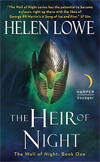
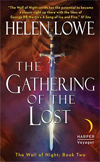
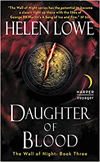
Helen Lowe's first novel, Thornspell (Knopf), was published to critical praise in 2008. The second,The Heir of Night (The Wall Of Night Series, Book One) won the Gemmell Morningstar Award 2012, and the sequel, The Gathering Of The Lost, was shortlisted for the Gemmell Legend Award in 2013. Daughter Of Blood (Book Three), was published in 2016 and Helen is currently completing the final novel in the series. She posts regularly on her “…on Anything, Really” blog, monthly on the Supernatural Underground, and tweets @helenl0we