Showing posts with label Arcane. Show all posts

Monday, April 21, 2025

The Art of Adaptation - Reader Persuasion

What have we learned?
Riot says Farewell to Arcane in a Hauntingly Romantic Music Video 

Hello everyone! 

Welcome to another instalment of The Art of Adaptation in the written and spoken word. Today, we explore how the reader might adapt to the story world based on the author's ability to persuade... in other words, how the author might push readers out of their comfort zone and into new experiences and perspectives.

Can stories really do this? Cause us to change our attitudes in real life?

The answer is yes, they can!

Simply put, storytelling has the potential to effect change through a technique called narrative persuasion. 

What is Narrative Persuasion?


Current research on storytelling and its functional role in human experience, including how people use media to interrogate their own beliefs and feelings, shows that they can glean social meaning from books, film, TV series and games. (For a deeper dive, check out Dill‐Shackleford, K. E on the social psychology of our engagement with fictional narrative and its functional value. (2016) 

But for this phenomenon to occur, it must begin with the writer persuading the reader/viewer of the story world's truth. If successful, it may open the way to new or different responses to familiar, and possibly blocked,  situations. In this case, the reader adapts to the author's Narrative Persuasion by believing in and immersing in the story.

How?

Narrative Persuasion is an art in and of itself. Through storytelling (the narrative), readers/viewers are coaxed toward a fresh or alternate perspective, or at least the possibility that one might exist. In this process, it may be the fictional characters that have the greatest impact. Still, it takes a certain style of writing to bring them to life for the reader.

Generally, pounding the reader with exposition, info-dumping their way to justification of a new idea or alternate response doesn't work. Instead, narrative persuasion invites us to immerse ourselves in the story, and by doing so, bond deeply with the characters.

And as our favourite characters believe, so too may we.

Take the multi-layered metaphors played out through the characters in Persuasion by Jane Austen. First, society persuades Anne Elliot to betray her love interest, Frederick Wentworth. Through his deep love of the sea, he persuades himself to accept her rejection and move on. But, the results for Anne are miserable, and eventually both Anne and Frederick are persuaded yet again to give their love another chance. 

Through the experience of sympathising with this fictional couple, we may also be persuaded to change our own worldview, just like the cinematic characters in the film The Jane Austen Book Club. Played by Marc Blucas (the disenchanted husband who has given up on his marriage), and Emily Blunt (his wife, a high school French Teacher who has fallen for one of her students) becomes a persuasion, within a persuasion, within a persuasion!

Marc Blucas and Emily Blunt in The Jane Austen Book Club (2007)

In the plot thread of the film, we see the estranged couple try to love again while reading Austen's book.  As a reader/viewer, it is hard not to adapt to Austen's, and screenwriters Robin Swicord and Karen Joy Fowler's, persuasive writing as we follow the characters deeper into the story until they find renewed love.

Creating Engagement is Key


Persuasion stems from engagement and connection.

In the paper, Connecting the Dots between fantasy and reality we find that the main ingredient to identifying with the characters is the ability to get lost in a story. From the perspective of immersion in another world, the narrative persuasion urges us to adapt, changing our attitudes, beliefs, and even behavioural intentions to match the story world characters', if we are moved to do so.

This process relies on creating engaging narratives, well-developed characters, and emotional resonance to reduce resistance and increase acceptance of information and viewpoints. For example, consider how Le Guin's Left Hand of Darkness has influenced our adaptation to changing personal pronouns over the last decades. (Even though the use of the non-binary they reaches back to Geoffrey Chaucer's 14th-century Canterbury Tales, the popular usage is recent.) It all pivots around our ability to relate to narrative.

Media psychologists use terms to describe this feeling of absorption and connection in a narrative with words like transportation, engagement, flow and presence.  I particularly like the term participation mystique, a process of interconnection where the definitive disappears, creating a spiritual experience or 'truth' within the story and its characters.

How is it done?

There are standard lists of advice for creating believable, engaging characters that can be persuasive. It begins with giving them goals, flaws, challenges and often some kind of secret.

In Delirium by Lauren Oliver, we find an engaging narrative, a YA novel that exemplifies a story of intimate telling that is 

1) easy to immerse in
2) provides a main character we can root for
3) is written in a persuasive form that touches on contemporary issues without excess exposition. 

Delirium offers a chance for readers to expand their world view of their own accord, without being told how or when to do so. 

The book has conventional chapters but uses epigraphs to portray our hero, Lena's, progressively adapting perspective. In a world that treats love as an illness, we follow her slow-boil rebellion with increasing sympathy. Here is an example below:


 Chapter One

The most dangerous sicknesses are those that make us believe we are well.
-Proverb 42, The Book of Shhh


As the story progresses in the deeply personal POV of the first person present, it's easy to become so immersed that we feel what happens to Lena is happening to us. When that occurs, the narrative persuasion succeeds. We no longer question the truth of the story world, but begin, outside of reading time, to question the truth of our own sanctioned beliefs. 

Concluding Thoughts


Have you read a book recently or seen a film that changed your worldview? Have you adapted to narrative persuasion and felt, in retrospect,  changed by it?

We'd love to hear your thoughts!

Meanwhile, all the Best for the Holiday Season!

:) Kim

Other Posts in the Art of Adaptation 2025

January - The Art of Adaptation - Films in 2025

February - The Art of Adaptation - Authors' Response to External Pressures

March - The Art of Adaptation - The Healing Magic of KDrama

April - The Art of Adaptation -  Reader Persuasion

May - The Art of Adaptation - Fantasy Monsters Part 1

June - The Art of Adaptation - Fantasy Monsters Part 2 

July - The Art of Adaptation - Alternate History

August - The Art of Adaptation - AI: A New Chapter for Writers

September - The Art of Adaptation - Crafting Mood with Language

October - The Art of Adaptation - Take Five

November - The Art of Adaptation - On Time

***


About Kim Falconer 


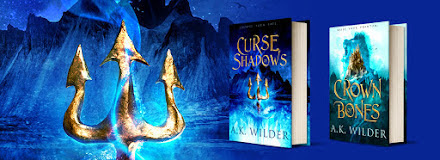
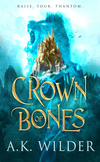
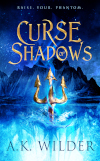
Kim Falconer, also writing as AK Wilder, has released Crown of Bones, a YA Epic Fantasy with Curse of Shadows as book 2 in the series. Currently, she is ready with the third book, out in 2025. TBA

Kim can be found on AKWilder.com, Twitter, Facebook, Instagram and KimFalconer.com. 

Throw the bones on the AKWilder.com site.. See you there!


Monday, December 16, 2024

Choose Your Weapon -- Espionage


Arcane, set in the League of Legends universe, Ekko is on a spy mission of deadly concern. 

Happy Holidays, everyone!

For the final post in the Choose Your Weapon series, I want to explore one of the most complex, and possibly most intriguing weapons at an author's disposal- Espionage.

espionage

/ˈɛspɪənɑː(d)ʒ/

noun

noun: espionage

The practice of spying or of using spies, typically by governments to obtain political and military information.

By this definition, the usual arsenal of the spy ranges between futuristic weapons al la Bond, stealth vehicles and the key to it all, information.

Yes, information becomes the weapon. If you aren't convinced, consult Sun Tzu.


The Art of War

The Art of War, by Sun Tzu (circa mid-5th Century), is the oldest known military treatise and a classic study of rivalry and competition. It has 13 chapters, each devoted to a different set of warfare-related skills. For today, it's the 13th chapter that interests me the most - The Use of Spies.

Sun Tzu said: Raising a host of a hundred thousand men and marching them great distances entails heavy loss on the people and a drain on the resources of the State... Hence the use of spies... This is called "divine manipulation of the threads." It is the sovereign's most precious faculty. 

The First Spy-Fi Novel

Even though Sun Tzu wasn't writing fiction, there are subgenres devoted to this style of storytelling. For example, The Spy by James Fenimore Cooper, published in 1821, is considered the first spy novel. It's set during the American Revolution and based on the exploits of Harvey Birch, an American secret agent. 

But the first Fantasy spy novel is considered to be "The Princess and the Goblin'', published in 1872. Complete with intrigue, camouflage, trickery and twists, Spy-fi is defined as media that centers around the adventures of a protagonist working in secret to gain hidden information. Usually, these adventures involve defeating a rival superpower or singular enemy in a fantasy or futuristic world setting--outer space, undersea, alt history/time and/or Shagrala-esk locations in the world.

Contemporary Spy-Fi

Little has changed over the last two centuries of Spy Fiction, other than writing style and the increase in female, or even non-gendered main characters. The essential ingredients remain the same: a combination of Fantasy, Mysteries and Thrillers, and some form of espionage as the main weapon wielded.

Consider the titles below and thank you Silvana Reyes Lopez for your insights too!


Incendiary

Set in a world inspired by the 15th-century Spanish Inquisition, Incendiary is a great example of espionage.

Renata has a magic ability that makes it easy to steal memories from people. She has lived a thousand lives. Yet, she only wants to live freely on her own.

Part of a rebel group, Renata now has to infiltrate the royal court in order to rescue the leader of her unit. But the palace harbors difficult memories for her, and the prince inside those walls is ready to have her blood. 


Judgment Night by C. L. Moore 

Moore’s novella begins with an ironic meet-cute.

Juille, the princess of a galactic empire, is incognito on a pleasure planet, where she meets Egide, the similarly incognito leader of the space barbarians (yes, space barbarians) at her father’s proverbial gates. Their dance of will-they-or-won’t-they-topple-each-other’s-domains twists through double crosses, divine audiences, and the use of ancient superweapons, but the book ends by asking why a galactic empire should even continue to exist.

On the way to answering that question, Moore gives us an array of “high fantasy” prose that keep us riveted in the genre. For example, the ship came to a velvety stop; the worldbuilding is neatly bound up in deep time with immense scale; and a female anti-hero who’s strong, complex, and sympathetic. She's also bad to the bone...


An Ember in the Ashes by Sabaa Tahir

Laia is a slave. Elias is a soldier. Neither is free.

Under the Martial Empire, defiance is met with death. Those who do not vow their blood and bodies to the Emperor risk the execution of their loved ones and the destruction of all they hold dear.

In this brutal world inspired by ancient Rome, Laia lives with her grandparents and older brother. The family ekes out an existence in the Empire’s impoverished backstreets. They do not challenge the Empire. They’ve seen what happens to those who rebel.

But when Laia’s brother is arrested for treason, she is forced to make a decision. In exchange for help from rebels who promise to rescue her brother, she will risk her life to spy for them from within the Empire’s greatest military academy...

Dragon by Steven Brust 

Over the years, Brust’s antihero Vlad Taltos has been involved in a lot of espionage and trickery, but in the eighth book we get that epic fantasy classic: a war

The beauty of Dragon is how petty, small, muddy, and unimportant that war is. Vlad, the supremely competent assassin and sometimes mafia boss, has to pretend to be a normal foot soldier in order to get close to an enemy. He’s utterly out of his element: uncomfortable, bored, and terrified. As the story wraps up, it expertly combines the satisfaction of a plot well-executed with dark satire and just a touch of sadness at such a useless loss of life.

All this is told in Brust’s spare and almost Hammett-like first-person prose, which describes epic fantasy figures and eldritch magic weapons as though they’re everyday nuisances...


Warcross by Marie Lu

Emika Chen is desperate for some quick cash to pay her rent, so she decides to hack herself into the global sensation Warcross, a video game that took the world by storm. She soon realizes she just hacked herself into the opening game of the international Warcross championship, making her an overnight sensation.

Convinced she’s going to get arrested, she’s surprised when she gets a call from the game’s creator, the young billionaire Hideo Tanaka, offering a deal she cannot refuse. 

***

Care to share your favorite Spy-Fi book or film? We'd all love to hear about it.

xxKim :)

***

The Complete Choose Your Weapon Series 2024

Poison

The Perfect Storm

The Sword

Firearms

Ranged

Spells

Unarmed

Curses

Time Travel

Invisibility

Espionage

***

About Kim Falconer

Kim Falconer, also writing as AK Wilder, has released Crown of Bones, a YA Epic Fantasy with Curse of Shadows as book 2 in the series. Currently, she is working on the third book, out in 2025.

Kim can be found on AKWilder Twitter, Facebook, Instagram and KimFalconer.com. 

Throw the bones, read your horoscopes or Raise Your Phantom on the AKWilder.com site See you there!

Monday, December 18, 2023

Go for the Unrealistic - Tips for the New Year!


Jinx isn't afraid of the 'impossible' - WallPapers.com

I want to wind up 2023 with a meaningful idea, and the topic that comes to mind is What's Next? It reminds me of a piece I wrote a few decades ago after hearing Will Smith talk about doing the impossible. I've tweaked it to fit the NOW. Hope you enjoy, and have a wonderful holiday season, and New Year 2024.

Will Smith said in an interview once that it’s unrealistic to bend a piece of metal and fly people over the ocean in it but fortunately, the Wright brothers didn’t think so. 

It all begins with this premise. 

Michael Parkes

A lot of advice for emerging writers, students, biz owners, teachers, apprentices, and entrepreneurs centres on ‘being realistic'. For example, you have to start at the bottom, take baby steps, like... forget about landing an agent if you haven’t published, and definitely forget about a major publisher without an agent. What you want to achieve is very hard work, $$$ will be tight, and rejection du jour so keep your day job...  It's enough to sink your dreams into the sludge.

But is the advice realistic? Probably. 

Do you let that guide you? No!

I highly recommend these five unrealistic tips to set yourself up to do the 'impossible' in 2024. 

Tip #1 Forget about being realistic. Stop thinking about the practical advice and the ‘cold hard facts’ and develop your craft/heart/goals. If you have a dream, something you are enthusiastic about, develop the skills to deliver it. All the talent in the world won’t fly if you don’t have the skills to communicate your vision. Develop them!

Tip #2 Think in terms of component parts. In publishing, you don’t set out to write a 500,000-word, multi-book series. You don’t even set out to write a single novel. You get up in the morning and you write five hundred words. You do that for a time and get some confidence and maybe, after a while, you find yourself writing a thousand words a day. Then two thousand. Same with a new business plan, thesis, art show, album, you name it. Component parts, day by day.

Tip #3 Say you can do it. He who says he can and he who says he can’t are both correct. Confucius. Think about that for a while.

Tip #4 Know your motivations. There is no ‘right’ or ‘wrong’ motivation for your artistry. It might be that you want to prove something to the world. You might want to feel of value. You might be obsessed with telling a story that will touch people’s hearts. Whatever your motivation is, know it. Know thyself. The awareness of what drives you is your touchstone.

YaoYao Ma Van As

Tip #5 Decide, devote, deliver. But first, just decide that you will do it, that you will achieve your dream. Devote your whole heart to it, and allow for compassion for others and the planet to be part of that devotion. Deliver what you promise to yourself and to others—one step at a time.


Bonus tip. Remind yourself to go for the unrealistic. I mean, what if we’d listened to any of this ‘realistic’ advice?

Everything that can be invented has been invented.  Charles H. Duell, an official at the US Patent Office, 1899

The singer (Mick Jagger) will have to go; the BBC won’t like him. -First Rolling Stones manager Eric Easton to his partner after watching them perform.

I’m sorry, Mr Kipling, but you just don’t know how to use the English language. –The San Francisco Examiner, rejecting a submission by Rudyard Kipling in 1889

You better get secretarial work or get married. -Emmeline Snively, director of the Blue Book Modelling Modelling Agency, advising would-be model Marilyn Monroe in 1944.

With over fifteen types of foreign cars already on sale here, the Japanese auto industry isn’t likely to carve out a big share of the market for itself. Business Week, August 2, 1968.

There will never be a bigger plane built. – A Boeing engineer, after the first flight of the 247, a twin-engine plane that held ten people.

If anything remains more or less unchanged, it will be the role of women. David Riesman, conservative American social scientist, 1967. (Of boy!)

I hope these ideas offer you inspiration for the New Year 2024!

Blessings to all,

xxKim

***

About Kim Falconer

Kim Falconer, currently writing as AK Wilder, has released Crown of Bones, a YA Epic Fantasy with Curse of Shadows as book 2 in the series. Currently, she is working on the third book, out in 2024.

Kim can be found on  AKWilder Twitter, Facebook and Instagram. 

Throw the bones, read your horoscopes or Raise Your Phantom on the AKWilder.com site


Sunday, April 16, 2023

Backstory - More than Meets the Eye

Jinx/Powder from the adult animation Arcane by Pxfuel

 What is a Backstory?

The backstory in creative work is more than meets the eye.  It is a background or history made to support or explain a character, land or kingdom so that the plot will make sense. As far as Fantasy novels go, there are abundant examples as the often complex storylines and generation-spanning scope can take some explaining. Just think of Anne McCaffrey's Pern and the dragons who fight thread, how Harry Potter was orphaned and why the Shire is in danger... every major aspect of a story has a history, informing the characters' actions, thoughts, ideologies and decisions. The question becomes not so much about what backstory is but about how much of it to utilize.

Why Have a Backstory?

The backstory can get a bad rap, mainly from its potential to bog the story down with too much tell and not enough show. The paradox is, too much backstory can feel like a yawn-inducing biography; but not enough and the character's actions or plot make no sense. It's a fine balance that goes deeper than 'she is like this because'....

Take Powder, later known as Jinx in the Sci-Fi Fantasy series Arcane. If we weren't shown how her childhood shaped her, how her miscalculation backfired, she wouldn't be easy to love. As it is, the heart pinches at her tragic story, her loss and her need. Her insanity...

Ash, wordsmith and recorder in Crown of Bones.

Writing a Backstory that Works

The goal of the backstory is to bring characters to life, making them more relatable, even if they are unlikable. In the case of Ash, her backstory unfolds through all three books, offering readers a chance to understand the intricacies of the plot in ways that aren't an obvious info dump. Again, too much backstory tells the story, giving the plot away. Not enough robs readers of a deeper connection to the characters, and the story as a whole.

I explore a few different ways to reveal the backstory in my current Amassia series: through the use of prologs where the reader can watch earlier events unfold in real-time. Through conversations with others, or inner diolog with oneself as in this example of Ash after her interview with Master Brogal.

... “That’s all I found, Master, but about my role in the Sanctuary—”

“I have a class to teach. Bring me the delegate report as soon as possible. That will be all.” He’s out the door in three strides, and I’m left staring at an empty desk. 

My eyes start to well and I exhale sharply, putting a stop to that. The chair scrapes the floor as I rise, shouldering my satchel. “I had a good trip to Tangeen, Master, save for the crossing,” I say to nobody. “No chance of me becoming a seafaring scribe anytime soon. How have you been?” But it’s a conversation we’ll never have. Master Brogal may be my guardian, but he’s no father. Not a warmhearted one, anyway. I’ve known this about him since I was eight years old, but still I yearn for…something more. It’s foolish—I could kick myself—it’s so foolish. I know better than to wish for what I can’t have...

Over the course of the three books, we learn just how deep the rabbit hole between Brogal and Ash but in a few sentences at the end of a scene, the groundwork is laid.

Game of Thrones with mega-multiple POV characters

Edit for Info-Dumps

Info-dumps are packets of information that we want the reader to know to better understand the world, the characters and plot. It's like in The Matrix where you get to download years of Jujitsu training in a matter of seconds (which works in the film). But, in a novel setting, instead of this info-dump being part of the story, it is separate, and out of sync. Instead of moving the story forward, it brings it to a screeching halt while we stop to say, by the way, you must know this about that... 

Note that the practice of info-dumping is human nature, especially for people sitting somewhere on the spectrum. (Think 75,000,000). 
“Info dumping,” or talking about an interest or passion, usually in detail and at length, is frequent in both ADHD and autism. In ADHD, the impulsivity plus passion equals a “spilling” kind of feeling, and the motor behind it can feel as if it's whirring. - The Washington Post

Given that this form of communication can be natural, it pays to watch closely for it in our writing. When you see it, get out the red pen.

Conclusions 

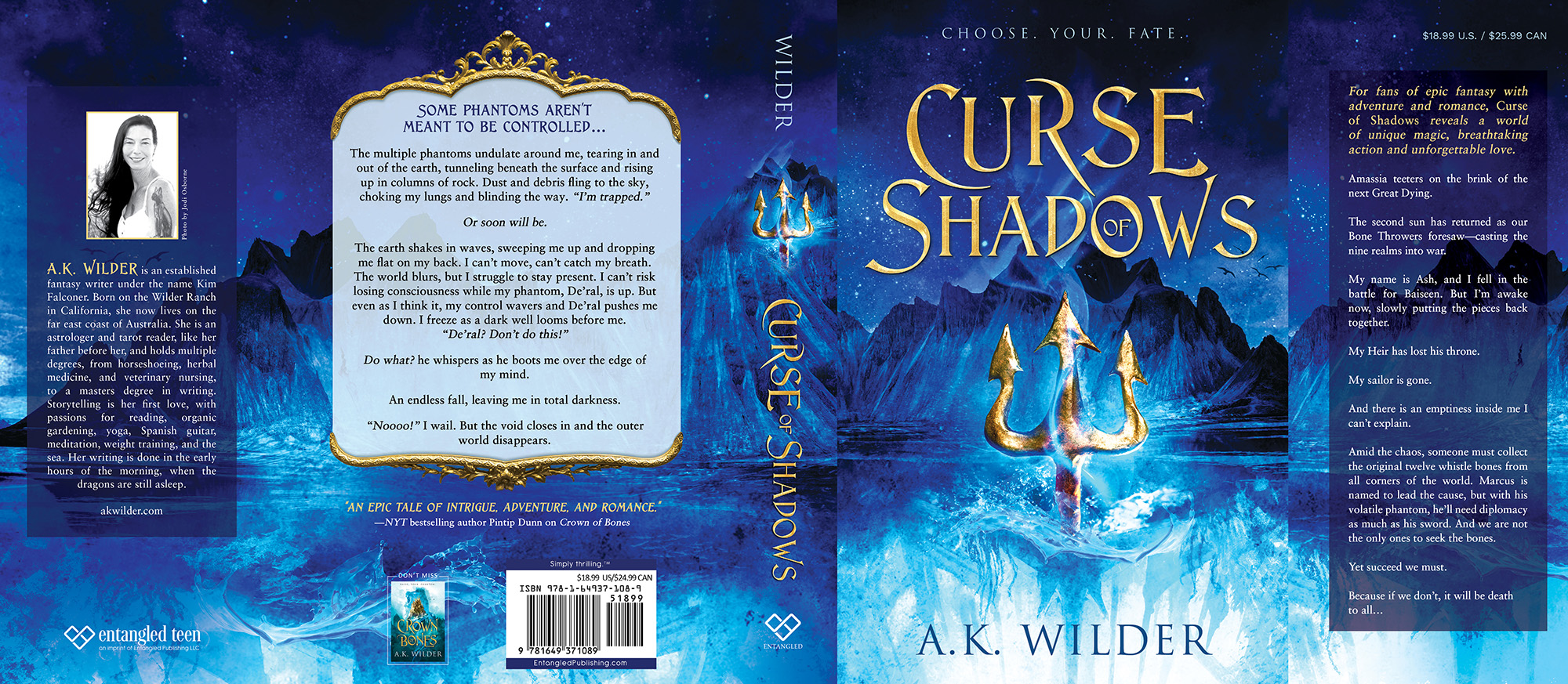
One thing worth remembering is that mystery, especially in the first chapter or prolog, is golden. It's okay to hold back. Release things slowly. You can offer insights when readers need to know, slipping in those Easter Eggs beforehand that they will reflect on later. Sometimes, as in Curse of Shadows, it's the very last chapter of the book that reveals the whole truth.

And remember, to overwrite the backstory is to be human. Don't beat yourself up for that while you get the story down, but do edit and rewrite until it flows. The beauty of this approach is,that when the author fully understands the backstory, they may not even need to include it. Their deep and rich understanding of what shapes the characters and the lands will shine through in the choices they make, the mannerisms exhibited, and the range of temperaments expressed. 

In this way, the backstory will shine through as the story unfolds--unforced, unhurried and uncluttered.

Does anyone have a favorite or memorable backstory to tell?  Comments welcome!

xxKim

Posts in the 'More Than Meets the Eye' Series

Book Titles

The End

Backstory

Environment

Styling Characters

Desire

***

Kim Falconer, currently writing as A K Wilder, has released Crown of Bones, a YA Epic Fantasy with Curse of Shadows as book 2 in the series. Currently she is working on the third out in 2024

Kim can be found on  AKWilder Twitter, Facebook and Instagram. 

Throw the bones, read your horoscopes or Raise Your Phantom on the AKWilder.com site 


Saturday, July 16, 2022

The Road of Trials

Artist: Igor Morski 

Inspired by Helen Lowe and her Hero Series, today I'm writing about this wonderful journey we writers take when bringing a new book to life.

Joseph Campbell in his Hero of a Thousand Faces talks about how we are all on the hero's journey and knowing which stage we are in can be amazing support when things get challenging.

And holy moly, they do get challenging! 

Vi Vi Arcane 

I've discussed the stages of this mythic journey for writers, and though everyone has their own experiences, I think many will relate. (If you want to check out a full depiction of my first publishing journey, you can find it here - Writing and the Hero's Journey)

My most recent book has been a similar path, especially on the last Road of Trials. I wasn't sure I (or my book) would survive.

I'm talking about the Editing Process.

This is where the writer encounters a series of tests, tasks and ordeals in the form of editorial notes. If it's their first time, they walk in blind, like the Fool, because they thought once their manuscript was ‘completed’, all the hard work was done. 

Ha!

It has only just begun.

Example of COS Copyedits 

Depending on the publisher, the process can include many rounds of editing by different people - structural, line, copy and proofreading. All this happens under the looming 'hard deadline'. (They don't call it DEADline for nothing - it's do or die!)

Example of COS Proofreader Notes

To top it off, my editors for Curse of Shadows were all in different timezones. That meant, in the final days before the deadline, I caught quick naps between midnight and 2am. That was it...

But the results, I believe, are spectacular and I'm happy to announce that Curse of Shadows made it to the printers on time! 

Which puts me up on Cloud 9. Seriously, my feet have yet to touch the ground (see Refusal to Return after the Ultimate Boon.)

Out December 6, 2022

But return I must because the process starts all over again with the next book in the series.

Just not today. Not yet.

For now, I will continue to sup with the gods.

If you've yet to read Crown of Bones, it's on special now -- Kindle $2.80

Crown of Bones Special $2.80 on Kindle

And, if any of you are interested in an ARC - advanced reader copy - of Curse of Shadows, please email me with ARC for Curse of Shadows in the subject bar. Thanks!

And happy journeys.

xxkim

***

Kim Falconer, currently writing as A K Wilder, has just released Crown of Bones, a YA Epic Fantasy with Curse of Shadows coming out December 6, 2022.

Kim can be found on  AKWilder Twitter, Facebook and Instagram. 

Throw the bones, read your horoscopes or Raise Your Phantom on the AKWilder.com site