Showing posts with label Warm Bodies. Show all posts

Sunday, October 16, 2016

The Downside of Adaptation


Have you ever walked out of a film thinking, "It was nothing like the book?" There's a reason for this conclusion, and it isn't necessarily bad script writing.

When Pulitzer Prize winning novelist Jeffrey Eugenides talks about adapting a novel into film, he makes a good point. The book's story radically changes once it becomes visual.
"It's no longer a book, and to try to insist on it being a book will usually make it a poorer film." - Jeffrey Eugenides
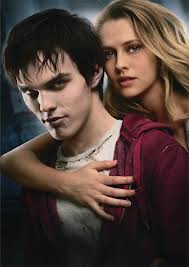
Warm Bodies
David Mitchell (the author of Cloud Atlas) agrees. He feels that a novel's size and scope has to be parred down to fit into a visual narrative. Things have to happen faster too. Where a novel can take its time world-building and developing its characters and history, giving readers thrills and elevated heart rates along with downtime and moments of chilling out, films don't have that luxury.

Mitchell says where the novel is like a DVD box set, the film, costing over $100,000 per minute to shoot, puts the human eyeball in danger of exploding after the first 180 minutes. The film's plot must be delivered at the speed of light, or something close to it, compared with the novel.

If we are in love with the book and sitting in the theater, lights going down, it can help to remember that adapting to film means transposing from one medium to another, a process that involves rethinking the entire story.

First, it moves from telling to showing. That means description, narration and internal thoughts must be translated into speech, actions, sounds and visual images. Backstory, slipped in throughout a novel, isn't going to play out visually, unless a flashback is used. There are ways to portray nostalgia and history in film, but they are very different from getting the same message across in text.

Cloud Atlas
Another consideration is the fluidity of interpretation in novels. Scenery, ideas, characters' intentions and desires are suggested in the text, open to the imagination of the reader. In a film, the writer and director, and actors, are making much more definitive statements, open not so much to the imagination but recording what is seen as fact.

Cast of characters can be an issue as well. Though HBO's Game of Thrones is managing to tell the ensemble stories, scope and scale of George RR Martin's novels, as Peter Jackson did with LOTR, it's easier to fit a multitude of characters into a book than a film. Even with a longer movie, or television series, there isn't the time or space to explore a large number of characters. There's only so much the viewer can keep track of in the period of time.

Not only will the screen writer and director, time and space have a strong influence on the adaptation, the score composer will as well. The mood the music creates controls the interpretation of any scene in ways that the novel does not. If you doubt this, watch the same scene from Pirates of the Caribbean with four different sound tracks.


In the end, you may fully enjoy a book more than the film, or vice versa, but it's fun, and revealing, to consider why.

Do you have a favourite adaptation? We'd love to hear about it in the comments.


Kim Falconer's latest release is out now - The Blood in the Beginning - and Ava Sykes Novel. Find this novel in a store near you.

You can also learn more about Kim at AvaSykes.com, the 11th House Blog, and on FaceBook and Twitter.  

She posts here at the Supernatural Underground on the 16th of every month and runs Save the Day Writer's Community on Facebook. Check out her daily Astro-LOA Flash horoscopes on Facebook. 

Saturday, January 16, 2016

Why Zombie?

iZombie's Rose McIver
Hi Everyone,

While watching the return of iZombie this week (Method Head, S02E10), it struck me how much these creature have evolved – Zombies, that is, not the CW or TV show runners in general (though maybe them too!).

As I wrote in a 2013 review of Warm Bodies, romance wasn’t the most expected direction the Zombie genre could take.

But maybe social psychologist Sara Sutler-Cohen can make sense of it:
"On-screen zombies have always reflected their era, creating a cultural arc and a ‘mirror image of what’s happening in society at that moment’."
If that's the case, the original attributes of zombies (White Zombie in 1932) including lack of speech or self-awareness, single-minded hunger for human flesh, slow, staggering gait, unstoppable, corpse like physicality controlled by a voodoo master, mirror something of the times. The zombie image didn’t waver much for the next seventy years and might reflect a culture grappling with issues of power, control, freewill and self-determination. Maybe throw in fear of death.

Not until 1985 do we see a change with the first brain-eating zombies (in Return of the Living Dead, directed by Dan O’Bannon). It makes them even more terrifying as the brain (memories, choice, more impulse control) indicates our conscious volition and individuality. Our identity. This might correspond to the the post-modern perception of perpetual incompleteness and deconstructivism where reference to cultural, ideological and moral opinions are reappraised (the death of the author - a zombie ate their brains?)

French TV drama series Les revenants
By the 2000s, we start to see quicker, more dynamic and resourceful zombies. They're becoming a lot more like us. In Danny Boyle’s 28 Days Later (2002), these iSmart zombies are the results of infection, not magic. The fear is what can 'get into us' from the outside - AIDS, Bird Flu, Ebola . . .

Then came 2010 with Isaac Marion’s archetype shattering novel, WarmBodies were our hero is a zombie who falls in love and turns into a real boy again.  It was followed by the French TV drama series Les revenants, or The Returned (2012), with deceased teenagers returning home years after her death, complete with memories, self-awareness and angst.

Warm Bodies - a Zombie love story
The latest in the tropes in of highly functional zombies is the Olivia Moor character on iZombie. She's a top med-student and fiancé turned zombie. In this new, DC Comic based, Zombie universe, the affliction has it’s perks in the form of memories (where eating the brains for a victim can lead to solving the crime.) Liv Moore not only can love individuals, she's driven to help others as well. Quite the turnaround from 1932s White Zombie.

Does this mean we, as a reading and viewing collective, are opening up to the perceived, monstrous 'others' out there in the world? Are we connecting with our inner dark side and transforming it through love? Definitely a thought I want to explore

And no, my next book is not a zombie romance, (it's an urban fantasy featuring Ava Sykes - a creature of a whole other kind), but I do think we can learn from this collective shift toward monsters with heart.

How about you? A fan of the zombie? New or old? Feel free to share in the comments. xxKimmy

Kim Falconer is a Supernatural Underground author writing paranormal romance, urban fantasy, YA and epic science fantasy novels.

You can find out more about Kim at the 11th House Blog, and on FaceBook and Twitter.

She posts here at the Supernatural Underground on the 16th of every month and runs Save the Day Writer's Community on Facebook.

Saturday, February 16, 2013

Warm Bodies

, ,
in Warm Bodies Feb 2013
Why I thought zombies made rotten lovers . . .

Lao Tzu said character is destiny and it holds true in fiction as well as ‘real’ life. How characters think, what informed their past, what hopes excite them, as well as their physicality, combine to create the next twist or turn in the story. So how can a mindless, flesh eating zombie EVER be a love interest? Paranomal hero can, but zombies NO!

That's what I used to think. I said in interviews that it was impossible to write a ‘zombie romance’. I even stated something along the lines of  You’ll never see a zombie romance! It could never work.

Why?

No matter how brilliant the plot or true the love, characters have to have a potency of their own, and it's got to be driving, charismatic. They must grow, change, exhibit emotions (or repress them), have likes and dislikes, flaws and attributes. Basically, they have to be ‘real’ people that the reader, or the viewer, can relate to. If they don’t feel alive they might as well be, you guessed it, zombies, and that’s not going to make anyone’s’ heart throb, or so I thought.

Then I picked up Warm Bodies.

How in the world does one bring a zombie to life?
Isaac Marion has the answer. You give them heart, or at least, a vestige of one. Once that awakens, a whole new world unfolds, where even a zombie can fall in love. Warm Bodies, a paranormal romance/horror/thriller, is the living proof. zombies don’t always make rotten lovers.

Warm Bodies by
Isaac Marion
It might also be proof of a shift in our collective unconscious. I've talked before about vampires and other paranormal ‘monsters’ as 'expression of the collective shadow', and how our shifting relationship to these ‘demons’ in film and literature reflects a shift in our consciousness as we form a new relationship to that ‘shadow.’  (see Evolution of the Vampire Revisited) Falling for a zombie is definitely taking up a lot of new file space in my research. This thesis just keeps expanding! Bottom line, as a species, we are opening up, connecting with our dark side and transforming it through love.

Whether this book and film are new trend in paranormal romance, (is that possible?) or a statement about evolving human consciousness, Warm Bodies is a fun read! It’s a story about R, a young man in a state of existential crisis because he’s not alive, and not really dead. It’s set in a post-apocalyptic USA where R has no memories, until he eats someone's. His growth arc is huge!

When the memories in one of his victim’s brains affect him, he finds himself attracted to, rescuing, befriending and eventually falling in love with the dead boy’s still living-girlfriend. Julie (Australia’s own Teresa Palmer) is a blast of colour in the dreary and grey landscape that is the “life” of the un-living. Their tense, awkward and strangely sweet relationship develops into something that will not only transform R, but his fellow zombies . . .  Warm Bodies the film 2013


It appears love is infectious after all!


Has anyone seen the film? Read the book? Let’s compare notes!


Kim Falconer is a Supernatural Underground author writing paranormal romance, urban fantasy, YA and epic science fantasy novels.

You can find out more about Kim at kimfalconer.com or on The 11th House Blog. She posts here at the SuperntrlUnderg on the 16th of every month. Her latest release is Supernatural Underground: Vampires Gone Wild.