Showing posts with label fiction. Show all posts

Thursday, April 24, 2025

From the Backlist - What's in a Blurb


A desperate prince… a castle full of lies… and an ancient shapeshifter trapped in the form of a human girl. Mistwood by Leah Cypress

Hello to all Sup readers! Today, from the Backlist, we are looking at the topic of BLURBS. Though the contest is long over from this April 28, 2011 post by Leah Cypess, the question remains. Do book blurbs make a difference?

NOTE - For those interested in the history of book blurbs:

In 1907the writer and illustrator Gelett Burgess decided to satirise the practice of putting women on the cover of books, whether they were about women or not. He put a sickly sweet fictional girl named Miss Belinda Blurb his new release, “Are you Bromide?” to incite sales. His plan worked, or back-fired (not sure which) when Bromide sold so well that the term Book Blurb was popularized and all future books included one on the back cover. 

Miss Belinda Book Blurb (1907) from Buried Under Books


***

What's In A Blurb 

by Leah Cypess

. . . Blurbs make an author feel good (trust me), but the constant question in publishing is: Do they actually have any effect on the reader? What I’ve heard from some people is that the answer is age dependent – in adult publishing, the consensus is that blurbs do affect readers; in YA, probably not to a great extent; and in mid-grade, probably not at all. 

Of course, as with most information in publishing, this is based on a strenuous and scientific review of five pieces of anecdotal evidence. So, I’m curious: do blurbs affect your buying decisions? Will they make you look at a book more closely? Do you even notice them?

Let us know what you think in the comments . . . Read the whole post and fascinating comments ..

***

What is your take on Blurbs? Read them? Love them? Distrust them?

Let us know!


Wednesday, October 16, 2024

Choose Your Weapon - Time Travel


Lee Dong Wooj in Tail of the Nine-Tailed Is the past repeating itself again?

Time Travel as a Weapon

You might think of time travel more as a mode of transportation, at least in film and literature, and you would be right. It certainly offers a way of moving characters into precarious and plot-twisting situations.

But it is also a weapon. 

If you don't believe me, read on to discover how deadly time travel can be.

In the 2016 series Travelers, future surviving humans send their consciousness back through time into people of the 21st century to change the path of humanity. Of course, they kill their hosts to do it...

Time Travel Defined

Think of time travel as a way to transport a) information (precognition as in The Minority Report) and/or b) characters forward, backward and sideways (into parallel universes). And note, even though Einstein's Relativity says time, travel or otherwise, is an illusion, quantum physics begs to differ. 

Brief Sidestep into Science

In quantum physics, we have the idea of time symmetry in that it flows both ways, forward from past to present to future, AND backward, from future, to present to past. The latter is the most common because an observer is essential to 'see' a thing for it to exist. 

As John Wheeler puts it, "...what the observer will do in the future defines what happens in the past—even in a past so remote that life did not then exist, and shows even more, that 'observership' is a prerequisite for any useful version of 'reality'."

Don't you love how 'reality' is in quotes? 

Time becomes both complex and illusory, but that doesn't stop us from using fiction to get a handle on it.


Wheel of Time depicts time with a seven-spoked wheel marking the seven Ages. The turning of this wheel and the events of each Age generate the Great Pattern, a predefined plan which defines the past, present and future -  not unlike Hindu and Buddhist representations of time.


The Sub Genres of Time Travel in Fiction


Writing time travel in fiction offers a way to weaponize a character as well as play with the time/space continuum. And the best part of this, to me, is you can cross genres like crazy to do it. TT includes multiple classes of Speculative Fiction from SF, Fantasy and alternate history to even more obscure niches. 

We have books and films ranging from Fantasy, like A Connecticut Yankee in King Arthur’s Court and The Dragonriders of Pern, to Fairytale like Rip Van Winkle to the War subclass like The Edge of Tomorrow (adapted from Hiroshi Sakurazaka's All You Need is Kill), Alt History like Outlander, comedy as in Groundhog Day and of course SF from H. G. Wells' 1895 classic The Time Machine to comedy/SF Back to the Future. 

I played with the symmetry of time in deadly ways in the Quantum Enchantment series, specifically Arrows of Time.

Time can change the course of history.
Right, Mr. Queen?
As well, we have works across more Spec Fic subgenres like Harry Potter and the Prisoner of Azkaban, and Wheels of Time to the wonderful array of KDramas such as Lovely Runner and Mr. Queen.

Conclusions

The point is, that time travel isn't always a glitch in The Matrix. It can be used to correct the devastating collapse of humanity (Terminator), to win the battle and save the day, for example...

"By making use of time displacement equipment, agents from both sides (pro Skynet and anti Skynet) are deployed on missions designed to either ensure, alter, or eradicate the status quo as perceived by the participants at the time." - Terminator Universe 

Now that is some weapon!


On a more subtle level, there is the temporal fugue portrayed in Creatures of Light and Darkness by Roger Zelazny where our hero moves through time, adding himself to a causality loop so his 'copies' can join the fight. The possibilities here are endless!

* * *

Do you have a favorite time travel book, film or game? I'd love to hear about it in the comments!

Choose Your Weapon Series 2024

Poison

The Perfect Storm

The Sword

Firearms

Ranged

Spells

Unarmed

Curses

Time Travel

Invisibility

* * *


About Kim Falconer

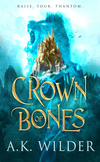
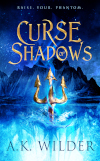
Kim Falconer, currently writing as AK Wilder, has released Crown of Bones, a YA Epic Fantasy with Curse of Shadows as book 2 in the series. Currently, she is working on the third book, out in 2024.

Kim can be found on  AKWilder Twitter, Facebook and Instagram. 

Throw the bones, read your horoscopes or Raise Your Phantom on the AKWilder.com site


Monday, June 21, 2021

Midsummer - Winter Solstice is Nigh

Art by Stephani Pui-Mun Law

Hey Everyone,

I invite you all to welcome the midwinter/summer Solstice! This marks when we have either the longest day of the year (N Hemisphere) or the shortest (S Hemisphere).  Here are the exact times for 2021.

MIDSUMMER/WINTER SOLSTICE
SUN @ 0° CANCER
LA - June 20 - 8:32 pm
NY - June 20 - 11:32 pm
LON - June 21 - 4:32 am
SYD - June 21 - 1:32 am

Ancient History

Since neolithic times, we as a people have celebrated the midsummer and midwinter solstices. It still means different things to different cultures but I like to think of it as a time of renewal. A time to fuel hope for the harvest to come (summer), or for the thaw and return of spring (winter). 

What Exactly is the Solstice?

Solstice literally means 'sun at a standstill' as the Latin name describes the sun reaching its maximum or minimum declination in the sky (from a geocentric standpoint). Hence we have a marker for the longest and the shortest day of the year. That alone is something to celebrate!

Ancient Stonehenge and the Solstice

And we do. Take Stonehenge for example, a literal touchstone and host to solstice rituals for the last 5000 years. And still today, modern druids gather at Stonehenge to watch the sun's first rays shine above the ‘hele stone.’  - Summer Solstice - Alban Hefin


The Solstice in Fiction


Fiction also connects us to the midsummer/midwinter Solstices, giving us a chance, at least unconsciously, to align with the power of restoration and renewal.

Plenty of films and novels offer up their interpretations of the Solstice, for example, the 'starts out sweet and turns to horror' film called Midsommar written and directed by Ari Aster. But be careful. It might put you off the whole idea of May Poles and other festivities this time of year.

Another psychological thriller, Solstice, by Joyce Carol Oates, explores an intense-turned-obsessive relationship between two women. In this case, the opportunity for renewal at the solstice is more metaphorical.

The Solstice in Fantasy World-building

Using lunar and solar events like eclipses, Equinox/Solstice, ingresses of planets and other celestial movements can ground a reader in the story. It offers a reason to celebrate or be afraid, or hopeful but no matter what, it gives cultural credibility to the story, deepening the world-building and making the work richer in scope.

In the Fantasy genre, we might see the Solstices mark times of initiation, seasons or events, as in my second Earth - Gaia series (under Kim Falconer) The Path of the Stray. Quantum Encryption Book 1. 

In this book, I used the midsummer Solstice to signify the time of year in a journal entry made by one of the main character's ancestors. The discovery of the journal leads the story back to that era. In essence, I had an element of world-building as well as an event to transition the reader back to the prequel.

Also marking a significant time, the Solstice is mentioned in  Hugo Award-winning writer, M. K. Jemisin's The Fifth Season - Broken Earth Book 1. 

In Traci Harding's Ancient Future Series, Stonehenge literally teleports the main character (and readers) to a distant past.

In this way, Traci's wildly successful series literally uses the summer solstice as a time machine, of sorts, to incredible effect. It all begins with car trouble, putting the main character, Tory, at just the right place and time.

...As she reached the perimeter of the circle a strong presence came over her and she stopped in her tracks. How strange that I should find myself here tonight. She was a little scared by this thought, for tonight was the summer solstice. When Tory recalled tales of Wiccan and Druidic practices traditionally held on this night a shiver ran over her...

In my newest work, Curse of Shadows, the second book in the Amassia Series, the Solstice becomes the hands on a ticking clock. The Bone Thrower insists that our company of main characters begin a quest on the midwinter solstice and complete it successfully by the midsummer solstice. The consequences of failing are dire and we only hope they can do the impossible in time to save the world.

How about you? Do you have any solstice traditions? Books that mark this longstanding human propensity to connect with the cycles of sun, moon and stars? I would love to hear about them in the comments.

xxKim (aka A K Wilder)

* * * 

Kim Falconer, writing YA Fantasy as A K Wilder, has just released Crown of Bones and soon to announce the date for the sequel, Curse of Shadows.

Kim can be found on  AKWilder Twitter, Facebook and Instagram. 

Throw the bones, read your horoscopes or Raise Your Phantom on the AKWilder.com site or have a listen to the audio version on the right.


Tuesday, September 15, 2020

5 Reasons to Read Fantasy


Art by Catherine Chauloux


In times of isolation and hunkering down at home, reading is on the increase. Some genres are actually skyrocketing as people find diverse ways to entertain themselves and their family while staying put. 

Catherine Chauloux

Although the circumstances are unfortunate, the results are beneficial. Reading has its perks beyond the obvious one of entertainment.

Benefit #1  - Mental Stimulation 

Researchers using MRI scans to measure the effect of reading a novel on the brain made some exciting discoveries. As subjects read, more and more areas of the brain lit up with activity. The scans showed that brain connectivity is increased by reading, especially in the part of the brain that responds to physical sensations like movement and pain.

Benefit #2 - Reduces Risk of Heart Disease

Reading immersive fiction is shown to have a relaxing effect on the body, lowering blood pressure and protecting to cardiovascular system. Even when the story dives and plunges, rushing us to the edge of our seat, the beneficial effects are there.

Benefit #3 - Bye Bye Stress

Research at the University of Sussex shows that reading is a great way to re-energize. Their work provides evidence of how effective just six minutes of reading can be to reduce stress levels by more than two thirds. (And you know you're going to read for more than six minutes!) "Losing yourself in a book is the ultimate relaxation,” said David Lewis, MD, who lead the study.


Benefit #4 - Love and Connection

According to social and media psychologists, the companionship experienced with fictional characters can be very real. The phenomenon is called parasocial interactions, one-sided relationships with celebrities or fictional characters. Don't laugh! The research is showing that these relationships, even though one-sided, can offer the mental and emotional benefits of camaraderie, community and sense of belonging, essential states for our health and well being. 

Peintre Contemporal - Catherine Chauloux


Benefit #5  - Boosts Self-Confidence


While the heroes in our stories strive to do better, accomplish goals, fight off villains, harsh environments, injury and disease, we are doing so too, right along side them. Reading about their triumphs over adversity, how they win love and saving the day makes us feel like we can, too, and that helps us feel a little better about ourselves.

Characters also show us that our “flaws” can be made into gifts, if we perceive them in a new way.
If that's not enough to convenience you, here are three books you may not have read yet that could spark your interest. (I have a reviewer friend who scouts the best page turners and sends them to me! You can follow her on Twitter here.)

Let me know what you are reading right now. Love to hear from you,

The Space Between Worlds by Micaiah Johnson
This is My America by Kim Johnson     Trouble the Saints by Alaya Dawn Johnson


* * * 


Author Kim Falcconer

Kim Falconer's New YA Fantasy Series is out January 5, 2020 - Crown of Bones. (Writing asr A.K. Wilder) 

Also, check her urban fantasy  - The Blood in the Beginning - an Ava Sykes Novel and the SFF Quantum Enchantment Series. 

You can find Kim on Twitter, Facebook and Instagram. Or pop over and throw the bones on the AKWilder.com site.


Saturday, May 16, 2020

Get Caught Reading


Get Caught Reading 
Welcome everyone, to lovely May, the Get Caught Reading Month.

Get Caught Reading is a nationwide push inspired by the Association of American Publishers. The aim is to remind people in this time of isolation and crisis how much fun it is to read.

But we don't need reminding, right? If you're part of the Supernatural Underground party, reading is a given.

Still, it helps to throw our hands in the air and celebrate the joy of books! Let's do that now by recounting some of the awesome things reading does for you.

Women Get Caught Reading
1) First up, reading is entertaining and good for your health. Not only does allow us to immerse in story worlds, but it also reinforces neurotransmitters in the brain, keeping the mind sharp and firing.

2) Some studies show that reading reduces stress by up to 65%. That's a lot of stress to let go of!

Note: I'm not sure that the actual writing of books reduces stress, but that's a topic for another day. :)

Anime Characters Reading

3) It may surprise you to learn that reading fiction, or even non-fiction, helps us do MORE in the world. Studies show that if we read about other people's adventures, we are more likely to have adventures ourselves. It gets the brain moving, which means the body is more likely to follow suit.


Reading Romance

4) I've talked about rereading and social surrogacy before. Basically, when we read, we make connections to fictional characters in the same ways to do ‘real’ people.

Psychologists call it parasocial interactions because they are one-sided, but the fact remains, these relationships offer us all the mental and emotional benefits of camaraderie, community, romance and a sense of belonging, essential states for our health and well being.

If the brain is imagining it, physiologically, it's happening!

So, tell me what you are reading this month to celebrate the joy of books! I'd love to hear why reading is good for you.

See you in the comments!

***

Author Kim Falcconer

Kim Falconer's New YA Fantasy Series is out August 4, 2020 - Crown of Bones. (Writing under A.K. Wilder) 

Also, check her urban fantasy  - 
The Blood in the Beginning - and Ava Sykes Novel and the SFF Quantum Enchantment Series. 

You can find Kim on Twitter, Facebook and Instagram. Or pop over and throw the bones on the AKWilder.com site.

Friday, November 16, 2018

Tricksters Afoot in Fiction

Image by Maroczna Postac

Fantasy fiction is rich with archetypal figures, characters that appear in all cultures, in all places, in all times. Think of them as the wise old man, the hero, the mentor, the villain, the innocent, the witch/shaman, the enchanter, the messenger, the ally, the ghost, the bad place... So many. But the figure I want to focus on today is the wily, enigmatic Trickster.

No matter how storytelling changes over time, through centuries and millennia, the Trickster remains one of the most beguiling and disturbing characters of them all. She, or he, goes by many names, the fool, the clown, the jester the disrupter, the rebel, but all describe a single entity with a powerful purpose.

Spike may be the most honest of all the BTVS characters.

What is the Trickster energy?


At the core of the Trickster is disruption, the intention to pull on the threads of order so the old rule will unravel, allowing for insight, growth and change. The Trickster presents the hero with a new perspective, one that might both excite and terrify. It certainly provides the opportunity for contrasting views.

“The Trickster’s function is to break taboos, create mischief, stir things up. In the end, the Trickster gives people what they really want: some sort of freedom.” — Tom Robbins

Take Spike in Buffy the Vampire Slayer. As a villain, he never hides his intentions to do as much harm as possible. But he loves his evilness so much, his joy in it becomes contagious, an act only a Trickster can accomplish. He laughs at the rules and invites the reader/viewer, and Buffy herself, to consider an alternative perspective.

Why we Need the Trickster
Bob the Skull in the Dresden Files

Tricksters come along when the hero, or the story, is stuck. They tip the apple cart, tell the truth, blow the roof off the house and crack open the windows, setting everything upside down. The dust stirred up by the Trickster restores the hero's vitality, returning to flow of the creative life force. Where once there were walls, gates and thick forests, a pathway opens.


Tricksters in Fiction

Some Tricksters are obvious, Mr Nancy in Neil Gaiman's American Gods, Katniss Everdeen in The Hunger Games, Matilda by Roald Dahl, Fitz in Robin Hobb's the fool, Bob the Skull in the Dresden Files.... but one example that strikes me as more enigmatic than most is Tom Bombadil in LOTH. 

He's a Trickster from the start and knows the way's of nature, has command over Old Man Willow and his entire forest, yet  Frodo's ring has no power over him. He speaks in riddles and rhymes and seems to exist outside the rest of the story. So far outside that Peter Jackson deleted his scenes to make room for more vital characters. Fortunately, Tom Bombadil remains in the books.

As Trickster, Bombadil allows the reader to wonder, giving a breathing space to see the larger picture in the history of the Ring. In him, we meet a character who exists beyond the constructs of the story, which shows us, and Frodo, that even for a moment, we can stand in that space too. 

“‘…even in a mythical Age there must be some enigmas, as there always are.  Tom Bombadil is one (intentionally).'” (Tolkien, Letter 144, p 174)

Salia concept art by Anna Campbell
A favourite Trickster character in my own writing, found in The Blood in the Beginning, Blood and Water and in the upcoming The Bone Throwers, is Salila. She's much like Spike in her disregard for the natural order of things, for rules and morals and codes. She blasts into scenes with the irreverence and evil of a demon, all while capturing the readers' hearts.

How about your favourite Tricksters? I'd love to hear about them.

***

Kim Falconer's New YA Fantasy Series is out in 2019 - The Bone Throwers. Also check her urban fantasy out now - The Blood in the Beginning - and Ava Sykes Novel and the SFF Quantum Enchantment Series. You can find Kim on Twitter, Facebook and Instagram.

Kim also runs GoodVibeAstrology.com where she teaches the law of attraction and astrology. 

Catch her here at the Supernatural Underground on the 16th of every month.

Monday, November 30, 2015

Step Away From That Manuscript--After #NaNoWriMo

This post was going to be about monsters, but it's not, because things are happening all at once again, as they sometimes do in my life. Due to these mitigating factors, this will be a much shorter post than my previous two.

Initially, I had wanted to talk to you about the importance of monsters in fiction. However, I am under a deadline, and it's the end of NaNoWriMo so I figured most of you were under deadlines, too.

Anyway, I thought I would impart a bit of writing advice to you.

Or make that non-writing advice, as the case might be.

That's right. I'm telling you not to write. Let me explain:

If you participated in NaNoWriMo, I'm sure you're excited about your story. You should be. Writing a work of fiction can be a major undertaking. Whatever else you do, finish your story.

If you intend to submit your story for publication, I would like to make a suggestion. this will be the hardest thing you will do, but I suggest that you set your story aside for one week at the very least. One month is optimal.

Don't look at it. Don't think about it. Write something else. Start a blog. Play on Twitter. Take a workshop. Read. Read. Read. Read books and stories within your genre and outside your genre.

But whatever you do ...

Do.

Not.

Look.

At.

That.

Novel.

Why?

You will be amazed at the things you see when you go back and read it after being away from it for a week or more. You will find missing words, badly phrased sentences--sentences that sounded so profound in your head when you first wrote them now seem trite and underdeveloped! You will discover poor transitions between paragraphs, and scenes that were fun to write, but don't actually move the plot forward.

By leaving the manuscript alone for a period of time and returning to it, you will find the themes that stand out clearly, and the muddled subplots that need to be eliminated.

This past summer, I was on a deadline to complete Without Light or Guide and did not have the luxury of a week away from the manuscript like I had with In Midnight's Silence. The difference between the two was that Without Light or Guide took a lot more editorial guidance and rewrites than In Midnight's Silence.

With my last novella in the series, I had the luxury of that week. I'm rereading the manuscript now with an eye toward clarity and plot. I'm catching simple errors and more complex ones in order to fill in the story so that it reads more smoothly.

So at midnight on November 30 (or on the date you finish the first draft), step away from that manuscript. Let it simmer. At the end of the month, you'll be able to see precisely what the story is missing, and you will make it better with each pass.

Wednesday, September 30, 2015

And now for something creepy: The Black Spider by Jeremias Gotthelf


It's almost-not-quite-October, and after numerous false starts on this post, I've decided to throw caution to the wind and talk about a creepy little novella that might have flown under your radar. First written in 1842, The Black Spider, remains one of my favorites, and I've read it a couple of times since discovering it last year.

Before we start, let me clarify that when I talk about horror, I don't think of slasher fiction, or torture porn. Those types of fiction simply aren't my speed.

I enjoy the gentle dread concealed within dark fairy tales and Gothic horror. The stories tend to be more intricate and rely heavily on a sense of mood and place. The Black Spider falls neatly on the side of the macabre, but Gotthelf does not rely on graphic descriptions of blood and gore. His is a much more subtle touch, one that I think you might enjoy.

The Black Spider is a Christian fairy tale filled with the familiar themes on the dangers of outsiders and dealing with the devil. There is an evil knight, frightened villagers, the devil, a good priest, and ... oh, a spider.

The story flips from the present to the past and back to the present. The prose is simple but exceedingly visual.

During a "modern day" (modern in 1842, anyway) christening party, the godmother of the child notices that although the grandparents' house is new, it contains a black post, which appears to be much older than the rest of the house. The child's grandfather then spins the tale of the black spider where we find that many, many years ago, the village was ruled by a Teutonic knight, who made terrible demands on his subjects. The villagers were too weak to deny him, and each task became more outrageous, more arduous.

The knight's cruelty culminates with a command to replant trees from a distant mountain to his estate. He wants a shady path to his castle. The people are faced with the terrible choice of either moving the trees and neglecting their harvests--thereby starving to death over the long winter--or resisting the knight and facing his wrath.

In pops the devil to the rescue.

Well, he doesn't actually "pop in," he sort of shows up in the guise of a "helpful hunter," known throughout the story as "the green man." All the green man wants in return for the boon of helping the villagers is a newborn unchristened child. Such a small thing to ask.

Of course, the villagers decline the offer.

Moving the trees becomes increasingly difficult, and as the knight's deadline and the harvest draw closer, one of the villagers, a woman named Christine, devises a plan. Christine advocates making the deal with the green man. Let him help them move the trees, and then when he comes for the newborn, she tells the villagers to have a priest present at the birth. That way, the priest can christen the child before the green man can claim the child.

Frightened of the green man, the villagers send Christine to negotiate the terms. Confident that her plan cannot go wrong, she meets the green man on the road, but Christine forgets one very important detail: the devil always finds a way to claim what is his. The green man seals their deal by giving Christine a kiss on the cheek.

No ordinary kiss is this.

"Basler-Kopp Die Schwarze Spinne"
by Franz Karl Basler-Kopp
Time goes by and one of the village women becomes pregnant. When she has her baby, the priest is called, and he christens the child before the green man can claim it. Everyone is fine, except for Christine, who feels as if "a glowing iron had suddenly been pressed to the spot where she had received the green man's kiss."

With each passing day, Christine suffers more and more from the green man's kiss. A black spot grows on her cheek. She appeals to the unsympathetic villagers, and begs them to give the green man the next unchristened infant. The villagers refuse to alleviate Christine's pain, and thus the spider is born.

Filled with dark delights that will leave the reader shivering, The Black Spider is an excellent story to kick off the haunted month of October.

Give it a read. You won't be sorry you did ... or maybe you will be ... just a little bit ... after dark.

Tuesday, September 22, 2015

Fact in Fiction: A Gate to Hell

Sometimes the saying is true: Fact is stranger than fiction. A writer will stumble over many examples of this in their research. We’ll look at it and say, “No one will believe that,” so we fictionalize it, oddly making it more “believable”. While writing The Dark Cycle Series I definitely found an example that fits this bill. 

The Devil’s Gate dam in Pasadena, California. Just the name of the place is confusing. Pasadena? What’s devilish about Pasadena? The Beach Boys said that’s where the little old ladies live. But then the Devil’s Gate part sends a bit of a shiver through the bones. And being in the location doesn’t help. If the stories of disappearances and deaths surrounding the land, and the strange rock formation shaped like a devil’s head don’t make you wary, then the story behind the myths most certainly will. 


The Devil's Gate Dam entrance
The land has always had the humans steering clear. Before the dam was built in the 1920s the Arroyo Seco River ebbed and flowed over the area on a seasonal whim. At times it would rage, causing serious flooding, then other parts of the year it would be as dry as a bone. The Native Americans believed that the land was cursed and barred their own from going anywhere near it, many saying there was a dark doorway in the area.

In the late 1940s, a very real reason became evident, and many more people began viewing the dam as a porthole to Hell, as one event after another spread the mythos. These events were said to be triggered by the real-life magic workings of the famous rocket scientist and occultist, Jack Parsons, along with the science fiction writer L. Ron Hubbard. They believed the dam carried magical properties and powers, as the Native Americans had always said. But they also believed they could harness that power to call up something called, a moonchild; an anti-god that could abolish civilization as we know it. 

These rituals and magical spells (dubbed the "Babylon Working") performed at the dam, as well as at Parsons' home, were said to have opened a porthole to another world, allowing demons to come and go as they pleased. 

Occultist Marjorie Cameron (The Scarlet Woman) & Jack Parsons
Sounds crazy, right? And when you hear the whole thing (including Jack's belief that his wife, Marjorie, was the whore of Babylon) it seems like a story written by a seriously strange mind. 

Soon after the last ritual, Parsons died in an experiment he was performing at his magic-infused home, seemingly killing the myth of devils and gates along with himself. The man, L. Ron Hubbard, became a famous novelist and the leader of Scientology, and nothing more was said of the gate to Hell. It seemed to fade into obscurity. 

Until 1956 when two young children where brutally murdered on the land, their bodies later found when their killer committed suicide. A year later, another boy disappeared when he walked ahead on the path a few yards away from his family. Later that year, another boy vanished without a trace on the trails. Those two boys’ disappearance remain a mystery. 

Since the ‘50s the legend has only grown, with people who visit the area experiencing ghost sightings of a woman in white, feeling burning sensations, and coming home with mysterious scratches. People feel watched, chased, and touched by something in the shadows. Porthole or not, the fear of the land is very real. And the origin of this real life mystery is definitely stranger than fiction;  plus, there's so much more to the tale that I don't have room for here. I encourage you to look it up, especially if you like old Hollywood Heyday drama.

As an author who writes about portholes to the World of the Dead, and demons walking among us, I can’t imagine it all really happening. But what if it did in Pasadena? Apparently that little old lady The Beach Boys sang about was no slouch, living in such a dark and dangerous place. 

___


Rachel A. Marks is the author of The Dark Cycle series, beginning with DARKNESS BRUTAL. You can read more about her weird hobbies and see some of her artwork on her webpage: www.RachelAnneMarks.com. You can also follow her on Twitter and Facebook.

Thursday, July 16, 2015

Saving the Day

Super Girl Returns by Jungwon Park
Hi Everyone,


Happy New Moon!

If you want to check your scopes for this month, jump on Facy and find your sign. (I've been a bit under the weather this week so popping them there was my easy option.)

www.facebook.com/kimfalconerfans


For my writerly friends, from published authors to emerging newbies, I 'm posting a couple of quick tuts.

The theme is saving the day, in two very distinct ways.

Number one is literally about saving your work in a way that not only insures against lost files, it give you the freedom to edit at will.

I learned this technique from a film animator and I swear by it now!

Save the Day - Part 1 


Number two delves into plot and character, what it takes to write narrative with stakes.

Whether your hero saves the day or fails, there is one thing your writing must have - stakes! This short tutorial talks about what stakes are, where they come from and how they fit into the storytelling.

Quick references to great resources including Donald Maass, Joseph Campbell and Blake Snyder. Clear and concise, what it takes to raise your stakes.

Save the Day - Part 2 


I'd love to know how many of you 1) save your work in this way and 2) have favorite books or films where the stake drag you to the edge of your seat.

Feel free to share in the comments.

Happy New Moon, everyone!

xxxKim

Kim Falconer is a Supernatural Underground author writing paranormal romance, urban fantasy, YA and epic science fantasy novels.

You can find out more about Kim at the 11th House Blog, and on FaceBook and Twitter.

She posts here at the Supernatural Underground on the 16th of every month.

Her latest release is "Blood and Water" in Supernatural Underground: Vampires Gone Wild. 


Thursday, April 16, 2015

Supernatural Sidekickin'

Screen Shot 2015-04-13 at 12.13.20 pm

Hello Sup readers and writers!

Before we begin, remember everyone, the Supernatural Underground "Never Have I Ever" giveaway is still on. Pop into the comments and be in the draw! 

This month, I'm blogging about sidekicks! I want to explore the qualities of a 'good' sidekick/wing woman/man, what traits they have, their roles in the storytelling and how to write them. Re-blogged from the 11th House. 


What Sidekicks Are Good For

Back story: A well written, three dimensional sidekick can help with back story, allowing the reader to see and hear about things that came before page one without wading through heavy exposition. We see this in Star Wars with the sidekick Chewbacca, where his adventures in the past with Han Solo help shape our understanding of the man. Also in the sidekicks C-3PO and R2-D2. We learn much about the world through their cometary.

World Building: The sidekick can represent a culture or social group as Gimli and Legolas do in Lord of the Rings. Gollum, a 'minor' character, but with a major goal, provides a talking point for the long and complex history of the ring. What life was like in the past, the roots of the hobbits as a people. He is kind of an 'anti-skidekick' to the anti-hero Frodo.

Contrast: The sidekick can have different values, ethics, goals and motivations, making for a contrast to the main protagonist. Damon Salvatore in The Vampire Diaries, for example, hasn't much of a moral compass. At all. His buddy Alaric Saltzman, however, does, and watching that friendship grow is a measure of the main character's arc and emotional evolution.

Humor and wit: The protagonist has to be pretty serious at times, playing it 'straight' as they work out how to fight the baddy, retrieve the lost treasure and save the day. The sidekick, however, is free to use wit and humor at times when the hero cannot. We see this in Buffy the Vampire Slayer with Xander (one of Buffy's many sidekicks). She may be in deep emotional angst and he can pop a one-liner that lifts the moment without throwing away her feelings.

Throw-aways: Similar to wit and humor, there are times when a scene is too intense, deep or meaningful and the sidekick can be just the one to lighten it all with a 'throw-away' line. Clive and Ravi do this on iZombie when Liv is too deep into the fact that she is dead, turned into a zombie and has to eat brains to survive. It can turn a scene around in a flash.

Freedom of Speech: The sidekick can say things the hero might be thinking, or wish they could say, but can't. In the Quantum Enchantment Series, Rosette has a sentient familiar, a temple cat who links with her telepathically. She might be having a conversation with a mentor or rival while her familiar does a running commentary on the whole thing, adding a new element to the scene.

Sympathy: The hero may also relate to the sidekick in ways they can't to others, allowing the reader to gain more compassion or understanding. This works especially well for main characters that are not fully sympathetic. Eric Northman's compassion for his progeny, Pam, is an example from True Blood, or Charlain Harrie's Southern Vampire Mysteries.


Screen Shot 2015-04-13 at 12.35.52 pm


Writing the Sidekick

The first question to answer when developing a sidekick in the story is why are they there? They have to move the plot forward, be part of the part of the story. They also have to have their own GMC - goals, motivations and conflicts, internal and external. In a shorter work, these won't be explored to a great depth, but with novel length stories and series, there is room for these subplots to be woven.

In Lord of the Rings, Gollum is a shadow figure of Frodo, a kind of "anti-sidekick" representing the "anit-hero's" darker obsessions, passions, and also his instinctual side. Gollum knows natures ways, leads Sam and Frodo into dark places, with darker designs. Gollum's inner goals, in the end, aren't any different than Frodo's, but he still has his own history, motivations, conflicts, and outer challenges.
  
Further questions to ask when developing a sidekick:
  • How do they move the plot forward?
  • What do they contribute?
  • Do they have heart or at least evoke an emotional response?
  • Are their stakes genuine?
  • Is their dialog strong and juicy?
  • Are they redundant in any way?
When getting the story down, the writer isn't usually thinking of all these things. I know I'm not! Still, it's a useful checklist for the next edit, and the next.

How about you all? Who are some of your favorite sidekicks?

Writers, how to you approach these types of Characters?

Comments are always welcome!

Kim Falconer is a Supernatural Underground author writing paranormal romance, urban fantasy, YA and epic science fantasy novels.

You can find out more about Kim at the 11th House Blog, and on FaceBook and Twitter.

She posts here at the Supernatural Underground on the 16th of every month.

Her latest release is"Blood and Water" in Supernatural Underground: Vampires Gone Wild.