Showing posts with label writing tips from authors. Show all posts

Sunday, August 3, 2025

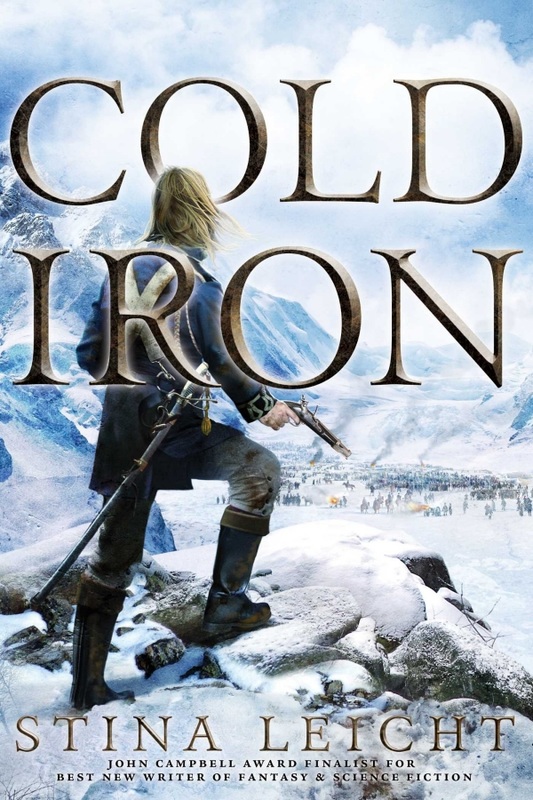
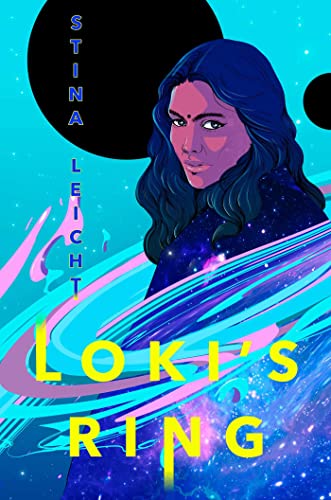
From The Backlist: "Great Dialog" By Stina Leicht

 .
It's always a delight to delve into our Supernatural Underground backlist-of-awesome and find a post we think you'll enjoy rereading (as much as we do!)

This month, we're featuring Stina Leicht's post on writing dialog, which is a deep dive that will interest readers and aspiring writers alike.

Enjoy!

Great Dialog 

by Stina Leicht

... Dialog should have texture. Some characters should be more serious. Others should speak in clipped tones. That’s more like real life, after all. Everyone has their way of speaking, and characters should too. Ultimately, dialog should say a great deal about the character, the world they’re from, the relationship they have with those with whom they’re speaking as well as the plot.

I’ll start with dialog as world-building. Everyone is familiar with the concept. We all know about accents, but geography and culture have a deeper, more subtle affect on speech. I learned that when I wrote Of Blood and Honey which is set in Northern Ireland. Unlike in American films, in reality an Irish accent isn’t the same all across the country even though its a small island. In fact, in the Irish language there are four distinct dialects. (There are others, but they aren’t officially recognized by the government.) And that’s when the Irish speak Irish. When they speak English, it’s possible for them to tell where someone is from within a few miles. It’s possible to tell a great deal about someone based on how they pronounce the letter “H.” It’s that nuanced. 

Picture

I’ll give you an American example. In Texas, an East Texas accent isn’t the same as a Central Texas accent. People who’ve spent all their lives in East Texas tend to, well… mumble. (And if you want a good example of East Texas dialog, read Joe R. Lansdale.) Central Texas accents are clearer and faster. People from other parts of Texas speak slower and more drawn out. It’s possible to convey these differences without writing in dialect. Listen closely. Ask any poet, language has rhythm. So do accents.

Once I get something down, I read it out loud. I ask myself if the words sound like something someone would actually say. If it doesn’t roll smoothly off the tongue, I fix it. Then I think about the environment the character came from. Are they upper class or lower class? How well educated are they? In addition, the analogies and slang they use should illustrate something about their background. The word choices can hint about about their age too. I once had a discussion with a new writer about whether a teenager would use the word “bosom.” Here’s a hint: they wouldn’t—that is, unless they’ve spent their entire lives around older southern (American) women and were home schooled.

..."

Like last month's What If: Folklore As A Source feature by Melissa Marr, the above is an abridged version of Stina's original, which you can read in full here.

To check in on Stina and what's she's writing currently, you can visit her here.

Hint, she has a new novel out this year: awesome, high five!

Monday, March 10, 2025

From The Backlist: "The Writer's Paradox" by Tera Lynn Childs

 .
We're all writers and readers here, so a writer's paradox holds perennial appeal. Here's the great Tera Lynn Childs' take on the theme -- enjoy!

The Writer's Paradox

by Tera Lynn Childs

Writers are crazy. There's no getting around the fact that (at times) we're completely neurotic, insecure, and borderline bat$#!%; crazy. I used to think that writing attracted unstable personalities, but now I'm pretty sure the Writer's Paradox is to blame.

You have to think you suck, otherwise you will.

When I started writing I thought I was a fairly sane person. I thought I was in control of my own emotions, at least as much as anyone is, and there was no way I would be as crazy as those writers on TV and in movies. Guess what? I was wrong.

Crazy Frog
This is what happens when you search for crazy on Flickr.


Over the course of writing and publishing a book, I go through stages of elation where I think, Woohoo, this is going to be the best book ever! (Note: This stage usually occurs before a single word has been written.) I go through meh stages where I think, The book is pretty crappy but I can fix it in revisions. (This is the most common stage.)

And finally I go through stages where I think, I'm a fraud who can't write, I'll never get this book under control, I'll never write anything as good as [fill in name of amazingly talented bestselling author here] and I'll never get another contract again!

This sounds crazy, right? ... The sad thing is--and as writers we kind of just have to accept this as fact--we need that fear ... "

To find out why Tera Lynn reckons writers need that fear, click here.

To learn more about Tera Lynn herself, and the all-important writing, follow this link.

Sunday, January 26, 2025

From the Back List - Adapting to Survive


The transformative power of bacteria turns plastic into eco treasures. Science 2023

Once again we have a treasure of our own from the Sup back list. It runs along parallel with Kim Falconer's latest post - The Art of Adaptation - Films in 2025

Read the entire back list post here and let us know what you think of these crazy bacterium set to save the planet!

* * * 

Adapting to Survive

 
Adapting a book to the screen has many names - remake, reboot, revision... But they all have one thing in common: the story is, in part or whole, rewritten to survive.

From the point of view of the book, this isn't always good, where 'good' equals accurate or in the spirit of.... As I mentioned once in The Down Side of Adaptation, Pulitzer Prize-winning novelist Jeffrey Eugenides reminds us that the book's story radically changes once it becomes visual. 

"It's no longer a book, and to try to insist on it being a book will usually make it a poorer film." - Jeffrey Eugenides

In the world of storytelling, adaptation is about the book withstanding a translation to 'motion pictures' and in the wild kingdom, adaptation means exactly the same thing... Read more.

* * *

We would love to hear about your favorite adaptations, in the wilds and multi-media! See you in the comments.


Thursday, July 6, 2023

Styling Characters in “The Gathering of the Lost”

.

Last week, inspired by Kim Falconer’s recent  More Than Meets the Eye: Styling Characters post, I took a closer look at styling characters in The Heir of Night (Heir).

The premise of Kim’s post is that a character’s depiction through “style”, whether clothing or arms, can provide insight into their personality, as well as their part of the story’s narrative arc, or their current mood and motivation.

In last week’s post I also addressed “When to Style”, which I won’t repeat here, so you may like to click back if you’re new to this post series or just want to refresh.
.

Styling Characters in The Gathering Of The Lost

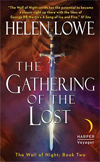
Today the spotlight’s on Book #2 in The Wall Of Night series: The Gathering of the Lost (Gathering.)
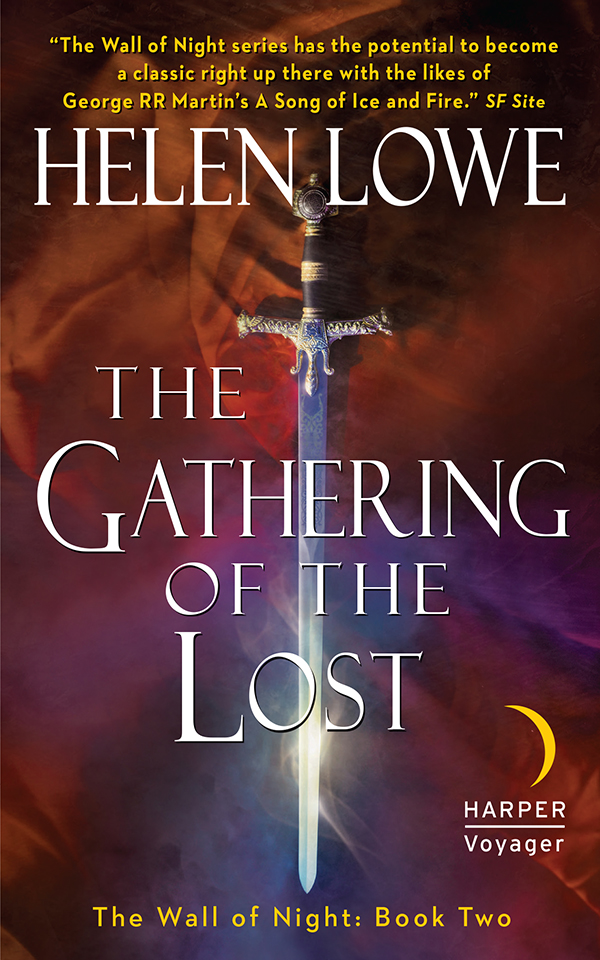
USA: Current cover

Last week, I set the scene with a brief outline of the Wall of Night environs, which is where the chief part of the Heir action takes place. In Gathering, the scene shifts substantially, to the Southern Realms of the world of Haarth – chiefly the city state of Ij, in the region known as the River, then farther south to the independent Duchy of Emer.

Although the story still follows the central characters from Heir they’re operating in a very different environment, which opens the door to styling changes – both for the characters that readers already know, and when new characters and settings are introduced.
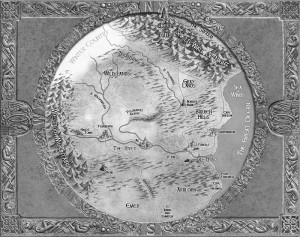
"The Heir Of Night" map: artist, Peter Fitzpatrick

Since there are a lot of characters, those mentioned are only a selection, not a comprehensive list. :D

The Heralds of the Guild: Jehane Mor and Tarathan of Ar

The Guild of Heralds operates throughout the Southern Realms but is most prominent on the River, where it originated. Heralds always ride in pairs that between them possess powers of finding and concealment, and who appear to have a symbiotic bond, chiefly evident by their practice of speaking with “one voice.” They carry dispatches, but also function as emissaries between rulers and the various states of the Southern Realms.
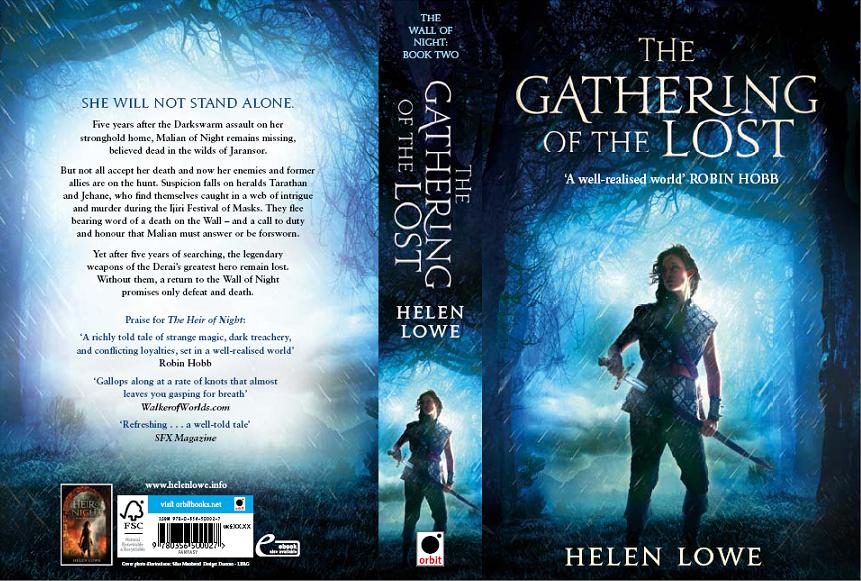
Full UK/AU/NZ cover

Being an “order”, although not a religious one, the heralds wear what is essentially a uniform. Accordingly, their style was established from the outset in Heir, when they arrived on the Wall with a secret message for the Earl of Night, and does not change in Gathering:

“They were both of middle height and clad alike in grey, their long cloaks cast back. A badge pinned each cloak on the left shoulder and a dagger was sheathed at their belts. Both their faces were drawn and weary, their clothes mired from the road…”

Heralds spend most of their time traveling, so in terms of styling choice, their clothing was always going to be in the grey or brown spectrum, i.e. to attract less attention in wild and lonely places, as well as blending with that “mire from the road.” Since brown is perceived as rustic in styling terms, and the heralds are emissaries as well as messengers, that made grey the logical choice.

When the heralds first appear, they are only carrying daggers, but it’s clarified in Gathering that they go armed when traveling beyond the River. In Jehane Mor’s case, that’s still only with what a Derai warrior (Tirorn) calls her “toy knife”, but Tarathan carries “a pair of short, curved swords strapped to his back” and also uses a “horseman's curved bow.”

As noted last week, styling should only convey detail that matters to the story. In the heralds’ case, their grey garb reflects their calling. The style of Tarathan’s weapons is also noted for a reason, which (I hope!) becomes clear once his backstory is revealed.
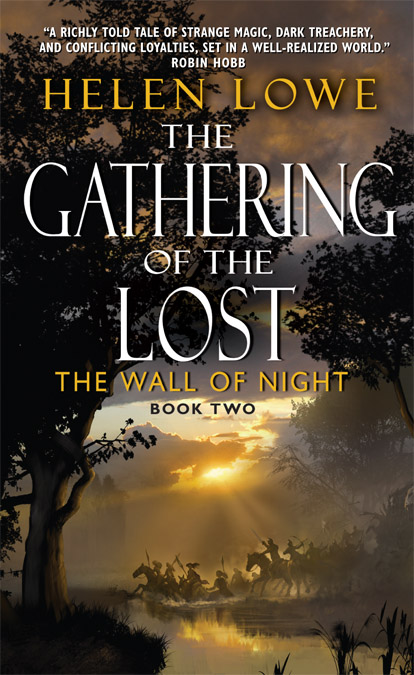
Original US cover

The Patrol and Aravenor

One reason heralds do not go armed on the River is because “the peace of road and river” is maintained by the Patrol. When first met, very early in the River narrative, readers learn only that they are a “mounted unit” and “silent behind their visors.”

Soon after, the heralds meet the Patrol captain called Aravenor, whose face is also covered by “the trademark visored helm.” At this point, it’s also disclosed that “the Patrol never revealed their faces, or entered a town or city, or stayed in any of the inns along the main road.”

It’s the helms, though, that lead a young woman in the neighbouring realm of Emer to speculate that, “…the Patrol are really demons bound to the River’s service and that is why they never show their faces to anyone.”

In terms of the Patrol’s styling, the helmets are the chief focus because of the associated secrecy. Although because they’re a mounted force, it’s not just the riders that go armored, but the horses as well:

“…the first of the of the riders emerged through the fog. The heralds saw the horse's head first, splitting the white air, its ears forward and nostrils flared. A second later the spiked helmet of its rider appeared, turning slowly in a sweep of road and wood. The visor was lowered, concealing the rider's face, and the horse too was armored, its breath curling through the metal chanfron as it walked forward. Together, horse and rider looked like some beast of ancient legend—or something altogether stranger, a shape of night itself emerging from the mist.”

The styling, together with the fog, is partly scene setting for what’s currently afoot, partly reinforcing the armed strength of the Patrol (which is important to this part of the story) – but also underlines that the Patrol is one of the great mysteries of the River lands.
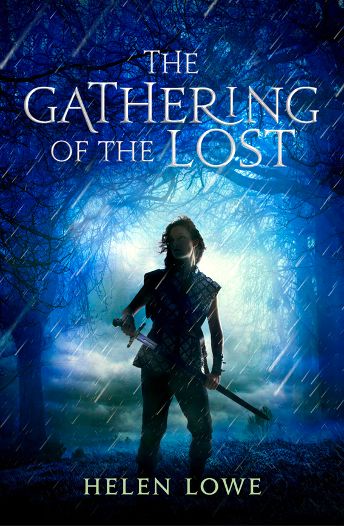
The "blue" UK cover

Raven

From the River, the story shifts to Emer, in particular its wild and dangerous northern march (Normarch.) Emer is known for its heavily armored Emerian knights (think Burgundy in the mid-to-late Middle Ages) but one of the first characters readers meet is a hedge knight called Raven.

Hedge knights are effectively swords-for-hire. They may serve a ruler or lesser lord for a period, but are not retainers. As such they follow conflicts where extra swords are needed, and some may also pursue the tourney circuit in the hopes of prize money. When hedge knights come together as a company, they would definitely be termed mercenaries, but as the “hedge” suggests, most spend a great deal of their lives on the road and live rough while doing so.

Clearly, Raven’s styling needs to reflect the hedge knight lifestyle, so here’s how he first appears:

"The rider … looked decidedly shabby in an old-fashioned ringmail shirt beneath a patched tunic, and the pot helm on his head had clearly seen better days."

A little later, the character with him (Carick) decides that, “…the shabbiness of Raven's first appearance did not improve upon closer inspection. The old-fashioned sark had been mended with horn and bone in places, and his cracked leather gauntlets, like the helmet, had definitely seen better days. Carick noted other signs of the disreputable as well: the tattoos glimpsed between the edge of the knight's sleeves and his gloves, the fetishes of bone and feather tied as a crest to his helmet—and horses that answered to a whistle.”
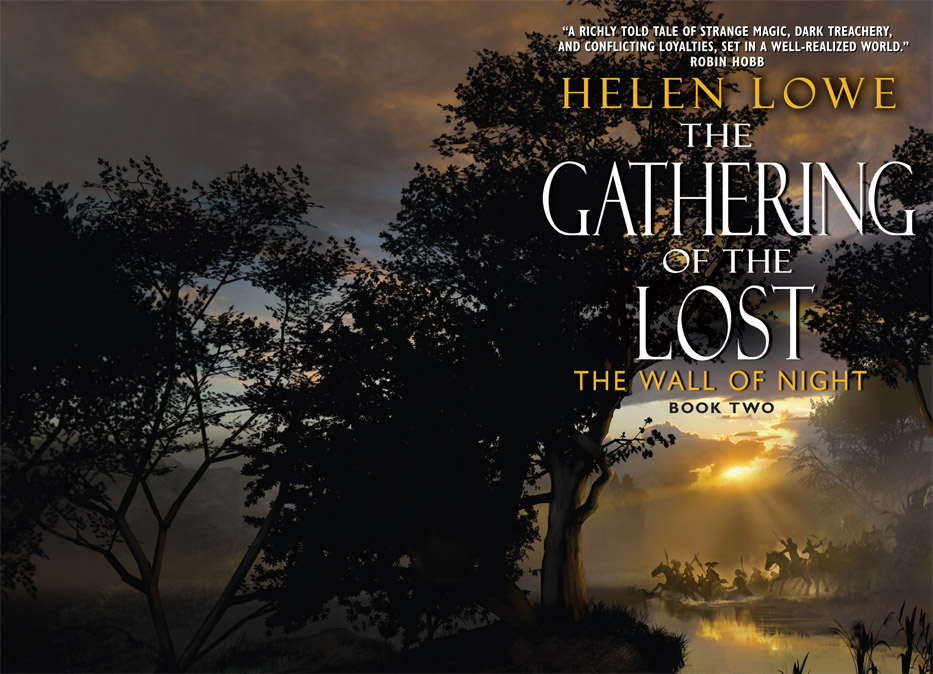
Full US Cover (Original)

Sufficient, I hope, for readers to glean that Raven may be a companion of dubious provenance. He’s very handy in a fight, though, as Carick learns soon enough.

Styling Armor: Audin; The Lightning Knights; Asantir

The Emerian narrative centres around knights-in-training, melees, battles, and a grand midsummer tournament, so armor and weapons play a  major part in styling the story. As with the Derai warriors in Heir, given readers know this is a militarized society, a certain amount can be taken for granted except when detail matters to the narrative.

For example, one of the knights-in-training is Audin, nephew to the Duke of Emer. In general, this is not emphasized, but when conflict comes, Carick notices “…the black oak of Emer on his jupon, set within the oak-leaf circlet of the ducal house.”

The fact Audin’s style includes a jupon also tells readers interested in such things a great deal about the style of armor that he—and by implication his companions—are wearing.

Similarly, when the young knights arrive at the tourney, styling in armor and weaponry is utilized to emphasize difference (a use also noted in last week’s post) when they meet the unknown Lightning knights:

“Kalan took in details without seeming to: blue-black armor beneath a long black surcote, and gauntleted hands resting on the pommel of a tall, two-handed sword. The guard’s visor was open, but he wore his mail coif in the Ishnapuri fashion, veiling the lower part of the face, so that Kalan could detect little of his features. He did not think that the man was Ishnapuri, though, despite the coif.”

UK release poster

Kim’s originating post points to styling conveying information about a character’s “background and place in the world”, as illustrated by the heralds’ greys, Raven’s rough equipage, and Audin’s jupon.

In the section of the book that briefly returns to the Wall of Night, readers re-met the Honor Captain, Asantir – who has been promoted since the events in Heir. Now she’s the Commander of Night and this is reflected in her styling:

“Asantir’s clothes and armor might still be plain black, but Night’s winged horse insignia on her breastplate gleamed with gold, ruby, and diamond. Even the cuffs of her gauntlets were worked with gold thread—necessary, Garan knew, for the prestige of Night…”


Returning to Malian

I did promise to return to Malian, when I discussed her styling in Heir. In particular, I noted that “Malian’s preference is for less restrictive clothing, where it doesn’t matter if she gets it dirty” and that I was “pretty sure” that preference would continue.

At one point, she “smooths the worst of the wrinkles out of her clothes and combs at her hair with her fingers.” Later, when preparing for action, she pulls out “her last clean shirt and hose.” The shirt and hose, “…as well as the sleeveless tunic she pulled on over the top, were black, but of everyday fabric.”

Still doing it plain and practical, in other words. Although Malian chooses apparel appropriate to the circumstances, her choices also convey a great deal more than meets the eye, including that clothes are not important to her.

Next time, we’ll see if that still holds true in Daughter of Blood, (The Wall Of Night, Book Three.) Meanwhile enjoy the Styling Characters fun – I hope it offers some insight into the style options for revealing character and nuanced storytelling.

~*~

About the Author

Helen Lowe is an award-winning novelist, poet, and lover of story. With four books published to date, she is currently completing the final instalment in The Wall Of Night series.

Helen posts regularly on her “…on Anything, Really” blog, monthly on the Supernatural Underground, and tweets @helenl0we.

~*~

Previous Posts

Styling Characters: More Than Meets the Eye (Kim Falconer)
Styling characters in The Heir of Night (Helen Lowe)

Note: This post also features on my "...on Anything, Really" blog today.

Monday, March 15, 2021

Characters from Scratch?


A Complete Guide to Special Effects Makeup

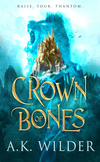
Creating the characters for Crown of Bones was like the birth of Athene. They leapt straight out of my head, fully formed, screaming a war cry. 

Moments later, they took over the page, expanding their roles and behaved in ways I couldn't control. More than once, I found myself saying, "Really? You're doing that?"

Crazy, I know, but I have come to believe that characters, and the stories themselves, all exist before we can even imagine them...

Salila

Zena Holloway Underwater Photography
Salila was the first to be born, full of wit, snark and hunger. She’s my current answer to Margaret Atwood’s question, "Is it somehow ‘unfeminist’ to depict a woman behaving badly?"

Not in the slightest...

Ash

Ash came more gracefully, with more compassion and patience. And with her was born an inner voice, an entity she talks with mind to mind. That was a shock. It took me time to realize the depth of this side of her nature, how it got there, and how it could be set free.

Marcus

The most challenging of my characters was Marcus. At first, I thought he was all the unanswered questions I had about my own brother, his life and his death...

But then Marcus and his phantom morphed into their own, distinct personalities and I forgot my preconceived ideas and listened to theirs.

Bone Throwers

Elven Forest Festival

Well, they were easy. I've trafficked in fate for most of my life. Bones, cards, planets and stars. It's all one...

Phantoms

The most delightful creatures to unearth were the phantoms, those projections of their savants' unconscious taking solid form. I adore their mystery, strength, and humour. If only we could all raise our phantoms as effortlessly as, say Piper or Samsen.

Of Kaylin and Ash
Jamesdesign1 DeviantArt

Kaylin

Of course, when it came to Kaylin, he was pure wish fulfilment. That sailor is everything I ever dreamed of, and more. I wish I knew the road to Tutapa so I could find him in RL! 

Please tell me about your favourite characters. Have you ever asked an author how they came to life? I'd love to hear about it!

* * *

Kim Falconer, currently writing as A K Wilder, has just released Crown of Bones, a YA Epic Fantasy.


She can be found on  AKWilder Twitter, Facebook and Instagram. 


Throw the bones, read your horoscopes or Raise Your Phantom on the AKWilder.com site or have a listen to the Audio version below.

Crown of Bones audio sample
Try the Audio Sample


Monday, March 20, 2017

Building Fantasy Worlds

Image by Surreal Artist Jacek Yerka
Hi Everyone,

I chatted with the Sup authors last week about how they created their worlds. So revealing! Here's what they had to say:

"The idea of a dark or twilit world was inspired initially by the swift nightfalls of Singapore, when I lived there as a child." Helen Lowe

"I always try to weave as much fact into my fiction as I can ..." Rachel A. Marks

"I didn't have to build from scratch, just point out what was different about Para-Dallas." - Amanda Arista

"I like to explore how environment shapes my characters, politics, beliefs, and then I let my imagination go wild." Kim Falconer

And then, there's George R. R. Martin -  [who] "... enjoys being surprised by his own work. He thinks of himself as a “gardener”—he has a rough idea of where he’s going but improvises along the way. He sometimes fleshes out only as much of his imaginary world as he needs to make a workable setting for the story.

Tolkien was what Martin calls an “architect.” Tolkien created entire languages, mythologies, and histories for Middle-earth long before he wrote the novels set there. Martin told me that many of his fans assume that he is as meticulous a world-builder as Tolkien was.

They write to say, ‘I’m fascinated by the languages. I would like to do a study of High Valyrian'—an ancient tongue. ‘Could you send me a glossary and a dictionary and the syntax?’

I have to write back and say, ‘I’ve invented seven words of High Valyrian.''” —Laura Miller, in The New Yorker

Why is world-building so important? 

The environment our heroes and villains live in is a major character of every book. It may be silent, behinds the scenes, shaping outcomes without the reader noticing, but it must exist or there's nowhere to for the story to unfold. And it must become real.

Some authors say that readers will believe in anything as long as it’s plausible, but I think Orson Welles proved that wrong when he read The War of the Worlds, by H. G. Wells, over the radio, causing mass panic. No, Martians weren't landing.

Fantasy readers don’t expect a world to adhere to Natural Law, but they do want it to adhere to its own laws. Ursula Le Guin reinforces this saying inner coherence, not plausibility, holds the reader enthralled. 

So let's look at how some of the Sup authors build worlds, and make them plausible, to us.

The Dark Cycle Series

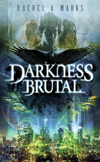
Rachel A. Marks - The Dark Cycle Series


"When thinking about how to begin building my story world, I always try to weave as much fact into my fiction as I can. In my mind, this creates a more vivid reality for my characters to populate. The best part of imagining Aidan's world when writing DARKNESS BRUTAL was being able to take the gritty reality of LA where I've grown up, play it up by overlaying urban legends I've been hearing since I was a kid, and then enrich the rules with supernatural mythos. And then make sure that the only one who can see this invisible world of demons, angels, and ghosts, is the main character, Aidan. So, part of the conflict the main character has in his journey is also a conflict in the world itself. 

"Seventeen-year-old Aidan can see demons, smell emotions, and feel the past in his skin, but will it be enough to save his little sister from the deal his mom made with a powerful demon all those years ago? "
The Wall of Night Series

Helen Lowe - The Wall of Night Series


"The Wall of Night world was with me for many years and the idea of a dark or twilit world was inspired initially by the swift nightfalls of Singapore, when I lived there as a child, then developed further when I spent a winter in Sweden with its "endless nights". 

The Norse myths with the "twilight of the gods" was also a considerable influence on the development of the world. As the story and the world expanded away from the Wall of Night to the Southern Realms of Haarth, influences from other landscapes played their part, from the khlongs of Bangkok influencing the River City of Ij, to the Nelson region of New Zealand shaping the physical character of the Duchy of Emer."

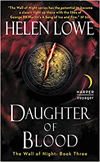
"The Wall of Night: fortresses of shadow and decay and an ancient war reigniting in a world where everyone could be an enemy and no-one is what they seem. Lost powers, undiscovered secrets, and a society divided by prejudice, suspicion, and fear -- and Malian, heir to the warrior House of Night and a promise that has endured down centuries: that she will not stand alone." - Good Reads: Daughter of Blood

Diaries of an Urban Panther

Amanda Arista - Urban Panther Series

"I live in Dallas and not too many books I had read captured the true urbanite quality of the city. It’s got everything that NY and Vegas with more cars and less smog. Drive 10 minutes and be in a vibrant down town or drive 30 minutes and be out in open land with cows. So I started there with my world-building, and just smoothed a layer of paranormal over the top of that. 

I was looking at the normal weird stuff and explaining it with paranormal things, like graffiti is actually protection spells and sounds in a dark alley that are actually were-creatures. I didn't have to build from scratch, just point out what was different about Para-Dallas. So my main character Violet could ease into the magical along with the reader. She still got her coffee, I still got to write about magic and things that blow up."

When Violet Jordan becomes a midnight snack for a werepanther, his infectious bite invokes the first element of her destiny to become the leader of the Dallas Wanderers. But if push comes to claws, can Violet make a fatal strike against the men threatening her new family, her new home and her first boyfriend in ages?

The Ava Sykes Novel Series

Kim Falconer - The Ava Sykes Novel Series

"The Aftermath. What a mess. The initial repair efforts deserved a medal. Having relief funding in the trillions helped. Who couldn’t make things as good as new, with that kind of backing? But fifteen years later and the funding isn’t so generous. It dried up completely in Anaheim, for example. There’s nothing there anymore but capped fracking wells and an abandoned amusement park. Kinda sad. I’d heard Disney Land was amazing, back in the day. Earthquakes will do that to a place, if earthquake it really was. There were all kinds of conspiracy theories, and then, there's the sea . . ."
"Undergraduate by day, bouncer by night, Ava Sykes works hard to build her life in New LA, a city experiencing the Aftermath of a seismic disaster. Her prospects improve until she stumbles upon an evil no sane person would want to confront. Suddenly, her life, her city and everyone she cares about is in danger. Pushed to the edge, Ava taps a power she never knew she had . . . and uses it."

What are some of your favorite worlds in books, or films? Feel free to share them in the comments.
xxKim

Kim Falconer's latest release is out now - The Blood in the Beginning - and Ava Sykes Novel. Find this novel in a store near you.

You can also learn more about Kim at AvaSykes.com, the 11th House Blog, and on FaceBook and Twitter.  Or on GoodVibeAstrology.com

She posts here at the Supernatural Underground on the 16th of every month and runs Save the Day Writer's Community on Facebook. Check out her daily Astro-LOA Flash horoscopes on Facebook.