Monday, April 21, 2025

The Art of Adaptation - Reader Persuasion

What have we learned?
Riot says Farewell to Arcane in a Hauntingly Romantic Music Video 

Hello everyone! 

Welcome to another instalment of The Art of Adaptation in the written and spoken word. Today, we explore how the reader might adapt to the story world based on the author's ability to persuade... in other words, how the author might push readers out of their comfort zone and into new experiences and perspectives.

Can stories really do this? Cause us to change our attitudes in real life?

The answer is yes, they can!

Simply put, storytelling has the potential to effect change through a technique called narrative persuasion

What is Narrative Persuasion?


Current research on storytelling and its functional role in human experience, including how people use media to interrogate their own beliefs and feelings, shows that they can glean social meaning from books, film, TV series and games. (For a deeper dive, check out DillShackleford, K. E on the social psychology of our engagement with fictional narrative and its functional value. (2016) 

But for this phenomenon to occur, it must begin with the writer persuading the reader/viewer of the story world's truth. If successful, it may open the way to new or different responses to familiar, and possibly blocked,  situations. In this case, the reader adapts to the author's Narrative Persuasion by believing in and immersing in the story.

How?

Narrative Persuasion is an art in and of itself. Through storytelling (the narrative), readers/viewers are coaxed toward a fresh or alternate perspective, or at least the possibility that one might exist. In this process, it may be the fictional characters that have the greatest impact. Still, it takes a certain style of writing to bring them to life for the reader.

Generally, pounding the reader with exposition, info-dumping their way to justification of a new idea or alternate response doesn't work. Instead, narrative persuasion invites us to immerse ourselves in the story, and by doing so, bond deeply with the characters.

And as our favourite characters believe, so too may we.

Take the multi-layered metaphors played out through the characters in Persuasion by Jane Austen. First, society persuades Anne Elliot to betray her love interest, Frederick Wentworth. Through his deep love of the sea, he persuades himself to accept her rejection and move on. But, the results for Anne are miserable, and eventually both Anne and Frederick are persuaded yet again to give their love another chance. 

Through the experience of sympathising with this fictional couple, we may also be persuaded to change our own worldview, just like the cinematic characters in the film The Jane Austen Book Club. Played by Marc Blucas (the disenchanted husband who has given up on his marriage), and Emily Blunt (his wife, a high school French Teacher who has fallen for one of her students) becomes a persuasion, within a persuasion, within a persuasion!

Marc Blucas and Emily Blunt in The Jane Austen Book Club (2007)

In the plot thread of the film, we see the estranged couple try to love again while reading Austen's book.  As a reader/viewer, it is hard not to adapt to Austen's, and screenwriters Robin Swicord and Karen Joy Fowler's, persuasive writing as we follow the characters deeper into the story until they find renewed love.

Creating Engagement is Key


Persuasion stems from engagement and connection.

In the paper, Connecting the Dots between fantasy and reality we find that the main ingredient to identifying with the characters is the ability to get lost in a story. From the perspective of immersion in another world, the narrative persuasion urges us to adapt, changing our attitudes, beliefs, and even behavioural intentions to match the story world characters', if we are moved to do so.

This process relies on creating engaging narratives, well-developed characters, and emotional resonance to reduce resistance and increase acceptance of information and viewpoints. For example, consider how Le Guin's Left Hand of Darkness has influenced our adaptation to changing personal pronouns over the last decades. (Even though the use of the non-binary they reaches back to Geoffrey Chaucer's 14th-century Canterbury Tales, the popular usage is recent.) It all pivots around our ability to relate to narrative.

Media psychologists use terms to describe this feeling of absorption and connection in a narrative with words like transportation, engagement, flow and presence.  I particularly like the term participation mystiquea process of interconnection where the definitive disappears, creating a spiritual experience or 'truth' within the story and its characters.

How is it done?

There are standard lists of advice for creating believable, engaging characters that can be persuasive. It begins with giving them goals, flaws, challenges and often some kind of secret.

In Delirium by Lauren Oliver, we find an engaging narrative, a YA novel that exemplifies a story of intimate telling that is 

1) easy to immerse in
2) provides a main character we can root for
3) is written in a persuasive form that touches on contemporary issues without excess exposition. 

Delirium offers a chance for readers to expand their world view of their own accord, without being told how or when to do so. 

The book has conventional chapters but uses epigraphs to portray our hero, Lena's, progressively adapting perspective. In a world that treats love as an illness, we follow her slow-boil rebellion with increasing sympathy. Here is an example below:


 Chapter One

The most dangerous sicknesses are those that make us believe we are well.
-Proverb 42, The Book of Shhh


As the story progresses in the deeply personal POV of the first person present, it's easy to become so immersed that we feel what happens to Lena is happening to us. When that occurs, the narrative persuasion succeeds. We no longer question the truth of the story world, but begin, outside of reading time, to question the truth of our own sanctioned beliefs. 

Concluding Thoughts


Have you read a book recently or seen a film that changed your worldview? Have you adapted to narrative persuasion and felt, in retrospect,  changed by it?

We'd love to hear your thoughts!

Meanwhile, all the Best for the Holiday Season!

:) Kim

Other Posts in the Art of Adaptation 2025

January - The Art of Adaptation - Films in 2025

February - The Art of Adaptation - Authors' Response to External Pressures

March - The Art of Adaptation - The Healing Magic of KDrama

April - The Art of Adaptation -  Reader Persuasion

May - The Art of Adaptation - Fantasy Monsters Part 1

June - The Art of Adaptation - Fantasy Monsters Part 2 

July - The Art of Adaptation - Alternate History

August - The Art of Adaptation - AI: A New Chapter for Writers

September - The Art of Adaptation - Crafting Mood with Language

October - The Art of Adaptation - Take Five

November - The Art of Adaptation - On Time

***


About Kim Falconer 


Kim Falconer, also writing as AK Wilder, has released Crown of Bones, a YA Epic Fantasy with Curse of Shadows as book 2 in the series. Currently, she is ready with the third book, out in 2025. TBA

Kim can be found on AKWilder.com, TwitterFacebookInstagram and KimFalconer.com

Throw the bones on the AKWilder.com site.. See you there!


Sunday, April 13, 2025

From The Backlist: "Book Addicts Anonymous" by Kerrelyn Sparks

 .
I think we're all book addicts here -- right? Right!

But here's the great Kerrelyn Sparks on that very subject:

"I love to read, and that love led me to writing. I love the whole business of books so much that I get swamped. One time I was so engrossed in writing that I got a phone call from the elementary school. School had let out twenty minutes earlier, and I'd forgotten to pick up my daughter! How embarrassing! Luckily, my daughter never held it against me. She understood, because she already loved books, too. Fellow readers understand the addiction... and the consequences. Supper gets burned. You go to work after a measly two hours of sleep."

Hard to beat, huh?! 

To read the full post-of-awesome (from our equally awesome backlist) click here.

And to catch up on Kerrelyn's books-and-writing latest, go here.

Enjoy!! 

Wednesday, April 2, 2025

Great Leaders in Speculative Fiction #3 -- Pyanfar Chanur & "The Pride of Chanur"

 .
Roll up, roll up, 'tis time for Instalment #3 in the great leaders of Fantasy and Science Fiction series.

If I'm being true to the theme, it's very very difficult indeed to go past Pyanfar Chanur, from CJ Cherryh's now-classic Chanur series.

The opening standalone is The Pride of Chanur, on which today's post is chiefly based, but I believe my comments apply equally to the subsequent trilogy: Chanur's Venture, The Kif Strike Back, and Chanur's Homecoming. The fifth novel, Chanur's Legacy, is a spinoff that follows another member of the spacefaring Chanur clan. 

.
As you've probably gathered from the covers, Pyanfar Chanur is not human. She's a Hani, from a lion-like race where (in pride fashion) only females go into space, to trade and deal with a range of other species, some oxygen, and others methane breathers. Collectively, they call their space system Compact space. 

The Pride story starts when Pyanfar's ship (the titular Pride of Chanur) is docked at Meetpoint station, where an unknown creature is loose on the docks. Hani and spacer practice is to mind one's own business and leave well alone, but Pyanfar and her crew's luck is out, because the stray makes a determined incursion into their loading bay, then the ship itself.


The stray turns out to be a human being, a species previously unknown in Compact space. Tully was a crew member on an exploration vessel that was pirated by another species called the Kif, who are inclined to raiding, kidnap, and torture. Tully is the final survivor and has managed to escape, but the Kif want him back and are prepared to go to any lengths to get him. 

Dockside skirmishes, interstellar pursuits, and space battles ensue, because this is space opera at its finest, and Pyanfar and her five Hani spacers are a riproaring, swashbuckling crew. In the midst of the furor, Pyanfar definitely leads from the front. But what begins her transformation into a great leader, rather than a courageous fighter alone, is when her moral line of sand becomes a line of blood, spilled on the Pride's deck. One that she's not willing to cross -- or to back away from.

When Tully seeks refuge on the Pride, he speaks no Compact language and is completely different to any species Pyanfar has previously encountered. She also knows that taking something the Kif want will bring down a world of trouble, not only on the Pride, but other Hani ships. The easiest course would be to hand Tully over and forget all about him.

The reason Pyanfar won't do that is because she realizes that Tully is a sentient being and should be accorded full Compact's rights in that respect. Her leadership shines in not only about holding to that point herself, but convincing others, both Hani and other species, to do the same -- despite a general reluctance to cross the piratical Kif. Her journey also involves a shift in  perspective, from seeing the Compact and its species from a purely Hani point-of-view, to comprehending a much bigger picture -- one that encompasses dealings with new species like humans, as well as the existing Compact members.

Pyanfar's ability to see that picture not only enables her to discern that change is needed, both in the Compact and within Hani society, but to be the change that will bring it about. Ultimately, this leads her to become (by the end of the trilogy) the equivalent of a president of Compact space, whose work has become wrangling the differences between its species, in order to preserve the cooperation that Tully's arrival threatened.  

Not by handing him over to the Kif, turning her back, and walking away, though. And the fact that Pyanfar Chanur can always be relied upon to kick-arse and take names, just makes her journey from spacer captain to galactic leader all the more enjoyable for readers. 

~*~

About Helen Lowe

Helen Lowe is an award-winning novelist, poet, and lover of story. With four books published to date, she is currently completing the final instalment in The Wall Of Night series.
.
Helen posts regularly on her 
“…on Anything, Really” blog, monthly on the Supernatural Underground, and tweets @helenl0we.


......................................~*~

Tuesday, March 25, 2025

From the Back-List: Confused about Genre?


Reading and Writing Different Types of Books
 

Today we share a back-list post from March 2013 from our very own Merrie Destefano, award-winning artist and author of multiple, intriguing genres.

Read the entire post Confused About What Genre You are Writing? and let us know what you think of these many subcategories of Speculative Fiction.

* * *

“What genre is this book?” 


This is a question that authors ask themselves frequently while writing. Agents ask it when considering representation. Editors ask it when acquiring. Marketing departments ask it while trying to promote the book. Bookstore staff members ask it when trying to categorize the book and when speaking to customers. Readers ask it before buying the book and when telling their friends about the book.

Phew.

The problem is, when you’re writing speculative fiction, all the boundaries seem to blur until you feel like you’re cross-eyed. To give you a brief example, when I wrote my first novel, Afterlife, I saw it as science fiction. When my editor acquired it, however, she asked for a few changes -- not many -- and the book was then marketed as an urban fantasy. To me, that book will always be sci-fi. But to many readers, it’s urban fantasy.

My current novel, Fathom, probably falls into the category of paranormal romance. But to me, it’s fantasy. I never saw the paranormal romance elements when I was writing the book. They’re probably there, but to me it was like a math equation:

Overarching coming of age theme + legendary creatures + mythological elements = FANTASY.

But then, I’m just the writer. Writers don’t usually get to decide what category their novels fall into. They just write the best book they can and try not to worry about things like markets or categories or the dreaded Latest Hot Topic.

So, just for fun, I put together a little Cheat Sheet for helping to define what category the book you’re currently reading might fall into. Now, these are just suggestions, not hard, fast rules. Here goes...

CATEGORIES OVERVIEW:

FANTASY: May take place in another world and often contains magic or supernatural elements. Does not contain scientific themes (otherwise, it would be science fiction.) Usually has a battle of good versus evil. May or may not have romance.
Books: The Lord of the Rings, Harry Potter, Game of Thrones.

HORROR: Can contains supernatural themes; meant to scare, startle or terrify. Sometimes rooted in folklore. May have vampires, werewolves, etc. Also may have a gothic tone. Sometimes written very beautifully, despite horrific subject matter.
Books: The Shining, Dracula, The Haunting.

PARANORMAL ROMANCE: May blend elements of science fiction, fantasy and horror. Takes place in our world, but often has otherworldly creatures, like vampires, ghosts, shape shifters, etc. A sub-category of fantasy and/or a sub-category of romance that contains experiences outside the normal or supernatural aspects.
Books: Highlander, Twilight, The Vampire Diaries. Read More...

* * *

We would love to hear about your favorite genres. Meet us in the comments!


Friday, March 21, 2025

The Art of Adaptation - The Healing Magic of KDramas


Nine-Tailed Fox from Pinterest

Welcome to the Supernatural Underground! Today we are looking at another form of adaptation as seen through the magical world of KDramas.

Why Korean Drama?

What is so spectacular about KDramas that makes them popular? 

First, the obvious. 

South Korea is financing their Art, film and music industry, and what a difference that support can make We are seeing more and more polished, well-written, directed and acted shows produced for a rapidly growing audience.

These shows present a window into another culture that broadens our international perspective. They bring the heights of emotion to the surface, exploring tropes of love, family, romance, fantasy, mythology, contemporary goals and timeless longings.


Gong Woo and Kim Go-eun in
Guardian - the Lonely and Great God

When well done, and many are very well done, they richly entertain while sparking creativity, cultural empathy and compassion.

KDrama as International Films*

KDramas, once categorized as foreign films but now referred to as 'international', have a magical appeal, tempting viewers with new settings, customs, styles and ideologies while staying firmly rooted in familiar feelings, narratives and archetypes. Think of them as the epitome of immersion into another culture, the next best thing to being there. 

The Brain Delights

As with all international media, we must adapt in multiple ways to experience these films to the highest degree.

From the original post, Kdramas not only adapt one medium to another - book or screenplay to film, they translate it for another culture. For this to work, the 'other culture' must find the truth of the story through sound, sight and the interpretation of the written word, ie subtitles. 

Not how the brain watches films.
We might think of this as multiple tributaries flowing into the same reservoir of cognition, but that isn't the case with the human brain. Not even close.

Each interpretation of sight, sound and language is processed differently and in different parts of the brain. 

How the Brain Views Multiple Media

For example, sound begins as an air wave, entering the ear where it turns into an electrical signal and travels through the thalamus to the auditory cortex in the temporal lobe for 'translation'.

Sight, on the other hand, is light that journeys through the eyes, into the optic nerve where it turns into different electrical signals and is carried to the visual cortex in the occipital lobe for interpretation.

Reading the written word, however, is fairly new to human experience, at least in evolutionary terms.
Because of the infancy of the process, there is no specific part of the brain responsible for written language translation. 

Instead, we must rely on our memory of the sounds heard while linking them to the sounds we 'see' in the written letters or glyphs. This process is known as phonological recoding, describing how our brains understand writing.

Via these multi-layers of stimulation, the brain learns to make sense of films with subtitles to our great benefit.

Watching Kdramas is Good for You

A major benefit of watching KDramas is the activation of multiple areas of the brain. Think of it as enhancing comprehension, memory, recall and attention to detail. It's stimulating and entertaining all in one.

With soap-like plotlines that aren't afraid to tackle everything from grief to joy, agony to ecstasy, watching KDramas can help us reconnect with our own emotions and process past trauma.

The idea that Kdrama binging can help with mental health may seem a stretch, but it aligns with psychological research. These models show how viewing creates a safe space for individuals to explore their experiences and by doing so they may regain a sense of control, restoring well-being. Healing through the art of storytelling

Expert Im Su-geun underscores, "Watching Korean dramas can be beneficial for anxiety and depression from the viewpoint of art therapy." KDrama for mental health

Subtitle Caveat


Kim Jung Nan plays Talupio
in Tale of the Nine-Tailed
Although subtitlers do an amazing job of staying true to the translation, they sometimes fall short. 

Take an instance in Tale of the Nine Tailed, for example. Here our hero is a Gumiho, a nine-tailed fox, who has a grandmotherly relationship with Talupio, the beautiful, ancient woman in charge of afterlife immigration and protector of the Samdo River. (Think River Styx)

Our fox calls her halmeoni, or Halmeonim, a form of supreme respect given to a venerated ancestor goddess. And rightly so.

But what words does the translation team choose for this exalted women?

Old Hag.

In the subtitles, he calls her Old Hag repeatedly!

If I hadn't been watching the film with someone familiar with the Korean language, I would have been very confused. Certainly, the actor never treated her like a hag, old or otherwise. 

The Bottom Line


Kdramas, with their high production values, strong acting and gorgeous stars have propelled South Korean TV shows to the top of global charts, but there are even deeper reasons to get hooked. 

With soap-like plotlines tackling everything from earth-shattering grief to the joy of new love, watching KDramas can help people reconnect with their own emotions. - Bing watching KDrama

"We all have family pressures and expectations, conflict, trauma, hope, and watching heavy topics being successfully managed on screen can change people's ability to navigate real-world challenges.

Besides, they are so wonderfully done and addictive!

***

Are you keen to let yourself adapt to a new experience? Try stories that make the heart beat faster, through KDrama!

xo Kim

*International films were referred to in the past as 'foreign films', which in contemporary settings is seen as exclusive and outdated.

Other Posts in the Art of Adaptation 2025

January - The Art of Adaptation - Films in 2025

February - The Art of Adaptation - Authors' Response to External Pressures

March - The Art of Adaptation - The Healing Magic of KDrama

April - The Art of Adaptation -  Reader Persuasion

May - The Art of Adaptation - Fantasy Monsters Part 1

June - The Art of Adaptation - Fantasy Monsters Part 2 

July - The Art of Adaptation - Alternate History

August - The Art of Adaptation - AI: A New Chapter for Writers

September - The Art of Adaptation - Crafting Mood with Language

October - The Art of Adaptation - Take Five

November - The Art of Adaptation - On Time

***


About Kim Falconer 


Kim Falconer, also writing as AK Wilder, has released Crown of Bones, a YA Epic Fantasy with Curse of Shadows as book 2 in the series. Currently, she is ready with the third book, out in 2025. TBA

Kim can be found on AKWilder.com, TwitterFacebookInstagram and KimFalconer.com

Throw the bones on the AKWilder.com site See you there!


Monday, March 10, 2025

From The Backlist: "The Writer's Paradox" by Tera Lynn Childs

 .
We're all writers and readers here, so a writer's paradox holds perennial appeal. Here's the great Tera Lynn Childs' take on the theme -- enjoy!

The Writer's Paradox

by Tera Lynn Childs

Writers are crazy. There's no getting around the fact that (at times) we're completely neurotic, insecure, and borderline bat$#!%; crazy. I used to think that writing attracted unstable personalities, but now I'm pretty sure the Writer's Paradox is to blame.

You have to think you suck, otherwise you will.

When I started writing I thought I was a fairly sane person. I thought I was in control of my own emotions, at least as much as anyone is, and there was no way I would be as crazy as those writers on TV and in movies. Guess what? I was wrong.

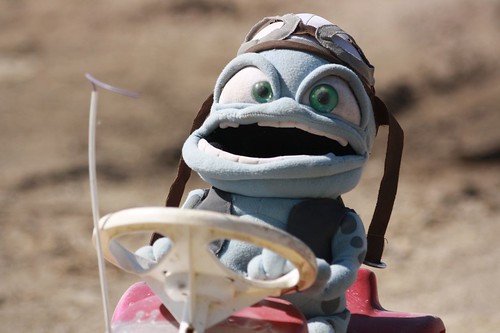
Crazy Frog
This is what happens when you search for crazy on Flickr.


Over the course of writing and publishing a book, I go through stages of elation where I think, Woohoo, this is going to be the best book ever! (Note: This stage usually occurs before a single word has been written.) I go through meh stages where I think, The book is pretty crappy but I can fix it in revisions. (This is the most common stage.)

And finally I go through stages where I think, I'm a fraud who can't write, I'll never get this book under control, I'll never write anything as good as [fill in name of amazingly talented bestselling author here] and I'll never get another contract again!

This sounds crazy, right? ... The sad thing is--and as writers we kind of just have to accept this as fact--we need that fear ... "

To find out why Tera Lynn reckons writers need that fear, click here.

To learn more about Tera Lynn herself, and the all-important writing, follow this link.

Sunday, March 2, 2025

Great Leaders in Speculative Fiction #2 -- Kaladin, Dalinar, & "The Stormlight Archive"

.
Yep, it's March, with hints of spring for some and harbingers of autumn for those in southern hemisphere climes -- but here on Supernatural Underground it's time for Instalment #2 of great leaders in Fantasy and Science Fiction!

Stormlight #1

The series I'm focusing on today (which currently comprises five books) is the Stormlight Archive by Brandon Sanderson -- although I'm chiefly talking about Book One, The Way of Kings. I also had an impossible task deciding whether the featured leader should be Kaladin Stormblessed or Dalinar Kholin. In the end, I decided there was nothing for it but to discuss both, so here goes!

Kaladin and Dalinar of "The Stormlight Archive" Fame

The Stormlight Archive is an epic fantasy, set in the world of Roshar. As the story unfolds, we learn that Roshar has endured many cycles of cataclysmic war, but has currently experienced over a millenium of peace. It's still a world where warfare, inequalities, and injustice, are rife, however, and from the story's outset, both Kaladin and Dalinar are enmeshed in its strife. 

Stormlight #2

Dalinar is the brother of the recently assassinated king of Alethkar. Historically, he was also his brother's principal general in successive wars of conquest, with a violent and bloody past. Well suited, in other words, to lead Alethkar's armies in a war of vengeance against the enemies (Parshmen) who engineered his brother's murder.

Kaladin

Again at the story's outset, Kaladin is a young commoner with a soldiering background, who has been enslaved and serves as a "bridgeman" for the Alethkar armies. The terrain where they are fighting is distinguished by deep (and monster infested) chasms, and the bridgemen's part is to carry the wooden bridges that enable the soldiers to cross the chasms and close with the enemy. Needless to say, being slaves, they are unarmed but must go ahead of the main force, so casualties are high and morale correspondingly low.

Stormlight #3

Kaladin's morale is also at very low ebb (unsurprisingly!) when he is forced into the bridge carriers. Yet he is also a natural leader, with a gift for motivating others, chiefly through leading by example. He is also poured from the mold that I term "his brother's keeper", in that he both feels and takes responsibility for the wellbeing of those about him -- in this case, his fellow bridge slaves. Although as the backstory unfolds, the reader discovers that it's a considerable part of why he is enslaved.

What makes Kaladin a great leader, is that he not only feels responsibility but acts upon it. He is also physically courageous and tactically adept, as well as having a charisma that inclines other to follow him.  It's not just charisma, though -- Kaladin also has a gift for inspiring others to be and do better, irrespective of circumstances. Together, these qualities enable him to instill the discipline and train the bridge carriers in tactics that greatly improve their effectiveness and survival rates. 

During the course of The Way of Kings, Kaladin's circumstances change for the better. In large part because of his leadership qualities and because he has an ethical compass that endures despite slavery, injustice, and brutalization.  

These qualities continue to define Kaladan's path through the Stormlight Archive -- but as to how and why his personal fortunes change, that's in large part because both path and fate cross that of Dalinar Kholin. 

Stormlight #4

Dalinar

Dalinar, as mentioned, has a chequered past. Correction, a very chequered past, and his path requires significant personal change, from brawler, drunkard, and war leader, to statesman. In this he is guided by chaotic visions and a book titled the Way of Kings, both of which set him on a path at odds with received wisdom and the traditional behaviors of Alethkar nobility. 

Dalinar's outstanding personal quality is his willingness to remake himself. Like Kaladin, he has personal courage in spades. Unlike Kaladin, the ethical compass must be learned. Yet Dalinar persists, despite considerable private and public cost, because he perceives the new path, and the attendant changes required of him, as necessary -- not just for the survival of Alethkar and its peoples, but also Roshar.

In other words, Dalinar is a big picture thinker. Convincing others, however, firstly to believe him capable of change, then to follow his path at all, requires more and harder work. Chiefly of persuasion, cooperation, and demonstrating respect, rather than war and destruction (his previous m.o.) Dalinar's willingness to put in that work (again, like Kaladin, leading by example) is part of what makes him an effective leader. Picking and promoting subordinates on proven merit is another -- which leads us back to Kaladin.

Stormlight #5

When their paths cross, Dalinar not only perceives Kaladin's courage and outstanding leadership qualities. He also believes that he owes Kaladin a profound debt of honor. Convenience might dictate overlooking the debt owed to a slave, but having adopted the Way of Kings, Dalinar is not prepared to renege on its tenets. He pays a kingly price to uphold his honor, one that most of Alethkar's nobility would never contemplate -- because he not only sees a larger picture, but understands that it must apply equally to individual dealings as well as affairs of state. 

Dalinar is a head of state and leader of armies, and throughout the Stormlight Archive he holds his followers to a high standard. But he holds himself to it first, which is the core of his personal integrity and leadership style, and why others, however reluctantly in some cases, are prepared to follow him.

Even, as it turns out, to contesting the ending of the world and surviving the death of their god. 

~*~

About Helen Lowe

Helen Lowe is an award-winning novelist, poet, and lover of story. With four books published to date, she is currently completing the final instalment in The Wall Of Night series.
.
Helen posts regularly on her 
“…on Anything, Really” blog, monthly on the Supernatural Underground, and tweets @helenl0we.