Friday, January 16, 2026

Fiction Predictions - When Writers Become Seers

Better Tomorrow by YuumeiART

Hello, Supernatural Underground Community!

A new year is here, and with it begins my new monthly series of posts. The theme for 2026 (drum roll) is Fiction Preditions.

It was sparked by the question: "How can authors write a work of fiction about society or technology, and then, decades later, we are living it?"

Introduction


Even the possibility of this happening provokes a deeper exploration: how do writers operating in the realm of imagination and fantasy travel the boundaries of time by predicting future technologies, social norms, and cultural shifts? That's exactly what I want to explore, month by month, until we hopefully come up with some answers.  

Neuromancer and AI vs. The Midnight Train

To kick off our exploration, let’s take a closer look at William Gibson’s iconic novel *Neuromancer*, published in 1984. This cornerstone of cyberpunk literature introduced readers to "cyberspace," a term Gibson coined that has since become embedded in our daily vernacular. He prophesied the notion of artificial intelligence and virtual reality, fleshing out a digital landscape that now feels completely familiar. Not only did Gibson capture the essence of hacker culture, but he also accelerated conversations around technology that many of us are still navigating today.

Fast-track to 2026, and we see an exciting new release: *The Midnight Train* by Matt Haig. This narrative explores how revising the past can reshape the future. (More on backward causation/retrocausation in a moment). TMT resonates with our current climate, where the past and present intersect through the lens of technology, quantum physics theory and inner active imagination therapy. 

All very interesting, but how does this happen?

The Role of the ‘Seer’

Throughout history, figures like Nostradamus have been branded as seers, individuals with the ability to foresee events long before they happen. Some view this as pure coincidence, or as synchronicity, while others argue that these predictions stem from 'truths' -  insights into human behaviour, trends, and the cyclical nature of society. Writers often follow similar trajectories, utilising their imagination to extend beyond the constraints of their time. By examining current sociopolitical climates, technological advancements, and cultural movements, even unconsciously, writers can craft narratives that resonate with readers and reflect potential futures.

I know it's not an answer, but it's a starting point.

Let's take Isaac Asimov, for instance. While his name evokes images of robot armies and galactic empires, it’s his scientific education, observations of technological progress and of human nature that propelled him to make accurate predictions about future advancements. From the advent of computers in homes to the rise of biotechnology, Asimov’s foresight illustrates how speculative fiction can serve as a mirror to cultural and technological evolution. Or maybe, a window into. . .

Imagination vs. Reality: The Lens of Storytelling

YA Art by PrasetuaJQ

Still, how does this happen? Part of it lies in the audacity to attempt. The audacity to dream. Our speculative genre inherently invites us to stretch our imaginations and explore the possibilities that may appear outlandish today. By challenging societal norms and igniting conversations about future happenings, writers create a worldview for us to project our hopes, fears, and aspirations onto.

But here is the core, the point and the purpose of storytelling. While we call it “fiction,” it can still become rooted in reality. The ability to envision the "what ifs" of our world allows fiction to create pathways for innovation as well as to support psychological readiness for change. This brings us to our contemporary narrative world, where current writers continue to explore the motivations behind our ever-evolving 'reality'.

Backward Causation: A Curious Concept

As we reflect on our relationship with fiction, we discover the idea of backward causation, also known as retrocausation, a theory that claims the future influences the past, not the other way around. This concept challenges the way we perceive time, in a first-then-final order. Notions such as visualising a future prompt changes in the past may describe a fluid universe we are not quite prepared for!

So, is speculative fiction a self-fulfilling prophecy? If so, is the collective unconscious involved? Can innovations presented in a book inspire real-world advancements as inventors and thinkers draw from movements in the collective? These are questions I want to explore in the Fiction Prediction Series this year.

Conclusion: A Journey Begins

Can this meeting of imagination and 'real life' in speculative fiction lead us to reconsider how narratives potentially create reality? As we embark on this twelve-month journey, I plan to offer a kaleidoscope of visionary books—past and present—each prompting us to ponder a new way of seeing this topic. 

From iconic works to fresh perspectives in contemporary literature, we’ll explore how writers can be seers, capturing insights that connect us through time, forward and back. 

Please join me in this series, and feel free to drop a comment on what books you want to explore, too. Suggestions are always welcome.

Let’s see where this idea takes us! 

Happy New Year!

xx Kim

* * * 

About Kim Falconer


Kim Falconer, also writing as AK Wilder, has released Crown of Bones, a YA Epic Fantasy with Curse of Shadows as book 2 in the series. 

Currently, she is ready with the third book, planned to be out in 2025. TBA

 Quantum Enchantment
Kim can be found on AKWilder.com, TwitterFacebookInstagram and KimFalconer.com

Throw the bones on the AKWilder.com site.. See you there!


Read Blood and Water, a PNR alt history that will leave you questioning every natural disaster ever endured.

“There is no doubt fiction makes a better job of the truth.”


Saturday, January 10, 2026

From The Backlist: "Making A Book Trailer" by Dakota Banks

 .
We all love a great book trailer -- and Dakota Banks' "how to" is an equally great read. 

This is an excerpt from the original post, but fear not, there's  a link at the end so you can click through to read it all! 

Also, Dakota currently has a giveaway for all four of her Immortal Path series' e-books, so you may like to check that out as well. :-)

Enjoy!

Making A Book Trailer 

by Dakota Banks

...

One of the first things a professional trailer production company wants from the author is a working script. Another reason I hesitated to go to the pros was that I didn't have a script and couldn't seem to come up with one. I seemed to be writing one almost as dialogue between two characters - focused and limited in its representation of the Big Picture. I finally threw out all my drafts of that script and wrote a new one in five minutes. It dealt with concepts rather than details. Shazam! Pictures began forming in my head for the visuals to go with the words. To see how high-level this script is, here is the one that freed me:

Sumerian demons survive to this day
causing chaos, destruction, and death
with the help of Immortal human assassins.
Maliha was an Immortal assassin
until she defied her demon
and became a rogue with a new agenda ...
balancing lives she’s taken with lives saved.
Immortal Jake is Maliha’s true love
or is he?
Maliha’s mortal friend and partner
is kidnapped.
Maliha must watch him die
or accept a sinister new master.
She’s damned if she does ...
and damned if she doesn’t.
Is there a way out for her?


Notice that it's broken into short lines that are easy to read and dramatic when presented one per "page" of the trailer. This is the first step in making a quality trailer yourself. Each of these lines suggested an image to me (except lines 2 & 3, which go together with the same image). I looked for places to purchase still images, video clips, and music, and ended up using istockphoto.com, which in my opinion has the best selection. (Others are bigstockphoto.com and shutterstock.com, plus many more.) These are media that you purchase a Standard license to use, and don't have to pay any royalties per use.

I used Windows Live Movie Maker, a program that came with Windows 7 and is available as Windows Movie Maker in earlier versions of Windows. You might want to play around with it by using some family photos and text overlays just to get the hang of it. You'll end up with a nice movie you can share, too.


When you select images or video clips that go with your script, you can initially download a "comp" - complimentary - version with a watermark that can be put into place in your trailer to see how you like it before you pay for it. This is very useful! I ended up building my entire trailer, including the music, from comps so I could see how it flowed before buying any of the media. There finally comes a time when you have to lay down your bucks, though, because the watermarks are a dead giveaway that you're using unlicensed media. Before distribution, then, pay for everything and substitute the real stuff in your movie.

In my case, I used Photoshop to crop some of the images, but there are a lot of image processors for simple editing, like Picasa, that will do the job for free. You may end up buying a video clip that runs for a minute and only want to use 20 seconds of it. You can do that kind of editing right in Windows Movie Maker, which allows you to specify how long each image or clip stays visible on the screen.

...

To read the full post, including selecting music and watching the finished trailer (worth it!), click here.

To check in on Dakota and check out her Mortal Path giveaway, click here.

Friday, January 2, 2026

Happy New Year -- & A Wrap on 2025!

 .
Happy New Year, Supernatural Undergrounders! I hope life brings us all some beach -- or beach analog -- goodness in 2026.

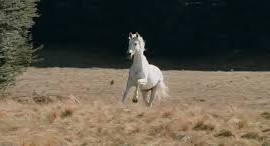
I also understand that we're entering the Year of the Fire Horse (although not until the end of February), which sounds like there may be action and excitement of the positive sort in store. All digits pretzelled that shall prove to be the case.

The Year of the Horse, 2026

I haven't yet decided on my theme for 2026, but in the meantime, here's the wrap on 2025's Leadership in Fantasy posts:

Great Leaders in Speculative Fiction ~ Where To Find 'Em & Why They Rock:

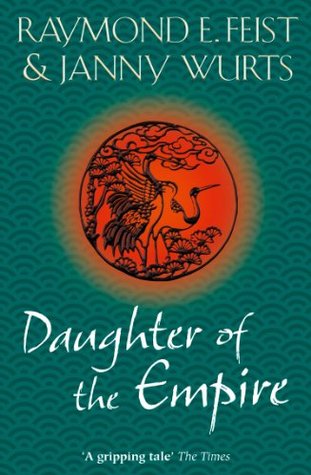
February: Mara of the Acoma in the "Empire" series by Raymond E Feist & Janny Wurts

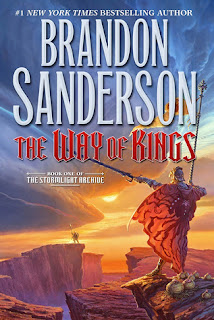
March:  Kaladin and Dalinar in "The Stormlight Archive" by Brandon Sanderson

April: Pyanfar Chanur in "The Pride of Chanur" series by CH Cherryh

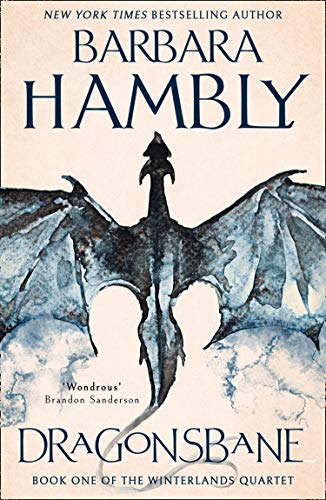
May: John Aversin in Dragonsbane, by Barbara Hambly

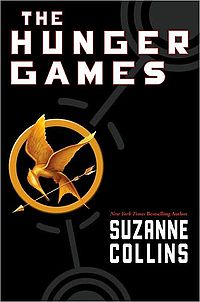
June: Katniss Everdeen in "The Hunger Games" Trilogy by Suzanne Collins

July: Ulric of the Nadir in Legend by David Gemmell

August: Signe de Barbentain in A Song for Arbonne by Guy Gavriel Kay 

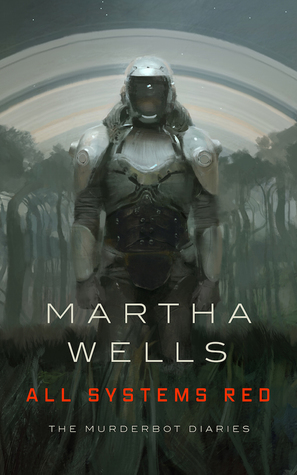
September: Dr Mensah in the "Murderbot" Series by Martha Wells

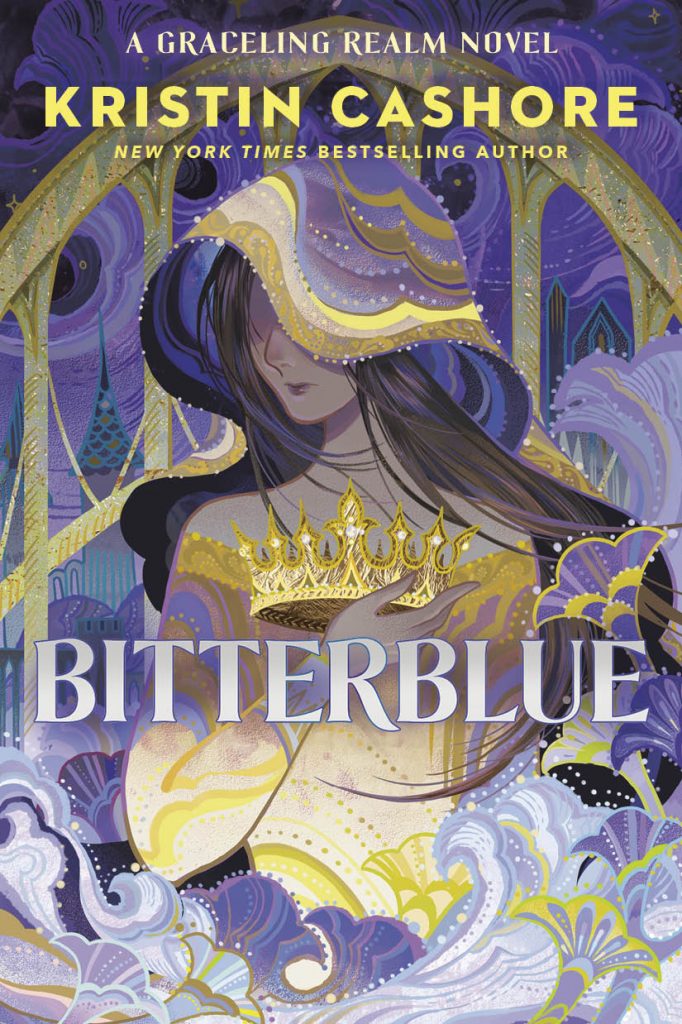
October: Katsa & Bitterblue in "The Graceling Realms" by Kristin Cashore

November: Coltaine in "Deadhouse Gates" by Steven Erikson

December: Faramir in "The Lord of the Rings" by JRR Tolkien 


~*~


About Helen Lowe 

Helen Lowe is an award-winning novelist, poet, and lover of story. With four books published to date, she is currently completing the final instalment in The Wall Of Night series.
.
Helen posts regularly on her 
“…on Anything, Really” blog, monthly on the Supernatural Underground, and tweets @helenl0we.