Showing posts with label kim falconer. Show all posts

Monday, November 16, 2026

Fiction Predictions: Three Extraordinary Women

The Divine Feminine Tarot by Cocorrina

When I started Fiction Predictions, this series of fiction writers seeing the future, I pictured gritty, neon-lit cyberpunk cities or cold, sterile laboratories. I didn't think first of dragon-filled skies, magical archipelagos, or cozy valleys populated by hippo-like trolls.

Yet fantasy and speculative fiction have always been some of our sharpest lenses for viewing what lies ahead. 

As we near the end of this year’s series, why settle for just one visionary when we can celebrate three?

This month, I'm taking a rapid-fire tour through the stories of three extraordinary women—Anne McCaffrey, Ursula K. Le Guin, and Tove Jansson—who quietly mapped out our modern biology, sociology, and global psychology decades before we caught up.

Anne McCaffrey: Bio-Engineering and Neural Links

For many of us, Anne McCaffrey’s Dragonriders of Pern series (beginning with Dragonflight in 1968) is the ultimate comfort read. On the surface, it unfolds like classic high fantasy: feudal holds, noble riders, and fire-breathing dragons.
Look closer, however, and Pern is actually a masterclass in futuristic biotechnology. McCaffrey’s dragons weren't born of magic; stranded human colonists genetically engineered them from native lifeforms to fight a deadly aerial spore. Today, as CRISPR gene-editing moves from sci-fi dream to medical reality, McCaffrey’s biological world-building feels remarkably prescient. 
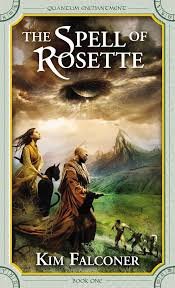
And the deep, instantaneous telepathic bond between dragon and rider? Doesn't it mirror our current race toward brain-computer interfaces and neural-link technology—minus the warmth, loyalty, and scales, of course. Or is that true? Anyone familiar with Jarrod in The Spell of Rosette may beg to differ!
Image by Michael Welan - original cover design 1969

Ursula K. Le Guin: "Tenderising" the Social Consciousness

While McCaffrey looked at how we might alter our biology, Ursula K. Le Guin explored how we might

evolve our minds and societies. Whether writing the grounded fantasy of Earthsea (1968) or the anthropological brilliance of The Left Hand of Darkness (1969), Le Guin possessed a rare gift for "tenderising" the masses for cultural shifts yet to come.
Decades before terms like "non-binary," "gender fluidity," and "ecological balance" became daily fixtures in mainstream headlines and dinner-table debates, Le Guin gently invited readers to walk inside worlds where these concepts were simply normal. By wrapping radical sociological ideas in deeply empathetic storytelling, she softened the public consciousness, preparing generations of readers to navigate a far more fluid, interconnected modern world.
Image: First edition's 1968 cover by Ruth Robbins. Fair use

Tove Jansson: From Local Weather to Global Eco-Anxiety

At first glance, Finnish author Tove Jansson’s whimsical Moomin books seem worlds away from

modern tech or social theory. Yet stories like Comet in Moominland (1946) and Moominsummer Madness (1955) are saturated in something close and familiar to 21st-century readers: existential climate anxiety, sudden catastrophic flooding, and displacement.
Of course, extreme weather itself isn't new. What is new is our instantaneous, 24/7 digital awareness of it. For almost all of human history, our species only knew what was happening to our own tribe—and maybe the one over the next hill. Today, thanks to the internet, we carry the weight of every flood, fire, and storm across the entire planet in our pockets. 
Jansson captured the exact psychological grief of watching a beloved, peaceful world suddenly upended by forces beyond anyone's control, perfectly mirroring our modern transition from local weather-watchers to anxious global citizens.
Image: Historia Moomin Den andra boken Kometjakten 1946 - Fair use 

Were They "Seers"?

Did McCaffrey, Le Guin, or Jansson possess a mystical crystal ball? Maybe, or maybe not. Perhaps, instead, they possessed something far more powerful: deep empathy paired with sharp observation.
McCaffrey understood where scientific curiosity would inevitably lead us. Le Guin understood that human identity and ecological balance are always evolving. And Jansson, writing in the shadow of World War II, understood the fragile, timeless human heart when faced with an overwhelming, unpredictable world. 
They didn't just predict our future—they gave us the emotional vocabulary to survive it.  
Have you read these authors yet? I'd love to hear your favourite!
🙏🏼❤️ Kim
* * *

About Kim Falconer

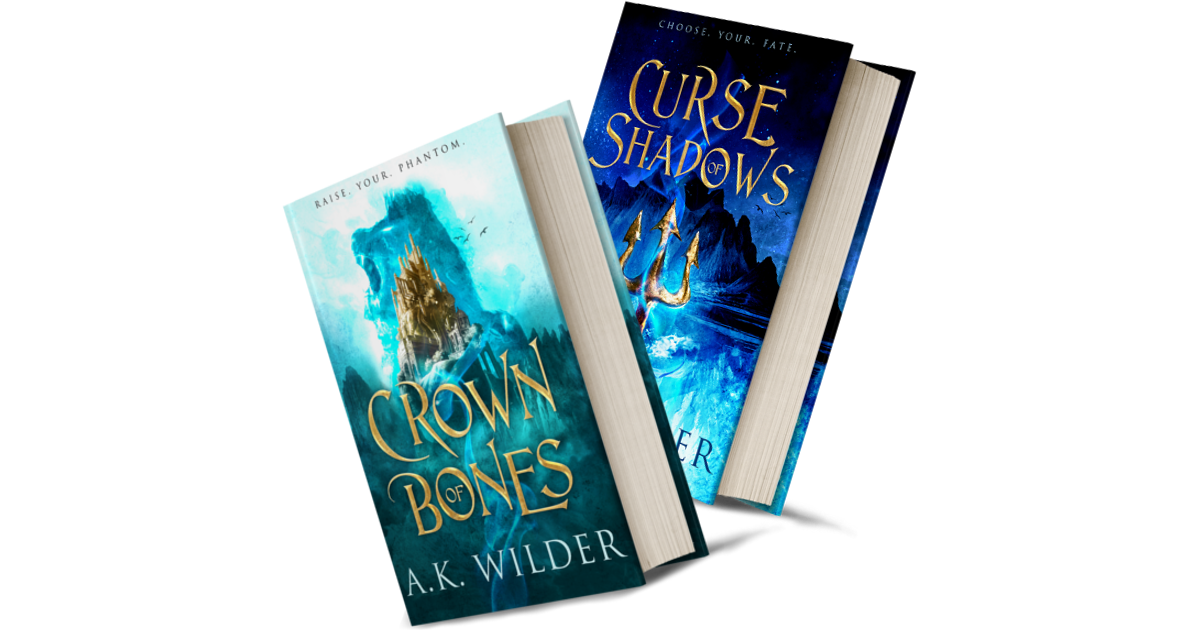
Kim Falconer, also writing as AK Wilder, has released Crown of Bones, a YA Epic Fantasy with Curse of 

Shadows as book 2 in the series. 

 Quantum Enchantment

Kim can be found on:


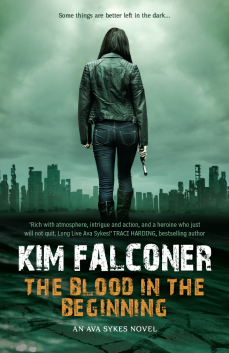
The Blood in the Beginning, an Urban Fantasy alt-history that will leave you questioning every natural disaster ever imagined. 


“There is no doubt fiction makes a better job of the truth.” 


Wednesday, October 21, 2026

From the Backlist: Bringing the Passion

 
As we move toward the end of the year, it's refreshing to look at the backlist and think about what came before. As this post from 2011 shows us, writer's are always looking for inspiration to bring more power, passion and riveting storytelling to their works. 

With that in mind, today's selection from the Backlist is Kim Falconer's writing tips on Bringing the Passion. Good for all seasons! 
 

We hope you enjoy!

*** 

Sunday, October 16, 2011 

Bringing the Passion

Write while the heat is in you. -- Henry David Thoreau

Passion translates through the pages and to make sure readers are enthralled, the writer must be too. But deadlines don’t go away when there is a lull, or the holidays have arrived, or there’s a new show on HBO. Writers must write, high, low, rain, sleet or perfect beach weather. Where does the inspiration come from? Here are a few ideas:

Tip #1 Show up: Writing is like a date; you have to show up if you want something to happen. Get to your desk every day, turn the computer on and say here we go! Sooner or later the Muse will be there, but you have to make the first move. Always.

Tip #2 Set an intention: State your goal for the day. Say it aloud. You might also write it down on a post-it and stick it to your monitor. It might be, two thousand words a day, flowing like a river, or ten pages edited, clean and easy. Setting an intention keeps the goal in sight. Adding a ‘feel good’ to the statement lifts the spirit.

Tip #3 Write what you love: This is major. If you aren’t passionate about your story, readers won’t be either. This isn’t something you can fake. Write what lights you up. If your current assignment doesn’t, find a way to change your mind about it. Throw caution to the wind. Fall head over heels. You have to LOVE the thing to make it sing!

See More of Kim's Books
Tip #4 Look after yourself: When others are on holidays, splashing in the pool or gliding down the ski slope, the ‘blank screen’ can seem like a punishment. When this happens, amp up the self-nurturing! Good food, power naps, exercise and socialise. Deadlines to not equate with prison sentences. You’ll get more done if you schedule in daily ‘me’ time.

Tip #5 Evoke the muse: In ancient times, no story told without calling on the Muses. ‘Tell me, O Muse,’ Homer begins, and we know where that got him. Stephen King suggests that when writers feel blocked it’s not because the Muse has abandoned them: I think what happens is that the writers themselves sow the edges of their clearing with poison bait to keep their muses away, often without knowing they are doing it. Love your Muse and she will love you back! More on evocations

Tip #6 Ghost write: If the keys aren’t clicking, open a new word .doc and write a few paras in another voice...

Read the complete article here: Bringing the Passion

***


Speculative Fiction (Fantasy/Thriller/Sci-Fi/Urban Fantasy) for adults and teens.


We're a group of best-selling authors providing news, reviews and interviews from the darker, more speculative side of fiction.


Fiction that makes the heart beat faster...


Friday, October 16, 2026

Fiction Predictions: Dahl's Vision of AI Generated Text

Image by Maklay62 from Pixabay

Welcome to the next edition of the Fiction Predictions series. Today I take us back seventy years to a story written by the prolific but controversial author Roald Dahl. While Dahl’s personal legacy is riddled with documented bigotry and cruelty, his 1953 short story 'The Great Automatic Grammatizator' remains an uncanny structural prediction of the modern AI crisis.

The Grammatizator

Long before computers could produce text, Roald Dahl wrote about a gifted mechanic who realises that the human mind follows fixed, predictable rules when writing fiction. He builds a massive mechanical engine called the "Great Automatic Grammatizator." By pulling a few levers to select a genre, tone, and plot structure, the machine churns out a flawless, prize-winning in fifteen minutes.

Grammatizator
Sound familiar?

In today's world, with a few clicks of the mouse to select a genre, tone, and plot structure, AI can churn out a 'flawless', potentially prize-winning novel in a few minutes.

But that's not all Dalh predicted.

Echoing today's concerns over writers losing their livelihoods, the machine in Dahl’s story becomes so efficient that it buys out all the human authors in the world. Real writers are forced to sign licensing agreements, giving up their names so the machine can publish automated content under their brands. It ends with a chilling plea from a starving human writer struggling not to sign the contract—a mirror image of modern creatives fighting against AI scraping and automated text.

Is this a step to full simulation?

Notice that while stories like The Matrix or The 13th Floor predicted the world as a simulation, Roald Dahl predicted the industrial economics of it. He foresaw that long before a computer would simulate an entire universe, it would first simulate the human mind, a writer’s mind... and then an actor’s face, just to save a studio money. If you aren't convinced, Google AI-generated vertical short drama. Or, just watch some on Insta.

The Death of the Author 2.0

It seems that Dahl predicted a whole new level of Barthes's death of the author. 

Literary theorist Roland Barthes argued that the intentions and biography of an author should not be used to determine the "true" meaning of a text. Instead of a creator who precedes the work, Barthes introduced the "scriptor"—someone born simultaneously with the text and who mixes pre-existing cultural codes, languages, and quotations to create story. In this way, the text is born in the reader's mind, that endpoint being the "true" interpretation and nuance of the work.

Is our future one where an algorithm generates the text, senses the cultural temperature, and sanitises the output in real-time, all at once?

While pondering that, let's take a moment to look at the impulse of the "powers that be" to retroactively edit human thought for mass consumption. 

The Posthumous Edit: From Plato to Puffin 

Throughout history, we can see a powerful impulse to step in and 'correct' human expression. For example, in the early Christian era, scholars systematically sanitised Plato—particularly his exploration of Eros and the nature of love—to align with the dominant religious orthodoxy of the time. 

Fast forward to 2023, and an example of the same process occurs. Long after Roald Dahl's death, publishers utilised sensitivity editors to scrub his catalogue, swapping out language regarding appearance and gender to fit contemporary cultural standards (markets). This isn't an argument for right or wrong. It's a statement about authorial control. 

Dahl himself was a figure whose real-world prejudices are well-documented. Yet, here is the irony: in his work, 'The Great Automatic Grammatizator,' he predicted a future where a machine would automate and curate literature. Decades later, his own human thoughts became the target of that same systematic, corporate curation.

Fear of Human Complexity

AI Bolggers Vs. Human Bloggers

In Plato’s case, the establishment feared that his nuanced views of desire and love (Eros) didn't fit the strict moral binary of the early Church. 

In Dahl’s case, modern publishers seemed to fear that his raw, unvarnished, and often unpleasant language wouldn't fit a modern corporate streaming ecosystem.

In both cases, the story was changed to sell the concept.

Was the Grammatizator Inevitable?

Given the human propensity toward power over (ironically the antithesis of Love according to Plato) and Barthes thesis of the death of the author, was Dalh's story of the Grammatizator and link to AI an inevitable artifact of the human mind, or one man's ability to foresee the future? 

I'd love to hear your thoughts.

***

About Kim Falconer
The Amassia Series


Kim Falconer, also writing as AK Wilder, has released Crown of Bones, a YA Epic Fantasy with Curse of Shadows as book 2 in the series. 

 Quantum Enchantment
Kim can be found on Twitter, Facebook, Instagram and KimFalconer.com. 

See you there! 

Read Blood and Water, a PNR alt history that will leave you questioning every natural disaster ever endured.


“There is no doubt fiction makes a better job of the truth.” 

Monday, September 21, 2026

From the Backlist: Fantasy Festivals

Art by the amazing Stephanie Pui-Mun Law

Happy Equinox everyone. 

Whether your season is turning from summer to autumn, or from winter to spring, it's a time of Sola Aequo where the divine beings 'make equal' the power of the sun for day and night. It's traditionally a time of celebration and gratitude, and a time to reflect.

With that in mind, today's post from the Backlist is Kim Falconer's Fantasy Festivals.

Enjoy!

***

Fantasy Festivals 

by Kim Falconer on the Supernatural Underground

There are a number of ways an author draws the reader into their story. They can use pace, suspense, fear, excitement, but behind the page-turning tools is a little something called atmosphere, the nuance that creates immersion.

For example: Harry Potter's first festival feast not only helps create an atmosphere at Hogwarts, it shows a contrast to his austere upbringing.


In this way, the readers and audience are captivated by the story, not just because it excites them, but because it feels 'real'.

Ways to create an atmosphere stem from language, word choice, dialogue, character and world-building - the sights, sounds, smells, textures, tastes and history of the story-world. Included in the art of world-building is the power of celebration. . . 

... and there's nothing like a royal wedding to make the heart sing.

Tolkien certainly new how to put on a festival! LOTR Return of the King


These fantasy festivals might match ones the reader is already familiar with ...full post here.

* * *

Do you have a favourite fictional celebration? We'd all love to hear it.

Happy Equinox, everyone!

* * *

About Kim Falconer
The Amassia Series


Kim Falconer, also writing as AK Wilder, has released Crown of Bones, a YA Epic Fantasy with Curse of Shadows as book 2 in the series. 


 Quantum Enchantment
Kim can be found on AKWilder.com, Twitter, Facebook, Instagram and KimFalconer.com. 

Throw the bones on the AKWilder.com site. See you there!

Read Blood and Water, a PNR alt history that will leave you questioning every natural disaster ever endured.

“There is no doubt fiction makes a better job of the truth.” 


Wednesday, September 16, 2026

Fiction Predictions: Rumi's Mystical Atoms


Rumi didn't sit at a desk to write! He danced! Art from Pinterest

Welcome to the next edition of the Fiction Predictions series. Today we go back 800 years to 13th-century Persia and visit the poet and philosopher known to us as Rumi. We will look at his "Poem of the Atoms" (or Zarrah in Persian) that reads uncannily like a description of subatomic particle spin, orbital mechanics, and quantum entanglement. [1] 

Rumi's Creative Process


In our imaginations, we might see Rumi bent over an ancient scrolltop desk, studying Greek philosophers and their notions of 'atomism'. Or maybe we envision him holed up in a candle-lit garret, learning Sufi mysticism teachings. But Rumi didn't tap his creative genius in such an academic way. Instead, danced.

In a state of ecstasy, Rumi whirled about, Dervish-style, channelling his creative works seemingly out of 'thin air'. If it weren't for his disciple, his 'recorder' as he would be called in my stories of Ash, all his beautiful and enlightening words would never have reached our ears.

Fortunately for us, chasing closely behind him was his scribe. He eagerly recorded every word Rumi uttered, scratching away with his reed pen, filling sheet after sheet of handmade rag paper before it was too late. Before the words were gone.

This was the raw, chaotic creative process of Jalal al-Din Rumi and his constant companion, Husam al-Din Chalabi.

In this way, Rumi gave us depth and understanding that science would verify 800 years later. 

Rumi and Quantum Physics


Long before the birth of quantum mechanics, Rumi described a universe made of tiny, ecstatic, perpetually spinning building blocks (zarrah in Persian, meaning the smallest indivisible speck) that was then translated into the ancient Greek word for Atom (in the 5th-century BCE, the Greeks theorised that the universe was made of indivisible units ("atoms") moving through a void (universe). 

But Rumi experienced these atoms in ways that might be hard for us to believe. We have to ask, did this ancient Sufi master somehow tap into the subatomic secrets of the cosmos long before our instruments could identify them?

Rumi's Atomic Universe of Love

From his famous Poem of Atoms, we find:

"O day, arise! Shine your light, the atoms are dancing.
Thanks to Him the universe is dancing,
Overcome with ecstasy, free from body and mind.
I'll whisper in your ear where their dance is leading them.
All the atoms in the air and in the desert are dancing,
Puzzled and bemused to the ray of light, they seem insane.
Every single atom, happy or miserable,
Becomes enamoured of the Sun, of which nothing can be said." [1, 2, 3]

Rumi's Atoms vs. Modern Physics

Rumi's Mystic Verse (13th Century) The Parallel in Modern Physics (20th–21st Century)
"O day, arise! Shine your light, the atoms are dancing... Overcome with ecstasy..." Quantum Wave-Particle Fluctuations: Subatomic particles are never still; the quantum vacuum is a constant "dance" of fluctuating energy.
"Every single atom... Becomes enamoured of the Sun..." Fractal Orbital Mechanics: The fundamental design of matter involves objects orbiting a central nucleus, a central star, or a galactic core.
"Behind every atom of this world hides an infinite universe." Subatomic Complexity: A single proton contains a practically infinite landscape of quarks and gluons bound by immense nuclear forces.

 Was Rumi a Seer of the Future?

Sufi Dance by Maryam Mughal
FineArtsAmerica
How do we evaluate a 13th-century poet who spoke of the universe as if reading from a quantum physics textbook? Did he look through time and grasp the truth of subatomic matter?

Again how?

There were no particle accelerators back then, or mathematical equations to prove the nature of quantum reality. But he was educated in Islamic philosophy, which had preserved the ancient Greek concept of the zarrah—the smallest, indivisible unit of matter. 

Where Rumi Begged to Differ

Western science later treated the atom as cold, dead, mechanical building blocks of the universe; Rumi’s Sufi mysticism saw the entire cosmos as a living manifestation of divine love (Ishq). And, to Rumi, love required a dance and an orbital centre to spin around. Through living this dance, he tapped into a universal truth: that the same laws governing the human soul must govern the physical world as well. 

Modern quantum physics eventually built the tools to prove that the universe is as dynamic, vibrating, and deeply interconnected as Rumi said it was eight hundred years ago. Perhaps he wasn’t a seer of this scientific data but more a manifestation of cosmic harmony, proving that sometimes, the heart will map the universe long before the mind can verify it.

What do you think?

***

About Kim Falconer
The Amassia Series


Kim Falconer, also writing as AK Wilder, has released Crown of Bones, a YA Epic Fantasy with Curse of Shadows as book 2 in the series. 

 Quantum Enchantment

Kim can be found on Twitter, Facebook, Instagram and KimFalconer.com. 

See you there! 

Read Blood and Water, a PNR alt history that will leave you questioning every natural disaster ever endured.


“There is no doubt fiction makes a better job of the truth.” 


“There is no doubt fiction makes a better job of the truth.” 

Sunday, August 16, 2026

Fiction Predictions: The Ship that Sank Twice


Futility or The Wreck of the Titan on Amazon - by Morgan Robertson

This month on Fiction Predictions, we look at a literary coincidence so mathematically precise it will make your spine tingle.

Imagine a thrilling sea adventure about the world’s largest, most luxurious ocean liner. It’s deemed "unsinkable" by the creators, yet on a freezing April night in the North Atlantic, it strikes an iceberg. Because the ship doesn’t carry enough lifeboats for its thousands of passengers, the disaster becomes a historic mass tragedy.

If you think you know this story, look again. This isn't a history lesson about the RMS Titanic—it's the plot of a fictional novella titled Futility, written by a former sailor named Morgan Robertson. The most unnerving part? Robertson published his book in 1898. 

That's nearly a decade before the Titanic was even a blueprint, and eleven years before a single piece of its steel keel was laid in Belfast. 

If this isn't a case of incredible coincidence, then surely it's a glimpse into the future.

The Titan vs. the Titanic

Feature The Fiction: Titan (1898) The Reality: Titanic (1912)
Key Timeline Published 9 years before Titanic was conceived. Construction began 11 years after the book.
Month of Voyage April April
Location of Disaster North Atlantic Ocean North Atlantic Ocean
Cause of Sinking Struck an iceberg Struck an iceberg
Description "Unsinkable" luxury liner "Unsinkable" luxury liner
Length 800 feet 882.5 feet
Propellers Triple screw Triple screw
Passenger Capacity 3,000 people 3,000 people
The Lifeboat Crisis Only 24 boats on board Only 20 boats on board

 Quotes from Futility say it all. Remember, Robertson wrote these headline-worthy lines 14 years before the Titanic launched.

"She was the largest craft afloat and the greatest of the works of men... She was considered unsinkable—indestructible."

Robertson describes the exact cause of the disaster:

"Seventy-five feet above the sea was the bridge... localizing the cold, damp air that always surrounds an iceberg... 'In the track of the ice, Mr. Smith,' said the Captain."

And the fatal mistake that caused thousands of people to drown.

"She carried as few as would satisfy the laws... she carried twenty-four lifeboats... which could, in a smooth sea, hold perhaps five hundred people."

Where were the remaining 2500 souls to go? 

Der Untergang der Titanic (Image courtesy of Titanic Sinking, engraving by Willy Stöwer/Public Domain)     

Was Morgan Robertson a Seer?

So, how do we explain a literary prediction that got the ship's name, size, month, speed, location, and lifeboat shortage right more than a decade before the facts existed? 

Was Morgan Robertson a genuine clairvoyant who peered through the mists of time?

Robertson himself was the first to admit he was not. Following the disaster in 1912, the author was besieged by journalists and spiritualists demanding to know how he did it. His response was simple: "I know what I'm writing about, that's all. I’m just a writer who knows the sea."

We can say that Robertson was a highly observant former sailor with a gift for engineering math and a certain cynicism regarding corporate greed. He looked at the shipbuilding trends of the late 1890s and realized companies were building vessels bigger and faster to win the lucrative transatlantic trade. At the same time, he knew British maritime safety laws were outdated, basing lifeboat capacity on a ship's weight rather than passenger count. 

In this way, we could say he calculated the future. 

But... still a synchronicity of correlations seems to exist. A meaningful coincidence? If only the executives at White Star Line had read Robertson's novella before they began work on the Titanic. 

If only....

***

About Kim Falconer
The Amassia Series


Kim Falconer, also writing as AK Wilder, has released Crown of Bones, a YA Epic Fantasy with Curse of Shadows as book 2 in the series. 


 Quantum Enchantment
Kim can be found on AKWilder.com, Twitter, Facebook, Instagram and KimFalconer.com. 

Throw the bones on the AKWilder.com site. See you there!

Read Blood and Water, a PNR alt history that will leave you questioning every natural disaster ever endured.

“There is no doubt fiction makes a better job of the truth.”