Showing posts with label Roland Barthes. Show all posts

Friday, October 16, 2026

Fiction Predictions: Dahl's Vision of AI Generated Text

Image by Maklay62 from Pixabay

Welcome to the next edition of the Fiction Predictions series. Today I take us back seventy years to a story written by the prolific but controversial author Roald Dahl. While Dahl’s personal legacy is riddled with documented bigotry and cruelty, his 1953 short story 'The Great Automatic Grammatizator' remains an uncanny structural prediction of the modern AI crisis.

The Grammatizator

Long before computers could produce text, Roald Dahl wrote about a gifted mechanic who realises that the human mind follows fixed, predictable rules when writing fiction. He builds a massive mechanical engine called the "Great Automatic Grammatizator." By pulling a few levers to select a genre, tone, and plot structure, the machine churns out a flawless, prize-winning in fifteen minutes.

Grammatizator
Sound familiar?

In today's world, with a few clicks of the mouse to select a genre, tone, and plot structure, AI can churn out a 'flawless', potentially prize-winning novel in a few minutes.

But that's not all Dalh predicted.

Echoing today's concerns over writers losing their livelihoods, the machine in Dahl’s story becomes so efficient that it buys out all the human authors in the world. Real writers are forced to sign licensing agreements, giving up their names so the machine can publish automated content under their brands. It ends with a chilling plea from a starving human writer struggling not to sign the contract—a mirror image of modern creatives fighting against AI scraping and automated text.

Is this a step to full simulation?

Notice that while stories like The Matrix or The 13th Floor predicted the world as a simulation, Roald Dahl predicted the industrial economics of it. He foresaw that long before a computer would simulate an entire universe, it would first simulate the human mind, a writer’s mind... and then an actor’s face, just to save a studio money. If you aren't convinced, Google AI-generated vertical short drama. Or, just watch some on Insta.

The Death of the Author 2.0

It seems that Dahl predicted a whole new level of Barthes's death of the author. 

Literary theorist Roland Barthes argued that the intentions and biography of an author should not be used to determine the "true" meaning of a text. Instead of a creator who precedes the work, Barthes introduced the "scriptor"—someone born simultaneously with the text and who mixes pre-existing cultural codes, languages, and quotations to create story. In this way, the text is born in the reader's mind, that endpoint being the "true" interpretation and nuance of the work.

Is our future one where an algorithm generates the text, senses the cultural temperature, and sanitises the output in real-time, all at once?

While pondering that, let's take a moment to look at the impulse of the "powers that be" to retroactively edit human thought for mass consumption. 

The Posthumous Edit: From Plato to Puffin 

Throughout history, we can see a powerful impulse to step in and 'correct' human expression. For example, in the early Christian era, scholars systematically sanitised Plato—particularly his exploration of Eros and the nature of love—to align with the dominant religious orthodoxy of the time. 

Fast forward to 2023, and an example of the same process occurs. Long after Roald Dahl's death, publishers utilised sensitivity editors to scrub his catalogue, swapping out language regarding appearance and gender to fit contemporary cultural standards (markets). This isn't an argument for right or wrong. It's a statement about authorial control. 

Dahl himself was a figure whose real-world prejudices are well-documented. Yet, here is the irony: in his work, 'The Great Automatic Grammatizator,' he predicted a future where a machine would automate and curate literature. Decades later, his own human thoughts became the target of that same systematic, corporate curation.

Fear of Human Complexity

AI Bolggers Vs. Human Bloggers

In Plato’s case, the establishment feared that his nuanced views of desire and love (Eros) didn't fit the strict moral binary of the early Church. 

In Dahl’s case, modern publishers seemed to fear that his raw, unvarnished, and often unpleasant language wouldn't fit a modern corporate streaming ecosystem.

In both cases, the story was changed to sell the concept.

Was the Grammatizator Inevitable?

Given the human propensity toward power over (ironically the antithesis of Love according to Plato) and Barthes thesis of the death of the author, was Dalh's story of the Grammatizator and link to AI an inevitable artifact of the human mind, or one man's ability to foresee the future? 

I'd love to hear your thoughts.

***

About Kim Falconer
The Amassia Series


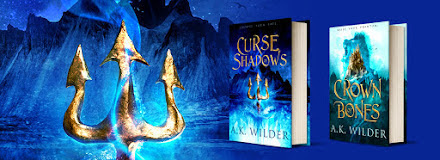
Kim Falconer, also writing as AK Wilder, has released Crown of Bones, a YA Epic Fantasy with Curse of Shadows as book 2 in the series. 

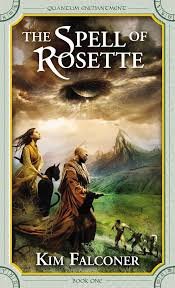
 Quantum Enchantment
Kim can be found on Twitter, Facebook, Instagram and KimFalconer.com. 

See you there! 

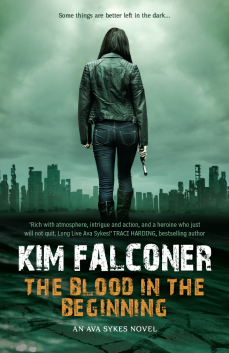
Read Blood and Water, a PNR alt history that will leave you questioning every natural disaster ever endured.


“There is no doubt fiction makes a better job of the truth.” 

Saturday, August 16, 2025

The Art of Adaptation - AI: A New Chapter for Writers

AI and Writing Detection - Justin Gluska, October 2024


Embracing AI: A New Chapter for Fantasy Authors 

In the enchanting realm of fantasy literature, where dragons soar and magic zings through the air, we find ourselves on the brink of a transformative wave—the rise of artificial intelligence. As we dive into this brave (or frightening) new world, I want to reflect on how AI might shape the landscape for fantasy authors and, in turn, the stories we cherish. 


Writing in a World of AI 

For many authors, writing is a deep, personal process, rich in emotion and intricately woven with their unique voice. AI presents an intriguing proposition here. With tools that can analyze narrative structures, suggest plot twists, or even help in world-building, could these innovations enhance the creative process? Some authors may find that AI serves as a brainstorming partner, helping to overcome writer's block or providing endless possibilities to consider. 

Can blending human creativity with AI capabilities result in more intricate and layered stories? If so, the concern remains: will the essence of storytelling be lost? 

The distinctive nuances of characters crafted from personal experiences, the way an author captures the intricacies of human emotions, or the intimate connection formed through relatable dilemmas might get overshadowed if automated systems take the wheel. Still, the heart of fantasy has always been its capacity to transport readers to new realms—perhaps AI can assist authors in doing just that, allowing them more freedom to focus on the emotional depth of their characters. 

1968 film inspired by
Arthur C Clarke
 

Marketing Magic in the Digital Age 

What about marketing, you ask? 

As the publishing industry continues to evolve, so too will the strategies authors employ to connect with their audiences. Marketing in the age of AI could redefine how fantasy authors approach their readers. Personalized marketing campaigns powered by AI analytics may better target specific demographics, allowing authors to reach niche audiences who are eager for their tales. 

Imagine a world where illustrations, interactive maps, and additional digital content can be effortlessly integrated into a book’s marketing strategy. By leveraging AI, authors could create an immersive experience that complements their storytelling, enticing readers to dive into the world they've crafted even before turning the first page. 

But what does this mean for authenticity? Will the charm of grassroots marketing—intimate book signings and personal interactions with fans—be sacrificed for distant algorithms? Navigating this slope will require a fine balance between innovation and the warmth that the community of readers and writers cherish. 


The publishing industry itself stands on the precipice of transformation as AI tools become more prevalent. From manuscript evaluations to editing, the potential for automating certain tasks could streamline the process. Publishers may gain the ability to sift through pitches more thoroughly, identifying hidden gems that previously might not have received any attention. 

Nonetheless, this shift raises important questions. If AI tools become standardized, will all fantasy stories begin to resemble one another, lacking the quirks and spark that make each narrative unique? Or could this be an opening for more adventurous, experimental works, as the time and barriers to entry are reduced for storytellers? 

The Human Touch 

At the end of the day, the most significant question remains: what does this mean for our experience as readers? Will the magic of reading mature into something more profound and immersive, or could it lose its heartfelt touch in the quest for efficiency? As avid fantasy lovers, we must be vigilant. 

Asimov's SF short stories 1940 - 1950
Proyas 2004 film with Will Smith
Our barometer for what constitutes a good story should always center on the depth of emotion and relatability it evokes. AI may alter the tools we use to craft and discover stories, but the soulful heart of storytelling will always thrive. The narratives we adore are stitched together not solely by structure, but by the human touch—the ability to connect, to inspire, and to transport us to realms beyond our own imagination. 


Adapt or Perish?

In 1968, a French literary critic and theorist named Roland Barthes wrote an essay called The Death of the Author. His thesis was that “The birth of the reader must be at the cost of the death of the author”. 

One way to understand this is to say that every text is eternally written here and now. But every time it is read, it is rewritten by the reader, and given a different meaning depending on the reader's mood, knowledge and perspective. In this way, the author (or artist) must step aside for the art to stand on its own and create new meaning.

Essentially, the author dies so the reader may be born. 

As AGI evolves, are authors to face a new kind of death, or was Barthes seeing sixty years into the future?

Conclsions
As we venture forward into the uncharted territory of AI, can we celebrate the fusion of creativity and technology, while holding on to the essence of what makes fantasy fiction so wonderfully captivating?
After all, the story is still ours to tell—wrought from the tapestry of dreams, imagination, and the undeniable human spirit. Isn't it?

Do you think AI will change the way fantasy authors create? I’d love to hear your thoughts and experiences in the comments below! 

Disclaimer

If you've read all the way to the end, my AI buddy and I thank you.

That's right, I actually didn't write this post. 

To exemplify the ideas here, I took 2 minutes to set up an AI blog platform on Grammarly with ideas, tone and keywords to explore. I pressed GO, and two seconds - one, two - later, this article appeared.

2009 Novel with the quantum sentient
“Being” JARROD.


I edited it a little, changing a word here and there, and adding different punctuation, but it's not really me, my research (which I would have spent 6 hours minimum doing, not 2 minutes) or my voice. 

Except for one heading and two paragraphs that follow it (and this disclaimer).

Can you tell which is me in the sea of AI (gathered and compiled in 2 seconds)? I'd love to hear your guess in the comments. 

xxKim

* * * 


Other Posts in the Art of Adaptation 2025

January - The Art of Adaptation - Films in 2025

February - The Art of Adaptation - Authors' Response to External Pressures

March - The Art of Adaptation - The Healing Magic of KDrama

April - The Art of Adaptation -  Reader Persuasion

May - The Art of Adaptation - Fantasy Monsters Part 1

June - The Art of Adaptation - Fantasy Monsters Part 2 

July - The Art of Adaptation - Alternate History

August - The Art of Adaptation - AI: A New Chapter for Writers

September - The Art of Adaptation - Crafting Mood with Language

October - The Art of Adaptation - Take Five

November - The Art of Adaptation - On Time

***


About Kim Falconer 


Kim Falconer, also writing as AK Wilder, has released Crown of Bones, a YA Epic Fantasy with Curse of Shadows as book 2 in the series. 

Currently, she is ready with the third book, planned to be out in 2025. TBA

Kim can be found on AKWilder.com, Twitter, Facebook, Instagram and KimFalconer.com. 

Throw the bones on the AKWilder.com site.. See you there!

Read Blood and Water, a PNR alt history that will leave you questioning every natural disaster ever endured.

“There is no doubt fiction makes a better job of the truth.”

― Doris May Lessing, Under My Skin: Volume One of My Autobiography, to 1949