When I started Fiction Predictions, this series of fiction writers seeing the future, I pictured gritty, neon-lit cyberpunk cities or cold, sterile laboratories. I didn't think first of dragon-filled skies, magical archipelagos, or cozy valleys populated by hippo-like trolls.Yet fantasy and speculative fiction have always been some of our sharpest lenses for viewing what lies ahead.
As we near the end of this year’s series, why settle for just one visionary when we can celebrate three?
This month, I'm taking a rapid-fire tour through the stories of three extraordinary women—Anne McCaffrey, Ursula K. Le Guin, and Tove Jansson—who quietly mapped out our modern biology, sociology, and global psychology decades before we caught up.
Anne McCaffrey: Bio-Engineering and Neural Links
For many of us, Anne McCaffrey’s Dragonriders of Pern series (beginning with Dragonflight in 1968) is the ultimate comfort read. On the surface, it unfolds like classic high fantasy: feudal holds, noble riders, and fire-breathing dragons.
Look closer, however, and Pern is actually a masterclass in futuristic biotechnology. McCaffrey’s dragons weren't born of magic; stranded human colonists genetically engineered them from native lifeforms to fight a deadly aerial spore. Today, as CRISPR gene-editing moves from sci-fi dream to medical reality, McCaffrey’s biological world-building feels remarkably prescient.
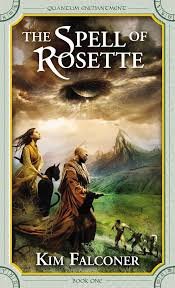
And the deep, instantaneous telepathic bond between dragon and rider? Doesn't it mirror our current race toward brain-computer interfaces and neural-link technology—minus the warmth, loyalty, and scales, of course. Or is that true? Anyone familiar with Jarrod in The Spell of Rosette may beg to differ!
Ursula K. Le Guin: "Tenderising" the Social Consciousness
While McCaffrey looked at how we might alter our biology, Ursula K. Le Guin explored how we might
evolve our minds and societies. Whether writing the grounded fantasy of Earthsea (1968) or the anthropological brilliance of The Left Hand of Darkness (1969), Le Guin possessed a rare gift for "tenderising" the masses for cultural shifts yet to come. Decades before terms like "non-binary," "gender fluidity," and "ecological balance" became daily fixtures in mainstream headlines and dinner-table debates, Le Guin gently invited readers to walk inside worlds where these concepts were simply normal. By wrapping radical sociological ideas in deeply empathetic storytelling, she softened the public consciousness, preparing generations of readers to navigate a far more fluid, interconnected modern world.
Image: First edition's 1968 cover by Ruth Robbins. Fair use Tove Jansson: From Local Weather to Global Eco-Anxiety
At first glance, Finnish author Tove Jansson’s whimsical Moomin books seem worlds away from
modern tech or social theory. Yet stories like Comet in Moominland (1946) and Moominsummer Madness (1955) are saturated in something close and familiar to 21st-century readers: existential climate anxiety, sudden catastrophic flooding, and displacement. Of course, extreme weather itself isn't new. What is new is our instantaneous, 24/7 digital awareness of it. For almost all of human history, our species only knew what was happening to our own tribe—and maybe the one over the next hill. Today, thanks to the internet, we carry the weight of every flood, fire, and storm across the entire planet in our pockets.
Jansson captured the exact psychological grief of watching a beloved, peaceful world suddenly upended by forces beyond anyone's control, perfectly mirroring our modern transition from local weather-watchers to anxious global citizens.
Were They "Seers"?
Did McCaffrey, Le Guin, or Jansson possess a mystical crystal ball? Maybe, or maybe not. Perhaps, instead, they possessed something far more powerful: deep empathy paired with sharp observation.
McCaffrey understood where scientific curiosity would inevitably lead us. Le Guin understood that human identity and ecological balance are always evolving. And Jansson, writing in the shadow of World War II, understood the fragile, timeless human heart when faced with an overwhelming, unpredictable world.
They didn't just predict our future—they gave us the emotional vocabulary to survive it.
Have you read these authors yet? I'd love to hear your favourite!
🙏🏼❤️ Kim
* * *
About Kim Falconer
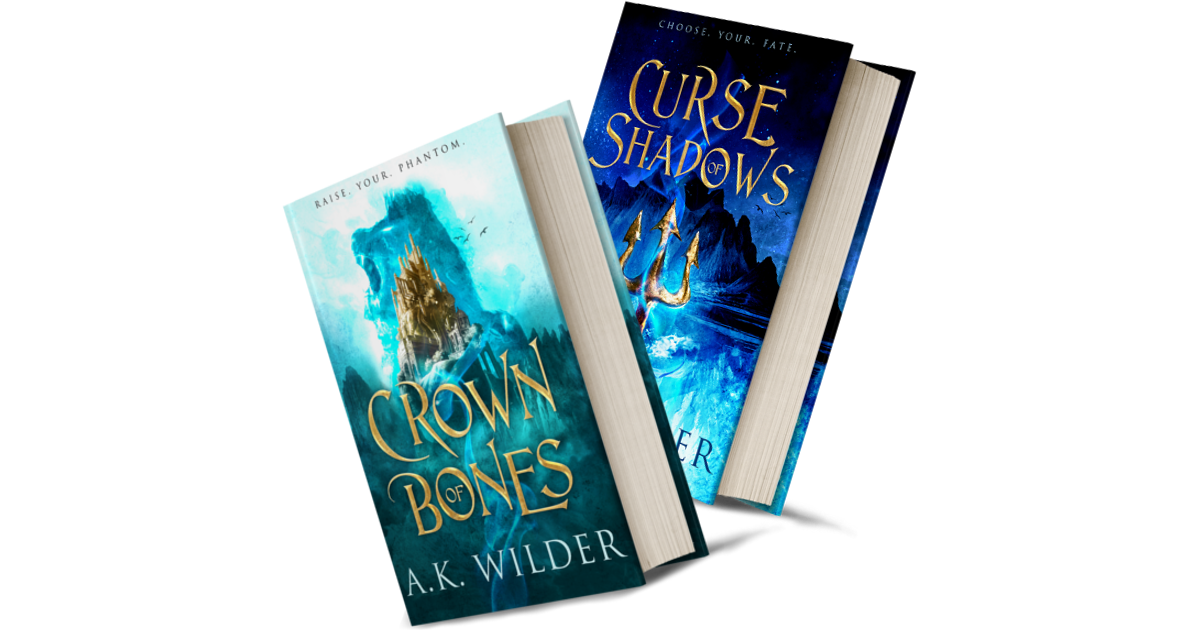
Kim Falconer, also writing as AK Wilder, has released Crown of Bones, a YA Epic Fantasy with Curse of
Shadows as book 2 in the series.
Kim can be found on:
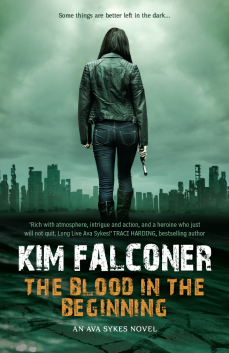
The Blood in the Beginning, an Urban Fantasy alt-history that will leave you questioning every natural disaster ever imagined.
“There is no doubt fiction makes a better job of the truth.”